
Translated material
Readers and Internet writers
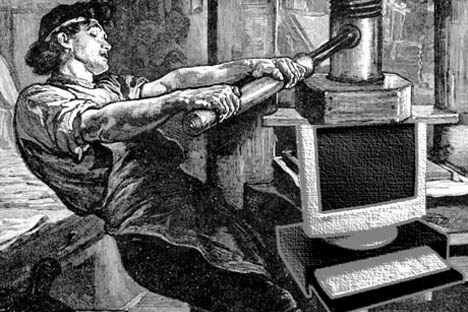
Talking with Tsvetkov
Alexander Genis: Today, Ach will open our traditional conversation with the poet and publicist Alexei Tsvetkov. This time, both participants in the conversation are concerned in the subject of discussions. We are talking about how the Internet changes the nature of reading and the strategy of authors.
Alexey, today I propose to discuss with you a topic that is extremely close to us in two respects: firstly, as readers, and secondly, as writers. Both that and the other has changed, the very nature of reading and scripture has changed under the influence of the Internet - this is already indisputable. A whole generation of people who read books from the screen appeared. They call people who read paper books “barbarians” because they destroy the delicate wood flesh, letting it on paper when you can read an electron bunch instead of precious cellulose.
Alexey Tsvetkov: The emblem of Kindla: a person sits and reads Kindle under a tree.
Alexander Genis: Yes, because he saved this tree. Indeed, beautiful, there is something in it. Moreover, I am not even against such a replacement, now we will talk about this.
The fact is that recently there have been a lot of studies about how the Internet has changed, the electronic fauna that surrounds us, how it has changed the nature of reading, and the nature of the person who reads. That is, everything changes. The most important thing is what absolutely everyone complains about is a shortage of attention.
Alexey Tsvetkov: Recently, many studies have appeared on how experiments in psychology are being built. So it turned out that the vast majority of articles written about psychology are not given a repetition in the same conditions. This is just like a little note.
Alexander Genis: You want to say that you should not trust these research too much?
Alexey Tsvetkov: Absolutely not worth it. But the fact that the nature of the reading is changing ...
Alexander Genis: The character of a person too.
Alexey Tsvetkov: And the character of a person, too, completely agree. See how many carriers have changed in human history - many times. We will not talk about cuneiform signs, although they have read them, probably, how differently what we are reading now.
Alexander Genis: Absolutely. And the people who read were also different precisely because they read differently. You raised a very interesting topic, because reading was far from always what we mean by reading now. For example, only in the 19th century people are completely used to reading to themselves, before that people read aloud. Agree, this is a completely different matter - read aloud or to yourself. I was shocked by the description of the ordinary day in the intelligent family of the beginning of the 19th century in Germany. Germany was a very well -read country, because there was invented printing, the Germans were the first readers of Europe. And at the beginning of the 19th century it is described how the day of reading goes. At first they read before breakfast, then they read before lunch, and then the whole family gathers and read together. In short, the overwhelming amount of time was devoted to reading. I must say that it was quite a long time, they read much more earlier than now - it is undoubtedly.
Alexey Tsvetkov: There were no TVs.
Alexander Genis: Absolutely, there were no TVs, and reading was a collective activity, reading was entertainment, like playing music, let's say so. It used to be impossible to hear music, it was necessary to play it. People played together, there were orchestras, that is, all this was a collective activity. Only then did reading become a purely individual occupation.
Alexey Tsvetkov: Let's get back to the point when the revolution occurred in reading, comparable to what happened to the Internet. This was some time after Gutenberg invented the whole thing, genres began to change. Roman as such has always existed, from antiquity, in antiquity they were called Miletic novels, pornography mainly.
Alexander Genis: Apuley, Golden Donkey - an example of such a Miletic story. They were not serious, but loved very much, like us.
Alexey Tsvetkov: There were not so many of them. The novel appeared with a typography when the book became cheaper, the books were very expensive once.
Alexander Genis: Because the book was primarily precious in itself, it was very beautiful.
Alexey Tsvetkov: If some prince or prince had two hundred books in the library, this was considered a large library.
Alexander Genis: Absolutely, the Renaissance princes had just such libraries.
Alexei Tsvetkov: Petrarch had something, it can even be more than two hundred.
Alexander Genis: So he is Petrarch.
Alexei Tsvetkov: When the seal gradually improved, because at first they printed the Bible and church books, then they began to print secular, a novel appeared. This is a typically Revech, bourgeois genre, which everyone began to read. We will ask now the question: is a fat novel possible on the Internet of the Internet, who will read it?
Alexander Genis: A very curious question. You just found a fork very accurately. Because when the book turned into a way of entertainment, and not a spiritual lesson, as it was before, there was really a revolution in a letter, the genres and writers appeared, not only readers, but also writers, changed, as you say. That is, the form of the existence of the book changes the content of this book. And now, apparently, something similar is happening. So or not?
Alexey Tsvetkov: Not only in the book. There is such a thing now, I’ll get back from the book, called Binge Watching - this is when people watch the series, but not as they watched before, but in one gulp. Suppose Netflix released the “Card House”, which many are now watching in Russia.
Alexander Genis: Including Putin is his favorite series, as I heard.
Alexey Tsvetkov: A person sits down at the TV until his eyes are out of the orbits, he can watch a whole season in the evening, and maybe one and a half.
Alexander Genis: But he does not read the book like that.
Alexey Tsvetkov: He does not read the book like that. Firstly, we said the Internet. What is the Internet? The Internet is no longer the Internet that we discussed can be 15 years ago, because it no longer implies that you are sitting in front of the computer and reading from the screen that you have a browser in front of you from which you read. Usually, I don’t know how other people, but my experience, because I am an old reader with all these electronic means, usually you read the newspaper from the screen, something like that, some short informative articles. And if you see a big one, then you throw it into a special reader, which you will then appear in a tablet or “kindle”, you can read it, but you can not read it. By the way, I do not read most of them.
Alexander Genis: You leave for later. You know how Karel Chapek said: “I would like to get to that paradise where all the books left by me are for later.”
Alexei Tsvetkov: They say, information overload, but about the same thing happened when the books first became ordinary. Previously, a man had a Bible, he read it from time to time.
Alexander Genis: And all my life I read one book. By the way, I saw a bookstore in North Carolina, where only one book is sold - the Bible. In all conceivable publications, one book. A strong impression on me made it.
Alexey Tsvetkov: And then it turned out that he finished one book, you can immediately begin to read another. This was a completely non -standard situation - it was a overload. And then a choice appeared, then either this or this one, for I can’t read everything that they publish, just the same with the Internet. And the principle of reading is changing. Suppose that if the novel genre disappears, if there is no demand, then who we are in order to impose this demand for people. Homer wrote wonderful epic poems, but we do not demand them from Sergei Gandlevsky and did not expect from Brodsky.
Alexander Genis: Brodsky just demanded, by the way, that the poets write in the epic genre. Therefore, he liked the gigantic poem by Walcott “Omeros” so much.
Alexey Tsvetkov: He himself did not write, however.
Alexander Genis: Maybe he didn’t have time. In general, he had intentions of this kind, in my opinion. But the question is who will read this. You talked about how the TV shows are watching, but novels do not read like that. But why don't they read novels like that? The devil knows him. But Philip Roth abandoned literature, he is one of the few writers that I have ever heard about who retired, however, he was 85 years old at that time. The mouth said that the reader who could come after work and reads a book after work. There are no more such readers, so he thinks. Although, of course, it is full of readers who will spend two to three hours with the Internet. This is where the most important obstacle to reading is, because there are too many other possibilities.
Let me tell you about myself, it’s always good to talk about my example. How has the reading has changed for me now? I turn every book into a “literary monument”. As you read, you can provide the book with any number of comments, for this there is Wikipedia and other Internet resources. Any word, name, name, geographical name can take you far away. When I read the book, it branches it into hundreds of others. As a result, reading is extremely slow, especially if I read something scientist, then in order to read the book, I need to finish the whole faculty of advisers.
Alexei Tsvetkov: By the way, in the books of paper I never wrote anything, I did not make any litter.
Alexander Genis: Well, what are you, I don't live without a pencil.
Alexey Tsvetkov: But now I do it all the time, but I am doing electronically. I generally avoid paper books in every way, I think that they are extremely uncomfortable, I don’t know what to do with them, especially if this is a big book, I don’t know how to hold it, it all the time makes me be in some uncomfortable position.
Alexander Genis: That is, you, the old reader, are ready to betray a paper book?
Alexey Tsvetkov: I betrayed her a long time ago. I don’t know how many listeners remember that there was once such a Palm Pilot on which there was a tiny green screen, maybe 15 years ago, I read from this tiny green screen, it was in my pocket. I read paper books only when I have no options. Now this is almost not former.
Alexander Genis: Does the quality of reading change? The studies of Norwegian scientists led by En Mangil showed that when students were given the same text on the screen and on paper, those who read on paper were able to restore what they read much deeper and thinner. That is, the quality of reading on paper, says the researcher is higher than the quality of reading on the screen. Do you agree with this?
Alexey Tsvetkov: Here we recall that I spoke at the beginning about the experiments. But I was just dealing with this issue recently and read another study: yes, the reading skill on the Internet is another, very distracted attention and very often jumps.
Alexander Genis: Fan reading occurs.
Alexey Tsvetkov: Again, the experiment that was conducted on schoolchildren, when they say that they need to read very carefully and look at links, the assimilation of the material is not inferior and even better than that of paper, because there can be additional certificates there. That is, it depends on whether the reader sits for the screen for some special purpose. Usually he sits behind the computer screen not with the aim of reading. And when he sits down to read, for example, “Kindl”, then this is a completely different thing, he has a book there. Or, let's say, I am now reading magazines at Kindle.
Alexander Genis: One way or another, we are talking about the fact that the electronic reading itself is very new, we do not know how to use it properly. That is, we do not really understand what is happening. Herbert Wells was once shown a film set according to his book. It was in the early 30s, the movie was very young and the film was monstrous. Wells said: "What a wonderful movie." "What did you like?" "Pictures are moving." Here we have about this attitude to electronic reading. Because in itself the fact that my library is in my pocket is still shocking me, I’ll tell you right. I have Kindl, like you, like everyone else, are uploaded there things, without which I can’t imagine my life, I have Gogol, Mandelstam, that is absolutely necessary, for example, in line to the doctor. I am happy that there is such an opportunity, but this is a dangerous opportunity. Again, another study, this time huper and churs, are scientists who are exploring as electronic reading acts on the brain. They say that due to the fact that electronic reading is so easy to interrupt, the very nature of our memory changes. It becomes more vulnerable, too many incentives for us to plunge in what they call “deep reading” when we are really completely immersed in the novel.
I remember what was “deep reading” in his youth. It meant you will die sooner than putting the book. That's when I was 14 years old, I read the “Brothers Karamazovs”, and do not tell me that this is early - this is just right. I remember that my parents came and with a scandal paid off the light, as it was probably with everyone then. I said to myself: “Well, they scattered.” And I could not stop until I read the chapter “Boys”, they were just as many years as I then. This reading is an unforgettable impression that remains with us for life, and I can’t imagine such a deep reading today.
Alexey Tsvetkov: You talked about yourself, and I will say about myself. I just read it, I won’t say that someone came to extinguish the light to me, but I read the three-volume of Richard Evans, the story of the Third Reich. This is a huge book. And at the same time I re -read Proust on an electronic device. These habits, they are changing. Do you remember who was the first to complain at all for writing? Socrates.
Alexander Genis: All the great teachers of mankind - Christ, Confucius - did not write.
Alexey Tsvetkov: Socrates did not write exactly.
Alexander Genis: And Christ did not write.
Alexey Tsvetkov: They followed and recorded. Socrates said that a vicious habit of writing all over the memory.
Alexander Genis: So it is. Research was recently conducted, we talked about this in the “American hour”, so I know this question well. In India, there is still a tradition of the storytellers of the epic, they are illiterate, so their memory is much better than ours, they can retell the Indian Iliad from memory because they have been trained since childhood.
Alexey Tsvetkov: In Serbia, there were the same at the beginning of the last century.
Alexander Genis: Absolutely correctly, it was there, in the Balkans, near Greece, there was a mighty tradition of an oral epic.
Alexey Tsvetkov: So we return to epic poems, besides Homer. There was a genre, it was so because the verse is a mnemonics. What is bad verlibr and really bad, I am not an enemy of Verlibra, I am an enemy of bad poems, but a friend of good.
Alexander Genis: Original ...
Alexei Tsvetkov: I think that much more bad verses are metrically written than verlibr, simply because there were more first accumulated. When a person writes with a verlibr, he does not have such strict rules. When the printing appeared, gradually all this died out. But in fact, epic poetry died out with tennyson, the "idyll of the king."
Alexander Genis: In the 19th century, poetry was even more popular than prose. Tennyson was popular as Dickens. It is strange to imagine this.
Alexey Tsvetkov: It can be difficult for a modern person. But tennison was popular as Lady Gaga. Henry Longfello was just as popular. Their popularity was along with the opera singers, which was then the most popular.
Alexander Genis: You can imagine that it is not popular not like Lady Gaga, but as Okudzhava. Already better, right?
Alexey Tsvetkov: I assure you, much more. When Longfello arrived in England in the 1830s or 1840s, ordinary people lined up in thousands to meet his crew, he was accepted in the Buckingham Palace.
Alexander Genis: This is because literature was really queen.
Alexey Tsvetkov: Longfallo wrote epic poems.
Alexander Genis: Yes, it was business. But when Dickens came to America, to New York, there was no room in New York, so he performed in churches.
Let's go personal. In my opinion, the literature has not yet recovered from the appearance of the Internet, it has not yet reacted to it, as, according to your example, the printing gave rise to a novel. The Internet appeared, but I would not say that he gave rise to some special genre.
Alexey Tsvetkov: And I would not say.
Alexander Genis: It's too early. However, it seems to me that the Internet extremely contributes to the spread of poetry, because for poetry the Internet is an ideal medium. How do you, poet, think?
Alexey Tsvetkov: A second, I will correct myself at first. There is a genre on the Internet called Longread, “Long Reading”. This is actually not a long reading, and the article can be in 30 pages, at 40.
Alexander Genis: The present “long reading” is four volumes of “War and Peace”.
Alexey Tsvetkov: From the screen, I can’t read anything that is much larger than the screen itself, which goes down much more. Poems are a completely different matter, because the poem just falls into this volume. Moreover, poems due to what we were discussing before this is no longer the most popular genre now, because mostly poets listen to poets. The Internet is this output to a wider audience, I see it by myself.
Я как стал заново писать стихи в 2004 году, так и живу с тех пор в интернете. Меня напротив удивляет, почему многие вполне серьезные и уважаемые мною поэты, как тот же Владимир Гандельсман, живет за пределами интернета. Книжка стихов — это сегодня сувенирная вещь. Я сейчас не читаю столько стихов, сколько читал в юности - чукча не читатель, а писатель, естественно. Но большинство стихотворной продукции, которую я читаю, я читаю с экрана - и с большим удовольствием. Доступ к аудитории совершенно другого плана.
Александр Генис: Как меняет это аудиторию?
Алексей Цветков: Я не говорю про книгу, советский издательский цикл, когда она выходила семь лет, но даже сейчас она выходит несколько месяцев, а потом надо ждать непонятно чего. А тут ты вывесил стихотворение, моментально к тебе понеслись отзывы: замечательное стихотворение или какую вы дрянь написали. Это - прямой контакт с читателями.
Александр Генис: Это напоминает то, что было в прошлом. Ведь раньше стихи прежде, чем попасть на бумагу, становились достоянием салонного чтения, таким образом автор всегда получал обратную реакцию довольно быстро. Это даже не только стихи. Пока Томас Манн писал «Доктор Фаустус», он каждую главу читал для своих друзей у себя дома, в Калифорнии, где он тогда жил. Гости все собирались, музицировали, и по много часов слушали большую главу.
Алексей Цветков: Это было еще в Древнем Риме.
Александр Генис: В Древнем Риме не было другого способа публикации.
Алексей Цветков: Были книги, их тиражировали. Были книжные продавцы, у которых сидели рабы, но сколько он экземпляров может сделать?
Александр Генис: Геродот читал свою “Историю” вслух на площадях полисов.
Алексей Цветков: Или в каком-то салоне это делалось, но это было общепринято и это было до недавнего времени. Сейчас у нас это - редкие оказии, зато у нас появилась такая площадь, которая никакому Геродоту и не снилась.
Александр Генис: То есть салоны возрождаются?
Алексей Цветков: Это не салоны — это стадионы.
Александр Генис: Ваша страничка на Фейсбуке — это все же салон. Но если “стадион”, то возможно ли возрождение стадионная поэзия Евтушенко и Вознесенского.
Алексей Цветков: У меня номинально тысячи читателей, видно по лайкам, что прочитало 200-250 человек, я никогда в жизни не мог мечтать, что 250 наглядных читателей, некоторые из которых даже оставили какие-то пометки и замечания, что такой контакт возможен.
Александр Генис: То есть у вас ощущение, что вы действительно знаете своего читателя?
Алексей Цветков: Да, есть.
Александр Генис: Это большое и редкое удовольствие.
Алексей Цветков: А поскольку я не думаю, что у меня других читателей ненамного больше, чем эта аудитория в интернете. Я фактически из знаю всех.
Александр Генис: Это напоминает мне нашу жизнь в эмиграции, когда каждая книжка печаталась тиражом максимум в тысячу экземпляров. У меня было ощущение, что я знал всех читателей в лицо. И я их часто действительно знал.
Another aspect. Из-за интернета меняется ведь сама идея стихотворной книги. Ведь есть такое понятие, как стихотворная книга — это очень важное понятие. Например, у Бродского есть , есть «Часть речи», есть «Урания». И каждая - это событие в жизни поэта в первую очередь, но и в истории литературы тоже. Интернет разбазаривает книгу, она исчезает как единица поэтического творчества, не так ли?
Алексей Цветков: Некоторые авторы может быть именно по этим соображениям удерживают стихи у себя в кармане. Я думаю, они из-за этого теряют. Но я знаю другие случаи, допустим, Маша Степанова, очень заметный сейчас поэт, она, правда, под псевдонимом еще в Живом журнале писала книгу стихов, которая вроде как бы поэма, но не совсем. Называлась это «Проза Ивана Сидорова». Все мы читали очень увлеченно новые куски. По-моему, она больше ради эксперимента это делала. Но вполне возможны такие вещи. Так что книга пошла вслед за эпической поэзией. Я когда-то мыслил книгами, а сейчас я смотрю: то, что объединяет мои стихи в книгу, которая все равно для меня вторичный продукт по сравнению с интернетом — это период. Поскольку у меня все стихи хронологические, то вот здесь линия отреза.
Александр Генис: То есть для вас стихи - это поэтический дневник? Важно, когда написано, а неважно, о чем. Вы не строите циклы, не собираете стихи по содержанию?
Алексей Цветков: У меня очень мало циклов. Где-то я чувствую, что у меня какая-то перебивка внутри, здесь я обрезаю, так у меня получается книга. В последнее время у меня вышел двухтомник, я взял передышку, не заглядываю в эти бездны больше. Кориче, Интернет сейчас первичнее по сравнению с печатью.
Александр Генис: Когда классиков хорошо издавали, например, Гете, то классическое собрание сочинений Гете выглядит так: сначала идут все сочинения Гете по хронологии, письмо, стихотворение, заметка, проза, все идет в том виде, когда это было написано, только по хронологии, а потом уже по собранным самим авторам книгам. То есть собрание сочинений Гете состоит из двух частей, одни и те же тексты, но в разных контекстах. Конечно, и то, и другое интересно читать, потому что представить себе, что человек в один и тот же день написал нежное лирическое стихотворение и какое-нибудь издевательское письмо, что с Гете бывало, очень любопытно.
Алексей Цветков: Во-первых, жанр писем убит, как мы все понимаем.
Александр Генис: Наоборот, никогда в жизни мы не писали столько писем, потому что все эмейлы — это письма, это новая эпистолярная история.
Алексей Цветков: Нет, секундочку, не надо путать жанры. Я в свое время написал очень много писем.
Александр Генис: И я - тысячи писем написал.
Алексей Цветков: Но они не текли, потому что надо было сесть и надо было собраться с мыслями. Потому что когда ты пишешь эмейл...
Александр Генис: Я бы не сказал, для меня эмейл — это письмо, доведенное до телеграммы, а это еще не худший вариант. Что такое формат эмейла? Это информация плюс шутка. Минимальный кусочек прозы, две строчки — вот это идеальный эмейл.
Алексей Цветков: Большинство эмейлов служебные.
Александр Генис: Служебная шутка там тоже уместна, я вас уверяю. Мне во всяком случае она никогда не мешает.
Алексей Цветков: Эмейл, кстати, тоже умер фактически, потому что все в чате сидят.
Александр Генис: Не знаю, я все еще пишу. Потому что я люблю, чтобы был зазор между тем, что я думаю, и что пишу.
Алексей Цветков: Я практически не пишу эмейлов, иногда ловлю себя на том, что целый день не заглядываю туда, а там что-то важное.
Александр Генис: Алексей, есть ли у вас какие-то стихи, связанные с интернетом, чтобы мы могли закончить, как все эти наши разговоры, вашими стихами?
Алексей Цветков: Опять же, интернета нет, но есть стихи скорее социальным сетям посвященные.
временного отрезка аренда
коротка и отчетлив сигнал
а не то бы любил без расфренда
а не в ленту лениво ссылал
после нас остаются на свете
не массивные бивни слона
в пустоте социальные сети
где за все отвечают слова
мы висим в них как мертвые рыбы
гребешком растопырив костяк
кабы не были немы могли бы
серебриться у славы в гостях
вот и вся напоследок харизма
ночь повадится шашкой глуша
и финальный урок дарвинизма
получает в фейсбуке душа
преградившая русло плотина
нам управа на прихоть и прыть
только жаль что любви не хватило
весь рентгеновский ужас прикрыть