
Translated material
Terror and elections
The shooting in Orlando turned the agenda of the presidential campaign in the United States
Even in May of this year, international terrorism was listed in the list of priorities of American voters in ninth place. Experts argued that foreign policy issues would not play a noticeable role in choosing the next US president. Today is the number one topic. The finalists of the race undergo the first check -in verification.
The terrorist threat is far from the first time in American history intervenes in the election struggle.
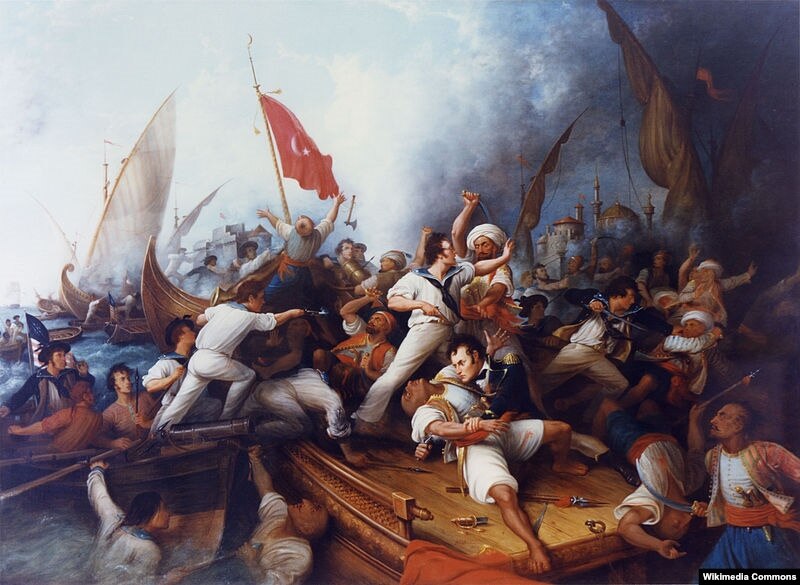
In the early years of independence, the United States had to solve the problem of piracy on the Mediterranean Sea, where the sea robbers of Maghreb - the vassal states of the Turkish Sultan attended. It is they who are so beautifully dancing in the romantic ballet "Corsair" according to the same poem by Byron:
Who, except for the brave, whose soul sings
And the heart is dancing over the expanse of the waters,
There will be a delight and a drunken pulse of tramps,
What are their flag in the seas without roads?
In the reality of romanticism, there were not so many in the actions of corsers. In the XVI-XVIII centuries, the North African Muslim pirates became a real disaster for the coastal regions of Europe. The main prey of the Corsarers were people whom they turned into slavery. According to a modern researcher, over 250 years, from 1530 to 1780, at least a million European Christians have visited the Turks and Moors. Those for whom the ransom could pay was released, like Cervantes, the rest went into hard labor, mainly as gallery slaves. The economy of North Africa countries held on piracy and slave trade. Sea robbery provided a constant influx of funds into the treasury.
The rich powers found that it was cheaper to pay off the pirates than to fight with them. They concluded with Tripoli, Algeria and Tunisia agreements on the payment of annual tribute in exchange for the immunity of their merchant ships from robbery. Moscow paid tribute to the Crimean khan. Thus, piracy turned into legitimate fishing. Bowing out of the corsers, the British, the Swedes, the Danes and the Venetians gained an advantage in trade competition with countries that could not or did not want to pay.
In colonial times, the immunity of the British extended to American merchant ships. But after the separation of the North American colonies from England, they lost the protection of the British flag. In October 1874, Moroccan pirates captured the first American merchant ship - Betsy brigantine. Thanks to the mediation of Spain, it was possible to return the ship and release sailors from captivity. However, Madrid advised Washington from now on not to risk and agree with the states of North Africa.
In July 1785, Algerian pirates captured two American vessels at once and demanded a ransom of 660 thousand dollars for each. Special envoys had only 40 thousand. As a result, the crews of these courts have been held captive for more than 10 years. Moreover, sailors from other American ships soon joined them. They were released only in 1795. The deliverance of 115 people from captivity cost America a million dollars - one sixth of the federal budget.
Secretary of State John Jay instructed the ambassadors of the United States in France and England Thomas Jefferson and John Adams to negotiate with the Tripolitan envoy of Sidi Hadji Abdarahman. They began in London in March 1786. In his reports, Jefferson convinced the Secretary of State that the payment of tribute is not a solution to the issue. Adams agreed with a colleague, but believed that America has no other way to solve the problem: it has no navy, and its economy was undermined by the war for independence.
The question caused acute polemic in the Congress. Many lawmakers believed that the future of America is expansion to the west of the mainland, and in Europe she has nothing to do.
On the other hand, American foreign trade, and above all with Europe, flourished. As a result, Washington nevertheless agreed to pay Algeria, Tripoli and Tunisia a million dollars a year in exchange for freedom of shipping. At the same time, the Congress adopted a number of laws on the construction of the navy.
The second president of the United States was John Adams, who continued the payment of Dani. Jefferson became his main opponent and opponent in the 1800 elections. Jefferson was elected, and as soon as he took office, Tripoli demanded an increase in the amount of tribute to three and a half million dollars a year - despite the fact that in 1800 all federal budget revenues were 10 million. Among other things, the humiliating payment of tribute contradicted the very national idea of the Americans, who began the war for independence due to freedom of trade. President Jefferson refused to pay. Tripolitan Pasha Yusuf Karamanli declared war on America.
Thus began a series of naval conflicts, called the Varvarian wars. It ended in 1815 by the liquidation of a pirate threat in the Mediterranean. The United States considers this its first victory in the fight against international terrorism.
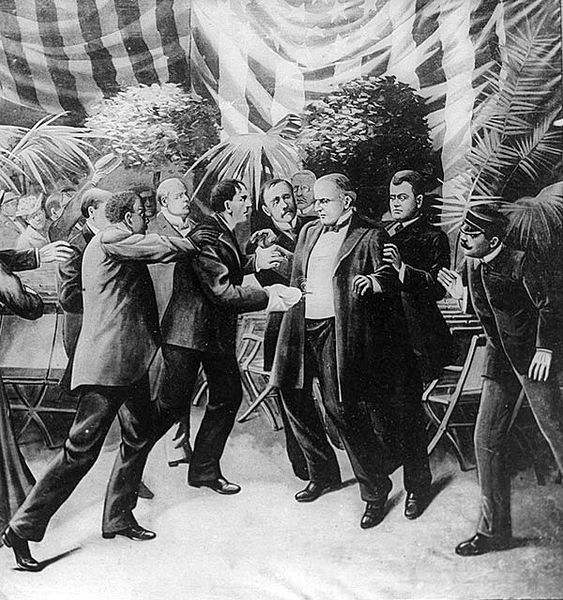
At the turn of the XIX and XX centuries, Europe shook anarchist terror. Anarchists killed not only monarchs and heads of state, but also random people whose guilt was only in belonging to the property classes. This wave of terror has reached America. On September 6, 1901, US President William McKinli was mortally wounded. The shooter immediately after the arrest named his name - Leon Cholgosh - and stated that he was anarchist and shot from ideological reasons. Cholgosh was born in Detroit, but his parents were immigrants-according to some reports, from under Grodno; At the entrance to the United States, his father called Hungar.
Vice-President Theodor Roosevelt entered the post of president. In his first speech in Congress in December 1901, he fell on anarchism with the whole power of his eloquence. “Anarchy,” he said, “is a crime against the whole human race. All humanity should be rallying in the fight against an anarchist. His crime should be considered as an attempt on the world order, as piracy or slave trade.”
The execution of Leon Cholgosh on an electric chair. The film of Tomas Edison. 1901
Roosevelt called on Congress to limit immigration in order to prevent subversive elements to the country. Immigration from Italy, Austria and Russia, he convinced the members of the congress, "comes from the most undesirable segments of the population." As a result, in 1903, an immigration law was adopted, which has banned the entry into the United States to anarchists and other persons who believe that the US government or any other government should be overthrown by the use of force, "as well as epileptics, poor and pimps.
Roosevelt was extremely popular and easily won the 1904 election.
In November 1979, activists of the Islamic Revolution in Iran captured the building of the American embassy and took hostages of its diplomats and other staff. For President Jimmy Carter, the crisis with hostages became a nightmare of Naryava. Finally, having exhausted all the diplomatic funds, he decided on a power operation. In April 1980, a special forces detachment on eight helicopters flew out of the Nimitz aircraft carrier and landed in a large salt desert in the east of Iran. He had to free the hostages and evacuated with them to Egypt. However, the operation from the very beginning faced difficulties. The group fell into a sandstorm and lost two helicopters. The third car collided during refueling in the air with a refueling aircraft and caught fire. As a result, eight died and four troops were injured. The commander of the detachment, Colonel Baquit, asked Carter to give up. The president agreed. On April 29, he informed the country about the failure of the operation.
Jimmy Carter: Our salvation team knew, I also knew that the operation would probably be difficult and probably dangerous. We were all convinced that she had great chances of success. All team members participated in it voluntarily. They were all well prepared. Before the operation, I met with their commanders. They knew that I and all Americans have high hopes on them. The families of those who died or were wounded, I express my admiration for their courage and bitterness about the loss, which I feel as personal.
The inability of Carter to solve the problem of hostages has become one of the good reasons for its defeat in the 1980 elections. The hostages spent 444 days and were released on January 20, 1981, on the day of the inauguration of Ronald Reagan.
The global war with international terrorism, which Washington declared after the attacks on September 11, 2001, and a spectacular victory in Iraq contributed to the popularity of President George Bush Jr.. Democrats candidate John Kerry failed to play part of the electorate on anti -war sentiments, because many of his one -partyists, including Hillary Clinton, voted for the war with Iraq. And although by November 2004 the rating of Bush fell from 90 to 50 percent, he convincingly won the election.
In the current presidential campaign, the theme of terrorism came to the fore after terrorist attacks in Paris and San Bernardino, California, last December. Polls showed that at that moment 16 percent, or every sixth American, considered terrorism the most serious problem that the United States faces. In November, only three percent of voters thought so.
Republican candidates began to operate together this topic. One of them, Ted Cruise, released a video that shows a scorpion crawling to ominous music in the desert. The video does not say what the enemy is meant, but judging by the entourage, this is Islamic terrorism.
Announcer: This is a scorpion in the desert. For most of us, its poison poses a clear and deadly threat. But some refuse to even pronounce his name. As soon as Scorpio seeks to destroy us, is it time to recognize him to those who he are until he attacked again?
Ted Cruise: I am Ted Cruz, and I approve of this message.
However, gradually the topic has lost its relevance. And now - a new surge. Again, we hear from one of the candidates: "I foresaw! I had adversely foresaw everything!" And calls to prohibit the entrance to the country of Muslims, and the promise to return torture ...