
Translated material
The right to terminate suffering
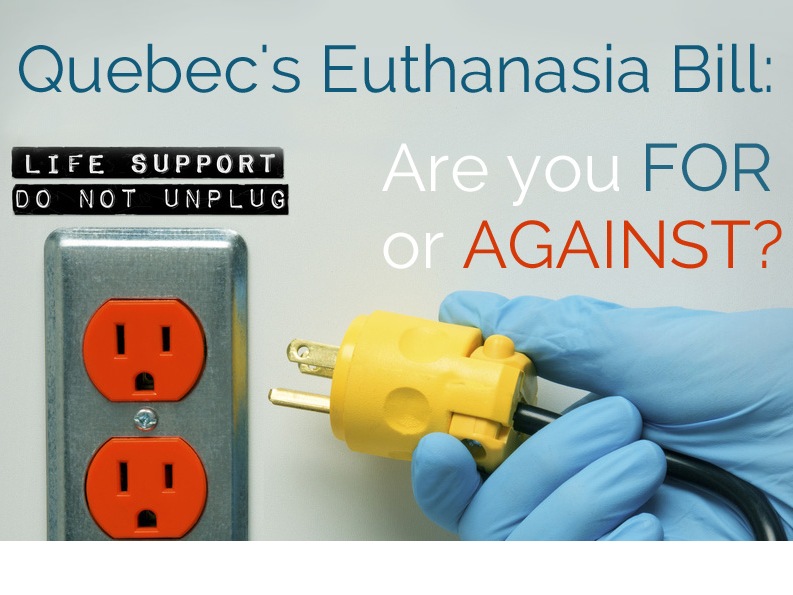
After several weeks of discussions, the upper house of the Canadian parliament adopted the law on euthanasia. This historical decision gives doctors the right to help the patient to die if he is in a serious hopeless state, but in his right mind gives permission to terminate supporting therapy. Thus, Canada has become one of the few countries where doctors are allowed to legally kill deadly patients.
The law will enter into force after it is signed by the Canadian governor General David Johnston, the acting head of state (the head is Elizabeth II), but this process is a formality. During the year, Canada provinces must establish the rules and norms on the practical application of the law. The adoption of the document was accompanied by long debate in both wards of parliament. As a result, the deputies abandoned the fundamental amendment, which allowed euthanasia to Canadians with serious diseases, but not at death.
According to the law, doctors can help voluntarily die only mentally healthy patients over 18 years old, suffering from incurable diseases in the terminal stage, if an ambulance is not in doubt. Criminal prosecution of doctors conducting euthanasia is canceled.
A group of parliamentary deputies also tried to legalize euthanasia for patients with degenerative diseases, such as multiple sclerosis, which leads to unbearable suffering. However, this idea was not approved by the majority. As a result, the final text of the law is very different from the original option. Senator Mike Duffy called the adopted law "Canadian compromise."
Many senators were unhappy even with the final, more strict, version of the law. Senator Andre Pratt said that the parliament is making a big mistake, legalizing euthanasia, adding that the liberal party in power will be responsible for the consequences.
The Supreme Court of Canada allowed doctors to help patients with serious and incurable diseases voluntarily part with life in February 2015. However, before the final decision of the parliament, the euthanasia remained illegal. The ban on euthanasia in Canada has been operating since 1993.
The Netherlands were the first state that allowed euthanasia by the Law of 2002, although in fact this way to pass from life was unofficially practiced for about 30 years. The Dutch law defines euthanasia as death from a medicine administered by a doctor to accelerate the death of the patient. The accuracy of the wording is important, since there is an euthanasia in which the patient receives a prescription for a fatal dosage of the drug and takes it on his own.
In the same year, after the Netherlands, the Law on Euthanasia was adopted in Belgium. There is also voluntary departure from the lives of seriously ill people only under the supervision of a doctor. In 2014, the Belgian authorities expanded this law on citizens of all ages living with an incurable disease. The third country, which legitimized euthanasia, was Luxembourg in 2009.
The softest law on euthanasia is in force in Switzerland, so this country is called the center of suicidal tourism. Switzerland is unique in that they will allow doctors to help seriously ill patients to pass away. Access to the drugs necessary for this is unlimited. In a referendum in 2011, most residents of Canton Zurich voted to legalize euthanasia not only for Switzerland citizens, but also for tourists who come to the country specifically for these purposes.
In addition to these states, euthanasia is permitted in Japan, South Africa, as well as in the American states of Oregon, Vermont and Washington.