
Translated material
Nonth questions
On the 27th “Kinotavra” met the “student” and “good boy”. As usual, good won
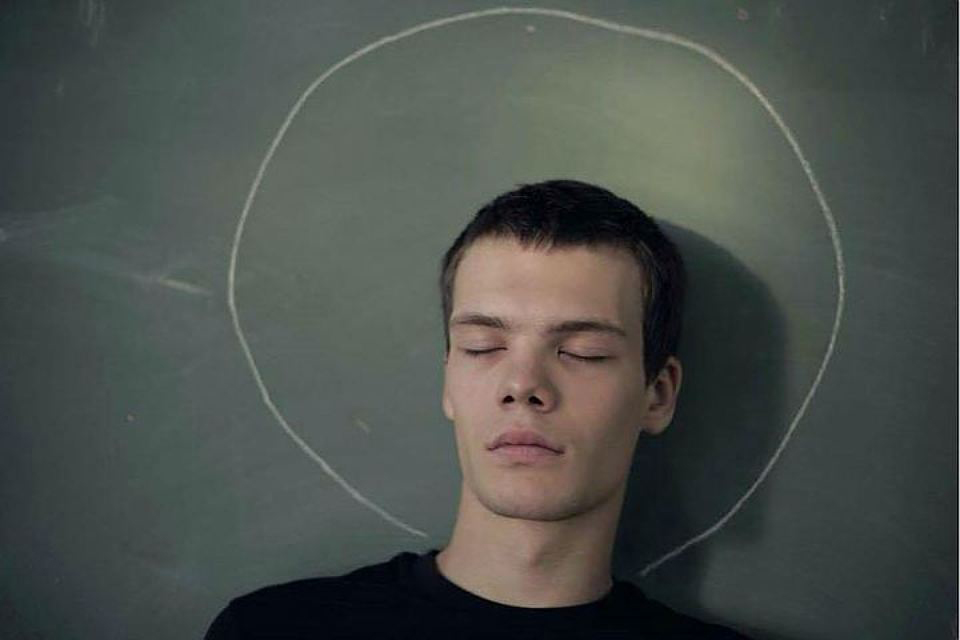
The hero of the film Kirill Serebrennikov, a schoolboy Benjamin (Peter Skvortsov), not in a joke imagined himself as a saint
The story is repeated from year to year: throughout the “Kinotavra” - the main festival of domestic cinema - all its guests and participants shout about the crisis and decline, and then complain about the results. A tradition that cannot be changed. Of course, according to the Hamburg (or Cannes, Venetian, Berlin) account even the best Sochi premieres do not reach the highest score. However, not a single event reflects so accurately and in a timely process that take place today, if not in art, then in society as such. “Kinotavr” is the same mirror that we do not get tired of blaming.
So this time: the conflict that loomed in the final of the festival was bright and unlikely to be random. The main awards were claimed by antipodes, as if deliberately reduced in the same program: the optimistic “good boy” of Oksana Karas and the polemic “student” by Kirill Serebrennikov. The action of both unfolds in a modern Russian school. Heroes are adolescents-old-legged people who enter the forced age conflict with parents and teachers who are aware of their place in the environment. Only one is a really good boy who is trying to help loved ones, and the other is a religious fanatic and a potential killer. However, both are unhappy with the existing order of things and want to change it.
The jury, led by Nikolai Lebedev, the creator of the 2016 Cashcad of the Russian film, “Crew”, predictably preferred good to evil. The Grand Prix went to the "good boy", the prize for directing-the "student": not shameful, but still losing. Of course, this conflict was by no means about art or professionalism, but also about the preferred model of cinema and society.
Cute, school
The “good boy”, the frivolous biography of the ninth-grader Kolya Smirnov, was already sweeping with the famous “plumbum” of Abdrashitov and Mindadze-and truth, the main character (talented Semyon Treskunov, 16-year-old star of the mainstream cinema) matured for years. He argues with his father (Konstantin Khabensky) on an equal footing, and the director (Mikhail Efremov) challenges, and the bully is not afraid, although his complexion is quite flimsy. He is not content with a fleeting novel with a casual tenth grader and knocks down the wedge to a pretty English teacher.
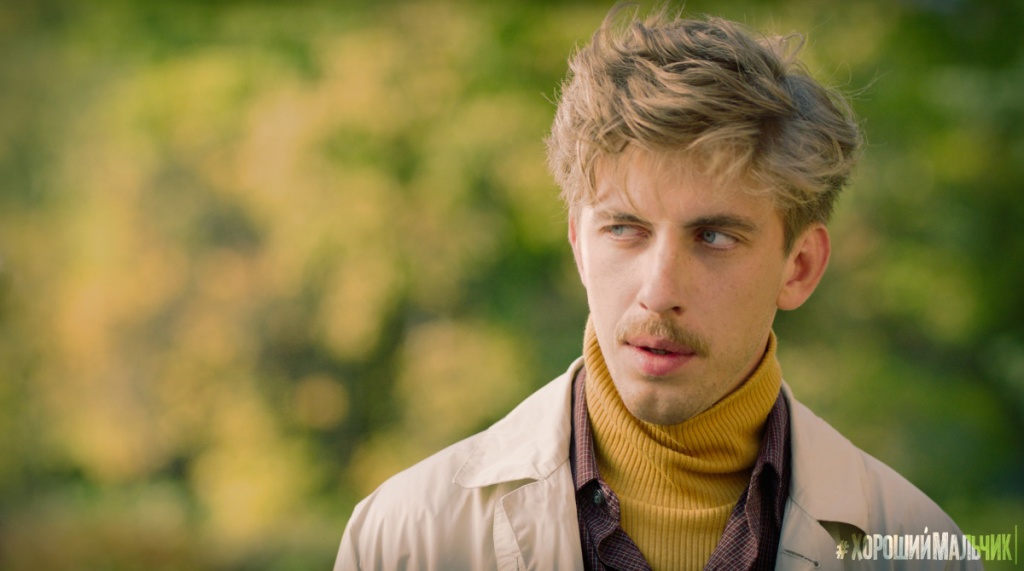
Alexander Pal in a "good boy" became a teacher of computer science
Formally, this is a film of growing up, but in fact it is more like a radical and tragic “plumbum” - in a “good boy”, such a terrible ending would be unthinkable - and not on conditional “400 strokes”*, but on the “adventures of Petrov and Vasechkin” **, only shot in another era. Now you can afford to pronounce the word “boobs”, show the interior of the underground casino and even put a woman in silk lingerie, wandering legs into the frame. It's OK! Not only Kolya is good, the universe surrounding him is good: Moscow came out of Karas some charming toy. Behind the scenes, nostalgic retro -language does not fall silent, and everyone is constantly dancing, and without - just so that a degree of good mood does not fall. In general, Feel Good Movie, as they would say in Hollywood.
From the competition with him, damned, the idea of reviving teenage and children's cinema on the domestic base arises-so far, except for cartoons about heroes, not very effective. It is difficult to imagine that adolescents recognize themselves in a “good boy”: they even have a much more adult and dangerous world of last year’s teenager Love Story “14+” did not seem seductive (judging by the modest box office). And adults, in turn, can decide that they are not such a film by age. “A good boy” is not only a kind of utopia, but also a picture shot for a utopian rolling situation, to which Russia is far far away.
Heroes are adolescents. Only one is a really good boy who is trying to help loved ones, and the other is a religious fanatic and a potential killer
However, the screenwriter of the picture Mikhail Radutsky is a real utopian. He participated in the creation of new Soviet mythology (script “Legends No. 17”), and in the superheroic fairy tale “Super Bobrovs”, and in his “rag union”, with all his Pankovsky Zador, preferred the transformations of reality a poetic dream of her. Perhaps he is just able to reformat the empty trend of the so -called good movie in a sincerely optimistic wave of films about "Russia, which we would like to see outside the window." And he even has a team for this: Vasily Butkevich and Alexander Pers came to a “good boy” straight from the “rag union”, slightly changing the role.
What are they all trying to tell us? The world is beautiful, although imperfect, cute people around, all dangers are imaginary, difficulties are overcome. You just dream, love, dance. Well, not the worst set of thoughts. Even an unexpected model of 2016 for Russia.
Bible by head
Serebrennikov’s “student” tends to the opposite pole - not the so -called good movie, but the so -called chernukha. Indeed, the Russian adaptation of the play of the German Marius von Mayenburg (the director has already put it on the stage of the Gogol Center called “(m) student”) condenses all the key problems of Russian society: religious intolerance, bureaucracy and formalism, psychological and physical violence, homophobia, anti-Semitism.
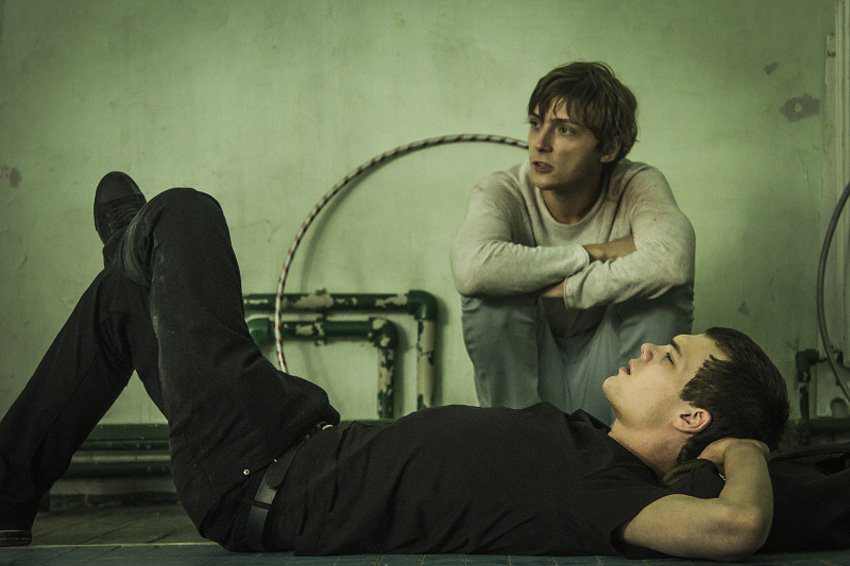
Pyotr Skvortsov (lies) played the main role only in the film “Student”, but Alexander Gorchilin-also in the play “Gogol Center” “(M) Pupil”
The local hero is the same age as “good” Koli, brilliantly played by Peter Skvortsov, a schoolboy Venya. And he, of course, is a bad boy. It is not enough where to pick up the bacillus of radical Orthodoxy, he does not part with Bibe-lyia and quotes it in every phrase. Serebrennikov meticulously displays the primary source of the quote, a book and a verse: they say, do not hesitate, this is what it is said there. Shocking the mother (Julia Aug) and teachers, the hero intrigues the peers - a pretty classmate (Alexander Revenko) and a shy disabled person (Alexander Gorchilin). Venya demands to prohibit classes in the pool, where you have to shamefully expose, and breaks biology lessons - after all, people could not come from monkeys! He does not care about estimates and reputation: he knows what is right and what is not. In the end, he will drag him to school and beat a huge cross to the wall - on which, which, not surprisingly, he will not be crucified at all. With the presentation of a friendly priest, a teacher of the “Fundamentals of Religious Culture”, Veni extremism is now accepted at school as a norm. The outskirts are his only opponent - a biology teacher and a school psychologist (Victoria Isakova), who, with more difficulty, defends everyone’s right to critical thinking and compassion for his neighbor.
The bold and relevant statement is awarded for craft perfection, and a sweet family film that carries illusory comfort is artificially given the status of an outstanding work
Undoubtedly, Serebrennikov here is not just a director, retelling someone else's plot, but the same conceptual thinker and fighter for common sense, like his heroine. He directly indicates the militant infantilism of the entire Russian society, for which humility with a absurd ancient dogmas is a more comfortable path than an independent understanding of reality. He is not touched by an idealist (undoubtedly, Venya is an idealist, not a hypocrite), but is horrified. In general, he prefers frontal metaphors, as if realizing: the time has come to call a spade a spade, and emphasizing in the right places. Otherwise, they will not read it.
Of course, this causes discomfort and leads to a paradox that happened on the Kinotavr. The bold and relevant statement is awarded for craft perfection (which the rough “student” is not quite inherent-however, it was made masterly), and the sweet family film that carries an illusory comfort is artificially given the status of an outstanding work, rewarding the Grand Prix.
Pictures of the world
Obviously, they must exist - both rewarded and showed - different films: children and adults, commercial and copyright, bright and gloomy. Each jury has every right to its opinion and choice: I remember that the author of the same innovative films of the 1980s Vadim Abdrashitov at one time, he flatly refused to give the comforting prize to the “cargo 200” of the late Alexei Balabanov. The jury of Lebedev wisely noticed both a “good boy” and a “student”, did not forget the experimental “zoology” by Ivan Tverdovsky (acting prize by Natalya Pavlenkova) and the audience “collector” Alexei Krasovsky (acting prize by Konstantin Khabensky and the award to the best operator Denis Firstov), and for the debut awarded the documentary “alien work” Denis Shabaev. No one left offended. Well, almost no one.
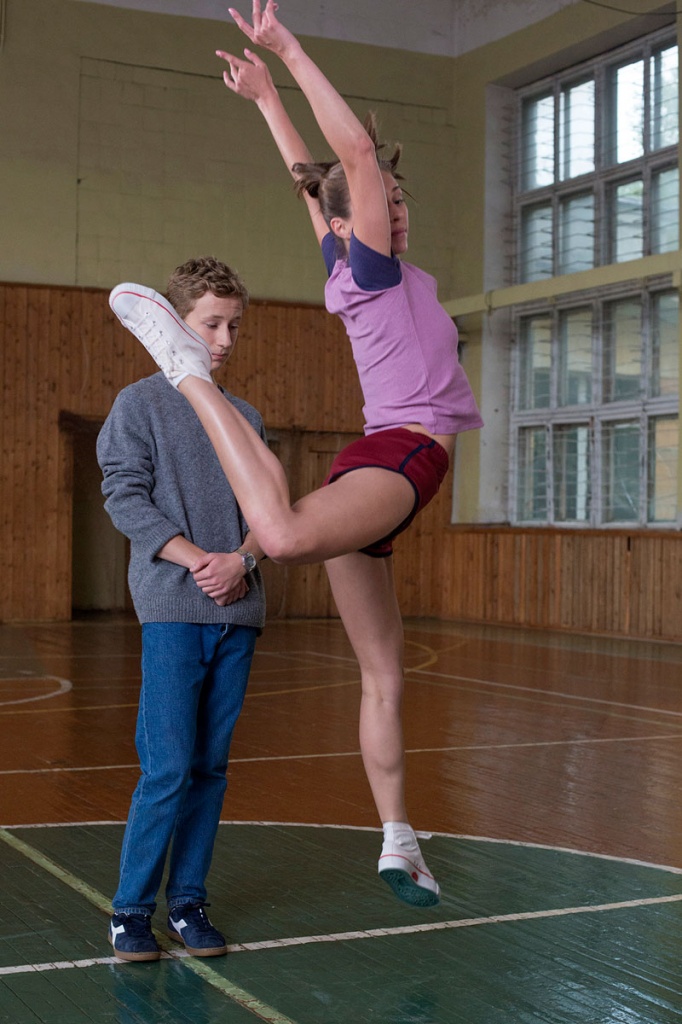
Good boy Kolya (Semyon Treskunov) while he is shy about dancing - he admires other people's dancing more
Having spoke the obvious, let's return to the conflict of two paintings in the world. The benevolence of one (“good boy”) returns to the stereotype of the cinema as a great comforter: to watch should be pleasant - this is the first commandment. And at the same time - instructive. Since the film speaks of growing children, let him give them parting words: what to be, what to strive for and how to do. Here, even adults are needed as visual aids - do not drink from a puddle, you will become such a kid. The fierceness of the other (“student”) thickens paints in order to tear the viewer out of the cocoon of well -being, wake him up from sleep, putting a pea under the feather beds. As Lars von Trier said, "the film should be like a pebble in a boot."
One boy calls to linger longer in childhood. The other is urgently growing up. It turns out that one way or another it is necessary to listen to one of them and make your choice. Were there any boys? This question is no less than a sign for Russian culture than "what to do?" And “who is to blame?”, The audience will give the answer.
* “400 blows” - Francois Trufffo's debut full -length film, in many ways autobiographical.
** “The Adventures of Petrov and Vasechkin” - a children's two -part musical comedy (1983), shot by director Vladimir Alenikov.
Photo: kinopoisk.ru