
Translated material
The state and the mafia
What are they different and what are similar-about this in the St. Petersburg “Bukvoede” as part of the Political Political Political Political Project was argued by a professor at the European University, the author of the Monograph “Power Entrepreneurship” Vadim Volkov, Deputy editor-in-Chief of the Journal of Social Policy Research Alexander Kondakov and a permanent moderator of these discussions, Professor of the Faculty of Economics of the European University Dmitry Travin. The New Times publishes a reduced version of the conversation

Participants in the discussion in the “Bookyed” (left to right) : Dmitry Travin, Vadim Volkov, Alexander Kondakov, St. Petersburg, June 7, 2016
Dmitry Travin: As a child, they explained to me that somewhere in Italy there is a mafia, these are bad, they are bandits, and the state is natural, good. In the 1990s, I suddenly discovered that not everything was so simple, because the mafia suddenly appeared with us, and the state simply could not cope with the management of the country. Then in the zero years the state began to cope with all issues again. True, I'm not sure that we are always satisfied with how the state copes with this. What is a mafia, what is the state, what is better, what is worse, can there be a good mafia and a bad state, is it good when a strong mafia somehow replaces a weak state?
The advantages of the state
Vadim Volkov: Remember the first phrase of the film "Godfather"? It sounds like this: Don Corleone, I Need Justice. That is, Don Corleone, I need justice. This is a very romanticized version of the mafia, of course, but the entire original scene of the “godfather” is built that a person (his daughter was raped) went to the police. Since the rapists were from wealthy families with ties, the police did nothing, the matter was furious, the honor was scolded - and the man turned to the mafia. The rapists were mutilated, that is, they somehow compensated for the damage. This is an example of how the state loses and how the demand for the mafia is created. Demand for the mafia is created in conditions of a weak state.
If we write a statement to the police, then there is a state. If we do not go to the police, but go to the thief in law, to the godfather, to some athlete with whom we studied together once, it means, operational, that we have not actually have states. And if most citizens in a situation of conflict - any financial, physical conflicts - go to alternative instances, by and large, at the micro level this is a situation where there is no state.
Can we say that such a situation is disgusting, disgusting? After all, issues are resolved. The godfather solved the question? Decided. So what is it bad?
In general, in any space and time there are legal orders, and the farther the time goes back, the more alternative, coexisting legal order with each other. It can be self -regulating organizations, universities, communities. So, it is important to establish the criteria for the difference between the state and the mafia. What is the difference between the state from the mafia and how can the mafia turn into a state and stop being a mafia? After all, the mafia is, as it were, an intake, primitive political order and security enterprise.
Firstly, the state is more predictable. And predictability is determined by the laws on which the state is oriented, and the procedures for which the powerful functions of the state are carried out.
Secondly, the state as a “solper” is economically more effective-due to the scale of regulation. It is one thing when you have 25 mafia in the same territory, each set its requisitions and can increase them or reduce them, but citizens do not control this, because this is controlled by some custom. Another thing is the state, especially a democratic state: there is a scale on a scale, and there are more predictable tax rates, the distribution of these taxes, a more transparent procedure with the participation of citizens.
"The state as a" soliper "is economically more effective"
Actually, the appearance of control - first of individual classes, then citizens - over the mechanisms of distribution of security tribute - this is a democratic revolution. Thanks to which a security tribute is put under state control.
And finally, another difference is legitimacy. And legitimacy, in general, is effective protection. But this issue is very controversial, because, according to many, in Italy until the 1950s the mafia was a completely legitimate institution, until it became a tough entrepreneurial class. And in this aspect, I admit, the mafia can argue with the state for quite some time.
The advantages of the mafia
Dmitry Travin: There is a film of the late 1940s, “Under the sky of Sicily,” this is about the mafia and about an honest cop that is fighting with her. This is an honest law enforcement officer talking with the main mafiosi, and he explains to him how life is arranged in a small village in Sicily. He says to him: you know, if it weren’t for us, that is, the mafia, crime would have swept around. How do you like this phrase?
Second. Here, a specialist in Dagestan once performed, and he said that in Dagestan there are four ways to solve the issue. The first method is comradely: they just gathered and figured it out. The second method is according to Sharia. This is for Muslims. The third method is by concepts. And the fourth: according to the law. But this, said the speaker, the most expensive way, most of all will have to pay bribes.
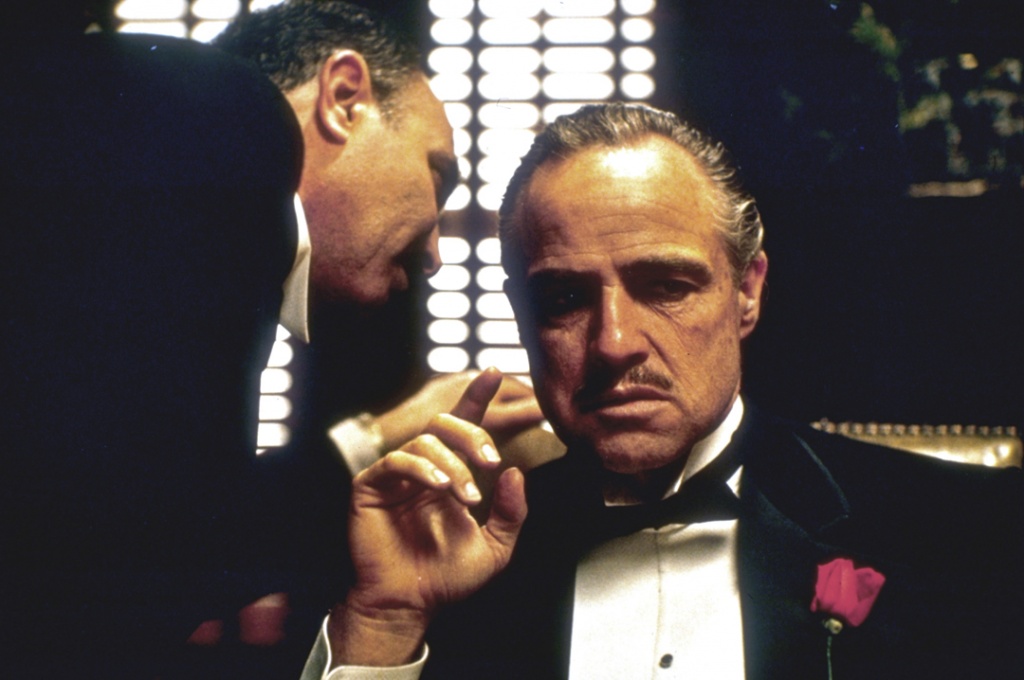
Frame from the film "Godfather" with Marlon Brando in the role of Vito Corleone, 1972
Why did I remember that. Vadim very well, clearly deflated us why the state defeats the mafia in competition. But at least one moment was in doubt. You said that the state is cheaper. In this case, it seems that it turns out that in Dagestan it is no longer cheaper if we look from the point of view of how much we need to pay extra taxes. And most importantly, you say: it is cheaper to maintain one state than 25 mafia. Or maybe the state is just such a mafia that monopolized its power and eliminated all the other mafia, and thanks to this it costs us more expensive, it takes more from us in the form of taxes, in the form of additional bribes? Maybe if there was an honest competition of the mafia, it would be more effective for us?
Intersection
Alexander Kondakov: If Vadim proposes to distinguish between the concepts of the state and the mafia, then I rather suggest trying to think about how these concepts intersect and how they can actually flow one into another.
On the one hand, modern, at least the mafia is some kind of organized people who are engaged in economic activity, from the point of view of formal law-illegal activity. That is, it is an alternative to the state and the law, because there are its own rules, concepts.
Last summer, we examined the sphere of sex services in St. Petersburg. That is, from the point of view of formal law, something prohibited. Sex workers, prostitutes, must pay a fine under administrative law. Those managers who administer the brothels are under the influence of criminal law. The organizers of this business are also under the influence of criminal law. Moreover, the terms of imprisonment are quite high.
We interviewed 43 sex workers, and we did not have the feeling that this is some kind of illegal activity-on the contrary, it is a very branched business, the service sector where there is a structure familiar to any business, hierarchy. There is a work schedule, there are salaries, there are roles that are distributed between participants in this business. There is an advertisement - you don’t have to go far, we can go out in St. Petersburg now and we will see a huge number of advertising of these services. There is a variety of services, at different prices, with different forms of payment. That is, I repeat, this is a business.
A difficult stable business organization suggests that this is not some kind of special case of an illegal type of housekeeping, but a special economic sector in the service sector. How is it still characterized? Why, despite criminal prohibitions, does it exist? Including thanks to the patronage of the law itself, protection. This is just a typical contribution of civil servants to any organization of such a business. Without the participation of the state, business mafia, in fact, is impossible.
Sex workers talked quite a lot of how and how some police officers, employees of various law enforcement agencies participate in this business. I recall one more study that we conducted with colleagues is how foreign businessmen conduct business in Russia and what they tell. The largest obstacle that they spoke about is the requirements of the law. They, according to foreign businessmen and managers, are generally impossible to fulfill, or their implementation is simply not profitable economically. If you begin to follow completely all the requirements of the law, your business will actually be destroyed.
At the same time, the design of the law gives all the fullness of power to various regulatory state bodies. It is they who determine the legality or illegality of actions, which, accordingly, leads to this alternative organization within the already state bodies, hierarchical mafia groups. That is, the law itself can contribute to the organization of various shadow business, and above all, based on the sale of immunity from the law.

Frame from the film about the good mafiosi from Yakuza - "Lawlessness", 2010
It may seem that it is enough to write some laws that will not allow this. But, alas, the modern trend is more likely that many states actually become mafia to some extent: for the sake of economic enrichment, the elite introduce a new type of policy aimed at extracting profit from all possible areas of activity of the state.
That is, instead of a policy of common good, the state collects taxes from citizens, and instead of placing us on Wednesday, where we compete with each other, and offers nothing else. In fact, like the mafia, the state makes an offer that cannot be abandoned. We must follow the laws and have to pay taxes, but in return we do not guarantee anything - neither healthcare nor education. This makes a modern state in such a type of mafia that works to enrich few at the expense of all.
These three concepts - the state, the law and the mafia - at the present stage are very intersect. And drawing between them the border is becoming increasingly difficult.
Delegated violence
Vadim Volkov: I remind you of the question of Dmitry Travina: the state eliminated the competition of the mafia and monopolized the compulsion market - is it good?
Imagine the situation: someone comes to you, well, let's say, in uniform of a tax inspector and says: I am a state, you will pay so much. Then another comes in a sports suit, says: Listen, we will guard you, you will pay us about the same. What is a reasonable person answering this? “You will figure out each other first and then tell me to whom I should pay and who will protect me from whom.” And they understand. After they figured out, the situation of balance and monopoly arises again.
What is possible disassembly? The natural law consists in the fact that the means of competition in the free security market is violence - this is a war on destruction. That authority, the organization that proved that it can destroy the rest and are able to provide the most reliable protection, is understandable. And therefore, everyone has an interest in prove this, this is a question of reputation-it means that someone wins, someone loses, the winning side becomes the strongest and exercises dominance within the territory: collecting tax, resolving conflicts, etc.
** Or maybe the state is just such a mafia that monopolized its power and eliminated all the other mafia **There may be another option: the “tax inspector” and “athlete” agreed, and then one instance delegates some powers of another instance. That is, they agreed, a hierarchy arose. This means that the bandits who guard the sex services market can no longer encroach on some other area-for example, go to a metallurgical plant or somewhere else: all, they were put in the framework. The security enterprises were licensed in the same way: they are legal, they pay tax, obey the law on private security, detective activity, licensed their weapons in the police. That is, he delegated some kind of violence function and the ability to earn money on coercion-in this case, on the sale of security services.
So, there are only two options: either brutal competition for destruction, or contract and hierarchy. Another form is a monopoly in the field of government (Government), which includes protection from external threats, and security from internal threats, and collecting taxes, and streamlining relations through formal or informal rules.
Dmitry Travin: That is, we can say that the state is the mafia that won the competition for the right to be a monopolist?
Vadim Volkov: Of course. The only thing, I avoid the word of the mafia. We will talk about a well -organized group of power entrepreneurs who won competition for dominance over a certain territory.
And then, of course, the issue of effectiveness arises: how we dispose of this monopoly, whether we provide economic growth inside this space or not, whether we provide stability or not. And here, of course, I have a very pragmatic position: any security company that can ensure the economic growth of this territory, its stability, protection from external threats, this, in fact, is a successful state.
Then this state says: listen, then here is the state, here is the law, all who are against - criminals, the mafia. And having said this, he is trying to fight. But the state has never defeated the mafia. All that the state can do is place the mafia in traditional mafia enclaves or enclaves of organized crime. Which? These are drugs, because the market is huge, large. This is an industry of vice in its different forms, including illegal, sex industry, gambling, etc. Everything that is prohibited by law (and therefore, the state cannot regulate anything there), but has demand - can be the permitted sphere of the presence of the mafia. And as a rule, they agree with her.
Mafia state
But there are other states. Fresh phenomenon in the international arena-Guinea-Bisau in West Africa. This state now becomes the main wholesale transshipment point of cocaine trade from Colombia to Europe - a large warehouse, in large batches they supply cocaine, transferred to small parties and taken further. And at the head of this enterprise is the head of the National Guard Guard Guinea-Bisau. In other words, we have a mafia enclave, which conducts illegal activities, but is called a state that is recognized as an international community.
Dmitry Travin: There was such an example - Panama under President Noriega: the Americans simply invaded, took Noriegu, put him in prison.
Vadim Volkov: Yes, and then instead of Panama there was Guatemala, now - Mexico. Well, what to do, then invading everywhere or do liberal ideas do not allow such a lawlessness?
Dmitry Travin: Liberal do not allow, let the mafia prosper.
Vadim Volkov: Good.
Alexander Kondakov: The state, in principle, with the help of its laws, can subjugate some areas of (mafia) activities. And in the case of sexual work, this is done in some European states. In the Netherlands, sex services are a quite ordinary economic sector controlled by the relevant state bodies and collecting its reports, including the tax. And the mafia, most likely, in this country in no way affects the organization of this business.
A special case: Yakuza
Vadim Volkov: Why cannot states clearly and effectively control the use of coercion or organized violence? Not only because they do not have enough rifles, machine guns, equipment to quickly come, transplant everyone, shoot and simply physically destroy competitors. But because they have poorly rebuilt by the management of the Principal - Agent. Because agents do not serve as a principal, that is, not state tasks, but begin to sell access to illegal markets, sell holes in law, and exemption from criminal liability. And they begin to take part of the income from the principal. After all, corruption is theft of the state.
Where lawyers and the state cannot solve these conflicts, the Japanese goes to Yakuza
Take Japan - a country with a very high level of social solidarity, organization, large elements of traditional society. So, here is one of the most numerous mafia - Yakuza, which is legalized, which has business cards, the number of which is known to the last person. Why? Because there are serious institutional holes, lack of lawyers, poor legislation in terms of development, bankruptcy. Там, где юристы и государство не могут решить эти конфликты, японец идет к якудза и говорит: вот территория, я здесь буду строить, вот у меня разрешение на строительство, но тут лачуги, дома, жители, которые не хотят выезжать, закон на их стороне, а мне надо развиваться. Решите вопрос. И начинается отрезание голов собачкам, протечки крыши — идет выдавливание. Якудза делает то, что не может сделать государство — обеспечивает бесконфликтное развитие территории. И берет себе часть государственного дохода. Собственно, чем больше таких проблем в государстве, чем чаще воспроизводится ситуация, в которой господствующее положение — у альтернативных решателей проблем, то есть у теневого регулирования, тем хуже само государство развивается экономически.
Во многих государствах число частных полицейских сил и охранников больше числа государственных полицейских, а часть военных функций выполняют частные военные компании (ЧВК). Означает ли это разрушение монополии (государства) на насилие? Значит ли это, что конкуренция лучше, чем монополия? С этими вопросами надо разбираться. Но в любом случае законы, регулирующие деятельность частных полицейских служб и военных компаний, их лицензирование, инспектирование и контроль за оборотом оружия в их рядах — все это все равно осуществляет власть, называющая себя государственной.
Reference
Мафия (от итальянского mafia) — криминальное сообщество, которое сформировалось на Сицилии во второй половине XIX века. Вместе с сицилийскими и итальянскими эмигрантами зерна мафии были занесены в США, где дали всходы в наиболее крупных экономически развитых городах, а также в некоторые другие страны.
Мафия, или коза ностра (в переводе с сицилийского «Наше дело»), объединяет в одну «семью» криминальные группы, которые имеют общие организацию, структуру и кодекс поведения (омерту). Основной доход «семье» приносит рэкет, то есть обложение данью предпринимателей под угрозой физической расправы. Каждая группа контролирует определенную территорию: район мегаполиса, небольшой городок или целый регион страны.
В более широком смысле слово «мафия» означает разветвленную законспирированную криминальную организацию, имеющую своих представителей не только в руководстве крупных предприятий, но и в органах власти. Кроме того, этим термином зачастую обозначают любые этнические преступные группировки, организацией и структурой напоминающие сицилийскую мафию (мексиканская мафия, ирландская мафия, японская якудза, китайская триада и др.).
Вадим Волков , проректор Европейского университета в Санкт-Петербурге, научный руководитель Института проблем правоприменения, профессор социологии права. Получил докторскую степень по социологии в Кембриджском университете (1995) и степень доктора социологических наук по специальности «экономическая социология» (2005).
Александр Кондаков , заместитель директора Программы развития партнерских центров Европейского университета в Санкт-Петербурге. В 2011 году получил степень магистра социологии права Международного института социологии права (Испания), С 2010 года — научный сотрудник Центра независимых социологических исследований, с 2014 года — заместитель главного редактора Журнала исследований социальной политики.
Дмитрий Травин , профессор факультета экономики, научный руководитель Центра исследований модернизации Европейского университета в Санкт-Петербурге, кандидат экономических наук.
Photo: kinopoisk.ru