
Translated material
Glavpur Immortal
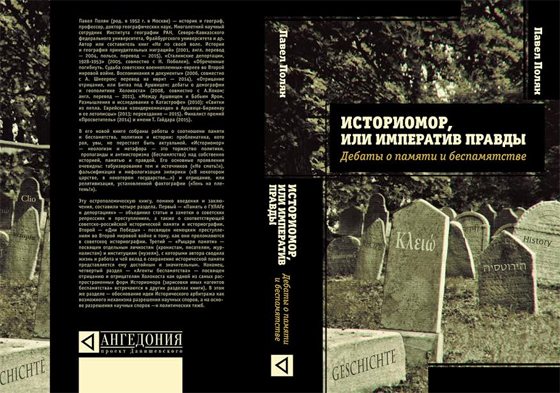
In the new book “Historiomore, or the Emperist of Truth. Debats about memory and unconsciousness ”I have collected work on the ratio of politics and history: problems, alas, does not cease to be relevant.
The concept of “historiomor” injected by me needs an explanation - neologism and metaphor. This is a triumph of politicized mythology and anti -historism over history and memory itself. Its basic manifestations are quite obvious: the tabooing of topics and sources (“Do not laugh!”), Falsification and mythologization of empiricism (“In some kingdom, in a certain state ...”) and denial or relativization of the established factography (“Shadow for the braid!”).
Along with the “historiomor” through the book, the concept of Glavpur is also the derivative of the organization “The Main Political Administration of the Soviet Army and the Navy” (abbreviated Glavpu, or, in the old fashioned way, Glavpur). In 1924-1990 This military body was simultaneously the department of the Central Committee of the Communist Party, and it was here that the ideological and propaganda doctrine of the entire Soviet state was developed, then imposed on the whole society, and not just barracks and headquarters.
In addition to the introduction and conclusion, there are four sections in the book. The first-“Memory of Gulag and Deportations”-combined articles and notes on Soviet repressions and crimes, as well as the corresponding Soviet-Russian historical memory and historiography. The second - “Victory Days” - is dedicated to German crimes in the Second World War and how they are refracted in Soviet historiography. The headquarters published by colta.ru is precisely from this section.
The third - “knights of memory” - is dedicated to individuals (chroniclers, writers, journalists) and institutions (museums), with whom the author reduced life and work and whose contribution to the preservation of historical memory seems to him worthy and significant. With four of them - Leonid Kotlyar, Tamara Lasrason, Ilzetraut Lipphardt and Masha Rolinikaite - I was honored to be familiar personally (in the same series for me - the names of the former Gulagovites of Vilnius and Leo Hurges, the former confusion of Vasily Baranov and the former prisoner of George Kholny): the whole book is dedicated to their knightly memory.
Finally, the fourth section - “agents of unconsciousness” - is dedicated to the denial of the Holocaust as one of the most common forms of historiomor (sketches of other “agents of unconsciousness”, even in the rank of existing ministers, are also found in other sections). Immediately, the justification of the idea of historical arbitration as a possible mechanism for resolving scientific disputes, and based on the resolution of scientific disputes - and legal political lawsuits.
Pavel Polyan
 © AST
© AST "We were born to make the kafka a past ... "
A. TARKOVSKY: ParaFrez of the text "Air Marsha" P. German
Glamor on Glavpur
The organizational feature of the celebration of the 70th anniversary of the Victory in 2015 was the tangible transfer of the Center for Historical and Fairment and Initiatives from the Trutty Mestsis of the Russian Organizing Committee "Victory" [1] In the newly created historical institutions, which, despite their formal public, are not such: this is the Russian Military Historical Society (RVIO) under the leadership of the Minister of Culture of the Russian Federation V.R. Medinsky and Russian Historical Society (Rio) under the leadership of the chairman of the State Duma of the Russian Federation S.E. Naryshkina, who before that headed the inglorious commission to counteract attempts to falsify history to the detriment of the interests of Russia. The status of these societies is similar to the status of those that under the king-priest were called imperial: membership fees may be gathering, but they do not live on them, judging by the Board of Trustees and Teleclames. Free societies, living on contributions and donations, and under the king were stunted, although they took on a significant job.
Between the two guests (officially created, respectively in 2013 and 2012), a peculiar separation of duties is traced. The structure of Medinsky and Rogozin - the child of the Ministry of Culture and the Ministry of Defense - is the Glavpur, launched on the parachute of the imaginary public: henceforth he is the bearer of the Glavpurovsky spirit and the guardian of the Glavpurov functions.
This is not bunistic - if we recall the ambitions of Medinsky as a minister, to finance only what is acceptable for his concepts, and, as writing on the historical topics of the author, fencing on myths and reefs with ideological opponents. Agitation and propaganda, Marcial patriotism, after 70 years a little powdered postmodern. The Holocaust is no longer denied, it is instrumentalized: after all, the murdered millions of Jews are victims of fascism, and therefore, our “allies” in the permanent struggle against neo -fascism [2] .
It’s not up to the story of factuals: it is enough not to be lazy and read the bestsellers of Medinsky himself-both his “historical” books and his official interviews to understand that he, in fact, is not needed (although he truly flashed his MOT “Rashka-Rushka”, brave!
On May 10, 2015, that is, the day after the 70th anniversary of the Victory, Medinsky spoke like this: yes, Molotov-Ribbentrop Pact of Molotov, but he delayed the war between the tall agreed sides and gave the USSR the necessary respite. And the Western allies, the president added in support of his minister, they say, they themselves were to blame - there was nothing to bother in negotiations with the USSR! Yes, and Poland, they say, is good - I bit away from Czechoslovakia after Munich shmatoks of Silesia! [3]
But now, from now on, we are already not to defend the vile alliance of two bloody bastards and executioners again, to fight one of which - under the rule of the other - the Soviet people, despite the necessary respite, laid so many lives, whether we have the right to reproach fascism or flirting with the fascism of others? ..
However, Medinsky as a Minister of Culture (what is still a mockery of this!) Tivers manage to follow the kosher of history and judge and to row directly from under the portrait of Pushkin in his ministerial office. (How is it annoying that it will not be removed for the historiomor that is performed by him and for culturophobia, but for something else.)
So, the Ministry of Culture at one time refused to issue a rental certificate to the film Hussein Erkenov “It was ordered to forget” (2014), where the episode with Haibach appears: in 1944, the NKVD troops, failed to deport the residents of the Chechen village of Haibach, burned about 700 people. The motivation for refusal: the film incites interethnic discord, and the fact of a mass murder in Haibakh is a “historical fake”.
Firstly, the minister applies testing for the fake clearly: from the authors of the movie masterpiece “Twenty-Eight Panfilovites” K. Druzhinin and A. Schalopa for the frank and exposed empirical fake were neither strictly nor weakly!
Secondly, Medinsky is cunning, because the source-lubal base is not like that. The archives have a certificate that from the aul of Haibach and its environs-and this is a high-rise and inaccessible part of Chechnya-due to suddenly the snow that had fallen, it was necessary to take out a non-transportable population. What happened to these people - we probably do not know, but not all documents about this are declassified: only after their introduction, it will be possible to talk about the degree of inaccuracy of the concept. But the evidence that there were executions during the deportation of the Chechens, and documents about this can be found in my boom of the book “Stalinsky Deportations”. As there is a document, which, most likely, should really be considered a fake, is a note by the GB Commissioner of the 3rd rank M. Gvishiani to the People's Commissar Beria with a dubious vulture: “Only for your eyes”. There are documents in the RGVA that confirm that there were executions, but they document fewer victims and not necessarily in the Galancho district, which was Haibakh. Not a word about the burning, and such an oradur does not fit well into the logic of the executioners not interested in public executioners.
The main thing is not that! No need to confuse the truth and fiction, documentary cinema and art. The author of the work of art has the right to his concept and to his metaphors and hyperboles (which, by the way, are quite represented in the logic and context of that deportation policy: “Yes, we are not cannibals, we do not shoot and do not burn them and do not throw them into gas chambers, but if the weather interferes with us, sorry and do not recover ...”).
The story with the Leviathan Andrei Zvyagintsev is charming - the film as historical as sociological. Medinsky accused the picture of incorrectness (“They don’t drink it in Russia!”), Anti-Russian conjuncturalness (“Rashka-Knight”) and in cosmopolitanism (“I did not see myself there”). He said: “But my personally my opinion: films that are not only imprisoned on criticism of the current government, but openly spat on it (this, by the way, disrespect for taxpayers), is filled with the spirit of hopelessness and meaninglessness of our existence, should not be financed at the expense of taxpayers” [4] .
The conversation about films acquires additional piquancy in the light of creative paraphrasing by Medinsky Lenin. “Of all the arts,” the minister is the scalambusil, “for us the most important is history” [5] . “History is the truth that becomes a lie. A myth is a lie that becomes true. ” This is a quote, however, not from Medinsky, but from Jean Cocteau, but Medinsky took it with an epigraph to his book “On Russian Drunk, Leni and Cruelty” (M.: Olma Media Groups, 2010).
Therefore, it is not so harmless - and not only as a figure of oral speech - his phrase sounds in one of the countless interviews: “I think that to the epic Soviet heroes - to the newlywords, and to the Panfilovs, and Zoe - we must be treated as the Church refers to the canonized saints. This is my human and civic position " [6] .
Then you understand the whole systematicity of that boorish replica on the air of “Echo of Moscow” on January 30, 2014 to Daniil Granin, who unveiled-with all the links-facts about Rom Babah for Smolny in the Blocade Leningrad (“Vienna!”) [7] , and that boorish shouting to which Medinsky on July 30, 2015 was put on the director of Garf Sergey Mironenko. It’s not that he exposed the myth of 28 heroes-Panfilovtsy (de facto, but others did it quietly for a long time), but inappropriately, loudly and, from the point of view of Medinsky, freely reminded of this exposure, placing a scan of prosecutors on the Rosarchiv’s website, another 1948, conclusions on this “life” [8] . The minister called the publication the “wordobludium” and “an attempt to wound the legend with sly, as if scientific calculations” [9] . He did not stop there on this on March 18, 2016 - as if on the eve of the expected premiere of the twenty -eight Panfilovites ordered by the Ministry of Cinema, K. Druzhinin and A. Shaliopi - shot Mironenko from the post of director of the archive!
As you understand, the systematicity of the requirements of Medinsky to build the entire line of history textbooks-from school to university-according to the pattern of a single historical and cultural standard. Systematicity and continuity: After all, back in 2004, Putin caused A.O. Chubaryana and A.N. Sakharov in the types of construction of “verticals” of single textbooks. So Medinsky could only accept this pass: “History textbooks should take into account the interests of the state”! [10]
And the interests of history? Who will take into account or defend them?
The historical truth, if it contradicts state policy or propaganda, the Russian state is not interested in. He is interested in his positive myth without restrictions on credibility and cynicism.
History turns out to be a serf girl, given to the hostess of mythology and concubines to the authorities. Historians, in this harem, are offered an unenviable role of eunuchs, with a sweet smile of vases with waxed fruits and diligently leading glamor to Glavpur.
Memory expropriation
But back to the glorification of the 70th anniversary of Victory.
The celebration of the 70th anniversary of the Victory in 2015 turned out to be a number of innovations.
First of all, this is expropriation and implementation on Red Square of one excellent civil initiative - the Immortal Regiment campaign, when people go to demonstrate with portraits of their loved ones who died in the war or who died after it. To come up with this to the Kremlin and RVIO weaken, but to take away - easily. In 2012, three television journalists from Tomsk - Sergey Lapenkov, Sergey Kolotovkin and Igor Dmitriev, employees of the independent television company TS2 invented. From year to year, their idea swelled with massiveness and popularity until finally came to the Kremlin. And as she became the Kremlin brand, was immediately vulgarized by portraits of the interlocutor of Ribbentrop and the last Russian tsar, as well as the creation of the All -Russian Movement of the same name, for the congress in Vyazma in June 2015, Tomsk journalists were not invited [11] .
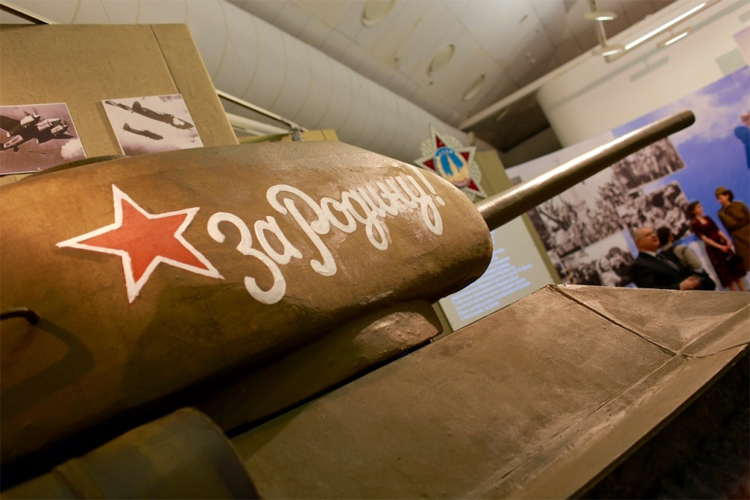
The limits of creativity and capabilities of the RVIO was demonstrated by the exhibition "Remember: the world saved the Soviet soldier!" In the new arena with her monstrous tanks from papier-mash and mummers and soldiers on the Vernissage Day, which could well appear under Stalin, and Khrushchev, and with Brezhnev. What, however, could not appear under Brezhnev - this is a neutral mention of Soviet prisoners of war and the Holocaust. But even that: nothing more than mention-a crematorium from papier-mash does not make an impression. But if this is an answer to those who attempted to the laurels of Soviet weapons and the merits in achieving victory, then loud, but not easy: it was much more effective to show not only themselves, but also the merits of other “applicants” - only such a background could become convincing.
Rio Naryshkina and Shakhrai strives for somewhat greater academicity: the core of his physical members - director of archives, museums, institutes and libraries. Financial support is clearly older. On the 70th anniversary of the Victory, it was responded with a refined intellectual product-coordination in Beijing in November 2014, an international conference dedicated to the 70th anniversary of the Cairo and Tehran conferences: “1943: the formation of the foundations of post-war world order”.
By the way, in St. Petersburg, in the State Museum of Political History of Russia, and in Moscow, in the RGASPI, two more exhibitions dedicated to Soviet prisoners of war were held. Exhibition in the RGASPI "Soviet prisoners of war: The feat and the tragedy ”is pointed on the issues of resistance in stalags and on the individual fate of the son of Stalin - Yakov Dzhugashvili: you can argue with these accents, but you can not help but welcome the exhibition itself.
Consider the archivists The first collection of archival documents about Soviet prisoners of war is the book “Red Army in German hands. Documents on the captivity, repatriation and rehabilitation of Soviet soldiers of World War II ”, compiled by R. Overmans, A. Hilger and writing these lines [12] , they would have more reasons for exposition inspiration.
Glavpur on Glamur
Civil society, alas, contrasted the officialdom this time: neither an exhibition nor a conference - but only a barely smoldering discussion in the media. Moreover, this systematically occupies, it seems, only “Echo of Moscow”, “Radio Liberty” and “New Gazeta”. Once again, the initiative was given exclusively in official hands.
True, several significant books have published, although more could have been published.
The Rosspan series "Man on the sidelines of war" (11 volumes of diaries and memoirs of prisoners of war, Ostarbeters, residents of the occupied regions), alas, finally ordered to live long. In her plans, from the very beginning, along with other ego-documents, the magnificent “Ostarbaiterskaya” prose Vitaly Semin (“Breight OST ” and “Dam”), which had not been reprinted for many decades, stood. The AST publishing house (Elena Shubina), releasing this historical injustice, released such volumes and opening a new series on the edge of the war. In the same series, the amazing diaries of Shura Mikhaleva from Kursk came out (“Where are you, my relatives? ..” Ostarbetera's diary) - a kind of report on the unconditional surrender of the tragedy of slave labor in Valthershausen in the enemy before youth and love! A remarkable compulsory work was demonstrated by a team of employees of the newspaper Arguments and Facts, which issued the Children's Book of War. Diaries 1941-1945 ". In total, there are 35 diaries distributed by 5 chapters: blockade of Leningrad, ghetto and concentration camps, rear, osterbiators and occupation. This book was deservedly recognized as the "Book of the Year - 2015" [13] .
Prisoners of war boast of only the catalog of the exhibition, which opened in St. Petersburg, which was issued by the Historical Memory Foundation together with the Berlin organization “ Kontakte -Kontakta” during financial assistance of the German Federal Foundation “Memory, Responsibility and Future”. By the way, the Historical Memory Foundation itself funded the book by A. Bakanov ““ Neither katsapa, nor the Jew, nor Lyah. ” The national issue in the ideology of the organization of Ukrainian nationalists, 1929-1945, published by Algorithm in 2014 [14] .
Despite the exhibitions about prisoners of war and books about Ostarbeters, which conducted the celebration of the 70th anniversary of the Victory, the authorities again forgot about them, as well as in general about the humanitarian aspects of the war. In the 12th volume "The Great Patriotic War. 1941—1945», выпущенном Институтом военной истории Министерства обороны РФ, миллионам остарбайтеров, как, впрочем, и миллионам еврейских жертв, достались лишь единичные упоминания во вводной статье к тому 10, озаглавленной «Государство и общество в годы Великой Отечественной войны: основные направления исследований»! [15] Коллеги ссылаются и на мои работы, но это не радует, поскольку усилия историков, занимавшихся теми, кто был «на обочине войны», в очередной раз оказались невостребованными в российской историографии.
Тем самым сохранена главпуровская стратагема — установка на искусственное и несправедливое идеологическое противостояние между ветеранами 1-го сорта (уцелевшими красноармейцами, воевавшими на полях сражений и не попавшими в плен) и всеми прочими — эвакуированными, жителями тыла (это 2-й сорт, их заслуги не оспариваются) и теми, кто оказался под оккупацией, был угнан в Германию или взят в плен (3-й сорт). Это противостояние — искусственное, оно — рудимент внутренней холодной войны, которую ГлавПУР вел со своими неуважаемыми воображаемыми врагами — «предателями», «пособниками», «подстилками» и прочими «недобитками». Противостояние это мобилизовывало социальную агрессию и разрушало основу восстановления взаимоуважения в стране и консолидации доверия в обществе. Так что неудивительно, что и спустя 70 лет и военнопленные, и остарбайтеры, и ставшие жертвами геноцида евреи снова оказалась даже не на обочине, а на невидимой стороне войны и Победы.
Не пора ли уже — хотя бы постфактум (в живых-то уже нет почти никого!) — отменить эту пересортицу и сделать невидимок заметными?
На сайте РВИО можно прочесть, что 14 декабря 2013 года в городе Гагарине открыт памятник убитым русским военнопленным… периода войны с Наполеоном! Спустя 201 год! Недавно в Кракове попытались установить памятник российским военнопленным периода русско-польской войны 1919—1920 гг. — но Польша запретила (что, конечно, и в самом деле форменные безобразие и глупость).
Мединский метал громы и молнии и уже присмотрел запретителям местечко пожарче в нижнем кругу ада [16] .
А где же, товарищ министр, памятник советским военнопленным периода Второй мировой или Великой Отечественной — тем самым героям и жертвам одновременно?! Ведь 201 год с окончания их плена будет в 2146 году!
Кладбищенские памятники советским военнопленным имеются в большом числе там, где их хоронили, — в Германии и Польше. В этих же странах (в частности, в Ламбиновице) немало мемориалов открыто на месте бывших шталагов и концлагерей, и советские военнопленные — определенно важнейшие их герои (Цайтхайн, Заксенхаузен, Бухенвальд, Берген-Бельзен, Зенне и многие другие). В памятные даты сюда приезжают президенты и премьер-министры и говорят о трагедийности их судьбы.
В польском Ламбиновице (Ламсдорфе) находится единственный в мире Музей истории военного плена. Монументальный памятник советским военнопленным в Саласпилсе под Ригой — едва ли не единственный на всем постсоветском пространстве. Можно подумать, что красноармейцев не брали в плен и не убивали на теперешней российской территории! Еще как брали — сотнями тысяч, и еще как убивали, особенно комиссаров и евреев!
В Смоленске и Рославле находились гигантские дулаги для военнопленных; эти же города, а отчасти и те же дулаги были и важными узлами при отправке на запад остарбайтеров. Не пора ли почтить и их память и поставить им памятники в этих городах?
Не пора ли спустя столько лет уже перестать рвать Победу из рук друг у друга?!
Она не орден и не пряник, она не знамя и не приговор.
Уже не война и еще не мир, она уже этим и потому общая и на всех — от конюха до маршала и от остовки до гвардейца — одна!
PS Лейтенант Александр Аронович Печерский — советский военнопленный-еврей. Оказавшись 22 сентября 1943 года в лагере смерти Собибор, он разработал и уже 14 октября осуществил восстание, единственное успешное восстание в истории всех таких лагерей. Казалось бы: герой из героев! Но Родина смотрела тогда на это иначе и отправила его в штрафбат, но он выжил и там и умер в своей ростовской постели в 1990 году.
Именем Александра Печерского уже давно была названа улица в Цфате — священном городе мудрецов и художников на севере Израиля. В 2007 году в Ростове-на-Дону на доме, где он жил, была открыта мемориальная доска, а в 2012 году в Тель-Авиве — памятник Печерскому. А в 2015 году улица Печерского появилась наконец и в Ростове-на-Дону — спустя 70 с лишним лет после героического восстания.
Героического? Но никакие инициативы, никакие усилия, довольно мощные и настойчивые сами по себе [17] , о присвоении этому еврею — пусть посмертно и пусть с таким опозданием! — звания Героя (сначала Советского Союза, а затем и России) так ничем и не увенчались.
Если не считать, конечно, ордена Мужества, срочно выписанного Печерскому к 27 января 2016 года — Международному дню памяти жертв Холокоста. Орден, конечно, не почетная грамота, но и не Звезда Героя [18] . Но и его употребили исключительно в качестве пиар-сопровождения визита Владимира Мединского в Собибор. Трудно было найти более некошерную фигуру для этого театрального — а по отношению к Печерскому и его родственникам даже оскорбительного — жеста.
И в то же время фигуру наиболее симптоматичную — современное лицо «главпуризма».
Историомор, или Императив правды. Дебаты о памяти и беспамятстве / П. Полян. — Москва: Издательство АСТ, 2016. — 624 с. (Ангедония. Проект Данишевского)
[1] См.: Полян П. Юбилей a la Glavpour ? Российский организационный комитет «Победа» как естественная монополия // Неприкосновенный запас. 2005. № 2—3. С. 162—169.
[2] Кстати, то же самое делают и «оппоненты» этой дискуссии. Еще при президенте Ющенко, глорифицировавшем кровавых палачей и военных преступников Бандеру и Шухевича, Рада попыталась принять закон, впрягающий в одну упряжь Холокост и Голодомор — через наказуемость их отрицания. Если совместные российско-украинские попытки изучить совместно Голодомор и привели к рассекречиванию и изданию многих документов, то для совместного исследования УПА и УНА на базе документов обеих стран так много толерантности уже не нашлось.
[4] Владимир Мединский: «Левиафан» запредельно конъюнктурен // Известия. 2015. 15 января. В сети здесь .
[5] Встреча с В. Мединским в редакции «Российской газеты» 27 августа 2015 г. В сети здесь .
[6] Там же.
[7] У Мединского, обвинившего Даниила Гранина во вранье, требуют извинений // Новая газета. 2014. 11 февраля. В сети здесь . Мединскому пришлось звонить Гранину и объясняться: оправдывался он, в частности, тем, что имя самого Гранина в его интервью не звучало. Jesuitism!
[8] См. публикацию «Справки-доклада главного военного прокурора Н. Афанасьева “О 28 панфиловцах”» от 10 мая 1948 г. (ГАРФ. Ф. 8131) на сайте Росархива .
[9] Мединский призвал Госархив отказаться от оценок после истории с панфиловцами // Lenta.ru . 2015. 30 июля. В сети здесь .
[10] См.: Фашизм для восьмого класса // Свобода. 2015. 19 ноября. В сети здесь .
[12] Rotarmisten in deutscher Hand. Dokumente zu Gefangenschaft, Repatriierung und Rehabilitierung sowjetischer Soldaten des Zweiten Weltkrieges / Herausgegeben von Rüdiger Overmans, Andreas Hilger, Pavel Polian in Zusammenarbeit mit Reinhard Otto und Christian Kretschmer. Padeborn — München — Wien — Zürich: Verlag Ferdinand Schöning , 2012. 956 S . Сборник вышел в 2012 году по-немецки и ждет своего перевода и издания на русском.
[13] Но у книги странная потребительская судьба: она не продается, а только дарится. Каким бы ни был список адресатов дарения, само по себе это — досаднейшая нелепость, отрезающая книгу от читателя!
[14] Выбор издательства сделан, к сожалению, без особой привередливости: «Алгоритм» специфичен своей всеядностью, выражающейся, в частности, склонностью и к националистическим теориям, и к приукрашиванию советских спецслужб.
[15] Государство, общество и война / Великая Отечественная война 1941—1945 годов. В 12 тт. Т. 10. — М.: Кучково поле. 2014. С. 10—37. Авторство не обозначено: в каждом томе приводится лишь сводный список (не то братская могила, не то свальный грех!), так что идентифицировать единство автора и текста невозможно.
[17] См.: Полян П. Политакция «Печерский»: холостой выстрел // Заметки по еврейской истории. 2013. № 4. В сети здесь .
[18] Из статута ордена: «Орденом Мужества награждаются граждане за самоотверженность, мужество и отвагу, проявленные при спасении людей, охране общественного порядка, в борьбе с преступностью, во время стихийных бедствий, пожаров, катастроф и других чрезвычайных обстоятельств, а также за смелые и решительные действия, совершенные при исполнении воинского, гражданского или служебного долга в условиях, сопряженных с риском для жизни».