
Translated material
Lithuania returned the obligatory draft in the army on an ongoing basis
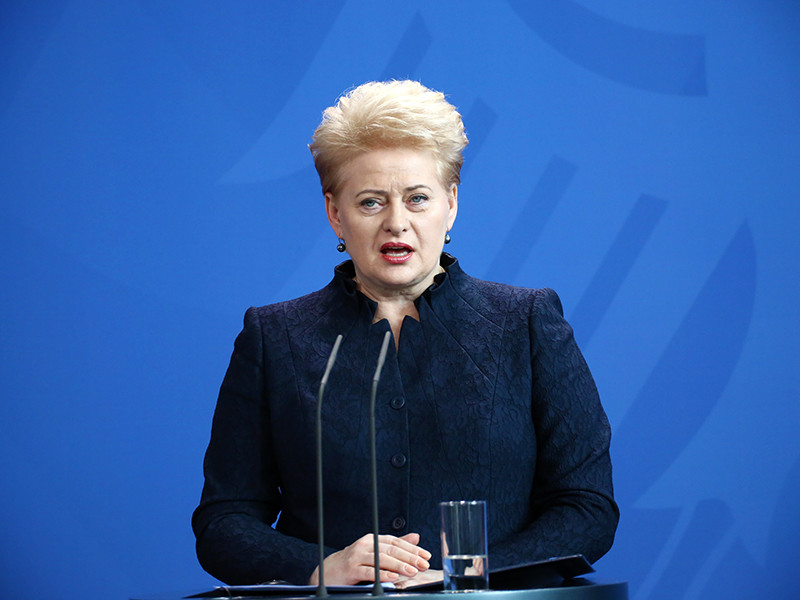
Lithuania President Dalya Grybauskaite signed the law on the introduction of universal military service on an ongoing basis, as well as a mixed army model. This was reported by the website of the office of the head of the Lithuanian Republic.
The law will enter into force on September 1 of this year. According to the office, it will allow you to replenish the regular forces of the army and form the necessary reserve.
According to the report, it is planned to attract from 3.5 to four thousand people annually in military service. Currently, more than 3.8 thousand volunteers have already expressed desire to serve.
The report notes that "an obligatory call for army service, a mixed army model, when the army consists of conscripts and professionals, creates a closer connection between society and the military." "This helps to better understand the need for a willingness to defend, which is the most effective means of deterrence," the report said.
Lithuania refused to call for military service in 2008 and moved to a professional army. However, last spring, the mandatory call was temporarily returned . As reported, for a period of five years. The explanatory note to the bill stated that the return of the draft was dictated by the geopolitical situation, the need to strengthen Lithuania’s defense, as well as threats of national security.
It was reported that, according to preliminary estimates, only in 2015, the transition to compulsory military service can cost the country's budget in 30-35 million euros.
In addition, Lithuanian Prime Minister Algirdas Butkyavichus reported that the resumption of the universal military draft caused a surge in emigration among young men. “This very much influenced the youth. Some, apparently, decided that a certain period of time was better to work abroad,” he said in an interview with Lithuanian radio .
It was noted that in 2015, 46.5 thousand people declared departure from Lithuania. Compared to 2014, the number of emigrants increased by 9.9 thousand people.
Recall that after the attachment of Crimea to Russia, the Baltic states, which consider the actions of the Russian Federation annexation, repeatedly expressed fears about the allegedly available Russian threat. Senior Western officials warned that Russia could prepare an attack on the Baltic countries.
In Moscow, the presence of such plans is categorically denied. Nevertheless, the Baltic and other states neighboring the Russian Federation take the necessary, as they believe, measures to strengthen their defense: they place NATO quickly deployment forces in their territories, and conduct regular exercises . In addition, other measures are taken. Thus, the Estonian authorities announced their intention to isolate the wall from the "aggressive" Russia.
Of all the three Baltic countries, Lithuania currently occupies the most anti -Russian position and takes the most serious measures against Russia. It was Vilnius who openly admitted that he supplies the elements of combat weapons to Ukraine, reminds of "Gazeta.ru" .