
Translated material
The IOC summit approved the lack of access to Russian athletes to participate in the Olympics
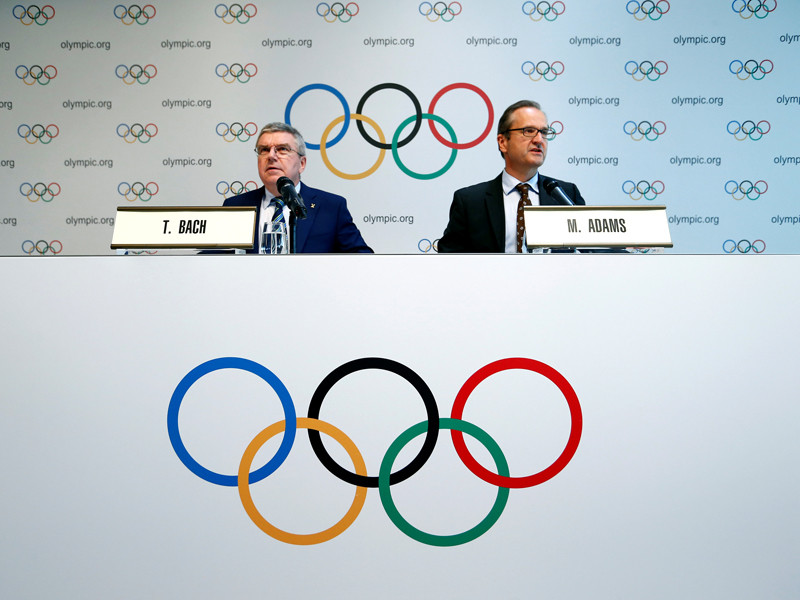
The leaders of the International Olympic Committee (IOC) and the leading international sports federations on Tuesday took part in the Olympic summit in Lausanne, which was evaluated by the unanimous decision of the International Association of athletics federations (IAAF) to not allow the Russian athletic team to participate in the 2016 Games in Rio de Janeiro.
It was previously stated that the IOC executive committee completely respects, welcomes and supports the IAAF position.
On Tuesday, this was once again confirmed by the head of the IOC Thomas Bach during a press conference following the results of the summit. Its broadcast was carried out in periscope.tv .
He made it clear that in Rio de Janeiro there will be no Russian athletes. The issue of participation in the games of certain representatives of these disciplines is entirely in the competence of IAAF, which had previously made its decision.
- Russia requires clarification about the solutions of the IOC and IAAF for athletes
- Zhirinovsky suggested holding his Olympics in Russia
- Alexander Zhukov: There is no talk of the boycott of the Olympic Games
As for the rest of the sports, the IOC offers the relevant international federations to decide whether to let Russian athletes into the Olympics. At the same time, their decisions will be met with no less respect, as in the case of IAAF.
According to him, all the persons involved in doping affairs, including coaches and doctors, will not be allowed to participate in the 2016 Olympics.
He also noted that IAAF will conduct an individual check of each athlete from Russia and Kenya and that passed it will be able to receive admission to the Olympics on an individual basis.
“There are very serious doubts about the presumption of the innocence of athletes from countries to which WADA has claims,” Bach quotes Match TV .
At the same time, the IOC did not consider the issue of disqualification due to the doping of the Russian Olympic Committee (OKR). This means that the rest of the athletes, in addition to athletes, will be able to freely perform at games under the Russian flag.
"The membership of the OCD in the IOC is not suspended. The report of the International Athletics Association clearly states that the Russian Olympic Committee played an important role in understanding the difficult situation with doping in Russian sports," Bach said.
At the same time, the head of the IOC noted the following incident, which has yet to be discussed with IAAF: the All -Russian federation of athletics (WFLA) is a detached member of the IAAF, but at the same time the athletes of the Russian Federation are part of the Olympic team and, in the case of individual admission, must be under their flag, as they represent the Olympic Committee of Russia, which are not suspended by the IOC.
Declating of the #olympsummit https://t.co/nvj3k2pmka pic.twitter.com/epcytcwupl
- IOC Media (@iocMedia) June 21, 2016
Bach also called speculation rumors about the discussion of the fate of Russian athletes at the Games with President Vladimir Putin. “All assumptions that I was discussing the agenda with Putin are causing me a smile,” said the head of the IOC.
Bach also commented on the charges against Russia about egregious doping violations that allegedly took place in the 2014 Winter Olympic Games in Sochi with state support.
"All information about the violations at the games in Sochi is just rumors, you need to wait for the WADA report. I will not speculate on this topic," he said.
Tatyana Lebedeva called the verdict of the IOC "slippery"
The International Association of Athletics Federations and the International Olympic Committee shift to each other responsibility in the issue of performing Russian athletes at the Olympic Games in Rio de Janeiro.
This opinion was expressed by the Olympic champion in long jumps Tatyana Lebedev.
“Bach made it clear that the Olympic competitions are held under the auspices of the IOC, so the national Olympic committees form national teams and put them up for the Olympics,” Lebedeva said in an interview with TASS. “On the other hand, IAAF can be allowed to play at the Games in a private order. That is, there are a feeling of shifting responsibility to each other. You have to look at lawyers from different points The question is, to whom athletes to file claims. "
“If the OCR takes responsibility in the plan that the athletes are“ clean ”and there are no complaints about them, then why don’t they speak at the Olympics under the flag of Russia as part of our national team. Today's statement looks slippery: not a federation, but the Olympic Committee puts a team for games. That is, the international federation fades into the background,” she added.
The summit of the last hope
The IOC summit in Lausanne was the last hope for Russian athletes to go to the Olympics without legal proceedings and claims to the sports arbitration court (CAS).
There was a possibility that the IOC at a meeting in Lausanne could adopt its resolution and still allow the Russian national athletics team for games-2016 contrary to the verdict of IAAF, since the competition does not fall under the jurisdiction of IAAF.
At the same time, during the meeting of the IOC, the question of the advisability of participating in the upcoming summer Olympics of all Russian athletes could be raised. The Minister of Sports Vitaly Mutko did not rule out such a development of events.
As announced in the press release on the eve of the summit, Lausanne will consider the situation with countries in which the National Anti-Doping Organization was recognized as not relevant to the Code of the World Anti-Doping Agency (WADA) for the reasons for the ineffective functioning of the anti-doping system.
The president of the Russian Olympic Committee, a member of the IOC Alexander Zhukov, who tried to convince his colleagues of the need to allow all the "pure" Russian athletes to participate in the games of all the "pure" athletes.
At the same time, the Olympic summit, despite its representative staff, does not make decisions that would have legal force. This is a kind of discussion club, in which the further development of the Olympic movement is discussed and recommendations are made on a particular issue.