
Translated material
The Peruvians rejected the "strong hand"
Latin America turns away from populism
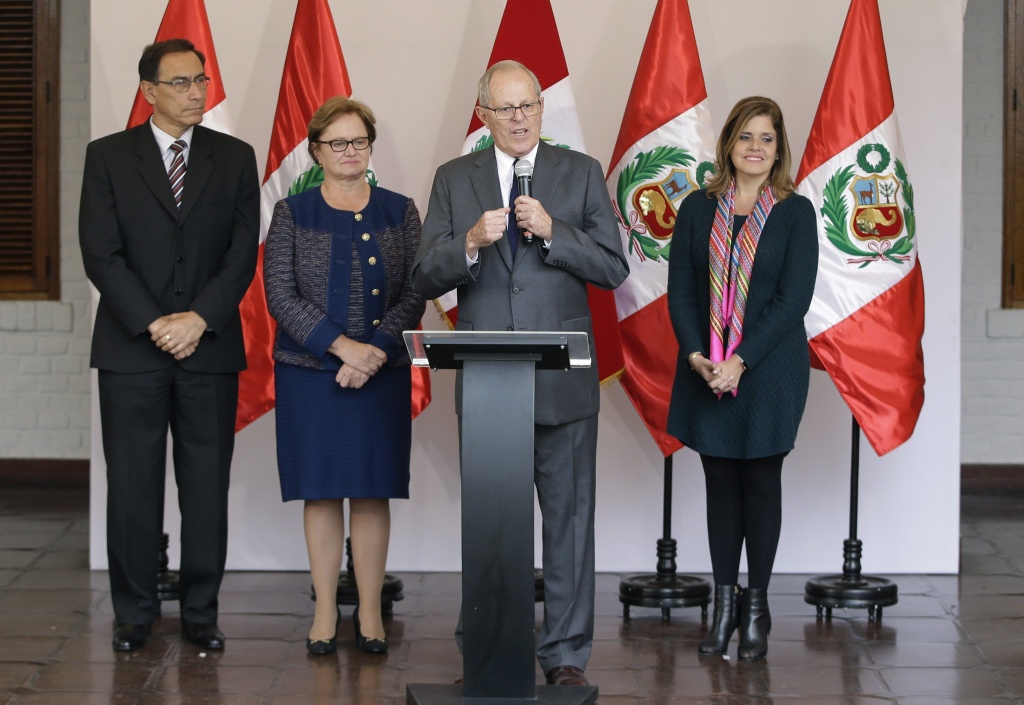
Pedro Pablo Kuchinski won the presidential election in Peru
Presidential elections in Peru caused a powerful reaction to the Latin American continent. Famous Latin American intellectuals and among them - the Laureate of the Nobel Prize in Literature Mario Vargas Llos - welcomed the victory in the second round of the election of economist Pedro Pablo Kuchinsky, who was opposed by Keiko Fuhimory, the daughter of former president of the country Alberto Fuhimory.
“The victory of Kuchinski saved the country from the disaster,” says Lesser. -The return to power of the mafia, which, during the reign of Fuhimory, robbed people to torture and killed them, would mean the appearance of the first on the continent of the drug-state.
The choice of the people
Throughout the election campaign, 41-year-old Keiko Fuhimory was considered a favorite, whose father is now serving 25-year imprisonment on charges of large-scale corruption, murders, forced mass sterilization of thousands of Peruvian women from Indian tribes and D other crimes.
Keiko inherited the political ambitions of her father and his style of government. Its main point of the program was the fight against crime and restoring order in the country. Russian Latin-American experts even saw some similar features in the policy of Peru and Russia, if not in modern, then the end of the 1990s. They decided that the Peruvians, as well as the Russians, missed a "strong hand that could restore order in the country." “Keiko Fuhimory plays what the people think now: maybe it would be better to have a tough hand in corruption, abuse in an unhealthy criminal situation in the country,” says Vladimir Davydov, director of the Latin America Institute.
However, the Peruvians made a different choice. Perhaps the fear of the return of the authoritarian policy of Father Keiko with all the classic features of Latin American populism: charismatic personality, a strong hand in the fight against crime, but complete contempt for the political elite and disrespect for economic laws.
In addition, on the eve of the second round of the presidential election, it became known that the US Office for Combating Drugs (DEA) began investigating the large -scale laundering of money by the leader and financier of the Fuchimori party “Narodnaya Strength” Joaquin Ramirez, and in the warehouse belonging to Keiko’s brother, Kenji Fuhimory Congressman, one hundred kilograms of cocaine were discovered.
However, the family of the former dictator does not intend to say goodbye to the authorities. She has enough resources to continue the struggle. Fuhimory was accused of stole $ 6 billion from the treasury, but only $ 180 million were still found of them.
Parting with chavism
But experts consider the results of the Peruvian elections in a wider context. “A populist wave on the continent, which rose after the appearance of Hugo Chavez in Venezuela, went back,” says NT the famous Peruvian political scientist and journalist Alvaro Vargas Llos (he is the son of Mario Vargas Llosa). - Now the region is moving to a more liberal, legalist development model. The changes that are now in these countries should lead to the emergence of a model with stronger and morally pure state institutions and a more liberal socio-economic policy. ”
The elections in Peru were confirmation of these words. They were won by a 77-year-old economist, a former investment banker, a former employee of the World Bank, who occupies the legal position, former Prime Minister Pedro Pablo Kuchinski. An active supporter of economic reforms, he intends to create a qualified government that could continue the country's economic growth that has been ongoing for two decades, but at the same time save it from corruption, embezzlement and rampant populism.
At the same time, Kuchinski also declared his fundamental position regarding the crushing of the left regime of Venezuela. “The Venezuelan opposition won the parliamentary elections, but the Maduro government now inserts all kinds of sticks into the wheels, in Venezuela hundreds of political prisoners,” said Kuchinsky after his election. “We cannot allow this in Latin America of the 21st century.”
“A populist wave on the continent, which rose after the appearance of Hugo Chavez in Venezuela, went back,” says NT the famous Peruvian political scientist and journalist Alvaro Vargas Llos (he is the son of Mario Vargas Llosa). - Now the region is moving to a more liberal, legalist development model "
However, the country remains polarized. Kuchinski achieved victory with a difference of only 0.3% of the vote. The “folk power” of Fuhimory remains one of the strongest parties in the country. After the first round of elections in May, she received 73 chairs in a 130-seater Peruvian parliament, and the Kuchinski party was only 18. In addition, the alleged drug dealer Kenji Fuhimory, who wants to put his candidacy in the 2021 elections, also announced his ambitions.
Photo: Martin Mejia/Tass