
Translated material
Memory. Yuri Kondratyuk
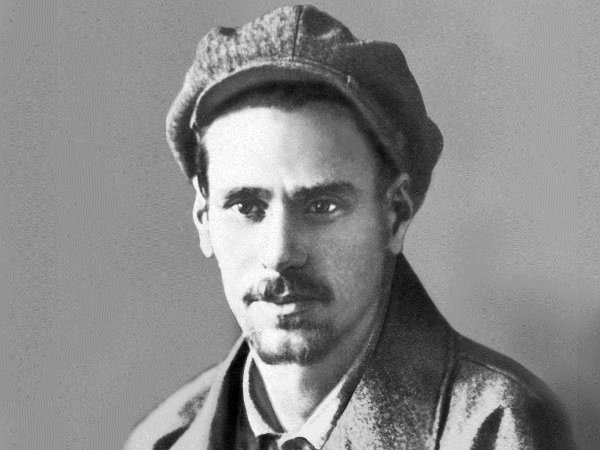
On June 21, 1897, Yuri Kondratyuk was born, one of the founders of astronautics.
Personal business
Yuri Vasilievich Kondratyuk (real name Alexander Ignatievich Sharge, 1897-1942) was born in Ukrainian Poltava. His mother was a Russified German, Baroness Lyudmila Shlippenbach, lived in Kyiv before marriage, taught at the Kiev-Podolsky female gymnasium. I also met a future husband, then a student at the Physics and Mathematics Faculty of Kyiv University Ignatius Shargeem. After Sharge, a Jew by nationality, went into Catholicism, in January 1897 they got married. However, a year after Alexander’s birth, his mother developed a mental illness, and until the end of her days she was in the hospital. The father of the future scientist left for Germany at the same time to continue his studies, in 1910 he died suddenly. The boy was raised by a grandmother.
In 1910-1916, Alexander Sharge studied at the Poltava male gymnasium, graduated from it with a silver medal. In 1916 he entered the Petrograd Polytechnic Institute. However, it was soon enrolled in the school of warrant officers, and at its end in the spring of 1917 was mobilized to the front. In March 1918, after the signing of the Brest world, according to which Soviet Russia left the war, was demobilized and went to his homeland to Poltava.
He became interested in the idea of flying to other planets. The university course of mechanics, physics and chemistry independently went on his own and prepared the manuscript “Those who will read to build”, in which, regardless of Tsiolkovsky, he deduced the main equation of the rocket movement. There he also brought a scheme for a four-speed rocket on oxygen-hydrogen fuel, paraboloidal nozzles and other ideas. In particular, he proposed a method of vertical take -off of the rocket from the ground. Predicted the use of the atmosphere of planets to extinguish the speed of a spaceship sitting on the surface. Finally, he proposed to reach the surface of the moon not directly, but first to bring the spaceship to its orbit, from which the runway will then separate.
In 1919, he was mobilized into the army of Denikin, but deserted from it, came to relatives in the Ukrainian city of Smela, where he got a railway worker. In 1921, fearing repressions due to service in the tsarist army, he changed his documents, becoming Yuri Vasilyevich Kondratyuk.
In 1925 he moved to the Krasnodar Territory, was a mechanic on a bread elevator. Then he sent his new work to Glavnauk called "On Interplanetary Travels." Despite the positive feedback, the manuscript was not published, but its author was invited to Novosibirsk to work in the design office of a bakery product.
There Kondratyuk took part in the construction of elevators. In 1930, in Altai, in the city of Kamen-on-Obi, according to the project and under the leadership of the inventor, the Mastodont elevator was built-the largest wooden grain storage in the world, designed for 13,000 tons. The construction in the conditions of the then deficiency was built without a single nail.
Soon after the completion of the construction of Kondratyuk, together with some other bakery officers, they arrested, accusing the wrecking. The accusation considered that built without nails and even without the drawing “Mastodont” would not withstand a huge amount of grain and fall apart, spoiling food.
The inventor was condemned to three years of camps, but instead they sent to the Novosibirsk special bureau No. 14 for prisoners-engineers, where he designed coal enterprises.
After liberation, he worked on the creation of powerful wind power plants. In 1933-1934 - at the branch of the Institute of Promoenerge in Kharkov. In 1934, he created the project of the largest in the world of the chickenpox "Crimea VES" at 12 MW. She had to be built on Mount Ai-Petri. In 1937, the VES foundation was flooded, but a year later the construction was turned off. The rotating 165-meter mast of the power plant became the prototype of the Ostankino television tower, which was designed by colleague Kondratyuk under the project Nikolai Nikitin.
Subsequently, the scientist was engaged in the design of winding stations of relatively small size. In the summer of 1941, when his experienced wind station was built near Moscow, the war began. In July, the inventor signed up for the People’s militia.
He died on February 25, 1942 during the defense of a bridgehead on the shore of Oka near the village of Krivtsovo, Kaluga Region. He was buried in a mass grave.
Kondratyuk had no children, he lived a civil marriage with Galina Pletneva, whom he wrote from the front to his death.
What is famous
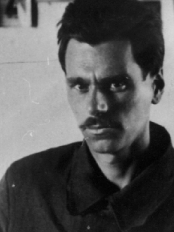 Yuri Kondratyuk. Photo: academ.info
Inventor-school, one of the founders of astronautics. I calculated the optimal flight path of a spacecraft to the moon. NASA used these calculations in the Apollo lunar program, and the trajectory proposed by the scientist was subsequently called the Kondratyuk highway.
He invented and described a four -speed rocket, combustion chamber with a chess and other arrangement of nozzles, considered the possibility of using the energy of the Sun to power spacecraft, as well as the placement of large mirrors in the near -Earth orbit to illuminate the earth's surface.
What you need to know about
For a long time, the name Kondratyuk was unknown in the country: he was the author of only two books on astronautics published by a small circulation at his own expense. However, the United States became interested in his calculations. Scientist George Lowe, involved in the lunar program of NASA, recalled: “We found a small inconspicuous book published in Russia immediately after the revolution. Its author, Yuri Kondratyuk, substantiated and calculated the energy profitability of landing on the moon according to the scheme: a flight to the orbit of the moon - a start to the moon from the orbit - a return to orbit and a docking with the main ship - flight to Earth. " These calculations were confirmed during the first and subsequent flights of American astronauts to the moon.
Neil Armstrong, first stepping on the lunar surface, came to Novosibirsk. From there, he took with him a handful of land taken by the house where the Soviet scientist lived. Today in this house is the Kondratyuk Museum.
Direct speech
About flights to other planets (“Those who will read to build”, 1919): “It is profitable to do this: initially send a base with reserves from the ground, but without people ... and then send a projectile with people; Having flown into the base, they take the right and fly further, and the base remains to fly around the earth. On the way back, reserves are again taken on it and return to the ground. This method is convenient in that, sending the main part without people, we are not constrained in the amount of acceleration and we can even use just a gun. ”
About the case of life and about Tsiolkovsky (“Wintering of interplanetary spaces”, 1929): “The real work in its main parts was written in 1916, after which it was subjected to additions and radical processing three times. The author hopes that he managed to present the task of conquering the solar system not in the form of theoretical foundations ... but in the form of a project, although not a detailed, but already with specific numbers, the implementation of which is quite possible ... <...> about the existence of ING on the same topic of labor. The author recognized Tsiolkovsky only subsequently ... At the same time, I was convinced of the priority of ING. Tsiolkovsky in resolving many basic issues. <...> [however] sometimes the same theoretical provisions and formulas, only slightly illuminated, give different lighting and the whole issue. ”
About women (familiar to the scientist Olga Gorchakova): “He treated women with great respect, did not tolerate vulgar conversations and jokes. Once, in the presence of women, one respected non -young engineer allowed himself to read poetry of free content - in Latin. None of the women understood anything, but Yuri Vasilievich Latin knew, he changed his face, went up to the engineer and said: "For daring to say now in the presence of women, they hit the physiognomy. Get out of here immediately!" We were numb, no one suspected that he was capable of such an act - he was peaceful, meek and soft. ”
6 facts about Yuri Kondratyuk
- The mother of the inventor Lyudmila Schlippenbach belonged to the old Swedish family. Alexander Pushkin recalled her ancestor in the Poltava poem: “Fit -baked squads, interrupting, falling to dust. Rosen leaves through the dramas, an ardent slapenbach surrenders. "
- For the first time I thought about the development of space space at sixteen years old, after reading the novel by Berngard Kellerman Tunnel. The book talked about the underwater tunnel leading from the United States to Europe. The gymnasium student began to reflect on punching a deep mine for the study of the bowels of the Earth and on flight beyond its limits. The second idea seemed more realistic to him.
- Changed the name due to chance. In 1921, in Kyiv, his stepmother Elena Kareeva (Goberman) lived with her daughter, the half -sister of the scientist Nina Sharmgea. When their acquaintance, a friend Yuri Vasilievich Kondratyuk, died, the stepmother persuaded his relatives to transfer the documents of the deceased for her cursory stepson. In 1977, Nina Shargei confirmed this in writing.
- Kondratyuk proposed a scheme for the output of a spacecraft in a spiral unfolding around the globe. Today this scheme is adopted all over the world.
- Kondratyuk suggested preparing astronauts according to a special program, as well as use a gateway to enter outdoor space and the idea of a space spacesuit.
- The scientist had no housing all his life, he wandered around the rented apartments.
Materials about Yuri Kondratyuk:
Biography on the website "Academy of News"
Help on the website of "Inventions of Russia"