
Translated material
They shaken, but extended
Contrary to the efforts of the pro -Russian lobby of the EU sanctions against Moscow, they will extend for another six months
Permanent representatives of the EU countries at a meeting in Brussels on June 21 agreed on the extension of another six months of sanctions imposed by the European Union against Russia in connection with the conflict in the east of Ukraine. A little earlier, an extension was announced for a year, until June 23, 2017, the so -called "Crimean" sanctions imposed after Russia's annexation in the spring of 2014. On the issue of sanctions "today there are fewer contradictions than you think," the head of the European Council Donald Tusk said the other day, speaking at Helsinki. However, the evidence that there are enough such contradictions and the pro -Russian lobby in the European Union is very active.
This is also confirmed by the statement of the same Donald Tusk that within the framework of one of the EU summits in October, a special meeting will be devoted to discussion of sanctions and relations with Russia as a whole. However, the current decision on the extension of sanctions will almost certainly be not revised, although formally it should still be approved in the coming days to approve the Council of Foreign Affairs of the EU countries.
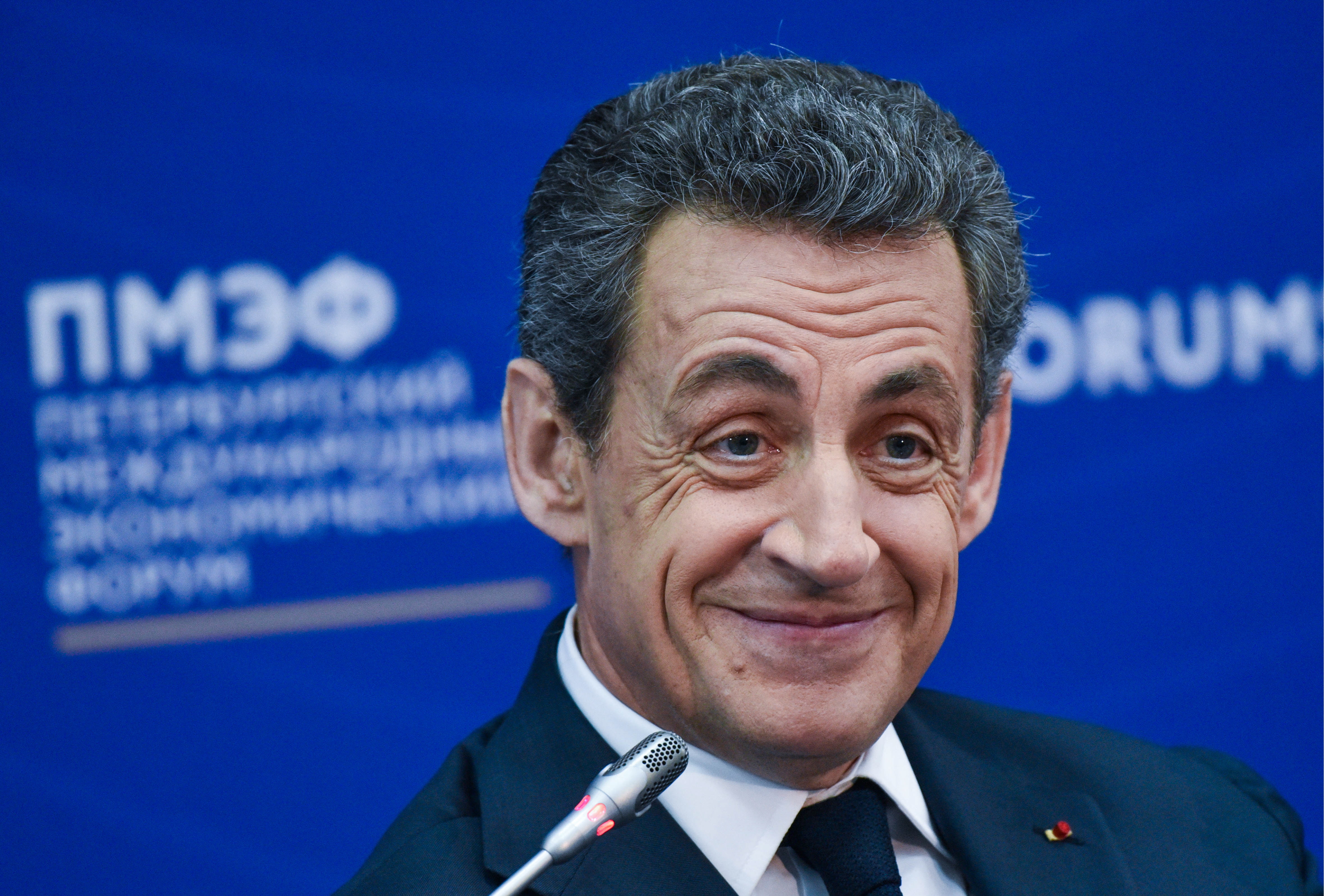
Europeans made this decision with a heavy heart. This is evidenced by the fact that the recently completed by the St. Petersburg Economic Forum was at once by several high-ranking European politicians, including the chairman of the European Commission , Jean-Claude Junker . He met with Vladimir Putin and told him that the only way to cancel the sanctions was to comply with Russia all the conditions of the Minsk agreements on the Donbass. Another European guest, the ex-president of France (and a possible future president-he is going to run again to this post in 2017) Nicolas Sarkozy , however, called for generally canceling European sanctions and Russian “counter-sanctions”. True, he invited Putin to start this process. He promised to think, but he dodged a specific answer.
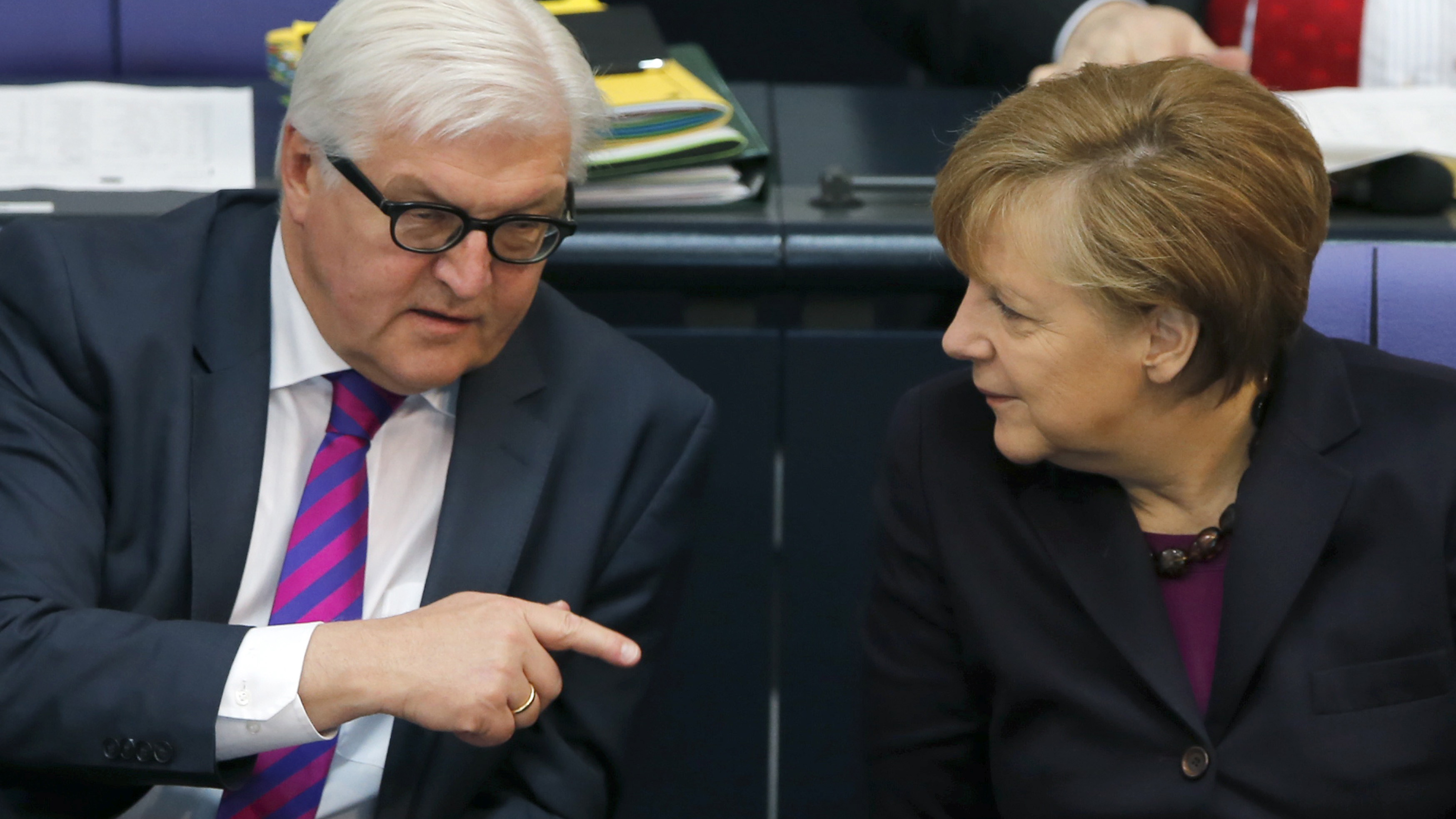
Meanwhile, the German Foreign Minister Frank-Walter Steinmeier spoke about the possibility of a gradual weakening of sanctions: as Moscow fulfill the obligations under the Minsk agreements of the sanction, according to the minister, could “fall off” one after another-up to complete abolition. This position contradicts the views of the Chancellor of Germany Angel Merkel , who, according to diplomatic sources, exerted pressure on its hesitation colleagues from countries such as Hungary, Greece and Italy. The position of Merkel as a whole coincides with the one that the ex -prime minister of Belgium, the leader of the fraction of the European Parliament “Alliance of the Liberals and Democrats for Europe,“ Guy Verkhofstadt : “European priorities is the preservation of the international security system that arose between the“ Cold War ”, the protection of the territorial integrity of European countries and the respect of the general norms of international international norms. Relations personified by such organizations as the OSCE.
The extension of the duration of sanctions is directly related to the process of de -capacity of the eastern regions of Ukraine
It is clear that Ukraine is very pleased with the decision to extend the sanctions. President of this country Petro Poroshenko , on a visit to France, said on Tuesday:
- I am very grateful to our German and French partners, the head of the European Commission, the leaders of the EU countries for their clear and fundamental position in the issue of extending sanctions. We proclaim that Ukraine intends to adhere to the Minsk agreements that Ukraine is strictly fulfilling the obligations. The extension of the period of sanctions is directly related to the process of de -Ukrainian regulations of the eastern regions of Ukraine, ”said the Ukrainian president.
Be that as it may, the theme of sanctions and, in general, relations with Russia will clearly remain on the agenda of the EU in the next six months. This is precisely the period for which the post of EU chairman, every 6 months passing from one member of the Union to another, will occupy Slovakia. The expert of the Slovak Institute of Security Policy Yaroslav Nadi told Radio Liberty with what difficulties in the Russian direction of her and the whole European Union.
- It is obvious that the current extension of sanctions against Russia was accompanied by the most obvious contradictions and debates among European politicians for all the time of their actions regarding the possibility and the need to cancel the sanctions regime. Do you think this is the last extension of sanctions?
- Yes, the voices in favor of revising the sanctions regime are distributed. I am convinced that the time for such a revision, whether it was the European Union or other countries of the Western world, has not yet come. Naturally, the longer the action of sanctions lasts, the stronger this will feel the regime of Vladimir Putin. The fact is that the sanctions were introduced for two reasons: due to the annexation of Crimea and due to Russia's intervention in the conflict in the east of Ukraine. No serious changes have occurred on any of these points. Thus, real, not far -fetched reasons for the abolition of sanctions are currently not existing. Indeed, it is possible that the votes in favor of the abolition of sanctions next time will be even more. But I do not think that during the next year - one and a half European Union would decide to cancel the sanctions. This would be illogical, as I said, and politically disadvantageous for the EU. Of course, with the only exception: if there are obvious and undoubted positive changes in Russia's policy.
- The action of sanctions is closely related to compliance with the Minsk agreements on the Donbass. There is also such an opinion among European politicians and diplomats: you can gradually weaken the sanctions regime - as Russia, as a clause, begins to comply with its obligations within the framework of Minsk. Does this approach seem realistic to you?
If the EU wants to be a solid international player, he cannot afford to change his own solutions from day to day
- No. Russia directly or indirectly took on a number of obligations in Minsk. Their implementation - I emphasize that all these obligations would mean the abolition of sanctions by the European Union. I do not see the reasons why some kind of "retail trade" could have been conducted here. In addition, how to "weigh", on the one hand, Russian concessions, and on the other - sanctions? How to determine which of them is "heavier", which are "easier"? This is almost difficult to feasible, and is unlikely to correspond to the political interests of the EU. Although some politicians adhere to this point of view, in general, there are various views on this problem even within individual countries. For example, in Germany, we see that the position of the Minister of Foreign Affairs Steinmeier is clearly different from the point of view of Chancellor Merkel. But all these debates are in the framework of a single position of the European Union, which is currently unchanged. If the EU wants to be a solid international player, he cannot afford to change his own decisions from day to day, depending on the economic or political interests of individual countries, parties or personalities.
- What steps from Russia could serve as a signal for the European Union to the fact that the regime of sanctions is really time to review?
- Some steps could be completely unambiguous, clear and relatively easily realized. These are primarily efforts - real, not verbal - to stabilize the situation in the east of Ukraine. I can fully imagine that the regime of President Putin will sooner or later go to this, even despite the fact that his original ideas in 2014 were completely different. Other measures in the current situation are hardly feasible - this is primarily the return of Crimea to Ukrainian control. The trouble is that there are no clear signs of any movement in a positive direction from the Russian authorities.
- Slovakia from July 1 will become the next chairman of the EU. The other day, the Minister of Foreign Affairs of your country, Miroslav Laichak, said that he was not calling for the abolition of sanctions, but would not want them to become a purely formal thing, because, according to him, “negotiations are underway with Russia, they are going there with visits, European politicians meet with Russian, not excluding those who are under sanctions. This is a reality, and this requires discussion,” added Laycam. How will Slovakia behave in the role of the EU chairman in the Russian direction?
- Slovakia cannot count on the role of a leader in deciding on the future of sanctions against Russia. So far we see the dual behavior of many of our politicians, starting with the Prime Minister Robert Fitzo. He sends some benevolent signals to the local public and Russia itself, says that it would be better to cancel sanctions that they do not have much importance, etc. But when voting in Brussels, Slovakia does not make any complaints, supports the common line to continue sanctions. We are part of the European Union, and in the role of its chairman our leaders will rather strive to find a consensus and to not contradict the majority’s opinion. Another thing is what the Minister Lychak said, that is, the behavior of some politicians, German, Italian and others who give priority for purely economic interests before the values on which the European Union is based. That's just that the general position on key political issues is not violated, the chairman could contribute to. The question of sanctions this applies in the first place.
- Economic arguments are very often used by supporters of the abolition of sanctions. If we talk about Slovakia - its economy has suffered greatly from European sanctions and "counter -sanctions" imposed by Moscow in relation to the EU countries?
There is the behavior of some politicians who give priority to economic interests before the values on which the European Union is based
- Judging by the calculations and statements of our economists, it is extremely insignificant. I will allow myself to say that in general we are not even talking about tenths of the percentage of GDP. Here, however, we must not forget about several specific firms that have long been oriented mainly on the Russian market: the sanctions were really hit on them. On the scale of the entire economy, these are, however, minor consequences. In general, from this point of view, we have a good period now: unemployment is falling, economic growth has been outlined. Some of those companies that I mentioned, for example, engaged in agricultural export, have already managed to reorient to other markets instead of Russian. In general, any allegations that sanctions bring great losses to the country is simply not true.
- All of Europe is now waiting for the results of the British referendum appointed on June 23 on the possible exit of this country from the EU. What do you think if Brexit becomes a reality, how much will its consequences affect the EU policy regarding Russia?
- I have no doubt that it would be very beneficial for the leadership of Russia if most British spoke out for leaving the EU. After all, this could be the first step towards the decay of the entire European project - other countries could follow the example of Britain, although I do not think that such a probability is very great. Brexit would not immediately have any great influence on the relations of Russia and European countries, but in Moscow they would consider the departure of Britain with a success. And I am even inclined to think, relying on some facts, primarily regarding Russian propaganda in Europe that Russia performs certain actions aimed at reducing the popularity of the EU among citizens of the European Union.