
Translated material
Let go with love
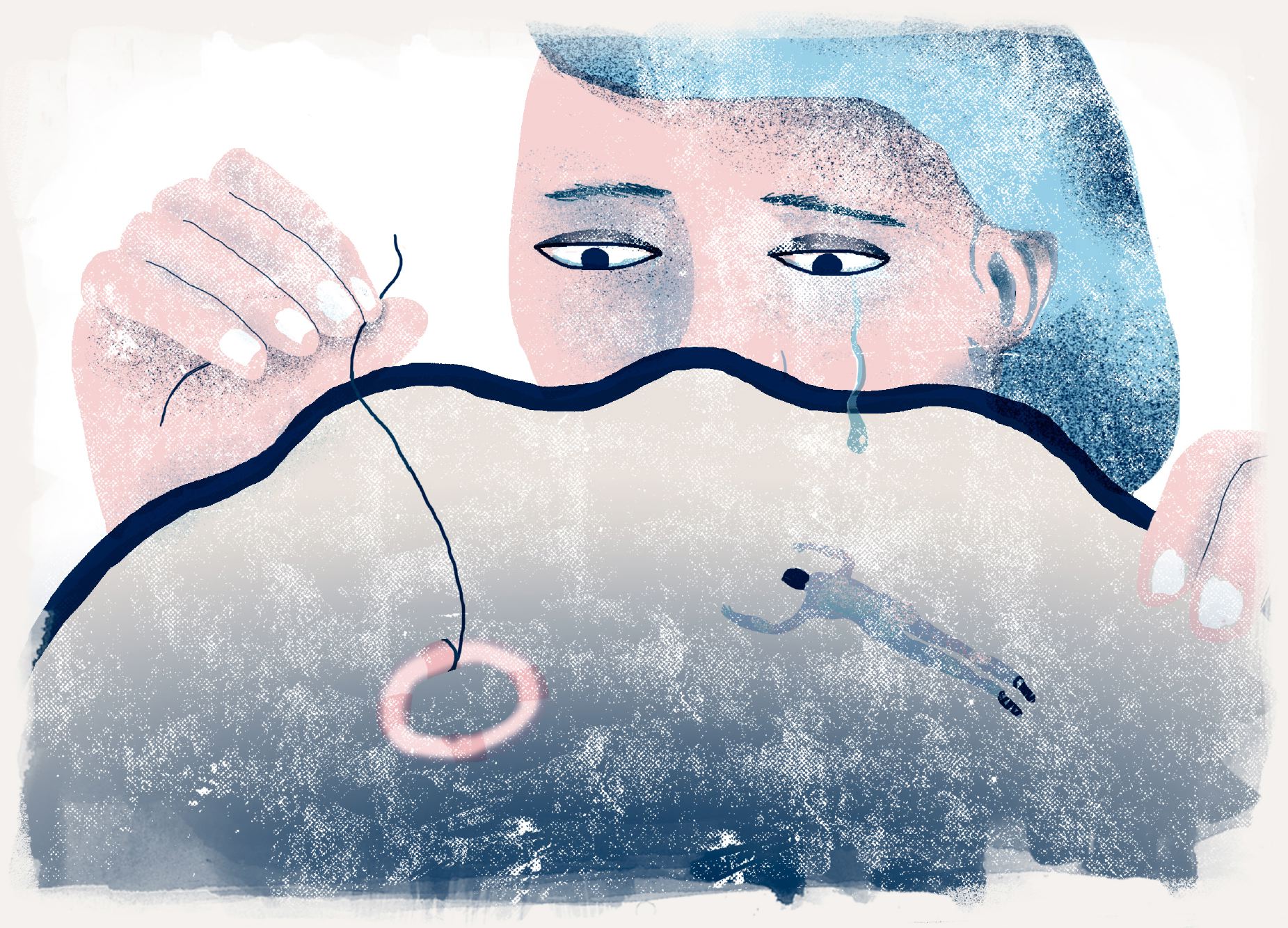
What is better-to try to control every step of your narcomaniac child or write a statement to the police? Co -dependence is a condition in which there are relatives and friends of drug addicts and alcoholics. Parents of addicts tell through which hell they had to go with their children, and the psychologist comments on their actions
Marina, engineer
I raised my daughter alone. We lived together - talked like two best friends. Could laugh and fool around at midnight. When Katya was fourteen, something irreparable happened. She had a-hopitsa girlfriends. They left somewhere in the evenings. Where, I did not know, the contact was lost. But I reassured myself: Katya has a transitional age, it passes. Once I found grass in her things. Asked:
- Where did you get it from?
- This is not mine - for sale. You give me little pocket money!
I again convinced myself: the younger generation - it is all that.
Katya decently graduated from school, entered the university, defended her diploma and got a good job - she headed the St. Petersburg representative office of the Moscow travel agency.
Well, I thought, my daughter grew up. Of course, our relationship is not very good. But the main dangers were clearly passed.
The daughter worked a lot, but I did not know where she was going and with whom she was spending time.
Once Katya came home, and she rushed all night. She said, they say, she went to the restaurant with her friends and ate something stale there.
The most terrible suspicions tormented me, but Katya denied everything. And then the truth became obvious. I turned to a narcologist. He said that his daughter may take injection drugs ...
I came to the next "specialist" already with my daughter. I am in tears. Katya is in the denial of the disease. There we were told with contempt that the daughter is “unprotected” and let him go further ...
At home I screamed, scandalized, demanded something from Katya. In public, she carefully hid her misfortune.
I turned into an information hunter. Once on the radio, I heard about the organization of Azaria and came there at the initial reception. I was given the addresses of groups for co -dependent, a schedule of lectures at which the relatives of drug addicts talked about how to behave with the suffering from this disease.
Now, after work, I was not home - for every day I had an event. It seems to me that I spent more money on teaching literature than a daughter on drugs.
They told me: I have to release Katya. Stop controling it. Let it go in its own way: the addict will not begin to recover until it reaches the bottom. And everyone has his own. Unfortunately, the bottom of some is death. The task of relatives is to leave the drug addict alone and let him achieve this very bottom. Yes, this is a risk. But there is no other way to recovery. Meanwhile, the native person of the drug addict should go his own way, without depriving himself of the joys of life.
For the first two years I arranged scandals at these lectures and seminars. I convinced myself and others that my case is special. I have a special daughter and an unusual story. But in fact, it was a classic case, directly from the textbook.
I remember that at the first meeting of the group of co -dependent, I was dumbfounded: are they all nervous? Their children die! How can you laugh and smile! I tried to prove, first of all, to myself that drug addiction is a form of licentiousness, not a disease.
And then they made me a diagnosis: cancer. After the operation, I realized: my condition destroys us both: both me and Katya.
And I began to listen to what they told me. I realized what it means to "let go with love." I stopped scandalous and control Katya. I did not look for her, even when she disappeared from home. I learned to separate my daughter from her illness.
Each of us went its own way. I was even delighted when Katya lost her job - now she had to have difficulty in drugs for drugs.
The daughter either disappeared for weeks, then appeared. Once, all valuable things disappeared from her home with her. I wrote a statement to the police and put on the table in the kitchen. She said that the next time I would take him.
I understood that I could lose my daughter, but I also knew that emotional independence is the only way out for me.
And once the daughter came home - terrible, thin, exhausted. And she said that she wants to be treated: she cannot live like that.
I managed to get a ticket to a good rehabilitation center for drug addicts. This one rehabilitation of Katya was enough to enter a persistent remission. In the center, she met her future husband. They both have not taken drugs for a long time. They have two sons.
***
Olga Ilyina, psychologist of the regional charitable public organization "Azaria":
The more relatives control the drug addict or alcoholic, the less the chance he has to “get to the bottom” - to come to the idea of the need for treatment. One of the characteristics of addiction is the lack of a sense of responsibility for their actions. Therefore, it is necessary to “release” control, leave the dependent in private with all the consequences of his disease: debts, problems with the law, household problems, health problems, etc. So far, relatives solve the problems of the dependent, they are responsible for the consequences of the disease. The dependent feels very well, he has no reason to quit “inject” or drink. Only when the sick person himself faces the “results” of his “activity”, may he want to recover.
***
Tatyana, history teacher
My daughter Lena has always been the smartest and most beautiful girl. She grew up in an atmosphere of universal admiration. She loved when she was praised. And there was a stall for flattery.
I worked at the school for two bets. Raised one two daughters. The three of us lived in the same room in a communal apartment in the center of St. Petersburg. And Lena wanted a good life and beautiful outfits.
In the family, she - the eldest daughter - was always the main one. The youngest and I always listened to her: she dictated where we are going, which we spend money on. She seemed so adult.
Lena did not study very well at school. When I tried to convince her of the need to gain knowledge, she waved it off:
- Mom, to live well, school knowledge is optional.
Then Lena began to miss the lessons. Transfer from one school to another did not change anything. Now I understand: she was a shallow, practical, reckless, sociable. But she has never been an adult.
Then her girlfriend told me that Lena sat down in an expensive car to a man who stopped when she saw her. With this person, she first smoked a drug.
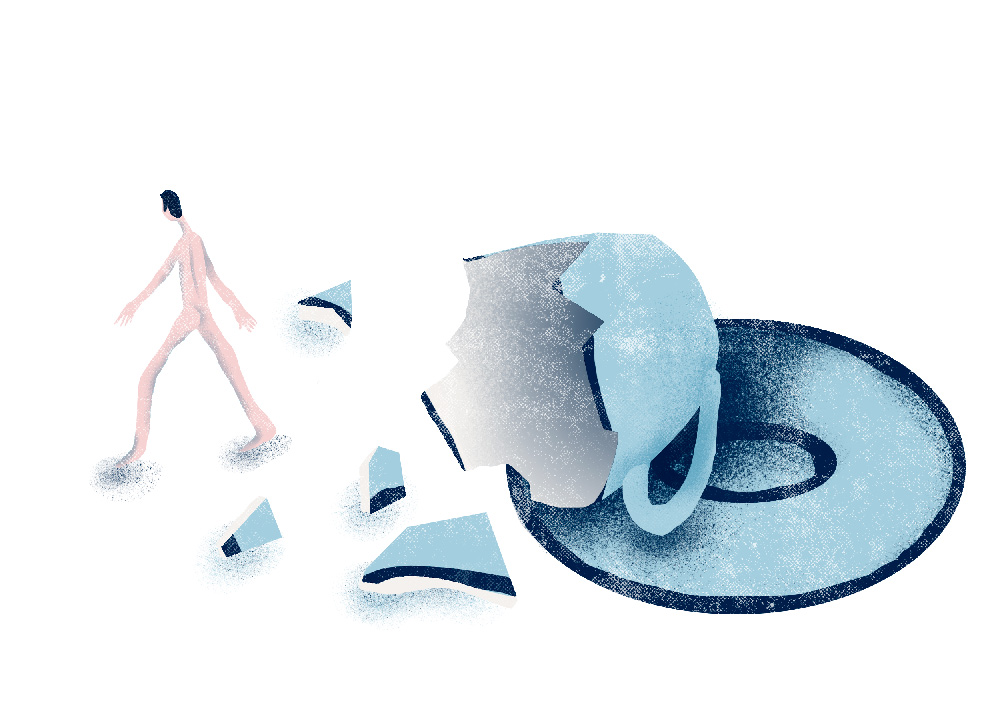 Illustration: Rita Cherepanova for TD
And then everything rolled. She made drug injections to the ankles. When I asked her about what kind of traces were on her feet, she answered:
- Mom, the basement is full of mosquitoes. They fly through ventilation and bite me.
Lena needed drugs for drugs. She established her “business”: she herself was engaged in prostitution and traded the same youngsters somewhere on the highway. I heard her reported on the phone any of her “wards”, who provided a certain sexual service to the client and did not take money for it ...
In the end, Lena admitted that she was a drug addict. It seemed to me that I fell into some black abyss. I asked her:
- What to do now?
- What can you do?
I began to go to meetings of the group of co -dependent. I tried in every possible way to separate from Lena - both morally and physically. My youngest daughter and I moved. And her friend, also a drug addict, also died to Lena, and soon died of an overdose.
In the end, my daughter asked me to arrange her for treatment. After leaving the rehabilitation center, she began to attend meetings of a group of anonymous drug addicts.
Five days later, she died from an overdose in one of the brothels in the city center. She was only sixteen years old.
I still can’t understand why this happened to my eldest daughter - so smart, so bright, so confident in myself? What did I miss her upbringing? Perhaps I was too busy and trusted my daughter too much. I guess I was too poorly informed. Sometimes I think what a brilliant life Lena would live, what a wonderful career a daughter would have made, she was alive ...
***
Olga Ilyina, psychologist RBOO "Azaria":
- The main thing was the main daughter in the family, she dictated the rules by which her mother and younger sister lived. Lena was the best, everything was for her. The attitude towards the child, when he is put on the "pedestal", creates addictions. Another bright characteristic of addiction is selfishness. The more requests of a teenager are satisfied with parents, especially if the family has more children whose desires fade into the background, the greater the chances of acquiring dependence. The child grows up to be spoiled when parents satisfy his desires to the detriment of their own and desires of other family members. Recovery begins when mother understands that she goes to meetings of support groups not only to help her child recover, but in order to learn how to live fully. For dependent, it is often a shock when co -dependents begin to spend time and money on themselves, and not on them. And it becomes impossible to control and blackmail loved ones with your disease.
***
Anna, engineer:
-I came to emotional independence from the states and moods of my son-narcomania through hatred. Yes, through hatred of your own child.
My husband and I learned that our son Lesha uses severe drugs when he was sixteen. He had the first overdose. His Narcomus friends themselves called an ambulance. My husband and I arrived at the hospital.
Why did the son become a drug addict? Probably got into a bad company. Half of the class in which he studied has already died of overdoses.
Now I understand that in the early years of Lesha's illness I fell into deep co -dependence. How much we drove him to the hospitals! How many detox processes he passed-there is not enough fingers to count! How many things he carried out of the house! I suffered. Scolded him. And I bought new things in return stolen. Now I understand: my whole life has turned into a relationship with my son's illness.
He stole. Everything is everywhere, wherever he could. Once he went into the library and stole wallets from visitors's bags. He was caught. I then reimbursed the money to the victims of the theft. I asked them for forgiveness. She achieved that they took their statements from the police. It was wrong.
I woke up after I discovered that I was living in almost empty walls - Lesha took out everything that was possible from the house. By that time, my husband died. And the son has been drifted from one short remission to another for about ten years - the exacerbation of the disease.
And then I seemed to be brutal. And she hated Lesha. I put the iron door to my room. I took more or less valuable things, including cutlery, I took it to me.
Lesha nevertheless managed to steal a microwave from the house. Without thinking twice, I wrote a statement to the police. He was given a year in a colony-settlement.
The son returned from the zone. I said that I would no longer let him in to live.
He got a job, rented housing with his friend.
Then this friend called me and said: "Lesha broke again." But this is the latter for today - the exacerbation lasted less than a week. The son said he was ready to be treated. The only thing I did then was to pay some tests to be taken to the hospital rather.
After rehabilitation, he has not taken drugs for almost two years. Lives with a girl, they dream of a child.
I ask myself: why did he become like that? No, I don’t see my guilt in this. Lesha since childhood was laziness. At school, he refused to go to the mathematical class, saying that he did not want a difficult study.
I think my coldness and even hatred helped my son take the path of recovery.
But you know, I sometimes recall those things that Lesha carried out of the house: of our husband and my husband of engagement rings, about porcelain cups that we were presented for a wedding, about the watercolor “portrait of an unknown”, which our family managed to save in a blockade.
My love for my son gradually returned. But the annoyance remained.
Olga Ilyina, psychologist RBOO "Azaria":
Just as dependent, co -dependent "reach their bottom." In this case, Anna’s hatred, like Lesha's disease, turned out to be their “bottom”, pushing from which they began to recover. The more co -dependent solves the problems of his dependent, the more he destroys his life. As a result, he begins to experience negative feelings in relation to the drug addict. One of the tasks of relatives of drug addicts and alcoholics is to stop living using the problems of the use of 24 hours a day. And slowly restore your own life. Only in this case is it possible not just a separation, but a department with love. When our own life has not yet been completely destroyed, we need to learn how to separate the disease and the patient. And to perform actions that will lead him to recovery - no matter how cruel they may seem.