
Translated material
Long roads
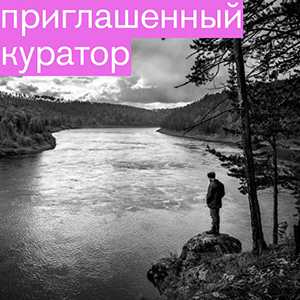
This year, Colta.ru decided to go to the experiment and invited to temporary curators over the section “Photo projects” of young and talented representatives of leading Russian photocurium. We divided the calendar year between six curators and asked them to select the most interesting samples of modern Russian photography for publication.
Invited curators
Katerina Zueva , center of photography named after Brothers Lumier
Nadezhda Sheremetova , "Femicip"
Sergey Lostev , "House of Metenkov"
Daria Tuminas , Freelance Curator, Amsterdam
Anastasia Bogomolova , The Blog This a Photobook
Svetlana Taylor , British Higher School of Design

Third resident: Sergey Lostev. Documentary photographer , curator of the photographic museum "Metenkov House" and the Cultural Transit Foundation . Lives and works in Yekaterinburg.
In 2013 and 2014, one of the curators of a photographic educational laboratory as part of the DNA-Pervouralsk project.
Works with documentary photography and various practices of contemporary art.
Sergey Lostev about Martin Vagnere
Martin Wagner, a photographer from the Czech Republic, drove from Ukraine to Sakhalin to understand how people live on the territory of the former USSR. Refusing the color, the author leaves only black and white feelings for us. The rivers are replaced by mountains, smoothly flowing into the kitchen and streets of settlements. Having visited 33 times in Russia and Ukraine, simultaneously finding a wife in the Krasnoyarsk Territory, Martin represents us a classic documentary approach, where he presents the changes that have occurred with our countries. In the photographs, the former USSR appears before us a deformed landscape with a person inside and countless roads. Of particular importance is the visual embodiment of the path, the author seems to ask the question: "Where does everything go?" - Or, more precisely: "Where did these shocks come?" The symbols of the Soviet era are gradually dissolving, but at the same time they silently observe what is happening. The outgoing nature of the province, so popular among photographers, through the Martin’s camera appears to be visual accurate statements. Time seemed to froze, the viewer does not notice where the 1998 photographs are, and where 2011. Having removed historical markers, the author makes his way to the very essence of what is happening.