Translated material
Zelenodolsk plant named after. A.M. Gorky

In early June, the Non-Forum of Bloggers 2016 was held in the capital of the Republic of Tatarstan. During this event, several excursions were organized for us, one of which was “Industrial Tatarstan,” during which we visited two enterprises: the Kazan Helicopter Plant and the Zelenodolsk Plant named after A.M. Gorky, which will be discussed in this report.
Over the years of its activity, the Zelenodolsk plant has produced over 1,500 sea and river vessels, including about 600 ships and military vessels. The plant is one of the most dynamically developing enterprises in Tatarstan and annually increases production volumes and product quality.
Over the past three years, the company has delivered 12 ships for military and civilian purposes to customers. Today, the plant is building 18 ships for Russian and foreign customers.
Our acquaintance with the leading shipbuilding enterprise of the Republic began with the museum, which I will write about in the near future, but today we will start the excursion with the production itself, namely with hull processing shop No. 3.
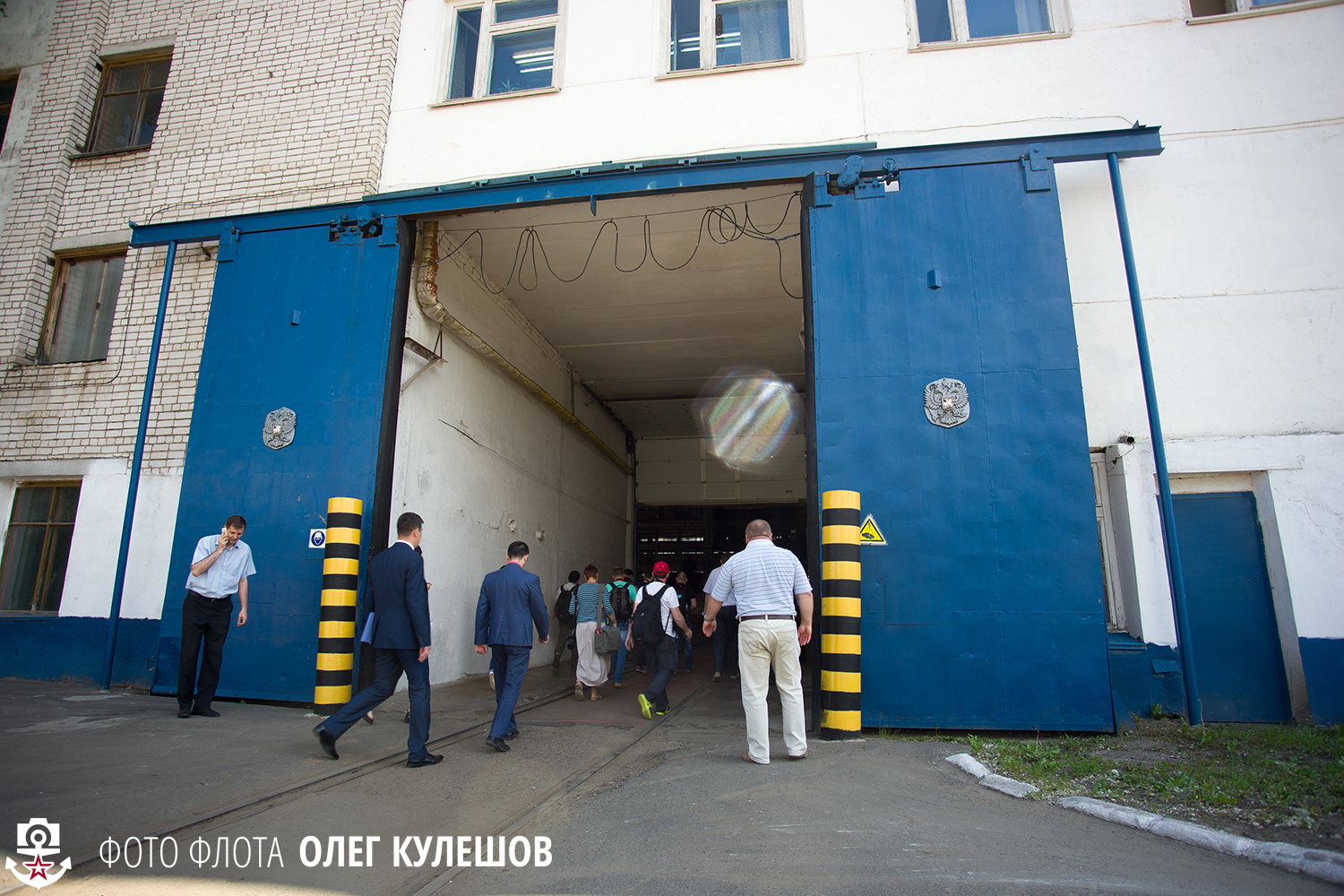
2. Gate leading to hull processing shop No. 3.
I note that the trip and visit to this enterprise would not have been possible if not for the general sponsors of NeForum 2016 Alfa-Bank and Tele2 .
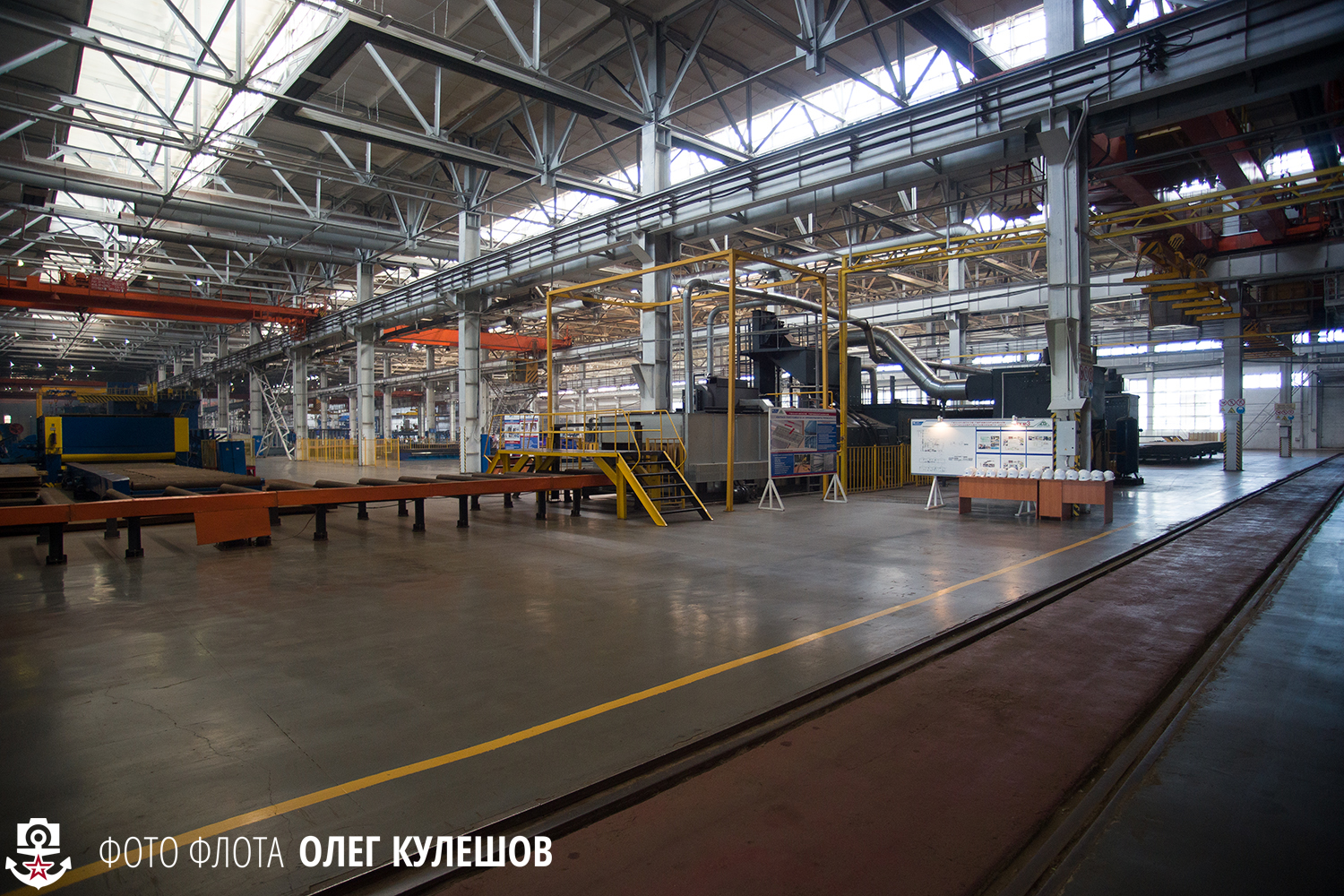
The inspection of the workshop began with the metal cleaning line ORANGE 25.6 Gietart.me (Netherlands). It is from this installation that the construction of the ship begins. Here, simultaneous cleaning, painting, drying of sheet and profile products is carried out without the use of additional labor.
3. Metal cleaning lines ORANGE 25.6 Gietart.me (Netherlands)
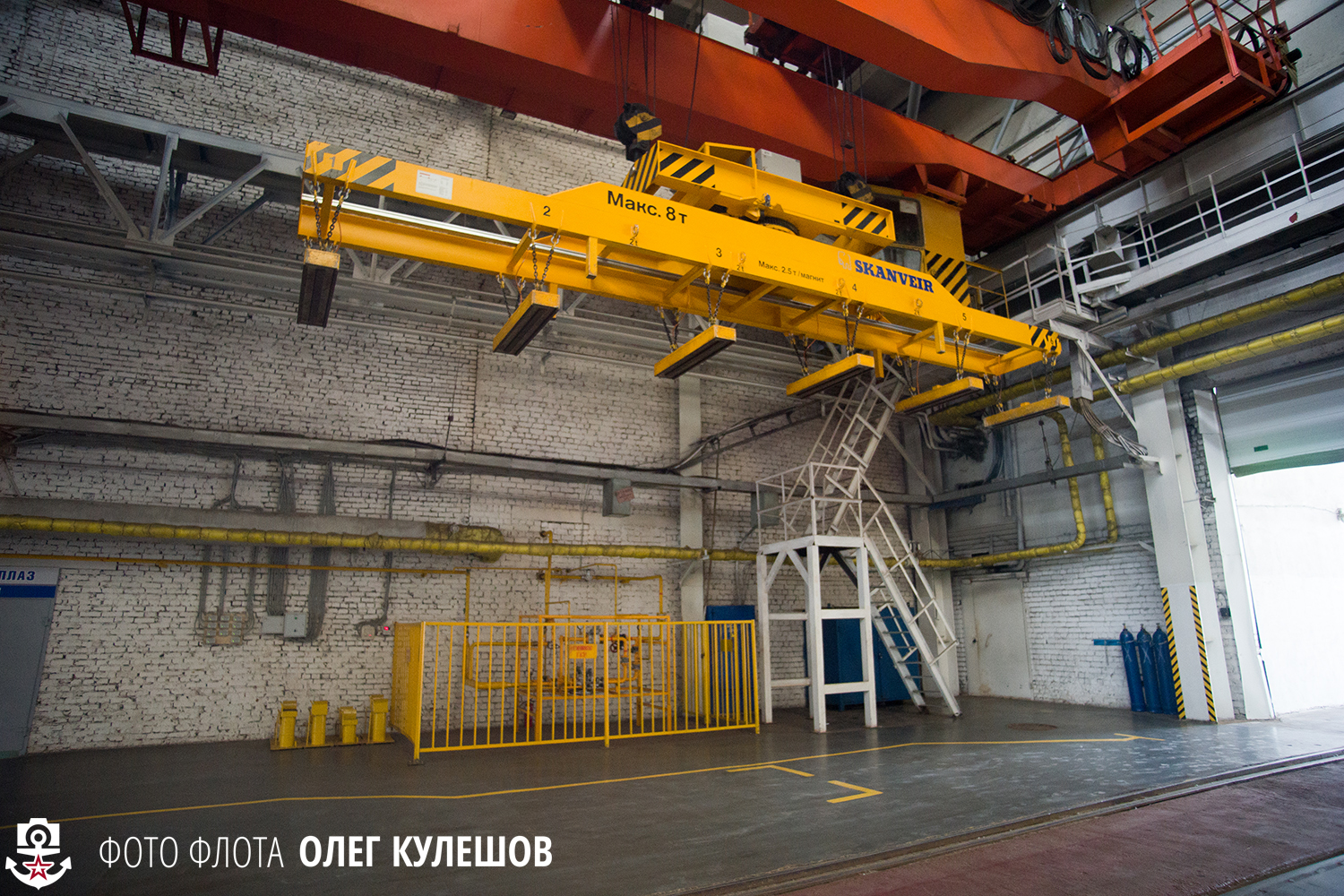
Multi-ton sheets of metal are moved around the hull processing shop using several SKANVEIR magnetic overhead cranes.
4. SKANVEIR magnetic bridge crane .
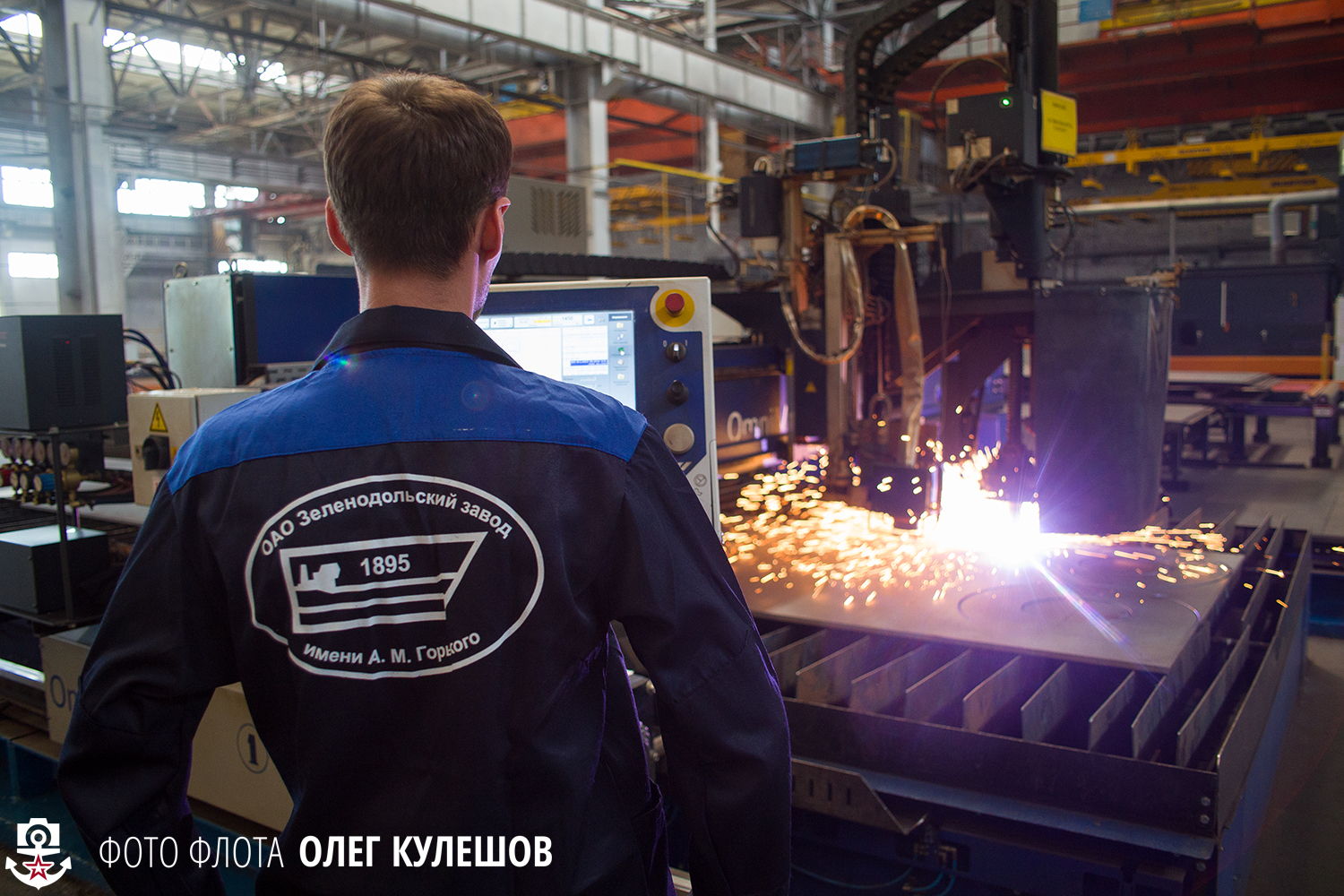
After cleaning, the sheet metal must be cut; this procedure takes place on the automatic profile cutting line "IMG" (Germany) and using a MESSER OmniMat L5000 plasma cutting machine (Germany).
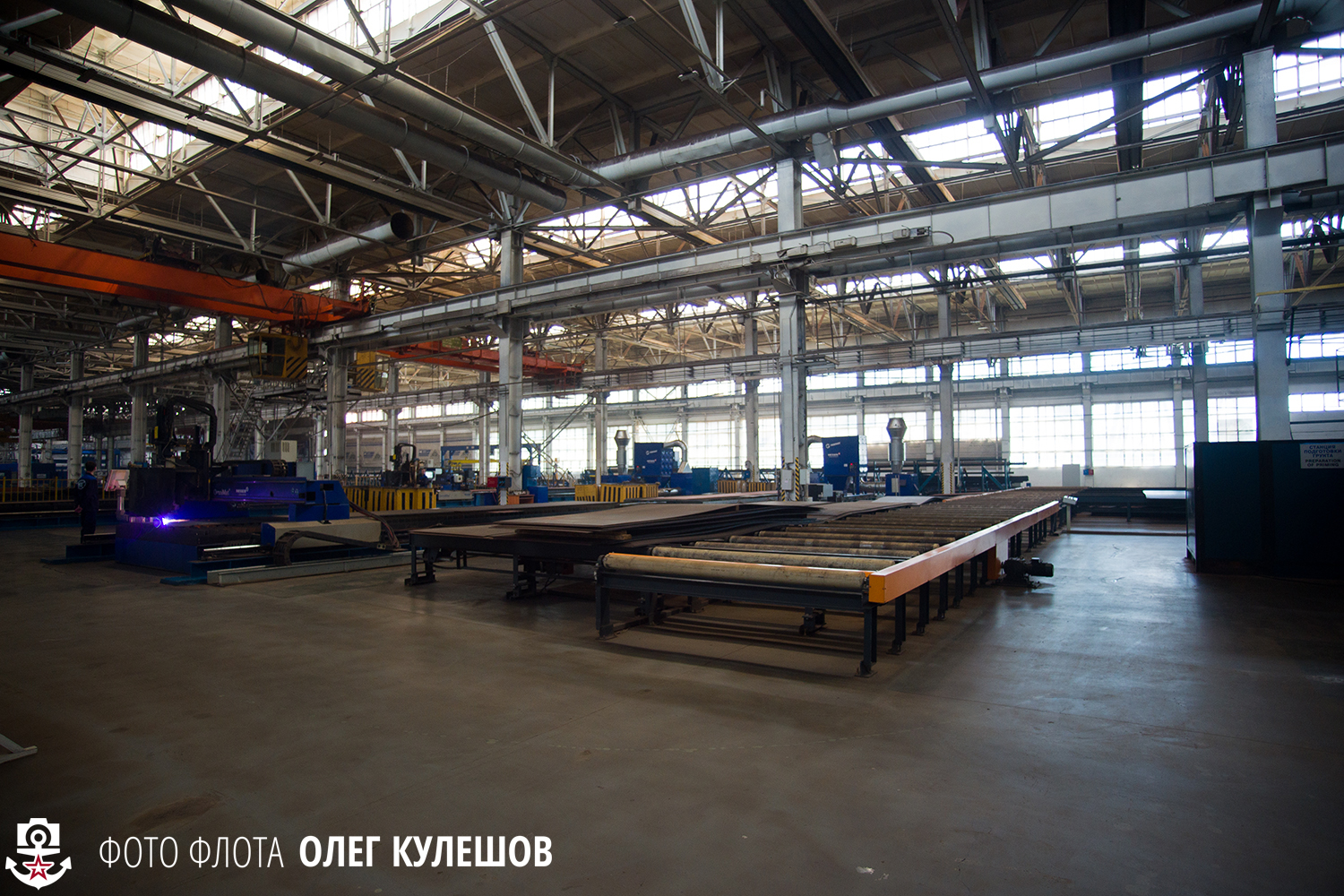
All procedures are carried out with the help of shipbuilders-operators. Everything is under control. The MESSER metal plasma cutting line allows you to cut metal almost a centimeter thick at a speed of 12 meters per minute.
6. Operator of the MESSER OmniMat L5000 plasma cutting machine .
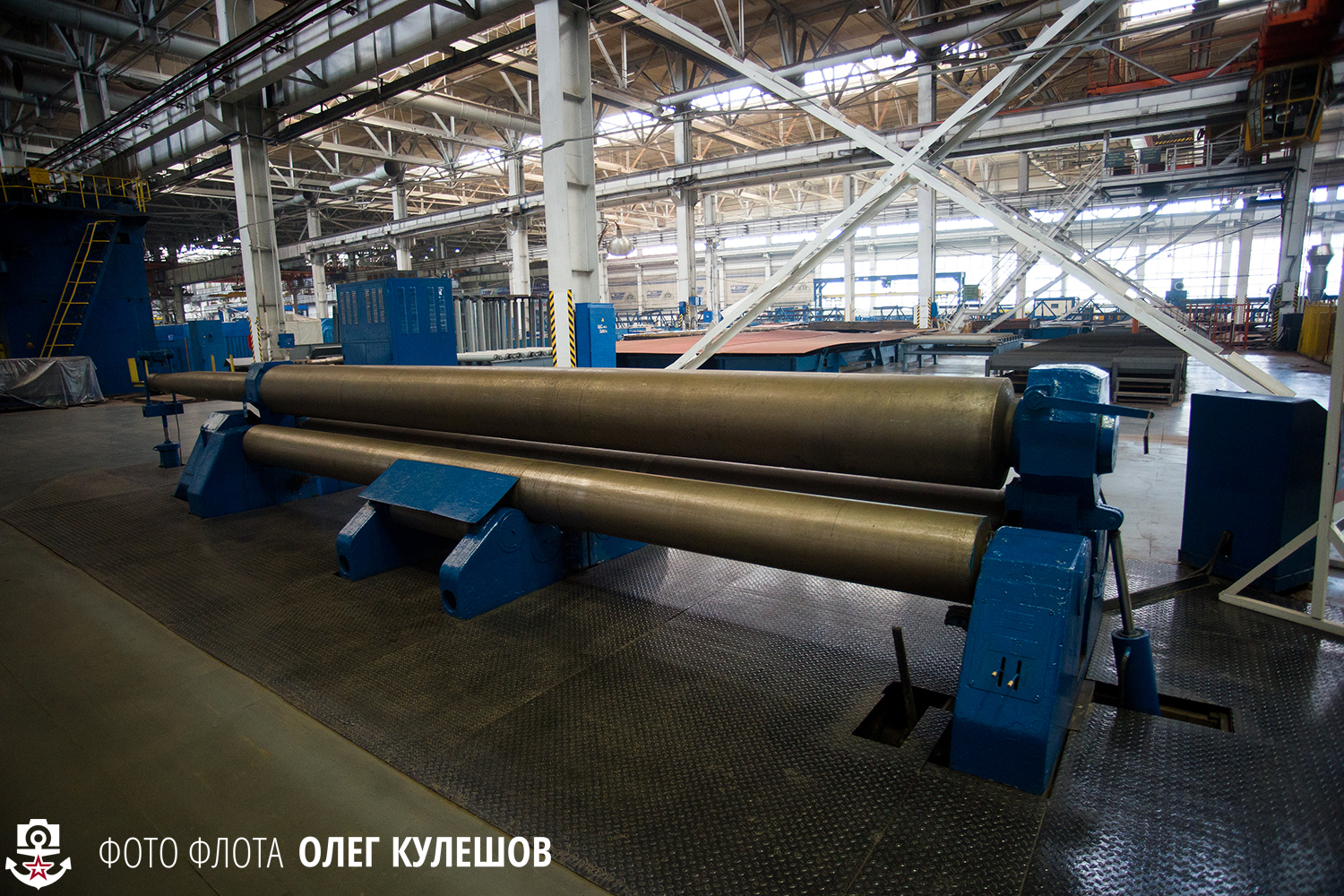
Despite the modernization of shipbuilding production carried out over several years, there is still old equipment.
This equipment works well, so why change it? One example is a sheet metal bending machine. Produced in Ryazan in 1985. With the help of this machine, the future ship takes shape.
7. Sheet bending machine.
Not only people work at the Zelenodolsk plant. There is a team of four-legged shipbuilders here - seasoned cats.
There is a legend that if a cat catches a certain number of rats and mice, then for this he is promoted and transferred to a ship, after which he becomes a member of the crew - a real Navy SEAL.
8. The future sea cat keeps order in the workshop.
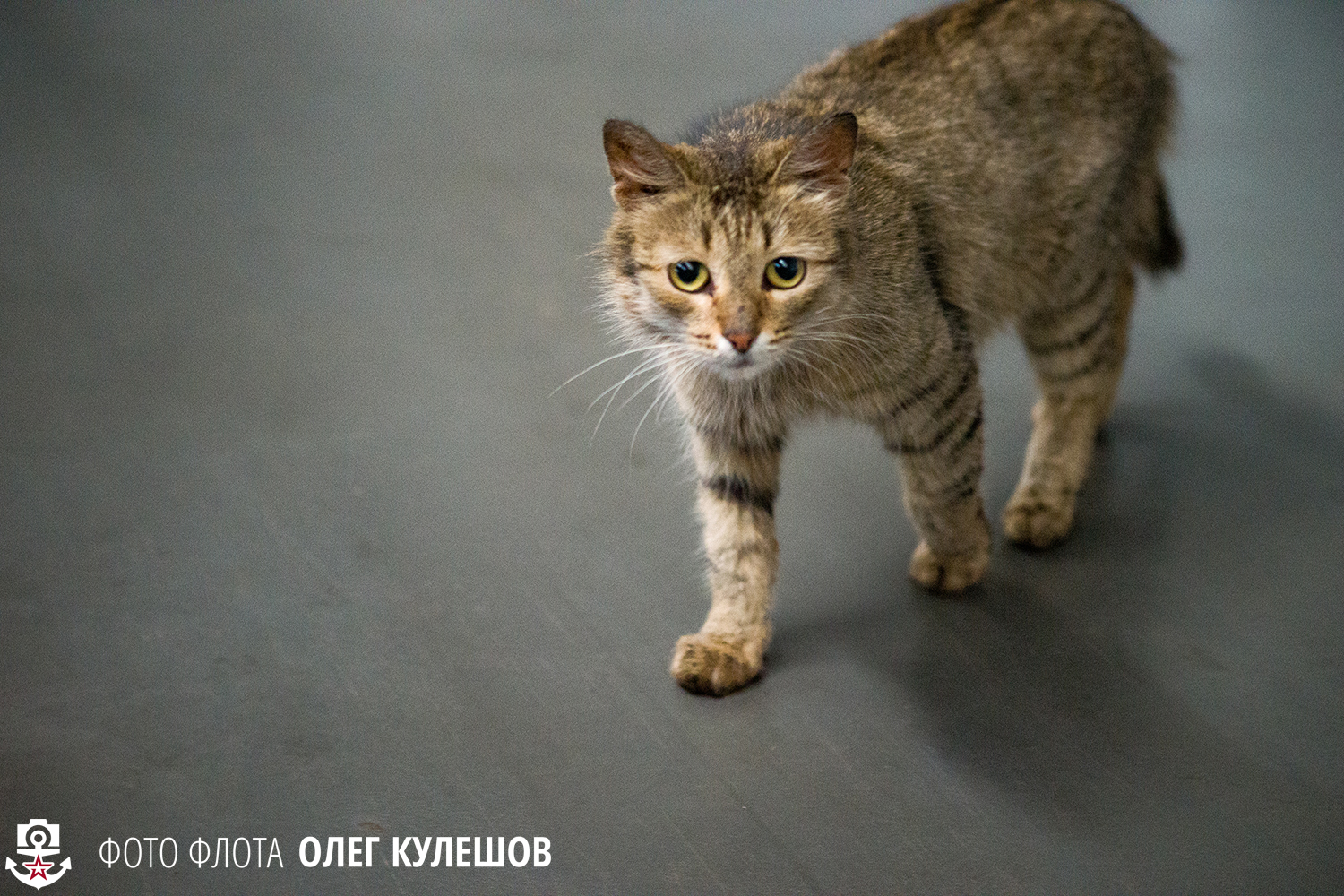
No one warned the shipbuilder cats about the bloggers’ visit, so they experienced great stress when dozens of lenses were pointed at their faces.

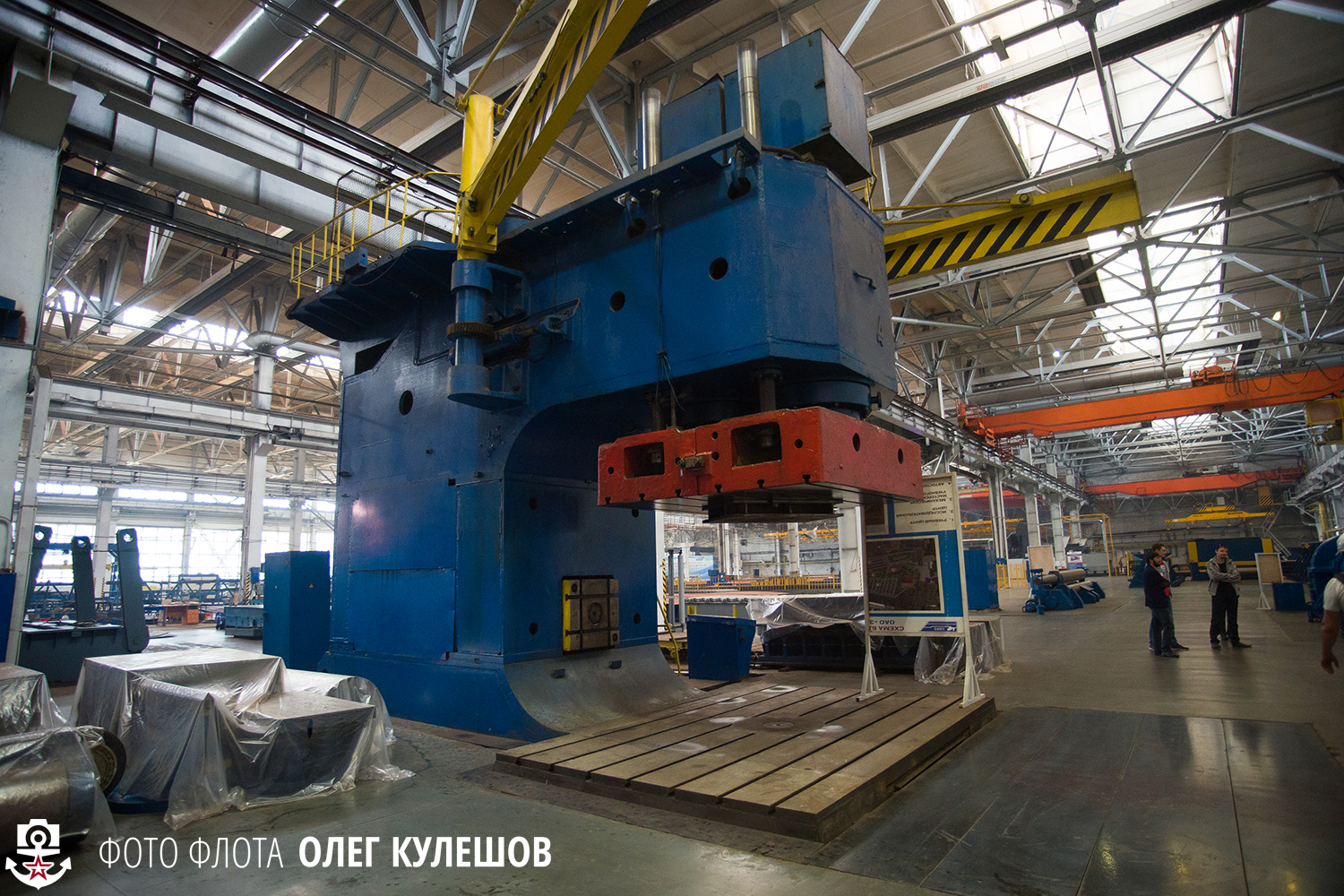
Another rarity of the hull processing shop is a hydraulic press produced by the Dnepropetrovsk Press Plant. 1985 They perform open stamping of parts for the future ship.
10. Hydraulic press.
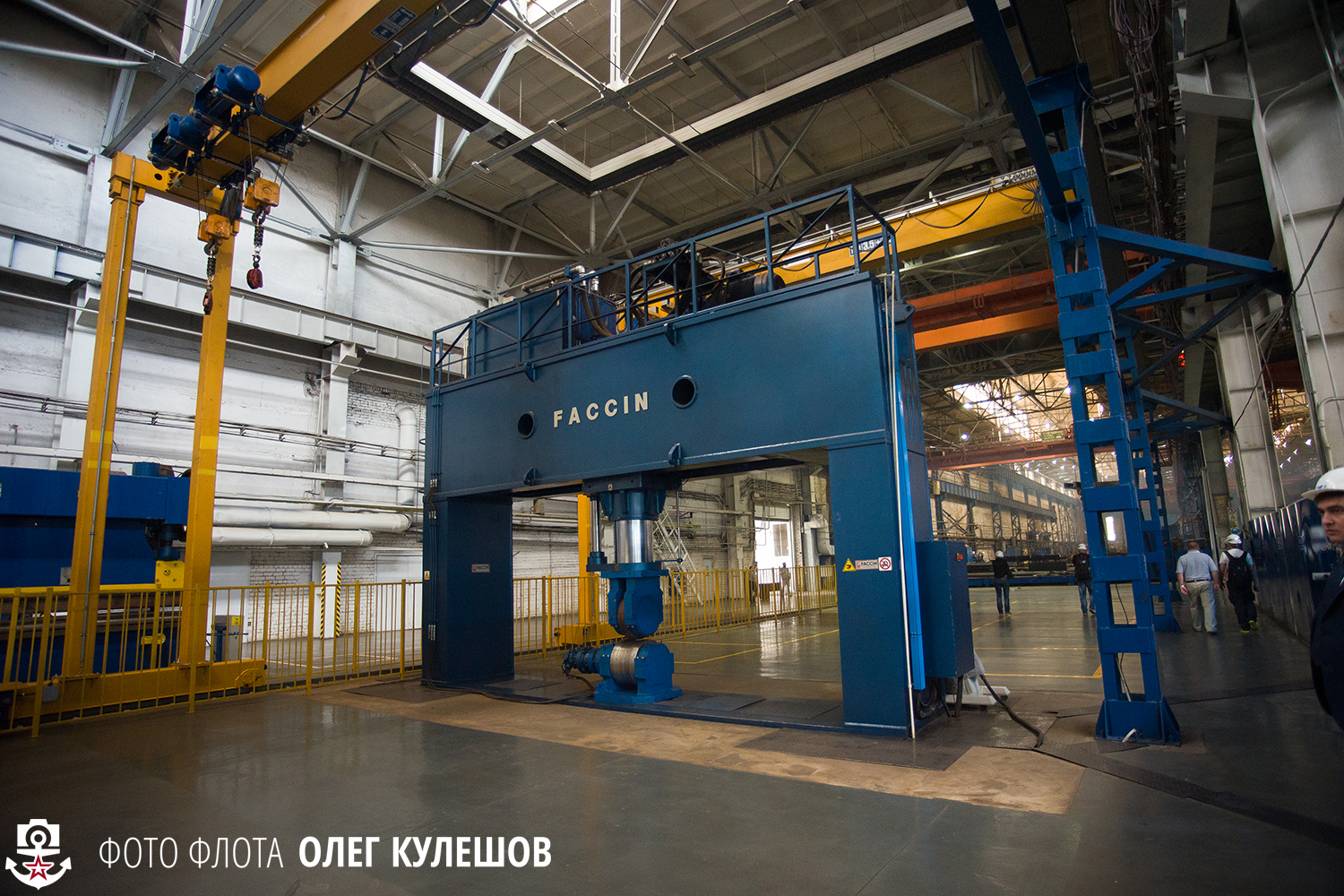
A few meters from the hydraulic press there is a second press, it is designed for three-dimensional bending of sheet metal. Manufacturer FACCIN (Italy). It produces three-dimensional bending of ship hull plating parts up to 30mm thick.
11. Press for three-dimensional bending of sheet metal.
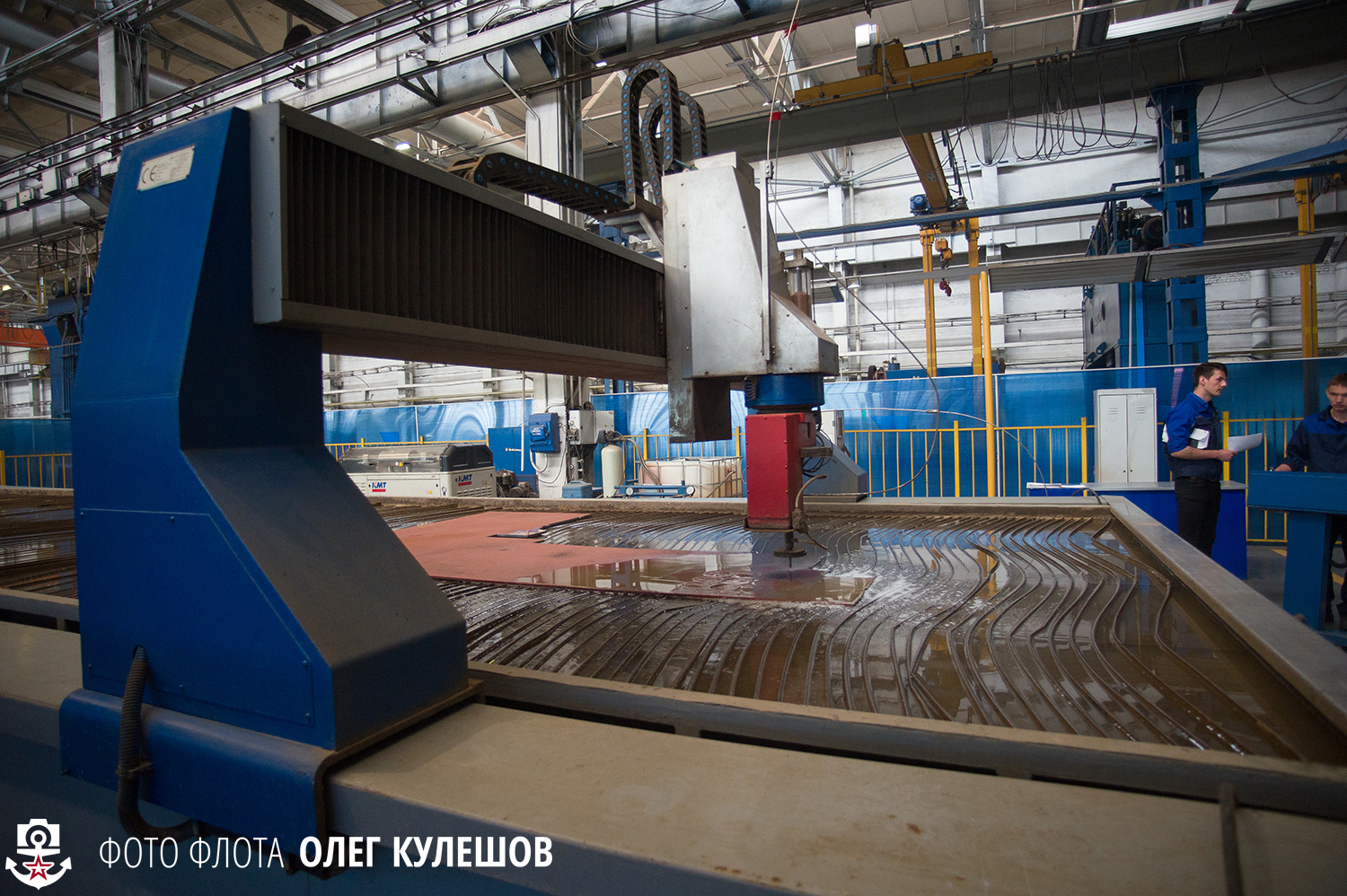
Let's finish the tour of the workshop with another interesting machine. The photo below shows a MODULA 3 waterjet cutting installation (Italy).
The machine is designed for cutting metal, concrete, stone, glass, rubber, polymers, plastics and other materials. Working cutting area: 2.5x12.0 meters, which is the largest working cutting area in our country.
12. Installation of waterjet cutting MODULA 3 (Italy).

Despite all the latest machines that are located in the body-processing shop of the Zelenodolsk plant, there is one sad moment - almost all the equipment is foreign. I really hope that Russia will soon restore the production of its high-quality and durable equipment.
13. Operator of a waterjet cutting machine.
We didn’t have time to get around the second half of the workshop. It is divided into two parts: the old one (in the photo in the center) and the new one (in the photo on the right). Larger ship parts are welded here: parts of the superstructure, etc.
14.
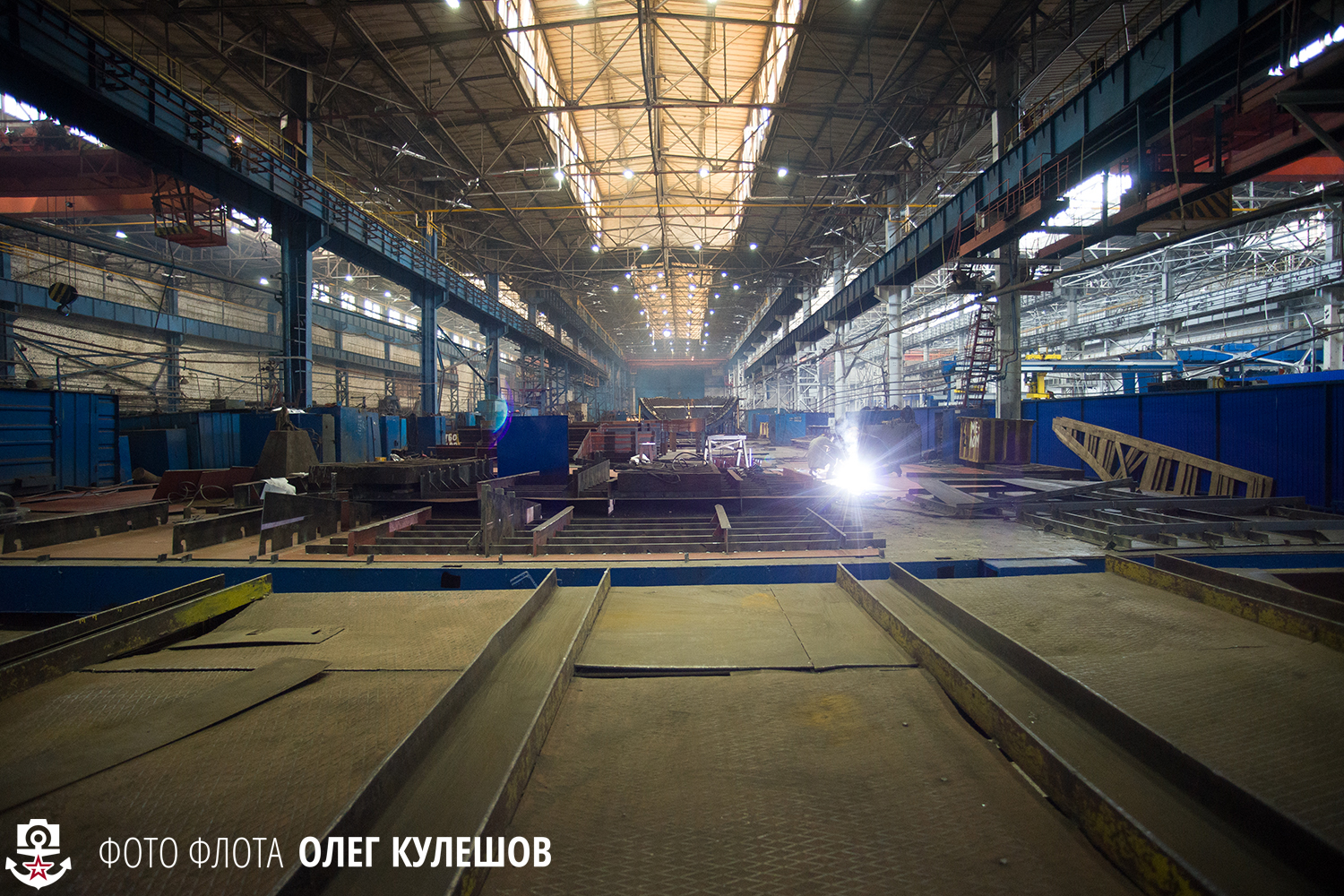
15. I hand over my helmet and go to the next workshop.
The next workshop was the finishing building workshop No. 17.
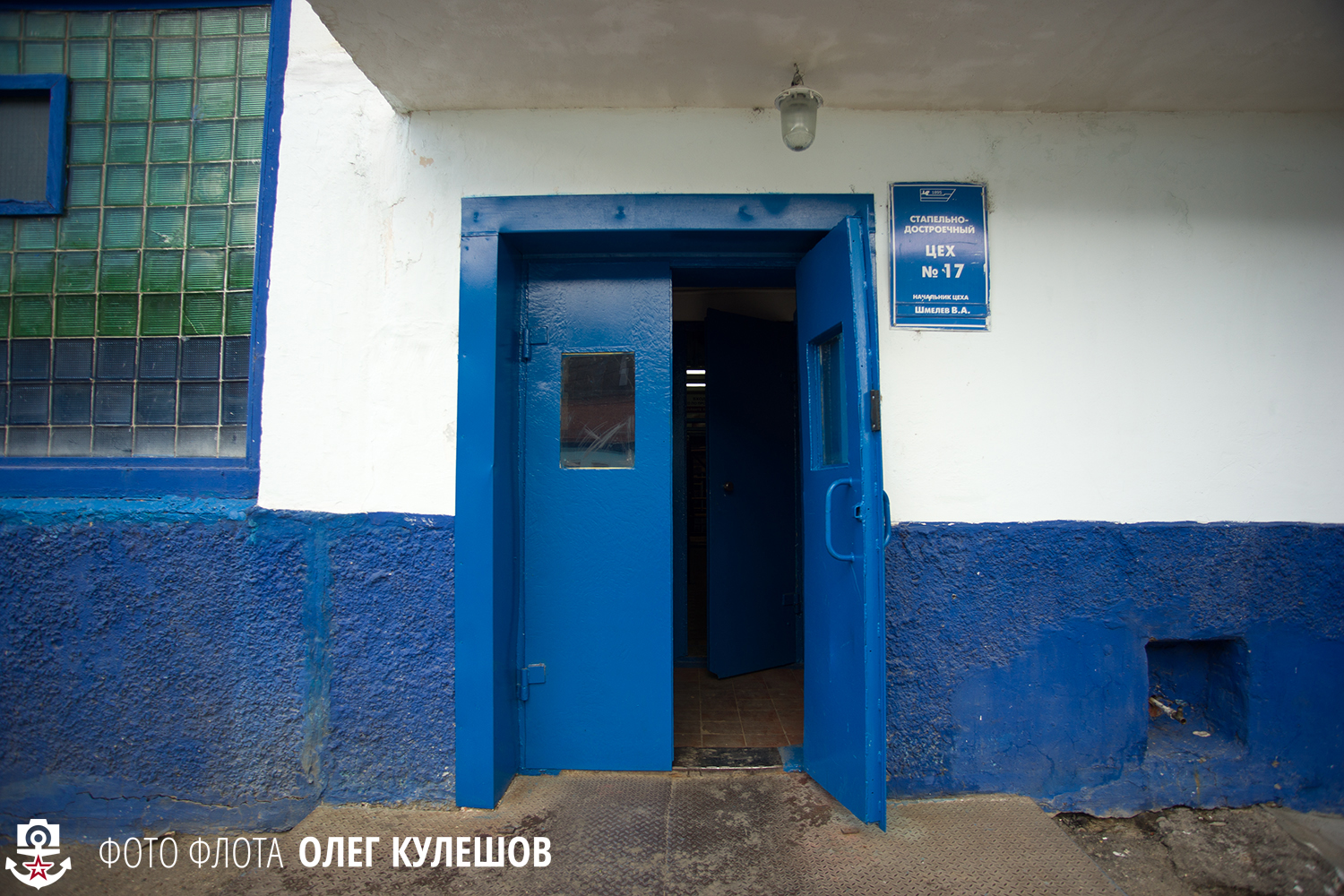
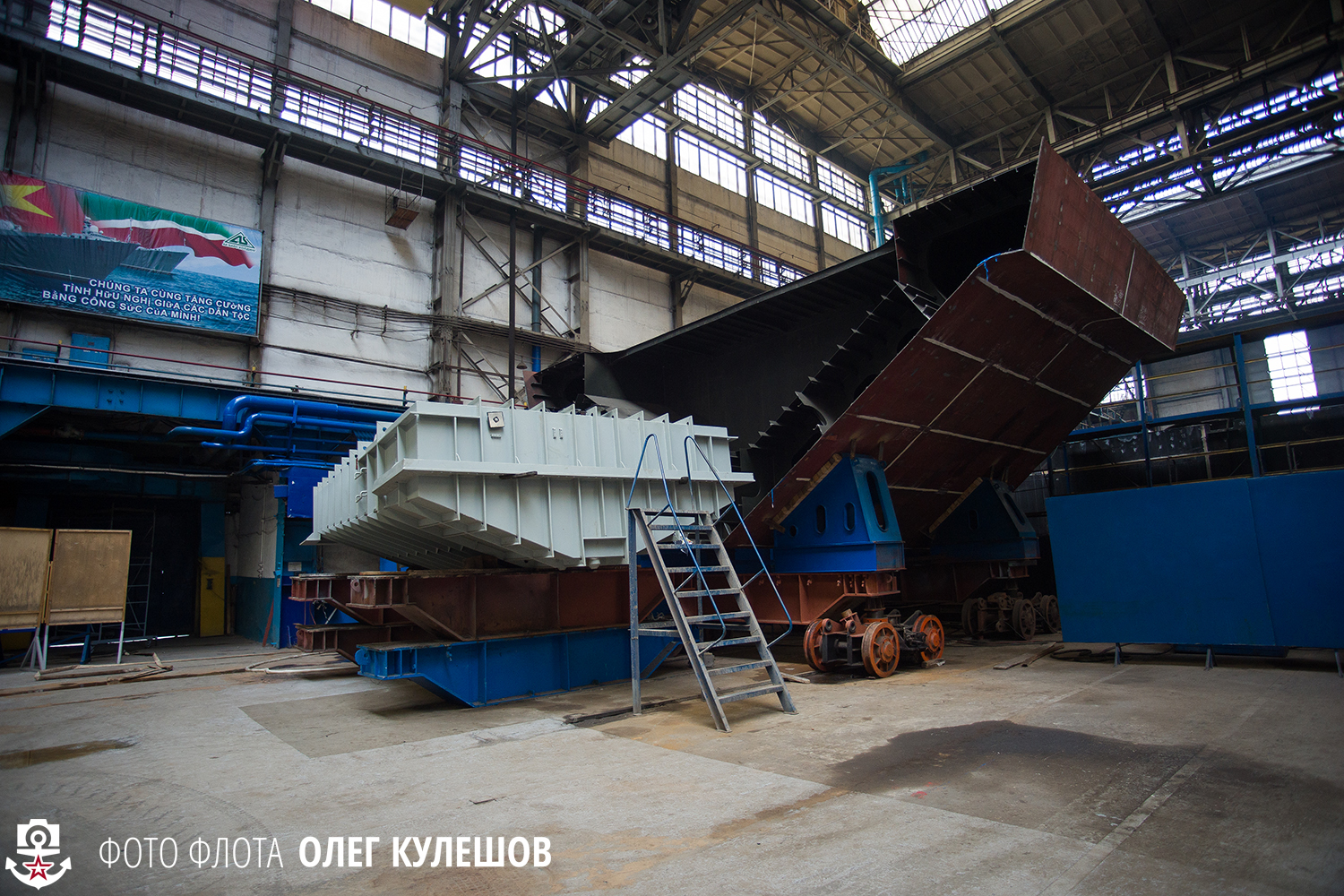
If in workshop No. 3 parts for future ships were made, then in workshop No. 17 these parts are connected to each other and the ship finally takes shape.
17.
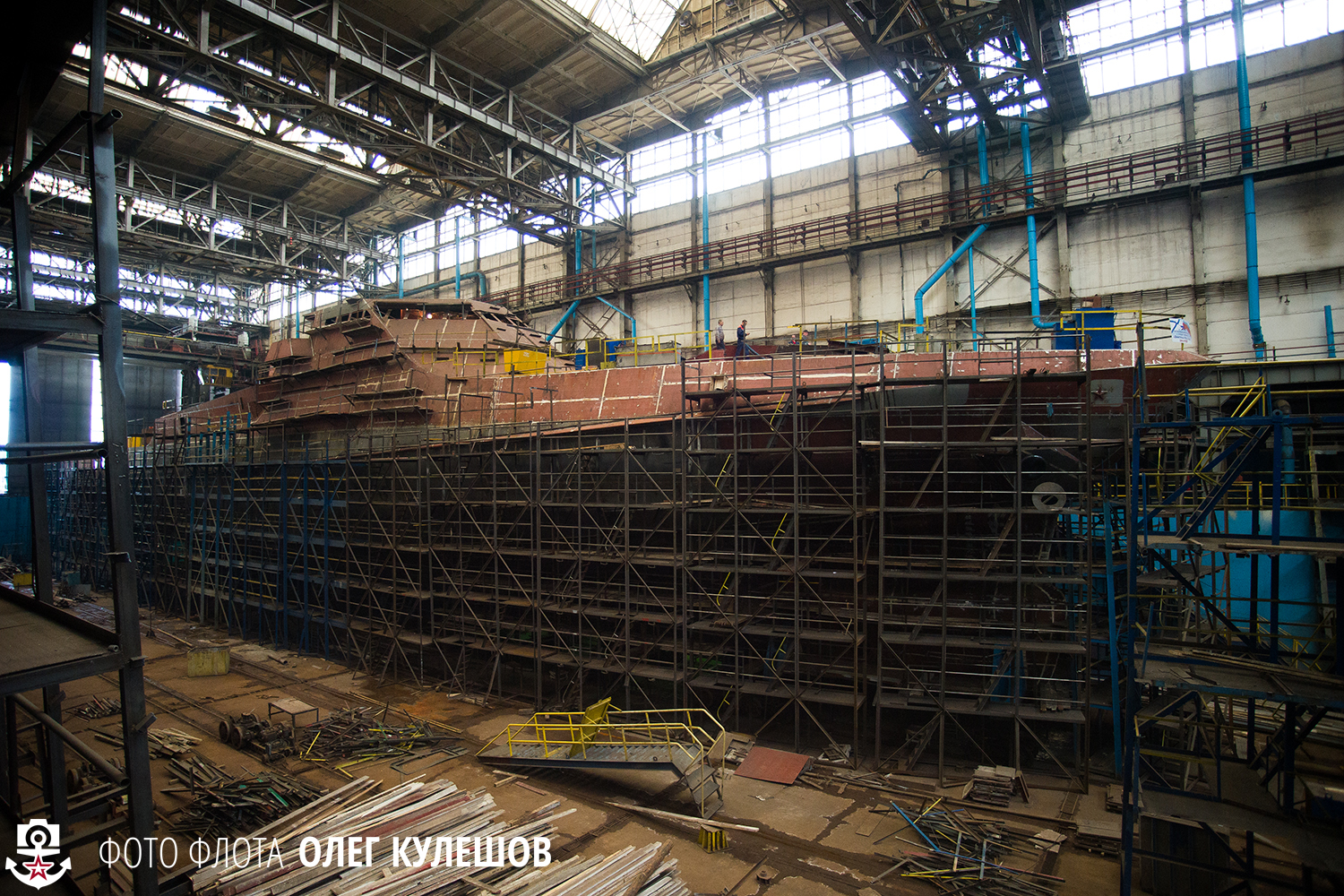
Unfortunately, all the ships under construction inside were not shown, but one was still allowed to be photographed - the Project 22160 patrol ship, named "Dmitry Rogachev", in honor of Rear Admiral Dmitry Dmitrievich Rogachev, who lived in Zelenodolsk and actively participated in the life of the city. Also, at present, a street in the city and school No. 4 are named after the famous military leader.
18.
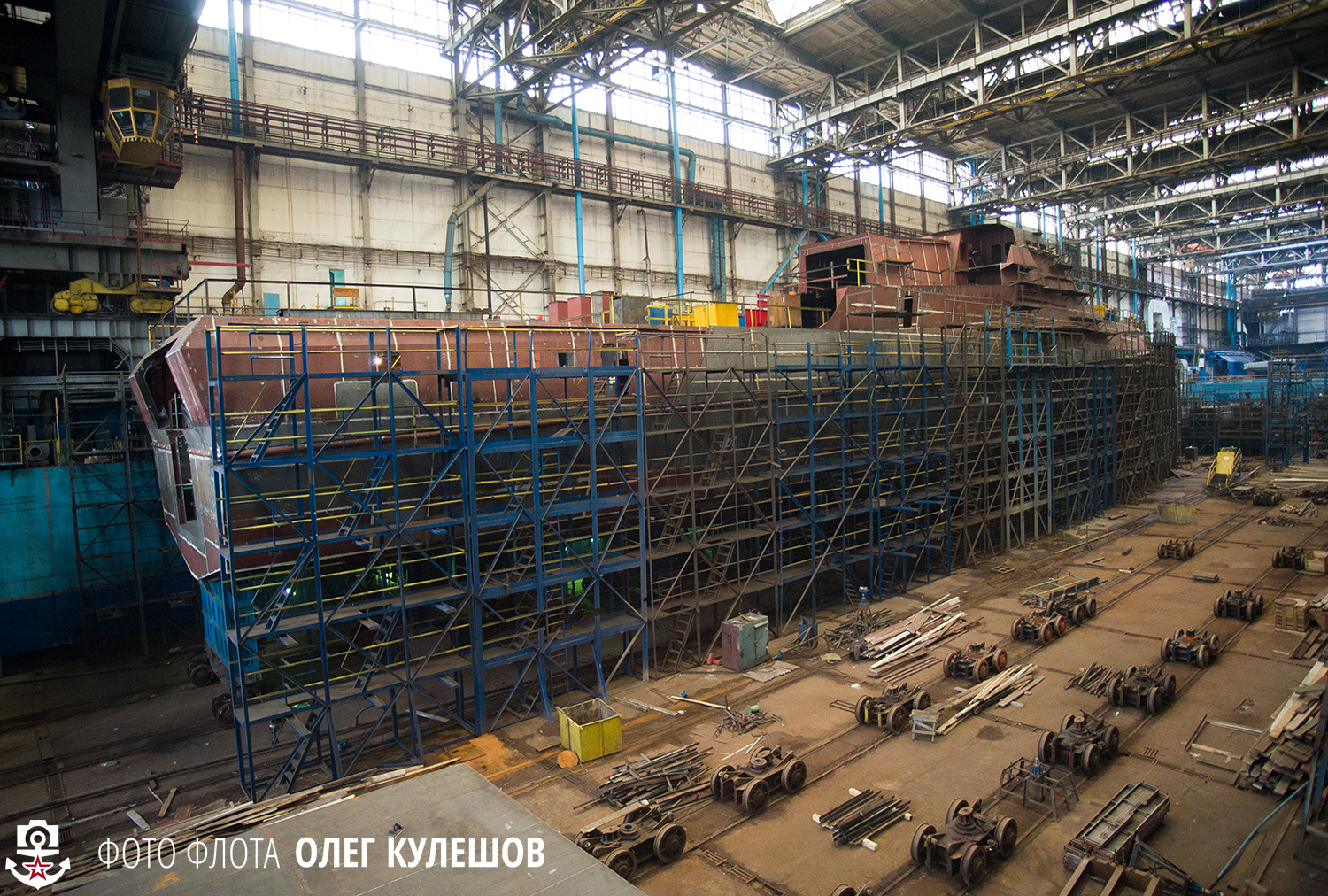
The ship was laid down in July 2014. As I wrote above, it belongs to project 22160 and was developed by the Northern Design Bureau.
According to information from the Northern Design Bureau, Project 22160 p ships are intended to carry out border patrol service for the protection of territorial waters, patrol the 200-mile exclusive economic zone in the open and closed seas, suppress smuggling and pirate activities, search for and provide assistance to victims of maritime disasters, environmental monitoring of the environment in peacetime, guard ships and vessels during sea crossings, as well as naval bases and water areas in order to warn of an attack by various enemy forces and means - in wartime, as well as operations in far sea and ocean zones.
19.
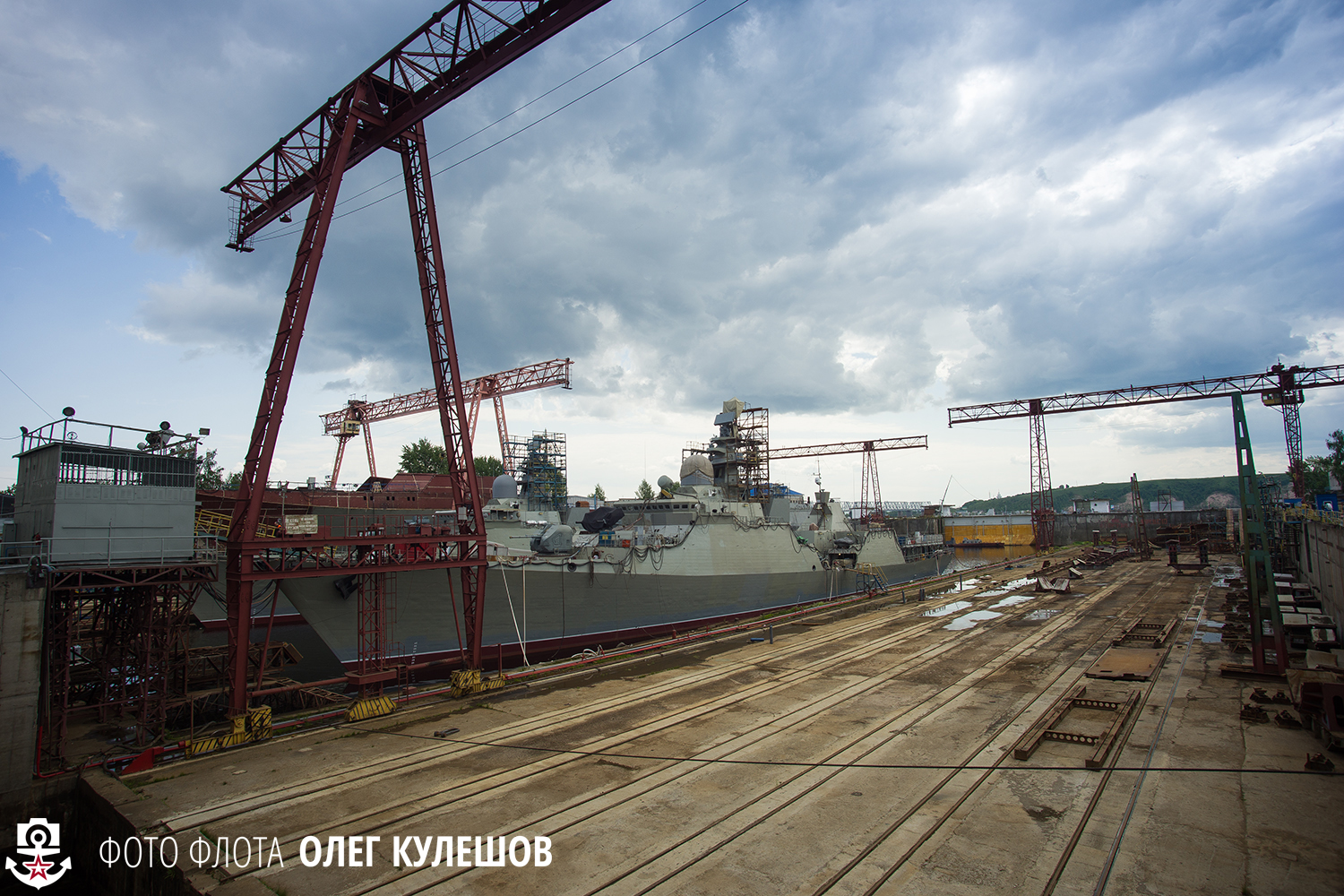
After the ship's hull is built and all the main mechanisms and equipment are installed, the next stage begins - taking the ship out of the workshop and launching it into the water.
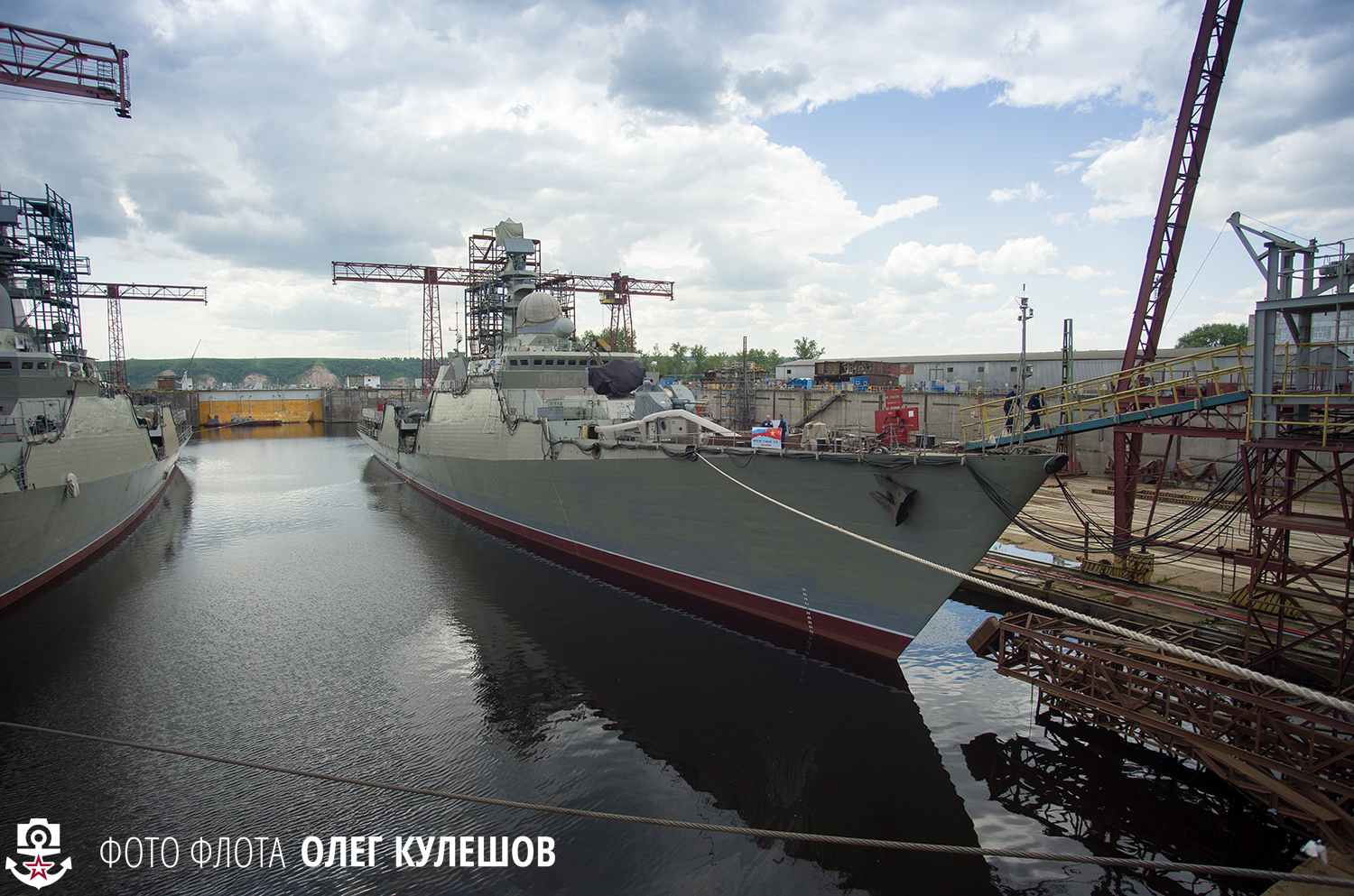
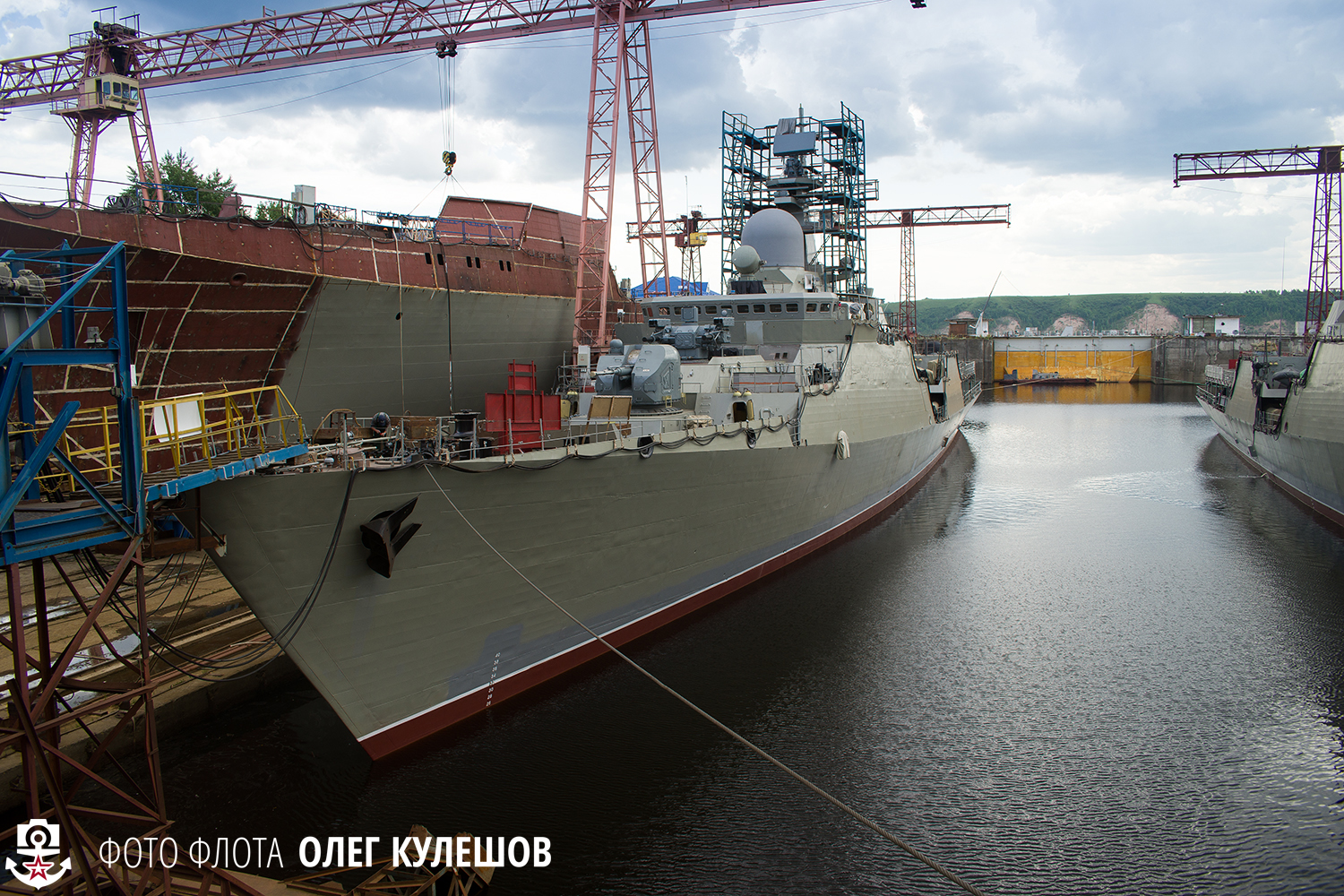
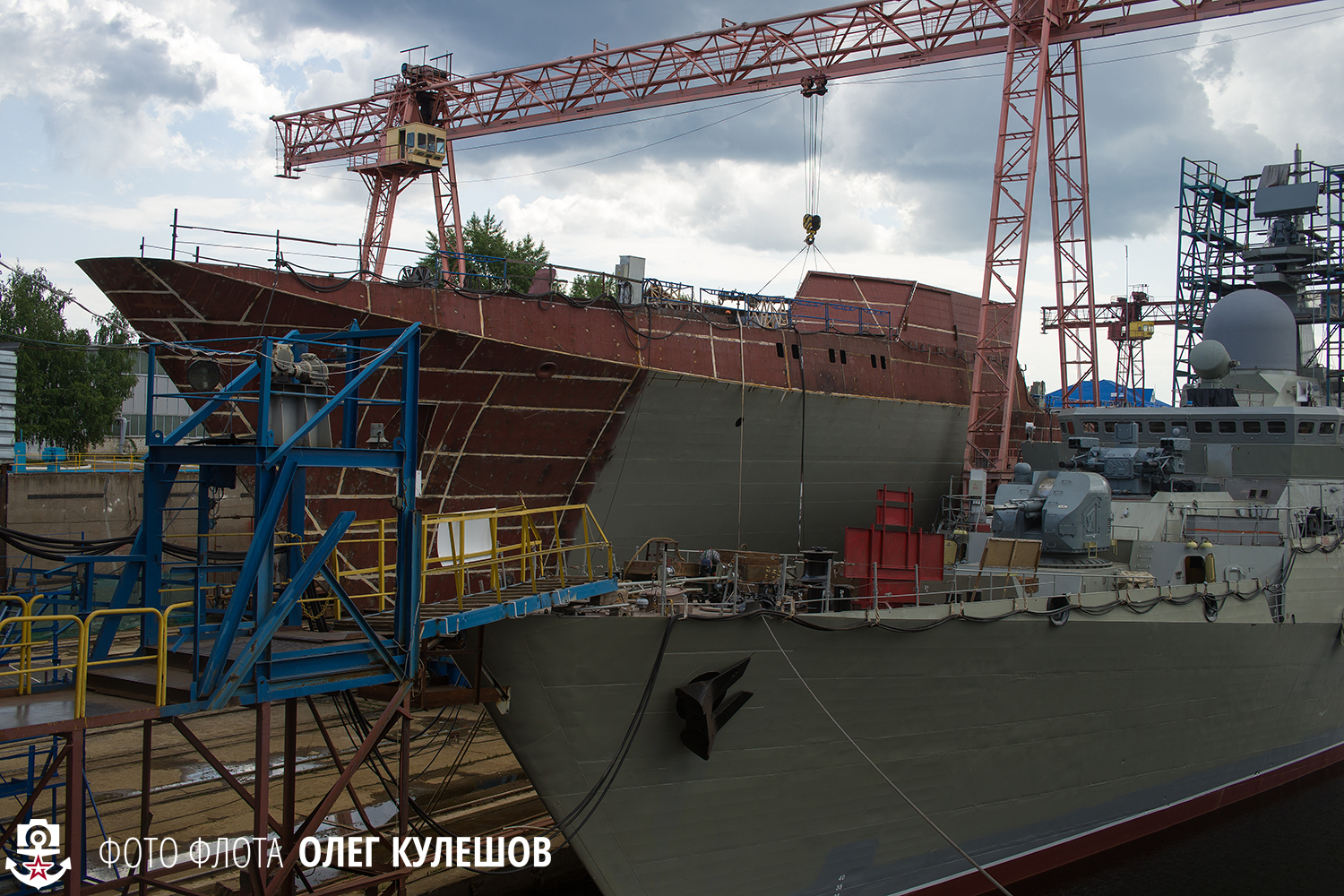
Currently, there are 4 ships in the docking chamber of the enterprise, of which two are Project 11661E Gepard-3.9 corvettes, which were built for a foreign customer. In the near future, both ships will begin sea trials.
20.
By the way, the products of the Zelenodolsk plant are also available in my native Severodvinsk.
Last year, the Sviyaga floating dock, built for the Navy, arrived from Zelenodolsk to Severodvinsk via inland waterways , which is currently based at the pier of the Zvezdochka enterprise.
Also included in the Belomorsk naval base are two small anti-submarine ships " Naryan-Mar " and "Onega" , built at this plant. Well, last year I went out to the White Sea on the physical fields vessel Vladimir Peregudov to catch the launch of two Bulava missiles ; it was also built here.
22.
It is also worth mentioning the shipbuilders of the enterprise. At the Zelenodolsk plant, serious attention is paid to working with personnel, including in terms of advanced training, decent wages, providing housing and preserving the health of workers.
Last year, as part of the celebration of the 120th anniversary of the plant, a solemn ceremony was held to commission the first stage of the Krasny Metallist residential complex; 78 families of plant workers received comfortable apartments. The plant plans to build 10 houses by 2020, of which 4 are 5-story and 6 are 10-story.
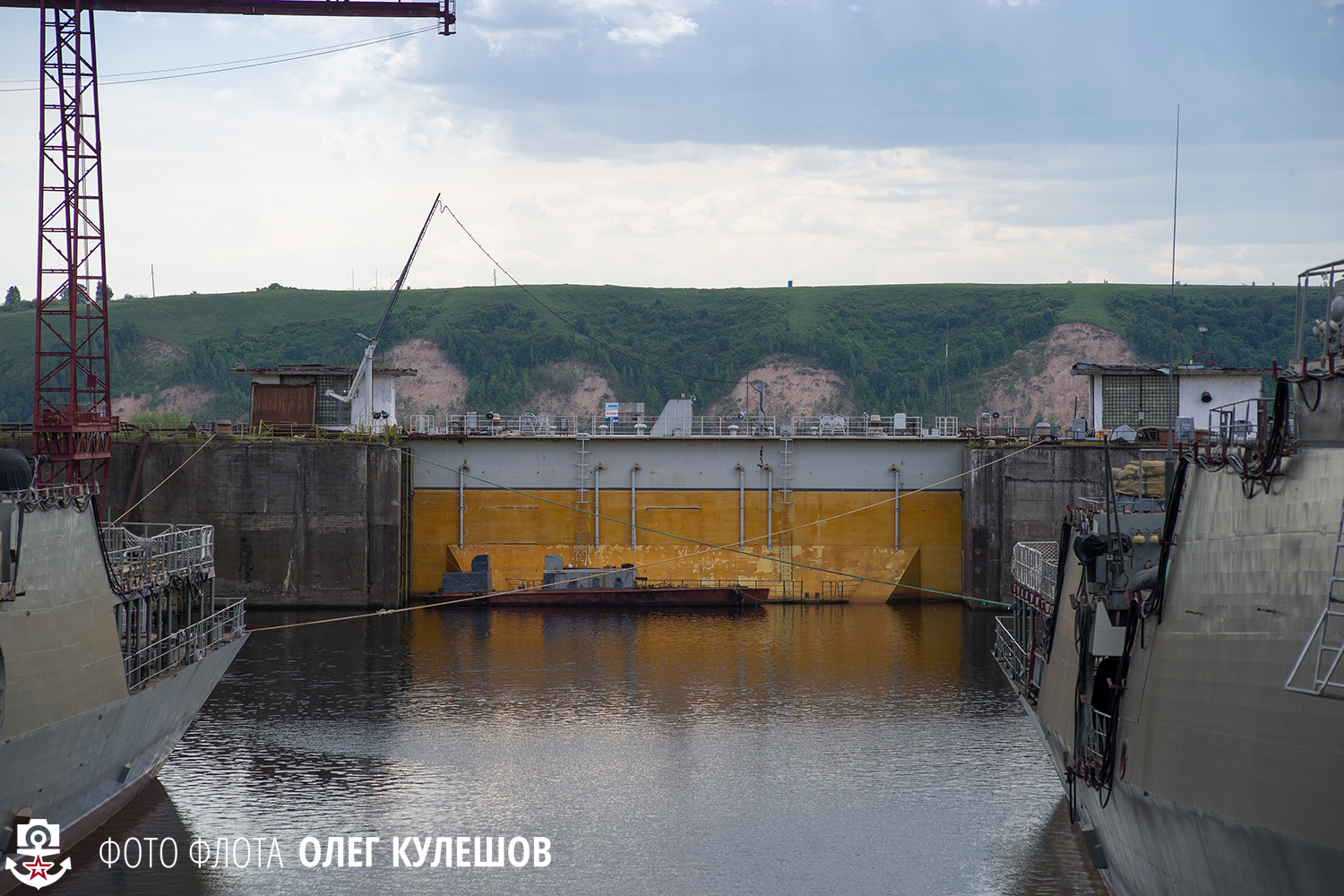
23. Dock chamber gate.
I thank the management of the Zelenodolsk plant named after A.M. for the excursion to the enterprise. Gorky, the Ministry of Industry and Trade of Tatarstan, as well as the organizers and sponsors of NeForum, thanks to whom this trip took place.