
Translated material
The United Kingdom against the European Union
What happened in the UK on the eve and during a referendum. Report "Medusa"
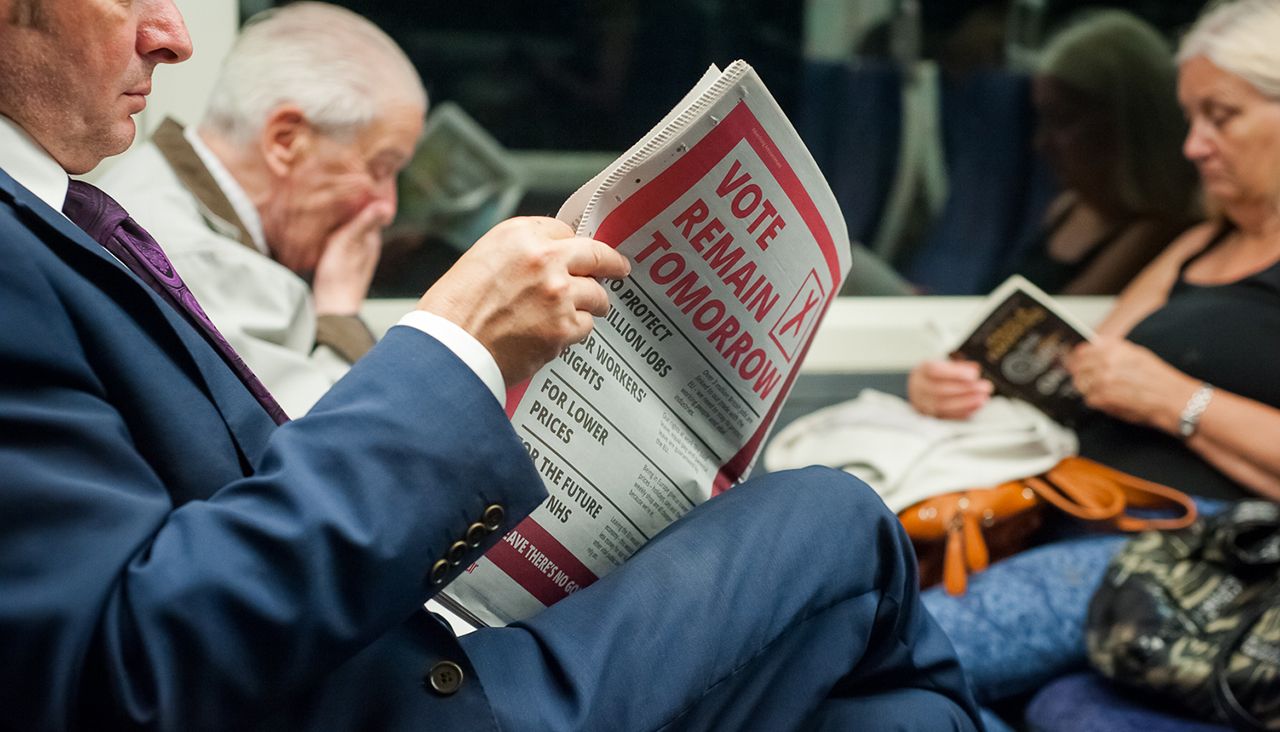
On June 23, a referendum on the country's withdrawal from the European Union (Brexit) takes place in the UK. How it ends is almost impossible to predict: opinions on this issue were divided approximately equally. The outcome of the vote depends on those 9%that are going to vote, but do not know why (or do not talk about this to sociologists). About how the last days before the referendum, about the arguments of both parties and about how the vote began, at the request of Medusa, is told by a journalist from London Katerina Nikitina.
The most important solution in life
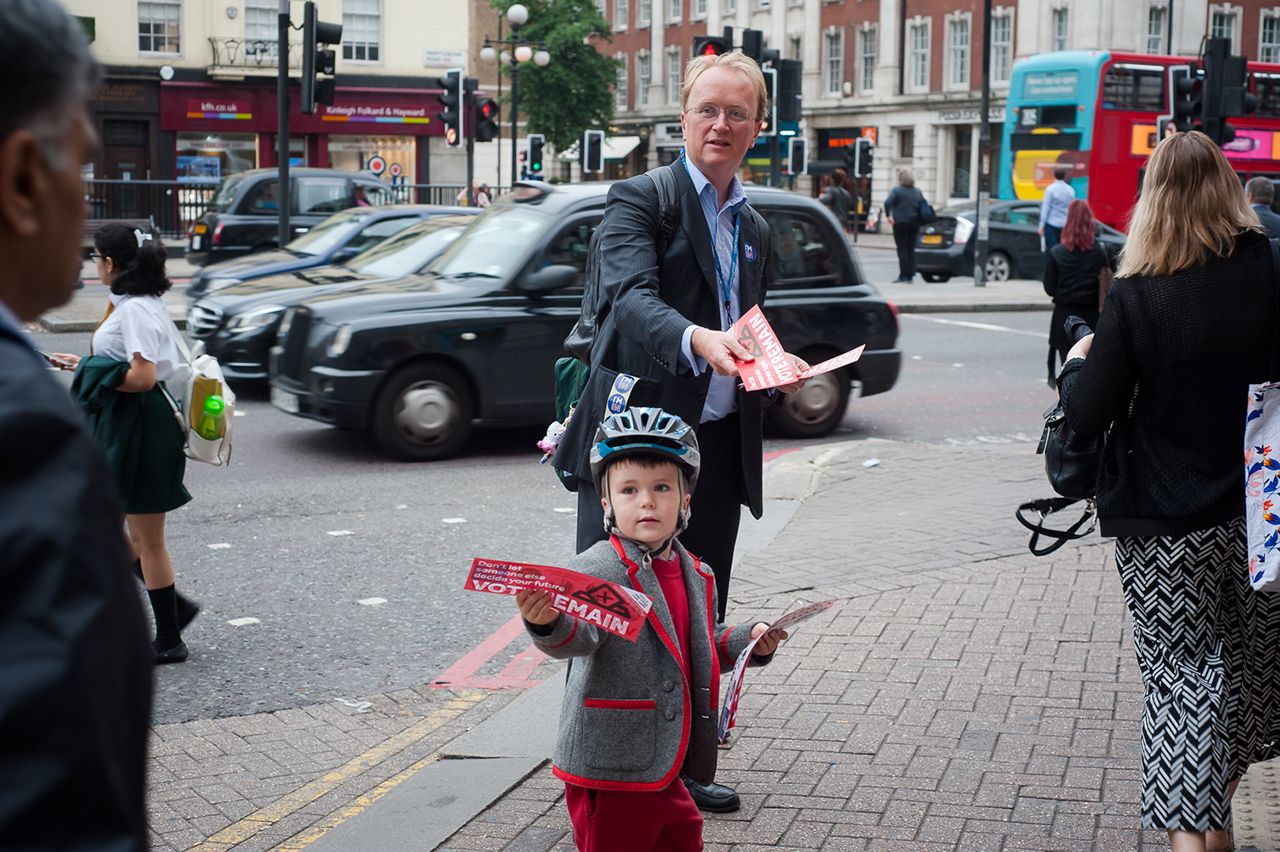
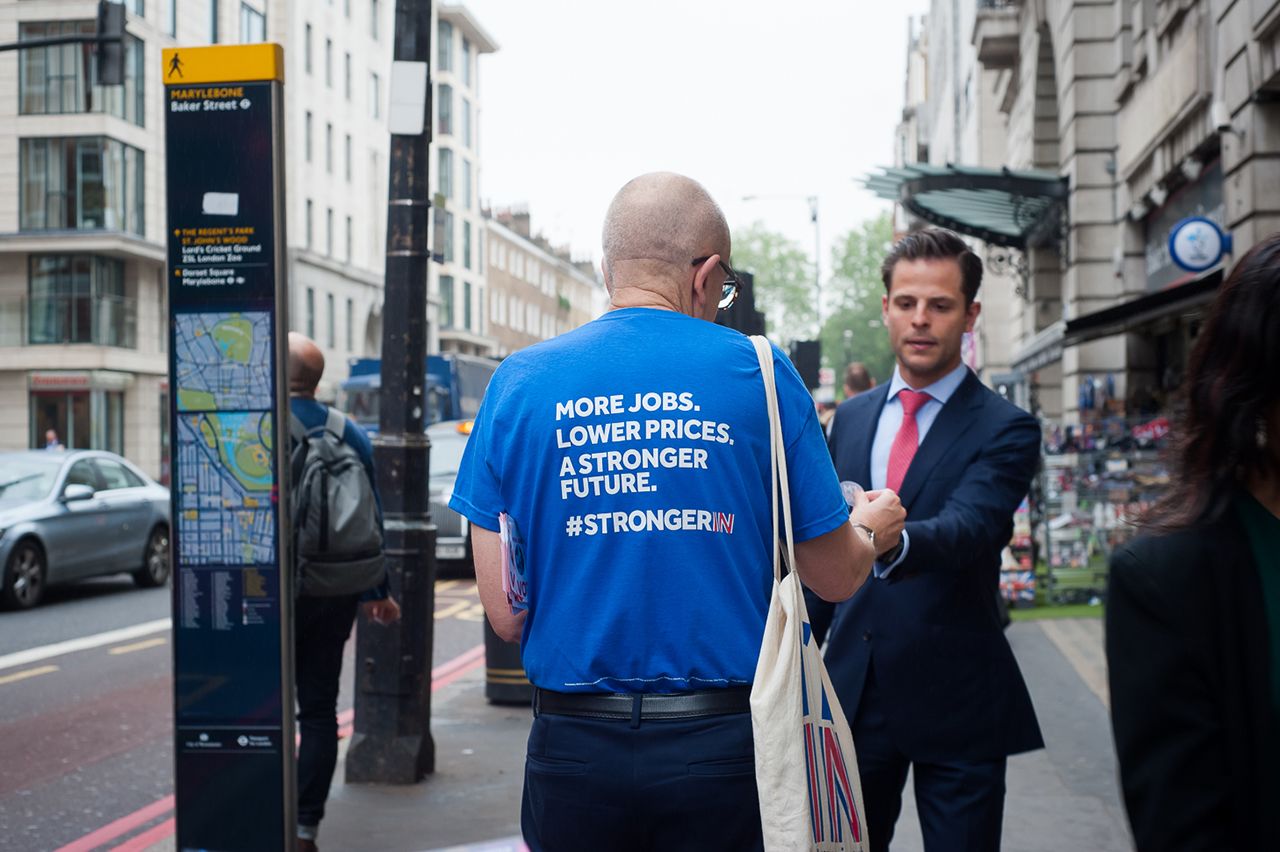
At the exit from the Baker Street metro station in London, a four -year -old boy runs up to the passers -by rushing to work and holds out leaflets: “Do not forget to vote tomorrow.” His dad, standing next to the stickers of "Iʼm in" ("I stay"), adds: "Vote to stay." The eldest daughter of about ten helps to tear off the stickers and glues them to those who wish on his jackets. A gray -haired man stops her gesture with a smile: “Sorry, dear, but I'm from another camp!”
There is the last day of the struggle for the results of the referendum on the withdrawal of Great Britain from the European Union. The country is divided approximately in half.
“The most important political decision in your life, there will be no second chance.” Newspapers and television every day remind that all citizens of the country on June 23 need to make their choice, and this choice may not be easy. The exit referendum was appointed Prime Minister David Cameron in February 2016-after he promised in the parliamentary elections in 2015 that in the event of conservatives victory, he would entrust the people's membership in the European Union. The conservatives won, the word had to be restrained. In numerous interviews related to a referendum, Cameron says that he has never spared about it. Although even an inexperienced viewer can see cunning in this. The Prime Minister is the main supporter of the UK to remain in the European Union. Despite the political weight and power of his arguments, opponents of such a decision in the country are no less. On the night before the referendum, preliminary polls showed that 45% are ready to leave the EU, and 44% to stay. Another 9% have not decided yet, but they are going to vote.
The unofficial name of the possible result of the referendum is “Brexit” (Brexit = Britain + Exit). "Brexit" scares and wait for him. The main disputes relate to immigration, sovereignty, economic development. Two powerful political campaigns are organized in the country: “Britain Stronger in Europe” (“Britain is stronger in Europe”) and “Vote Leave” (“Vote for the exit”), which are financed due to large business, political parties and private donations. The main persons of the first campaign were the leading members of the conservative party David Cameron and the Chancellor of the Treasury George Osbourne, almost the entire Labor Party; The campaign is also supported by well -known scientists, businessmen, stars. For exit from the EU, conservatives are agitated: the Lord Chancellor Michael Gov, former mayor of London Boris Johnson; They are joined by the leader of the Independent Party (UKIP) of Nigel Pharazh, which is not officially part of the Vote Leave, but calls on this independently.
In their intensity, the debate around the possible Brexit is superior to discussion of football, even despite Euro 2016. The hottest topic is migrants.
We are not racists, but must understand
Steve Hairons is a regular of the Captain Kidd pub in the east of London. He is the owner of the company, which is assessing the state of real estate put up for sale, and solves the problems of cracks and mold, which inevitably arise in the old houses of the Victorian era. “I hire people from all over the world, more than half of my workers are foreigners,” he says. - I am not a racist or homophobic, I am happy to work with those who understand the work well. Let people come, but we must control their number. If you have a qualification and you need this country, no one stops you, we will be happy to invite you! ” When asked whether he is ready to pay more than 20 thousand pounds a year Polish workers (so many or more, according to the requirements for non -citizens of the EU, must earn applicants for a working visa in Britain), Hairons, thinking, answers: “So much is not ready.”
- Who, in the case of Brexit, will you replace half of your specialists?
- We will train and hire the locals.
Friends of Hairons are nodding approvingly. “I will also vote for the exit,” admits a 77-year-old pensioner, a former fisherman Bruce Pup. - Whatever this government wants from us, I will do the opposite. In any case, nothing will happen to me. ” Hearing the question of what he will do if Britain votes for Brexit, Pope laughs: “I will get drunk!”
- And if it remains?
- Same!
“The working class more actively supports the exit from the European Union than the average,” says Owen Jones, a British journalist, columnist in The Guardian. “They see the Prime Minister from an alien environment, a conservative whom they do not trust, and are happy to stick his sticks in the wheels.” Finally they have such an opportunity. ” Jones is an invited guest at a meeting of Polish activists, which takes place in one of the audience of the University of Arts. The discussion Eva Yasievich is moderate - a Polish writer living in London, and a human rights fighter. Poland is the second (after India) country, supplying the largest number of migrants to Britain. 853 thousand of her citizens moved here.
“I constantly hear: if there are fewer migrants in the country, we will be able to provide more jobs to residents of Great Britain. I do not believe in these arguments. 70% of service workers are immigrants. Even Boris Johnson himself cannot rise in the morning and wipe his ass without the participation of foreign workers, ”Eve says, tearing off his last phrase the applause of the hall. Eve defends Polish, Romanian, Bulgarian visitors who perform low-skilled work and speak poorly in English: “We could help them adapt, providing more affordable English schools.” Also, in her opinion, it is important to develop trade unions that will equally protect both the rights of the British and the rights of visitors. “I believe in the idea of an international working class,” she says. - There are no workers better or worse simply because they were born in different countries. We are all workers. ”
Jones and Yasievich, which unfolded around the referendum, are called “debates about immigration”-only this side of the issue is truly, in their opinion, concerns English society. If the UK vote for the exit, then, according to Jones, this will mean one thing: a campaign against immigrants has begun in the country. “Only the lack of imagination prevents you from realizing how much more terrible consequences this campaign can lead,” he concludes.
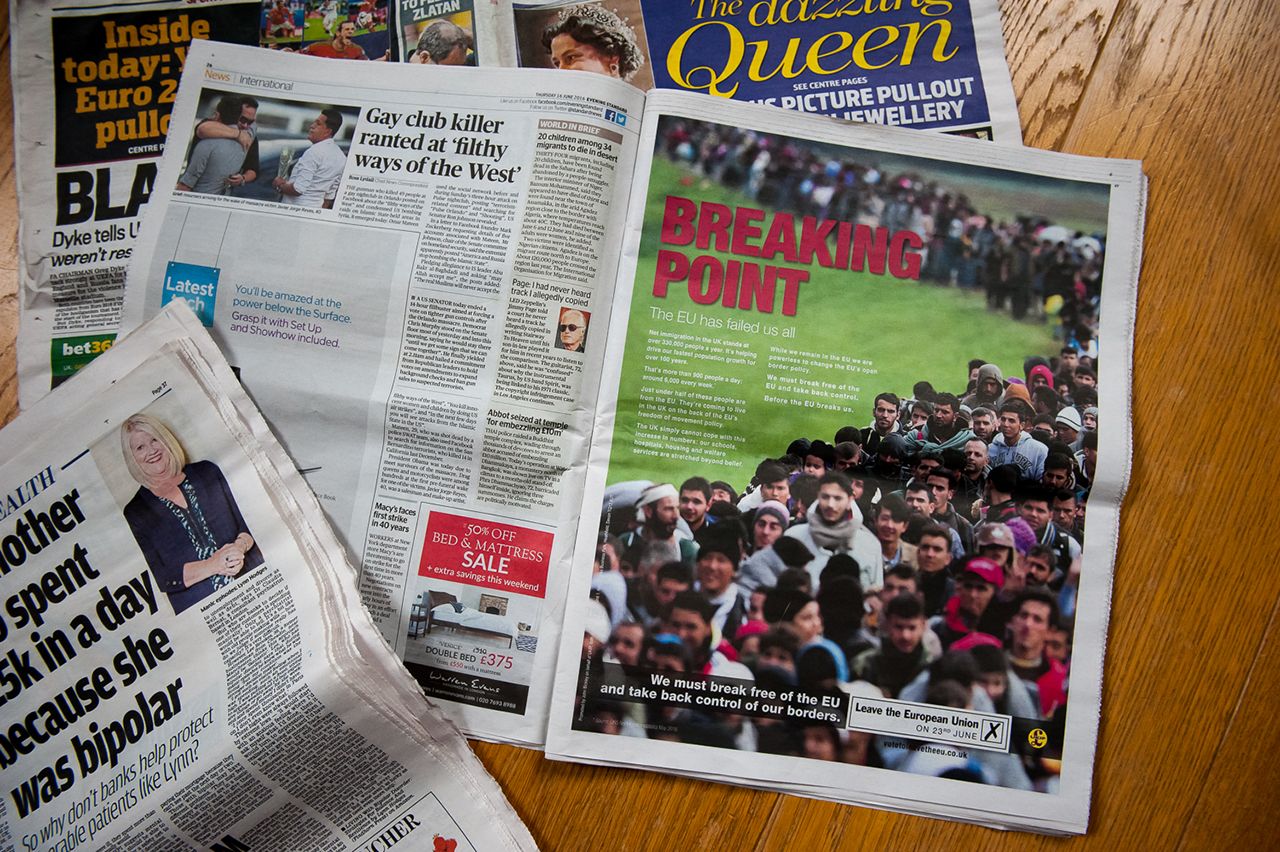
A week before the referendum in the press and on the streets of the cities, an advertising poster appeared over the exit from the EU, initiated by Nigel Farah from UKIP. It has a photograph of thousands of Syrian refugees crossing the border between Croatia and Slovenia in October 2015. The signature read: “The EU lost. We must free ourselves from the EU and take control of our borders. ” The poster instantly was in the center of the scandal. The Treasury Chancellor George Osborne called him “disgusting and low” and compared with the fascist propaganda of the 1930s. Prime Minister David Cameron - "an attempt to intimidate and share people." Even the writer Joan Rowling published on her website “About Monsters, Villains and EU Ru-Conferenced”, in which she also indicated the Nazi mood of the poster: “It will be dishonestly assumed how many supporters of Brexists and fanatics do it, this is far from the case. At the same time, it is pointless to pretend that many of them do not support this campaign and, to some extent, do not control it. ” They sued the advertising, and the plywood had to be removed, although, according to him, "he reflects the truth about what is happening in the world."
The problem of migration is the main trump card of the campaign that supports the exit from the EU. So far, David Cameron actually signs that he cannot keep his promises to reduce the number of immigrants from hundreds to tens of thousands a year, supporters of the exit find a simple recipe: we must close the boundaries of the EU, which implies unhindered movement of its inhabitants. And to invite only those whom we ourselves want to see, and in the quantity in which we can afford to afford. Otherwise, according to them, the burden on the free health and education system will become overwhelming for the country. Almost every public statement by Brekzit supporters on migration issues begins according to the fact that no one personally has anything against foreigners and everyone appreciates the contribution that migrants bring to society. It is exclusively about monitoring the number of people who come to the United Kingdom. True, how exactly the system will work to attract foreign workers after leaving the EU, supporters of the campaign do not specify, referring to the example of Australia and Canada with their point system of attracting migrants, then speaking about a special British path.
Natalia Macca is the founder of Perfect Household Staff, selecting home staff for wealthy houses of Great Britain. In its base, containing several thousand workers, more than half are immigrants from the EU. “In the case of Brexit,” says McCU, “workers from Eastern Europe will need to be replaced by the British, and they have a different quality of work and other salary requirements.” She calls this situation a potentially catastrophic, but not so much for her business as for customers who, somehow they need house assistants, will just have to pay much more for them. “The market price is the same,” McCa said. “But Europeans are much more willing to go for this price than the British.” But there are fewer British than Europeans. ” At the same time, Natalia herself is going to vote for Brexit: “Despite the fact that our generation will be quite difficult - and, possibly, long enough - in the future it is better for the country.”
At the meeting of the Vote Leave campaign in the Old Billingsgate Hall, organized four days before the referendum, people of various ages and professions are gathering, many of whom refute the thesis that supporters of Brexita are primarily workers without higher education in the age of 50. Chris is a young financial analyst in the bank. He comes to the meeting in a pirate suit and with a home -made cardboard anchor, which says that the European Union pulls the country to the bottom. In a conversation with Medusa, he admits that he was educated in one of the leading English universities, and at work he builds financial models every day. Chris believes that his country underestimates the importance of sovereignty, transmitting control to Brussels, and in the long run, the exit from the EU will affect the economy of Great Britain in the most positive way.
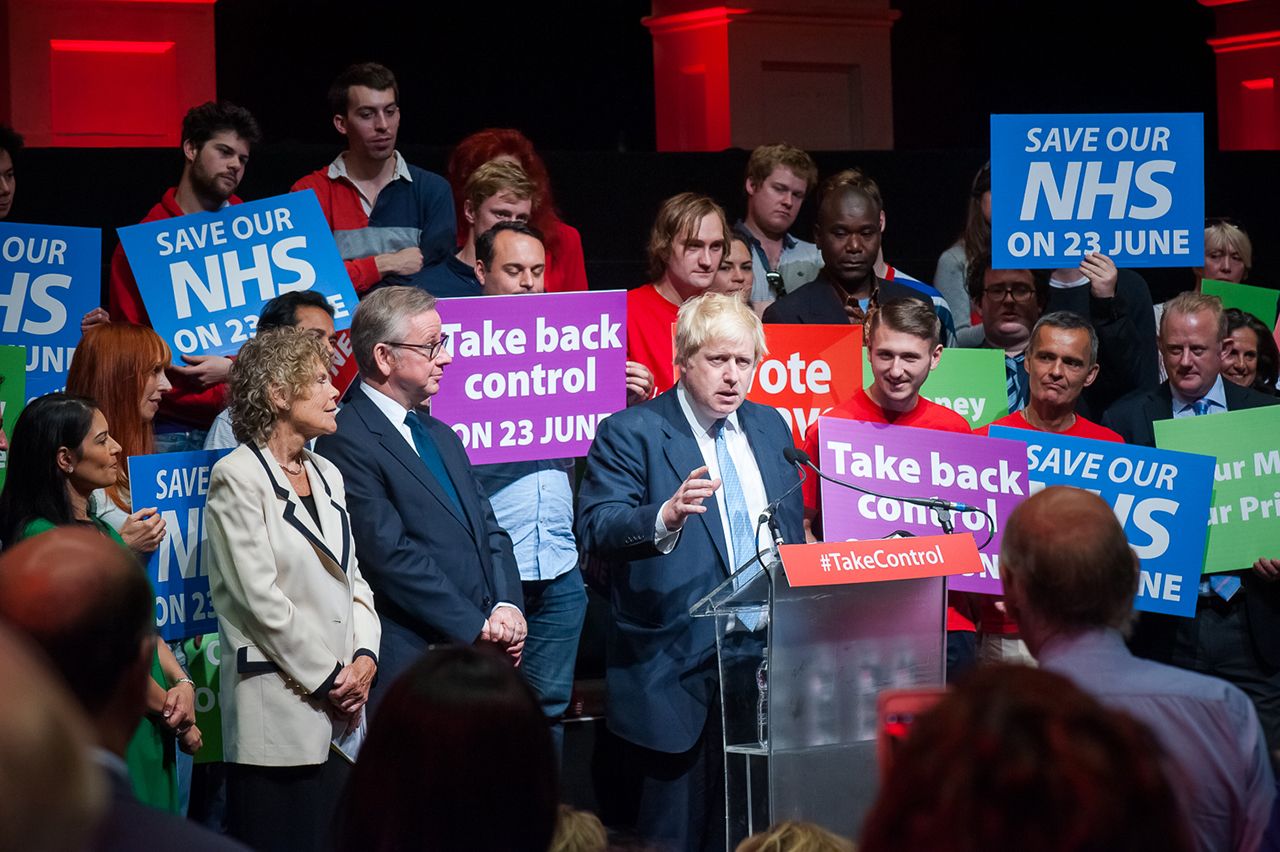
The organizers of the event bring a dozen two activists onto the stage and distribute posters with the main slogans of the campaign: “Our money is our priorities”, “We will save NHS” ( British healthcare system - approx. Medusa ), “Return control”. On a bright and dynamic background, the main faces of the campaign for exit from the EU appear: next to Boris Johnson and Michael are the former Minister of Sports Kate Houi and the Minister of Employment of the Population of Pritish Patel. Their speeches are built around the most controversial points of the referendum, and the greatest approval and violent applause cause statements: “We do not leave Europe - we leave the European Union”, “This is a union not for workers, but for the elite with money”, “We are the fifth largest economy in the world, and we can do it without the participation of the sinking EU”, “We will trade not only with Europe, but with everything. The world ”,“ We want to see our country going to the future with hope, confidence, independently ”,“ This is our only chance - to regain control! ”
The 20-year-old Edu from Bristol was laid by a red T-shirt with a slogan “Leave”, which he bought at EBAY: “I looked at the surveys and they angered me, paved with a slogan. The voices are clearly wound in them in favor of those who want to stay. They are all damned capitalists. My great -grandfather fought during the war so that Germany did not control us. And now we are giving up to her arbitrarily. ” This is Eda's first participation in a public political event, and, excited by success, he promises that he will walk.
EU or new schools
Kai Speaker, Associate Professor of the Department of Political Philosophy of the London School of Economics, argues in an interview with Medusa: “The campaign“ Strongger in ” - in order to stay - decided that she would win the dispute, if she put on economic arguments. I understand why they did this, but in order to get the support of the majority less sophisticated in matters, I would talk more about the position of Britain in the world and appeal to what place it should occupy. What will happen after Brexit? The remaining EU countries will meet without Cameron and will decide how to continue business. And it will be very uncomfortable for the British population - to see how such decisions are made without it. In my messages, I would emphasize the population: you do not want to be outside the adoption of these decisions. You do not want to be outside the most important political association in today's world. If we want to come out, we will globally lose to the degree of our influence, we will be hermit, no one will listen to us. We will just lose power. ”
Speakerman himself cannot take part in a referendum, although he lives in England for 13 years. He is the owner of a German passport. For him, “Brexit” personally can threaten to return to Germany, and for his university - a loss of access to European schemes for financing scientific research and a sharp reduction in the number of international students. “If European students have to receive complex visas and pay for study in England as much as students from other countries pay, there is a big risk that many will not want to go here, preferring German, French and so on to English universities.”
David Cameron quotes the leading economists of the country, according to which the UK exit from the EU threatens with large financial losses (from 20 to 40 billion pounds a year). As a member of the European Union, Great Britain today has access to a single market of 500 million inhabitants, within the framework of which it sells goods and services on the most favorable conditions for itself - without international taxes and duties. Almost half of all that produces Britain goes to this market, and more than three million jobs are tied to it. 80% of the British economy does not make up goods, but services, including banking, insurance, advertising. “We are selling more services to Luxembourg today than for an entire India,” says Cameron. According to him, if Britain leaves a single market, economic growth will stop in the country, there will be less work, less tax deductions to the treasury, which means that the UK is threatened with a large hole in the budget. In this case, Cameron claims, you will have to either occupy from other countries, or increase taxes, or spend less, including on the social sphere. “Six years ago, we were already in a situation where the country's economy was not growing, there was no work, I do not want to go back,” the Prime Minister says, recalling post-crisis times, and calls not to take risks.
"Don't risk!" - It was the main message of the campaign “Stronger in”, but even its supporters are ready to take risks. Konrad Carwallo is an art consultant of Oaktree & Tiger Art Advisory, in the first profession-a mathematician and a financial trader. He says: “If we leave the EU and the pound weakens, this will become a fantastic opportunity for Europeans and Americans to start buying art in Britain, and a local art market can still rise,” he said. Carwallo himself in a referendum decided not to take part. He says that the data that both campaigns provide is not enough to make a balanced solution. Each of the parties voices only what is convenient and beneficial to it: “This is not the decision that the general public should make. These are too complicated things. ”
Supporters of Brexita believe that Great Britain is a fairly large player in the global economy and can easily agree on special trading conditions for themselves, not only with Europe, but also other countries of the world, including America and China. And they offer “saved” on membership in the European Union to be sent to the development of the medical system and the construction of new schools. In their advertising materials, members of the campaign for exit from the EU Vote Leave lead to 350 million pounds - this is the amount, according to them, are sent from the treasury of Britain weekly to Brussels. Independent experts argue that this figure has little in common with reality and is more likely 160 million per week (given the discounts that the country receives during trade). And this amount is an adequate value of membership in an economic association, which provides residents with goods, services and work.
The rain decides
Итоговые результаты голосования будут определять не прогнозы лучших экономистов, а прогноз погоды. Так считают многие наблюдатели в британской прессе, приводя статистику о том, что молодое население страны (потенциально поддерживающее ЕС) склонно в дождь оставаться дома, тогда как избирателям более старшего возраста (которых чаще приписывают к сторонникам «Брекзита») не страшна любая английская непогода.
В ночь со среды на четверг в Лондон и другие английские города пришли серьезные грозы: гремел гром, вспыхивали молнии, не прекращался очень сильный дождь. Утром в новостях предупредили об опасностях наводнений и задержках транспорта.
Илина Георгиева, консультант по вопросам общественных мнений и лидер кампании «Stronger In» в Вестминстерском округе Лондона, призвала в фейсбуке: «Мы будем стоять с плакатами в самых видных местах города, приходите, кто может, поддержите нас». Всего с начала своего участия в кампании Георгиева провела более сорока акций. В феврале на первую встречу волонтеров в ее округе пришло человек десять, с каждыми выходными их количество росло, и к финальному дню только в Вестминстерском округе набралось не меньше ста человек активных участников. Договариваются они чаще через WhatsApp, и после того как мероприятие подтвердилось, его публикуют на основном сайте кампании. Основных способов работы волонтеров с широкой публикой три: раздача листовок у метро и в других заметных местах города, информационные столы на массовых мероприятиях и обход домов. Сначала, рассказывает Георгиева, людям приходилось объяснять, что это за референдум, кому он нужен и как принять в нем участие. В последние недели в этом отпала необходимость, большинство определились с выбором и чаще стали просить наклейки, которые идентифицируют политические взгляды. Многие стали вешать постеры на окна домов. Как говорит Георгиева, люди в Англии ждут, что к ним постучат волонтеры, и могут даже обидеться, если ты зашел к их соседу, а к ним нет: «Здесь так принято. Это то, как работает английская политика».
На акции кампании «Stronger In» приходили студенты, пенсионеры, очень богатые люди, среди которых есть даже бывшие министры из разных партий. «Я не думаю, что вы когда-либо еще увидите кампанию, которая объединяла бы столь разных людей со столь разными политическими взглядами», — считает Георгиева. Для нее самой важность поддержки ЕС неразрывно связана с личной идентификацией. Она родилась в Болгарии, год прожила в Швеции и десятый год живет в Англии. «Я не могу назвать себя ни болгаркой, ни британкой — я житель единой Европы», — говорит она.
За последние несколько месяцев только одни выходные прошли для Георгиевой без политических акций. Это случилось за неделю до референдума, после убийства члена парламента Джо Кокс. Неожиданная трагедия потрясла страну, и обе стороны решили приостановить все политические кампании. Ни в «Stronger In», ни в «Vote Leave» не стали связывать случившееся с грядущим референдумом, давая комментарии только о том, каким замечательным человеком и эффективным политиком была Кокс.
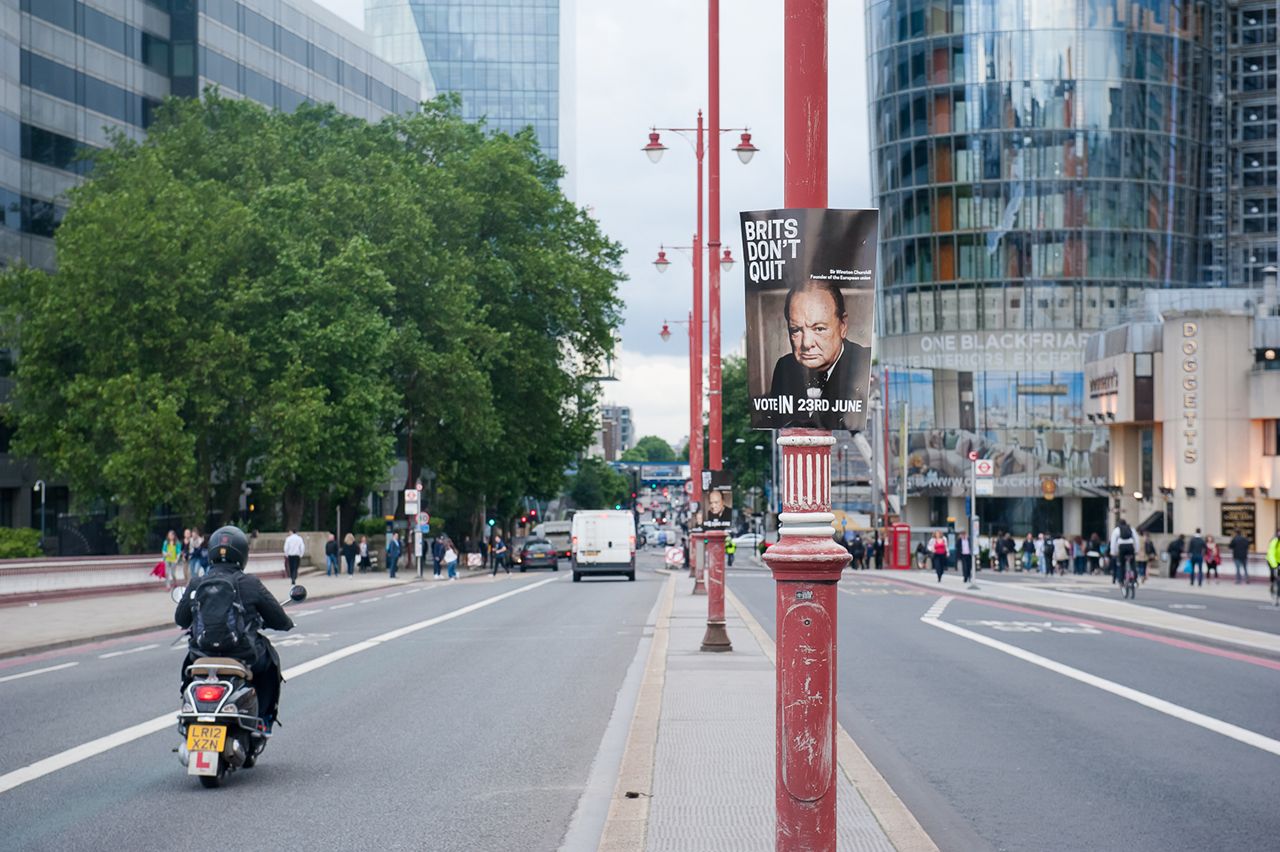
В день референдума (который, как и всякие выборы в Великобритании, проходит в четверг) агитация продолжается. Обе стороны выходят на улицу с плакатами и значками, предпринимая последние попытки склонить голосующих в свою сторону. Центры голосования открыты с 7 утра до 10 вечера. На участок не обязательно приносить даже паспорт — достаточно назвать адрес и имя. Правда, тем, кто никогда не голосовал до этого, нужно было подать заявку и зарегистрироваться заранее — срок приема таких заявок истек 9 июня. Кроме того, разрешается голосовать по почте — тоже заранее и тоже через специальную заявку. Сама процедура занимает пару минут: получить бюллетень, поставить крестик напротив одного из вариантов («Остаться членом Европейского союза» или «Выйти из Европейского союза») и опустить бумагу в специальную урну. Никаких строгих проверок и дополнительных мер безопасности на участках нет.
В будний день в спальных районах Лондона пусто. На площади рядом с муниципальным музеем, где разместился один из центров голосования, высокая блондинка выгуливает двух мопсов. Лорета Стаски приехала 17 лет назад из Литвы, но британское гражданство решила не получать, поэтому сегодня не голосует. В Лондоне у нее свой бизнес по выгулу и передержке собак, который позволяет ей выплачивать ипотеку, ездить в отпуск, платить налоги. Она говорит, что не очень переживает за решение, которое сегодня примет страна. «Если надо будет отсюда уехать — уедем. В любом случае это займет как минимум пару лет, пока примут новые законы. За это время, я надеюсь, мы успеем продать квартиру». Стаски уверена, что если у нее получилось построить бизнес в Британии, то она построит его и в Литве. «Я ко всему отношусь философски, — говорит она. — В мире нет ничего постоянного. Сейчас я счастлива здесь, но могу так же счастлива быть и в другой стране, это зависит от внутренного настроя. Все в мире меняется, сегодня ты здесь, завтра там».
Katerina Nikitina
London