
Translated material
The soul of notes

"When you listen to the game of the pianist, each note should have its own character, each note should have its own soul ..."
"When you listen to the game of the pianist, each note should have its own character, each note should have its own soul ..."
These are the words of the pianist Hank Jones, the eldest of the three jazzmen brothers: Teda-Trubach and Elvin-the drummer. Hank was born on July 31, 1918 in Viksburg, Mississippi and left our world in May last year. He belonged to a quarter of great pianists who grew up in Detroit. Three others are Tommy Flenegen, Barry Harris and Rollnd Hann.
On the air or in podcast from our site svobodanews.ru you listen to the weekly and booty “jazz time”. Thanks for the loyalty to our frequencies and thanks for your comments on our website. The microphone in Paris has your ds.
Theme - declared.
Hank Jones - Blues in My Heart (Benny Carter) - 7:52 (Hank Jones - Bluesette - Black & Blue)
“Blues in My Heart”, “Blues in my heart”, a play of an alt-saxophonist, a trumpeter, a composer and a bandlider-Benny Carter. Trio Hank Jones, Royal, with George Duvivier on the double bass and Alena Doson on drums. The Bluesette disc was recorded in London on July 22, 1979 and went out at the Black & Blue company.
Hank's real name is Henry. He was also a pianist, a bandlider, an arranger and a composer. The epithets with which he was awarded by critics is "bright, lyrical and perfect."
Hank's father was the deacon of the Baptist Church, and at the same time (for life you still need to earn) a forester. From Vicksburg, the family moved to Pontiac, Michigan, where Johns Sr. bought a three-story house: he had seven children and almost all were engaged in music. His wife sang, his daughters learned to play piano, and the younger brothers Hank, as I said, had a Ted-played on the pipe, and Elvin drummed first on stools and other planes, and then on small drums and on plates, all these Crash, Ride and Hi-Chat.
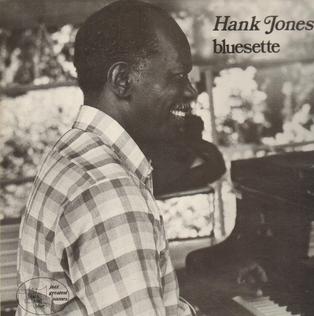
Hank sat down at the piano at preschool age, and in school tried to imitate his idols: Erlu Haines, Fatsu Waller, Teddy Wilson and Art Tatum. At 13, he played in the local clubs of Michigan and Ohio. By the age of 17, he was already a member of the so -called Territory Bands, local orchestras who had their own territory for performances, that is, earnings ....
Hank Jones - Bloomdido - 5:11 (Hank Jones Trio - Storyville)
“Bloomdido” is the composition of Parker's “birds”. Hank Jones - Royal; Mads Winding - double bass and al foster - drums. Copenhagen, March 1991.
You listen, there is no doubt about this, the weekly “Jazz Time”, through the satellites of Hotbird and Asiasat-7, as well as from our website www.svoboda.org . “Jazz Time” is the story of jazz from Ragtaym to this day.
Hank Jones - Softly as in A Morning Sunrise - 5:49 (Hank Jones - For My Father - Justin -Time RDS)
“Softly As in a Morning Sunrise”, “Directly, as at dawn” - the standard of Romberg and Hamrestyn. CD Late Hank Jones; The recording was made in New York in 2004. Hank - piano; George Mraz - double bass and Dannis Macrel - on drums. Hank Jones called his disk in the same way as Horaz Silver his famous composition - “for my father” ...
And here is a completely different interpretation of this famous standard:
John Coltrane - Softly As in a Morning Sunrise - 6:25 (John Coltrane - The Complete 1961 Village Vanguard Recordings - Impulse)

“Softly As in a Morning Sunrise”, but this time performed by the quartet of John Coltrane, Soprano Saxophone; November 61. Rudy Van Gelder's entry was made in the New York club Village Vanguard McCoy Tiener-Royal; Reggie Warcman - double bass and brother Hank - Alvin - drums.
If your hiking "Panason" makes a strange crack, this is not necessarily etheric interference. It is possible that you are listening to the “Jazz Time” in the company of the cricket-fanatic, which is freely distinguished by the brushes of Max Rouch from the brushes of Jimmy Kobba. These same, quite seasonal, interference are possible, even if you listen to us from the website www.svoboda.org . The microphone has in Lutetia, where the crickets are in bulk in the subway, your ds ...
Hank Jones - Little Girl Blue - 5:37 (Hank Jones - Complete Original Trio Recordings - LoneHill Jazz)
“Little Girl Blue” is the 1935 standard of Rogers and Hart from the Broadway musical “Jambo”. Hank Jones - Royal; Marshal in Ventil - double bass and Kenny "Kluk" Clark - drums. August 1955.
Brothers Jones, Hank, Ted and Elvin, appeared in New York in 1944. Hank began playing the combo of the veteran of Jazz Trubach Oran Taddeus Page, better known as - Hot Lip Page. He moved to the saxophonist Andy Kurke, and then (from 1946 to 1947) accompanied Colemen Hawkins himself. Since 1947, the six -year -old jazz epic began - Hank became the accompanist of Ella Fitzgerald. Norman Grenz missed him through the labyrinths of his “concerts in Philharmonics”.
But Hank did not disdain any work: the guaranteed earnings were supposed to cry and he worked on any roles, on any roles: on the radio, on TV, on any show. Without claiming the role of a leader; Often playing with secondary compositions.
Jaki Glison, rather a comedian than a singer, from time to time appeared on stage with the trio of George Shiring. He composed a kind of song, simple, like a dead fish, and demanded that he play it at the beginning of each show. Any musician could play this dead fish, but Shirring jammed. The great width could not play a dozen stupid notes. And then George was blocked with a screen, and in his place he sat down, ready for any part -time job, Hank Jones and played the fish so that it beat his tail. After that, Uncle George was again on the stage and the concert began ....
Frank Sinatra - Little Girl Blue - 2:54 (Frank Sinatra - Songs for Young Lovers - Capitol)
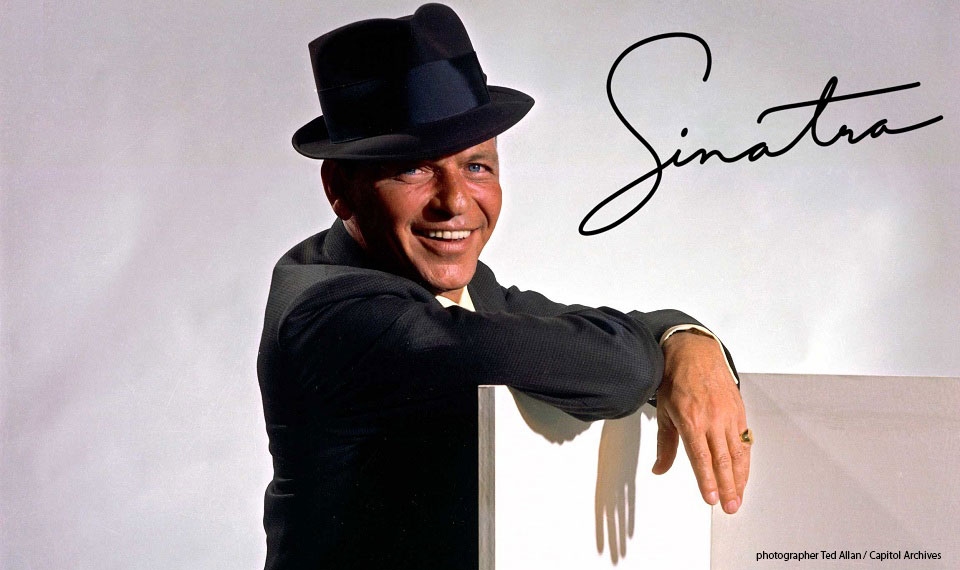
“Little Girl Blue”: “Sit and count your fingers ... What else can you do? Believe me, I know how you feel, I know what kind of quagmires life drags you. Sit, sit, count your fingers, baby, a sad baby ... (...) Watch the drops, consider drops of rain, they fall and fall, dear, I know that you are terribly unhappy ... "
Frank Sinatra with the same song by Richard Rogers and Lorentz Hart. His murderous vinyl "Songs for young lovers." NELSON RIDLA orchestra, 1960.
In the fifties, Hank Jones played in the orchestras of Artho Sho and Benny Gudman, recorded with Lester Yang, the “cannon nucleus” of Edderley and with Uzes Montgomery. For some time he was, as it is called, the “home pianist” of the Savoy recording house. Then he changed Savoy to CBS, where he worked from 1959 to 1979. This means that he accompanied the singers and singers of the “stables” “CBS”: Frank Sinatra and Marilyn Monroe (including her famous congratulations to John Kennedy “Happy Birthday Mr. President” on May 19, 1962).
Since the “TV show of Ed Sullivana” was under the auspices of “CBS”, Hank played in this popular show.
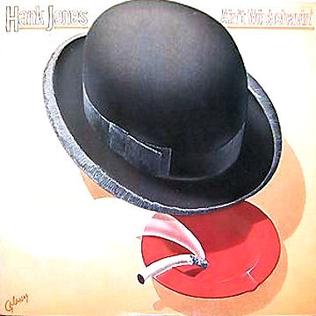
At the very end of the seventies, Hank Jones managed to speak in his more adequate role: he was invited to Broadway, like a pianist and as a conductor, to the musical based on Fats Waller "Ain't Misbehavin '."
Hank Jones - The Oracle - 6:45 (Hank Jones -the Oracle - Emarcy)
“The Oracle”, “Oracle” - the composition of Dave Hallund. Hank Jones - Royal; Dave Hallnd - doublebas and Billy Higgins - drums. 1989 entry.
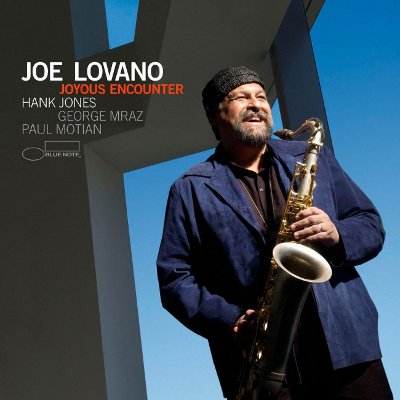
Hank Jones went to the heavenly orchestra at the age of 91. This happened on May 16, 2010. He actively recorded until 2007. His penultimate disk was recorded with the Joyous Encounter saxophonist Joe Lovano for Blue Note.
Hank had a crystal clear sound, perfect articulation, impeccable phrasing, a wonderful balance in the game between the right and left hand. We can say that he understood better than others and reproduced the style of Art Thatum. In his solo performances, it is easy to find modern lines in the game of the right hand and a real stubborn Stride - the left hand.
Roberta Gambarini & Hank Jones - Deep Purple - 5:16 (Roberta Gambarini & Hank Jones - You Are there - Decca)
“Deep Purple” by Peter de Rose and Mitchell Paris. Hank Jones accompanied the Italian singer Robert Gambarini. Hank said about her: “This is the best jazz diva over the past fifty years” ...
The finish line of “Jazz Time” today is entirely given to the native of Philadelphia pianist Kenny Barron. He is the younger brother of the saxophonist Bill Barron. Kenny began in the quartet of Dizzi Gillespi, entered the Jazzet Arta Farmer and Benny Golson, he led the Combo “Sphere” and “Classical Jazz Quartet”. Between 1987 and 1991, Kenny Barron was recorded with Stan Getz. But the main activity of this pianist is still devoted to teaching. Kenny’s asset 43 CD recorded as a leader. He is included in the Jino Ritzzo list "50 greatest pianists of all time."
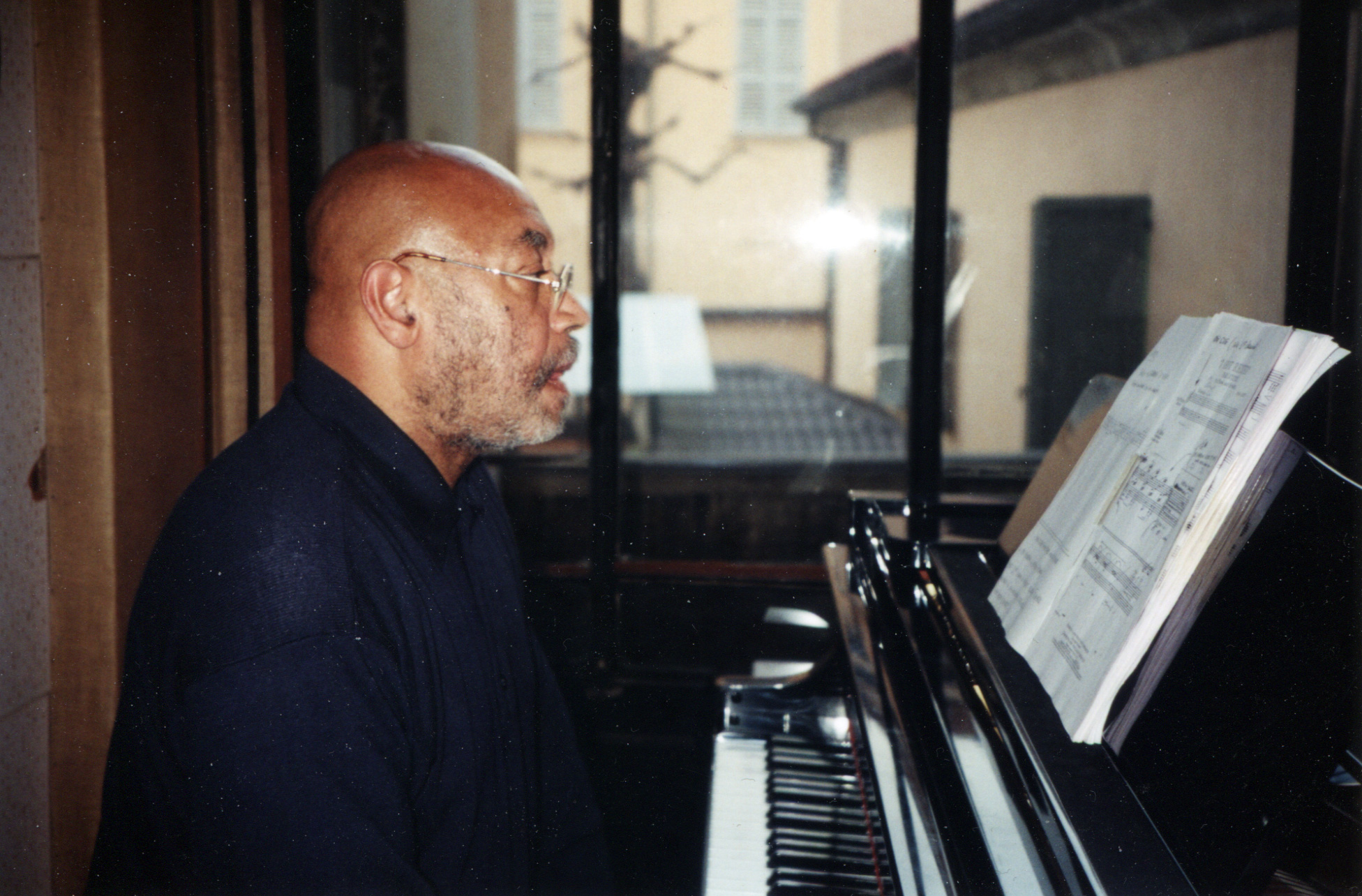
For the forgetful, I recall the address "Time of Jazz". This is www.svoboda.org . The microphone in Paris has Dmitry Savitsky.
I have chosen, honestly, the beloved duet of Barron and the violinist Regina Carter. Kenny's composition is called “Ghosts”:
Kenny Barron & Regina Carter - Phantoms - 11:16 (Kenny Barron & Regina Carter - Freefall - Verve)
“Phantoms”, “Ghosts, Phantoms” - the composition of Kenny Barron. Barron's duet - piano and Regina Carter - violin. The record was made in Brooklyn, New York, in December of the two thousandth year.
This is what the curtain of the Jazz Time club falls. Sound engineer of this issue Alexander Arkadyev, author and presenter - Dmitry Savitsky. Our address and address of the podcasts are the same: www.svoboda.org . Until next week, all the blessings to you, Chao, Bai-Bai!