
Translated material
Lukyanenko, Larson, Ulsson and Walter
Four Detectives for Summer Reading
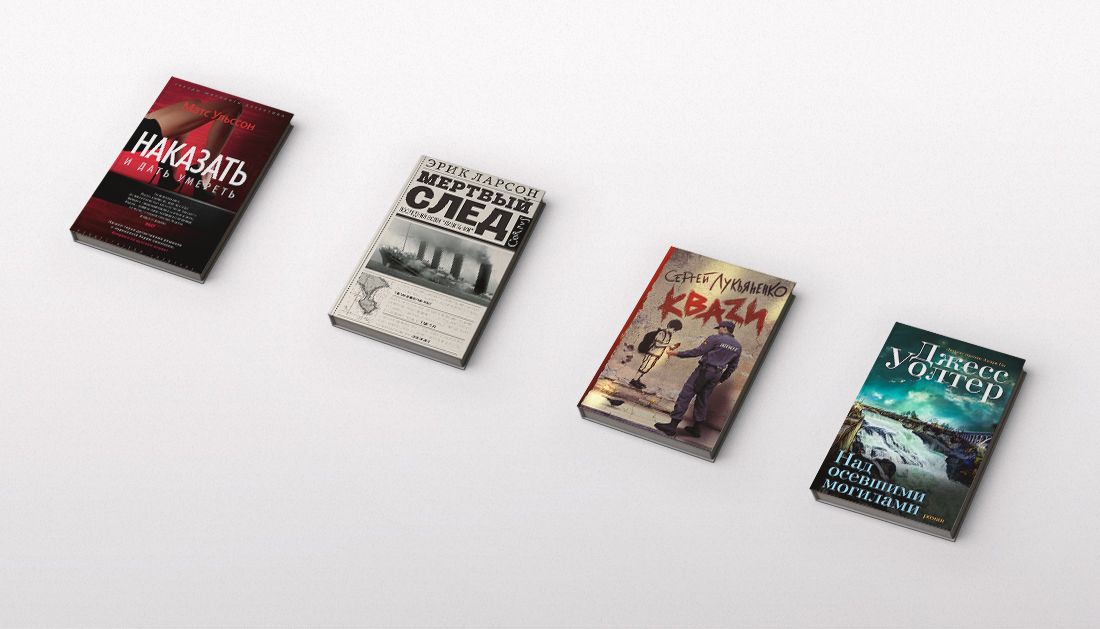
In the summer, Galina Yuzefovich’s book reviews go to Medusa twice a month. This time, a literary critic talks about four detectives that are ideal for vacation: “punish and let to die” Matt Ulsson, “A dead trace. The last voyage of the “Luzitania” ”by Eric Larson,“ Quazi ”by Sergei Lukyanenko and“ over the settled graves ”of Jess Walter.
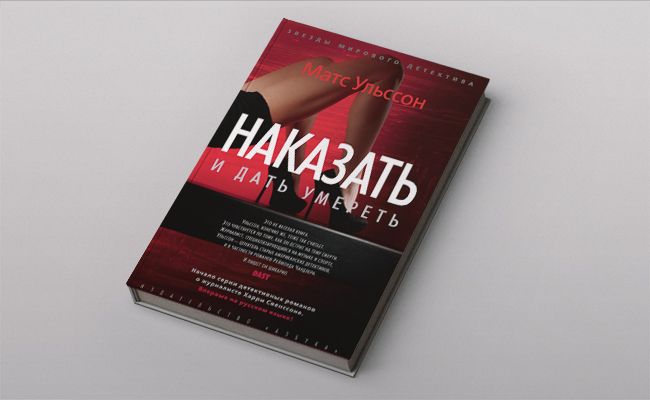
Matt Ulsson. Punish and allow to die. SPb.: ABC, ABC-Atticus, 2016. Translation from Swedish O. Bochenkova
Type: Scandinavian
The plot: former journalist Harry Svensson, a laconic and brutal lover of BDSM, and part -time beginner restaurant, returns to the hotel after an unsuccessful attempt to sex with a knuckles for carpets and finds a dead girl with traces of torture in a neighboring room. In the same bed with the murdered, a long -standing acquaintance of Harry is snoring - a popular Swedish bluesman, who was popular in the past, abusing alcohol and feverishly trying to regain his former glory. Both Bluesmen and Harry - this situation makes it possible to show off the rays of the sophists again, but soon the same failed girlfriend Harry (a woman who has not managed to evaluate the exciting power of the knocked out) is also killed under very similar circumstances. Now Harry needs to avoid a completely natural accusation of double murder, and for this, the easiest way, of course, is to catch a maniac - unless, of course, the words “easier” and “maniac” can generally stand nearby.
Advantages: The main sign of the Scandinavian detective is dark, gloomy caverns lurking behind the gingerbread facade of “Swedish socialism”. Prostitution, a rampant of drug addiction, family violence, total indifference, double standards and perverted morality - all these dubious benefits, at one time open to the reader Styg Larsson, Matt Ulssson are in abundance and in very, very good quality. The macabr dance peppy polka with a cozy Ikean mosquito from an unpainted pine tree, and in each purely blocked corner, if not a maniac, then in any case a deep social drama. But, as you know, in addition to darkness in the detective, light is important, which should be triumphed above the darkness. When the Russian reader finds out that the hero who had fired from the editorial office will be enough for four years of a comfortable life and to open his own restaurant, the thought of the caverns will suddenly cease to seem so frightening and the haze will retreat. And God would be with him, with a maniac - is it a matter of him? ..
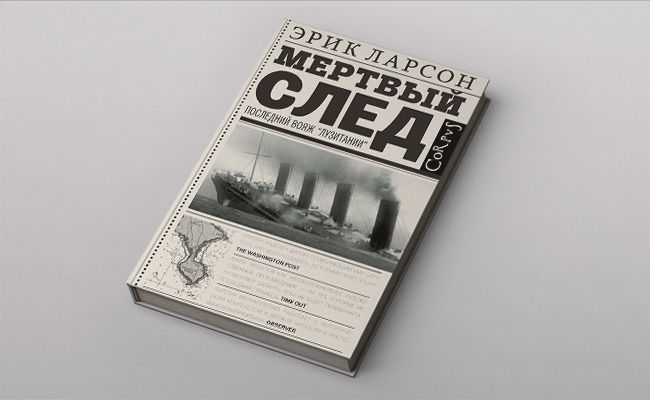
Eric Larson. Dead trail. The last voyage of Luzitania. M.: AST, Corpus, 2016. Translation from English by A. Aslannyan
Type: non-fiction
The plot: the documentary romance of an American writer, historian and journalist Eric Larson is not quite a detective, but rather a classic thriller, in which the essence of what happened is known in advance, but, as they say, the details are important. On May 27, 1915, the English passenger liner "Luzitania", which went under the American flag in British coastal waters, was torpedoed by the German submarine. The ship instantly sank, and more than a thousand people drowned (contrary to the Naval Code of those years, the submarines did not try to save the crew and passengers of the enemy vessels they sunk). The death of Luzitania became one of the reasons for the US entering the war on the side of the Entente and generally the point after which the First World War Fleet was unwound to the full. However, Larson is not interested in the consequences, but the origins: small streams, random and non -accident coincidences, private fate, mistakes, hopes and fears merge and form a mighty stream, with inevitable authority, bearing a luxurious four -pipe “lusitan” towards the German torpedo. If the wife of President Woodrow Wilson lived a couple of years longer. If the New York Knigorgovets did not go to Europe in search of rare books. If the king of England was a little better about his cousin - Kaiser Wilhelm. If at the court of the last one, another batch of generals took the top. If the visibility on that fateful day was a little worse. If Captain Turner, who directed his “Luzitan” in the harbor with a firm hand, turned out to be a little less experienced and courageous. If the radiograms of the German submarines were not deciphered by British marine intelligence, and there were no so -called “coal tunnels” in the sides of the ship ... Of these and many others, “if, like dry leaves of those falling as it moves to the tragic final, the chain of events is formed, to observe excitingly and almost painful.
Advantages: the ability to collect from a petty historical rattling the narrative at the same time impeccably reliable and at the same time impeccably harmonious and plot - the skill that relatively many Western historians and almost never Russian historians possess. Larson, an outstanding representative of the Western Historical School, takes a huge information massif and cuts off everything superfluous from him in such a way that at the output the text is fascinating, more touching and truthful. If suddenly you did not have time to forget the brilliant book of Peter Englund, “The Restless and Pain of the Battle”, which is also telling about the First World War, then Larson’s “Dead Trail” is a thing of the same breed, only with a detective spring built inside.
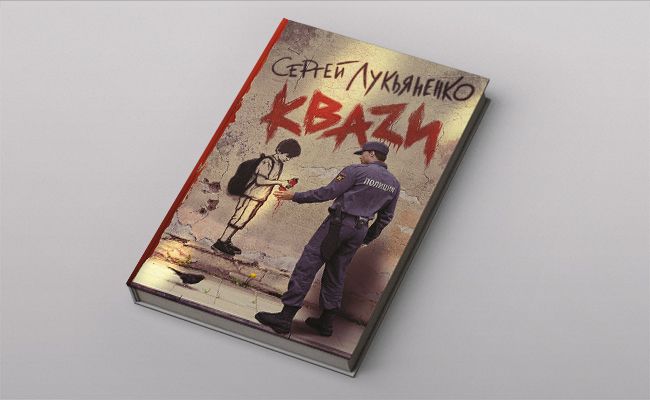
Sergey Lukyanenko. Quazi. M.: AST, 2016
Type: Fantastic
The plot: In the near future, the planet is experiencing a global catastrophe: dead people suddenly begin to “rebel” massively, turning into bloodthirsty senseless zombies, striving in strict accordance with the laws of the genre to devour the living. However, and this is the personal contribution of the writer Lukyanenko to the classic plot - the afterlife of the zombies does not end there. Of the meaningless empty-eyed deadly, they, after a certain period, turn into mysterious and in their own way of beautiful quasi-physically powerful, almost immortal, impassive owners of grayish skin, organically unable to lie. After a short, but bloody war, a fragile balance is established between the living and the dead in Russia: people and Cohaz live in the world, although they still do not like each other (or rather, dislike comes from people). Moscow, surrounded by the Moscow Ring Road, becomes the life of the living, the PeterGU is assigned the role of the capital of the dead. All other lands are populated by the “rebel” dead, who have not yet been “rise” to the state of the Cabazy, but it is not given to the ground to rest.
In this bipolar world lives the “mortal investigator” or, in a simple way, a police Denis. Its role is to timely detect and neutralize the "rebellious" dead. However, Denis with the “rebels” has their own accounts: for a long time, at the very beginning of the disaster, they killed his wife and little son, therefore, in most cases, “inquiry” for Denis turns into the physical destruction of the zombie, after which, respectively, they lose their chance to continue their lives as a quaise.
Once Denis is caused in place of a strange crime: a well-known virusologist, happily married to a woman-quad, killed, rebelled-and mysteriously managed to devour his killer. The trace leads to the serene widow of the virologist - it seems that it was she who ordered this strange murder. However, at that moment, when the unraveling in the pocket, to the over-the-end Denis (should I say that, having discovered two rebellious dead, he is contrary to the hands with a young blow to both the heads) put his partner-a high-ranking police-quad from St. Petersburg ... History, at first simple, becomes more confusing, and that seemed to be murdered on the household soil It turns out to be a new turn in the Cold War of two closely related species - living and dead ...
Advantages: whether we like it or not, but Sergey Lukyanenko is one of the few domestic authors capable of serially producing a cheerful, uncomplicated and all that way, mass literary product. Here is his current novel - from the same series. And the fact that in places he is surprisingly similar to the trilogy of Sergei Kuznetsov “living and adults”, and in some places - to the Lukyanenkovsky “Night Watch” (for example, the key conflicts “who whose son” and “carry no darkness or light” obviously migrated to “Quas” straight from there), but it is written cheerfully and is read easily. The only thing that is a little from is the manner of certainly comparing any successful policy of our unsightly future with Putin and Churchill, but without this Lukyanenko has not been able to recently, alas.
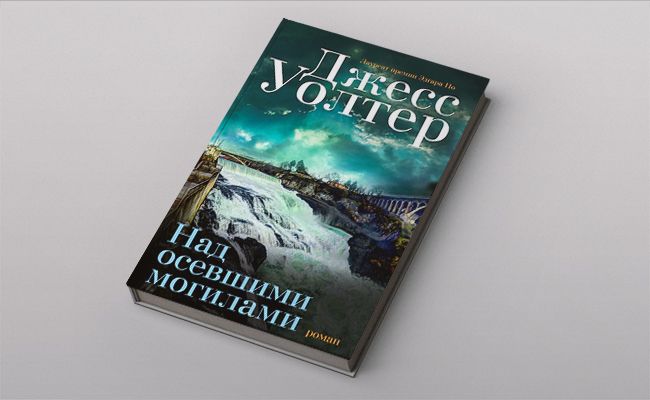
Jess Walter. Above the settled graves. M.: Fantom Press, 2016. Translation from English by A. Safronov
Type: classic American
The plot: Spokan-a small quiet town in the north-west of the United States-entered, in the words of one of the heroes of the novel, a detective Alan Dupil in the Black Strip. First, the buyer of drugs, escaping from the raid, literally drowning his accomplice in the river. Trying to find a corpse, the police stumbled upon the coastal thickets on the body of a murdered prostitute, holding two twenty -dollar bills in his hand. Then an unknown villain shoots at the holder of the pawnshop. And after that there is a natural collapse: first, the killed prostitutes are two, then three, then four ... to deal with all this in the city, where even ten murders were previously considered an anomaly a year, there is already a Dupil and his former student Carolina Mebri, who, in order for the reader to be completely indefinitely, with irresistible power pulls each other (Dura’s wife and two children, Carolina meets beautifully with a beautiful force. A guy twelve years younger). First, the investigation moves in two parallel courses (the drowned man on the river and the pawnshop separately, the killed prostitutes are separate), then the two lines converge together in order to again disperse the spectacular and unpredictable zigzag in the finale.
Advantages: Jess Walter clearly carefully read textbooks on the “creative letter”, so his detective is simply exemplary and from the point of view of plot construction, and from the point of view of heroes and surroundings. All clues are neatly posted before the reader to the hundredth page, which, however, is hardly helping you solve the problem yourself. In a word, a slightly mechanistic, but extremely solid thing - just started, but two evenings did not happen.
Other reviews of Galina Yuzefovich can be found here .
Galina Yuzefovich