
Translated material
The first school startup
How schoolchildren become programmers and develop their own applications
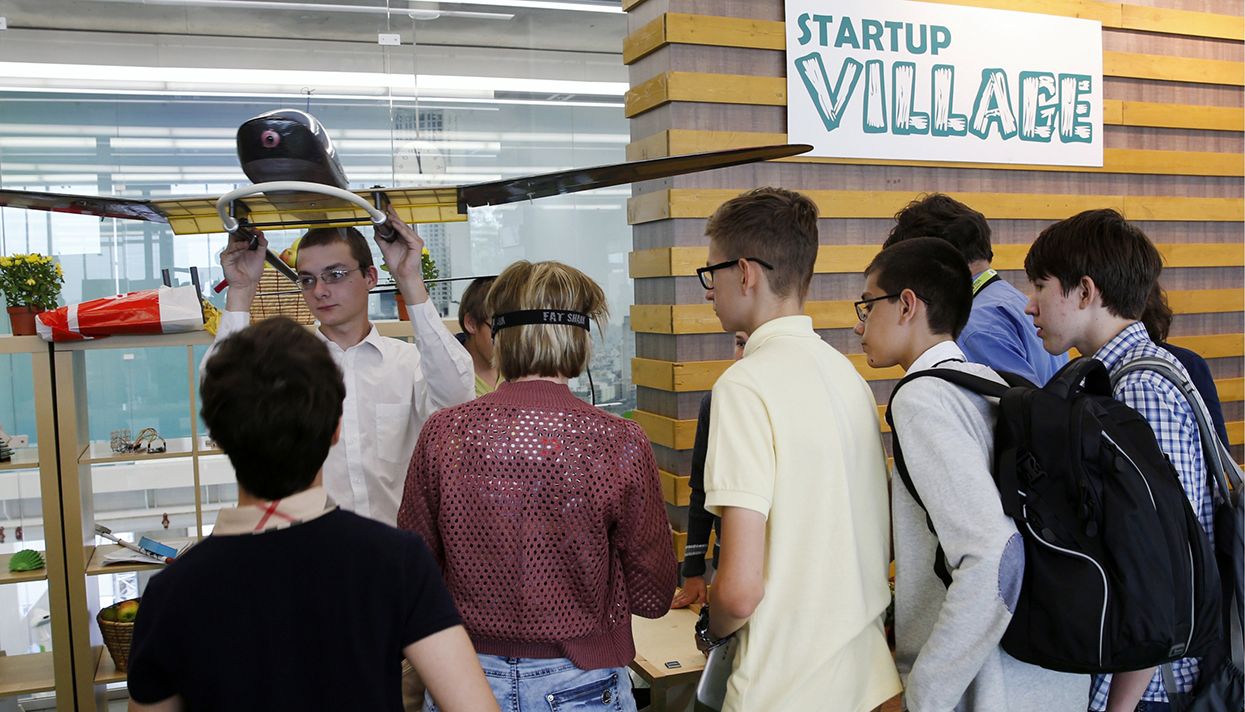
The concept of startups launched without serious financing, calculating quick success, captures Russian schools. Already several schoolchildren launched their own projects and found funding on them. Journalist Oleg Egorov at the request of Medusa talks about developers who are not 18 years old, but who already have their own projects.
The younger, the better
“Young people need to be included in a professional system as early as possible, in a career,” the head of the French company Numa Frederick Gru, in an interview with the Newtonew portal, said. Numa came to the Russian market last year and is engaged in the same as in France - the acceleration of startups. Numa finds young entrepreneurs and teams with business projects at the initial stage, helps them to finalize, promote and attract investments. Frederick Yu believes that the Russian market of youth startups is much more promising in Russia than in France: “The guys here are even more [in France] technically trained and have a serious academic base.”
The age of the Creator does not matter in the world of startups, especially related to information technologies. The main thing is an investor who is ready to take a chance and invest in a project whose success is not guaranteed. A good example is the story of Nick D`Aloisio, a British who wrote Summly an application at the age of 15 for a brief retelling of large volumes of text. For several months, D`Aloisio promoted his application without much success, until he attracted the attention of investors-and sold Summly Internet giant Yahoo! For $ 30 million. At the time of sale, the programmer was 17 years old.
Startup for yourself
The fifth grader of Evelina Mazita has an ordinary page of a ten -year -old girl VKontakte: reposts of publics with quotes about love, messages with a bunch of emoticons, in audio recordings - Leonid Agutin, Silver and Lʼone. And all this is interspersed with advertising of the application for learning the Russian language and photographs from the Startup Village conference. Masitov came up with the idea of the Rusmig application herself. A student of grade 5 of Lyceum No. 2 of the city of Almetyevsk (Republic of Tatarstan) says that she came up with an application out of love for the Russian language. This is her favorite subject at school, she repeatedly performed at Russian Olympiads and occupied prizes.
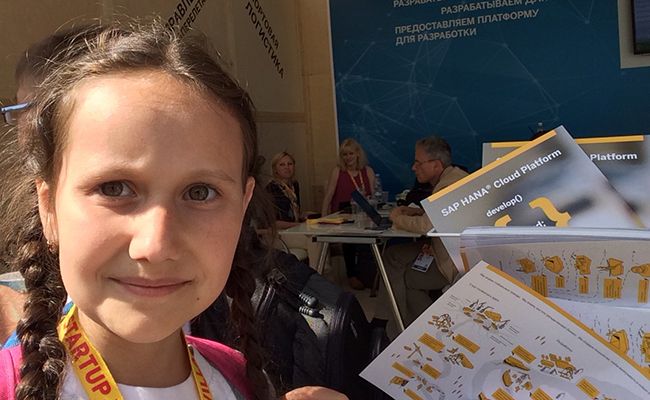
“Now many Russians are free in English, French, Spanish, but at the same time, they do not know the elementary features of the Russian language,” says the schoolgirl in an interview with Medusa. - The simplest question: "How is it right: calls or calls?" It can be at a standstill. " Therefore, after Evelina visited a lecture on startups and Internet business, she immediately had an idea-to develop an application that helps to teach Russian.
When we correspond with Evelina, her answers are not similar to the words of the fifth grader: she calmly discusses the target audience, monetization and prospects for the success of Rusmig: “The competitive advantage of my application is that brief courses for studying the Russian language can always be at hand in the form of a mobile application for iOS, Android, Windows Phone.” Unless sometimes she calls her own application “Super Magi-Project”.
While Rusmig is under development (Evelina Mazitova is responsible for the content of the application, it is programmed by a 15-year-old single schoolboy). A month after the launch, Evelina plans to reach the audience of 400 customers, 200 of which will be ready to pay (150 rubles per person). In a year, he intends to increase coverage to 5,000 people, 200 of whom will be paid. Total will turn out 300 thousand rubles a year.
Tatar startups
Denis Shelestov from Elabuga, the founder of the rustle Ventures venture fund, specializes in investments in school startups. In an interview with the Secret of the Company, he recalls how he traded ice cream, which I bought at the dairy plant in childhood: “I bought for 3 rubles, but sold for 15-25. Feel what margin? ” Over time, Shelestov mastered programming, created a popular service for the ranking of WillDev programmers and is parallel to other projects. After a couple of years, Shelestov expects to sell WillDev (which he founded at 16) for $ 10 million.
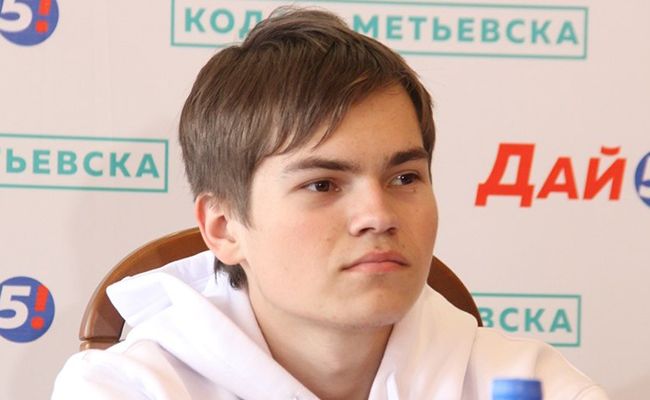
Shelestov inspired her own success to open a venture fund, which invests in startups of schoolchildren. Ramil Ibrahimov, the president of the Union of Young Leaders of Innovation, was the founder of the fund (Ibragimov became known to the general public recently, when on behalf of the Facebook, on behalf of the Union of Innovation Leaders approved the execution of a gay club in Orlando, after which he had a criminal case).
School programmer from Almetyevsk Emil Gafiyatullin, author and developer of the Tatarcha application for learning the Tatar language, is very grateful to Ibragimov-he helped him launch a startup as part of the DAY5! School online technology park, issuing an investment of 50 thousand rubles.
Gafiyatullin himself wrote the Tatarcha app from scratch. His idea is to “return the Tatar people to the roots, to spread the ownership of their native language wider.” “I myself do not know the Tatar language, despite the fact that I am studying in the Tatar boarding school in Almetyevsk,” Gafiyatullin said Medusa. “Our target audience is, first of all, the Tatars who want to learn their native language or improve it.”
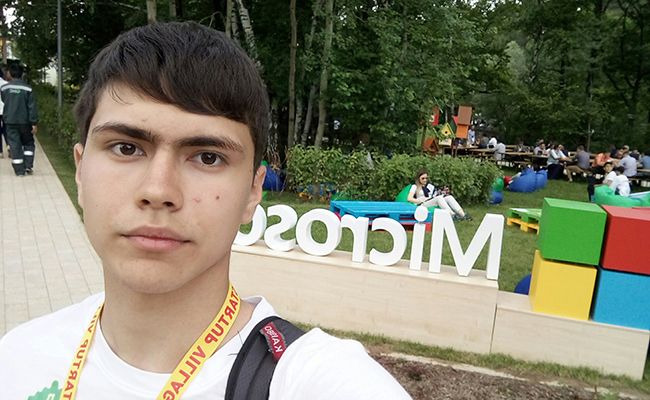
Emil Gafiyatullin has high hopes on Tatarcha. “Let's start with targeted and contextual advertising“ VKontakte ”, then we will connect the thematic forums. We want to get the first 10 thousand users. In the world - 7 million ethnic Tatars. The number of potential users is about half, ”he explains. In the application, the Freemium model is going to use: the basic version will be available for free, an expanded premium version-for money. “We plan to earn a maximum of 100 million rubles per year, at least 10 million. So we, schoolchildren, are enough for ice cream, ”Emil believes.
Part -time
Both Evelina Mazitov and Emil Gafiyatullin say that their business initiatives do not interfere with their studies and do not cause conflicts with parents. “To combine the project with studying at school is not difficult. Parents do not mind, and are often interested in how the project is moving. Now, in general, vacation and free time is the sea, ”says Emil. After school, he is going to enter the institute, combining it with startups: “I am sure Tatarcha is the first but not my last startup.” Its investor Denis Shelestov adheres to a different point of view of higher education: "I do not really want to go to the university, I want my way."
In 2015, Yevgeny Smirnov, the St. Petersburg teacher and founder of the portal on the formation of Newtonew, put an experiment in secondary school No. 184-as an additional course, students of grades 10-11 developed their own startups.
Marking the positive experience (the skill of public speaking, the ability to work with information and visualize it, the ability to analyze the consumer’s opinion), Smirnov still believes that it is too early to do startups at school: “Everyone is doing well at school, and no one works at home. But when we are talking about startups, you need to understand that at first the project is kept only on the personalities and work of the founders. Schoolchildren are not ready for this. The startup cannot be forced to do - it should go from the inside. ”
Oleg Egorov
Moscow