
Translated material
"The unity of the church cannot be made dependent on the number of delegations who have arrived"
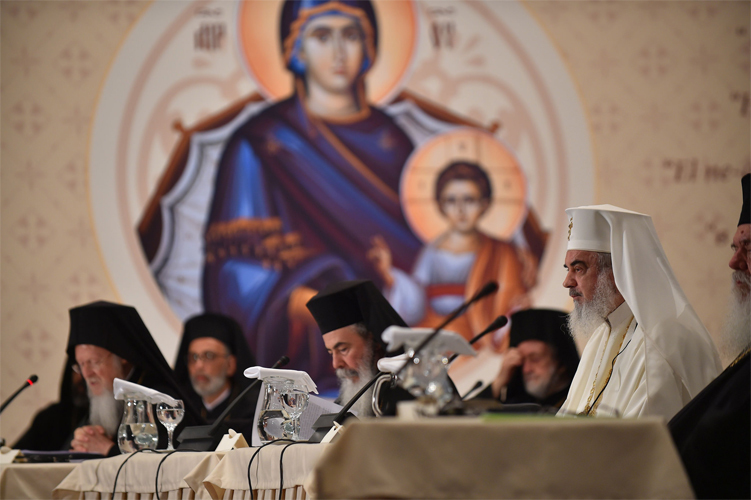
On June 26, the All -Orthodox Council ended in Crete, preparation for which lasted more than 50 years. However, in the Russian media - both secular and church - they spoke about the cathedral in skeptical and even critical tone. This is due to the fact that two weeks before the beginning of the cathedral, Patriarch Kirill suddenly refused to take part in it. Three more churches refused to go to Crete - Antioch, Georgian and Bulgarian. Nevertheless, 10 out of 14 churches held a cathedral, which was called the "St. and the Great."
The Archbianacon John Khrissavgis, adviser to the Patriarch of Constantinople Bartholomew on theological issues, managed the work of the press service of the cathedral. In an interview with Sergei Chapnin, he represents the view of the cathedral from those who participated in it. This is the first interview with the official representative of the Ecumenical Patriarchate by the Russian media after the ROC refusal to participate in the cathedral.
- Father John, among the Orthodox, including in Russia, there were big expectations related to the fact that the Olderly Cathedral would testify the unity of the Orthodox Church, but this did not happen. Four local churches did not send their delegates, and many disappointed many. How do you assess the current situation? What is the position of the Ecumenical Patriarchate in relation to churches that refused to participate in the cathedral?
- The delegates of the Holy and the Great Council deeply regret that some of the fraternal churches, including the Russian Orthodox Church, refused to take part in it. It was impossible to postpone the cathedral - this would violate the agreement reached in January 2016 in Switzerland. None of the Primate, including the Ecumenical Patriarch, is entitled to act against the consensus regarding the holding of the Holy and the Great Council. To transfer the date of the cathedral for a later date (as proposed, in particular, the Russian Orthodox Church. - Ed. ) It was possible only to consensus.
At the same time, I do not think that unity as such depends on the number of arrivals or may be made dependent on any national interests. Local Orthodox churches gradually realize that there is something more than what is inside their national borders. And this “more” is revealed in that unity, whose participants we become when performing the Holy Eucharist. The same is implied in the name of the current cathedral great, i.e. Universal, supranational.
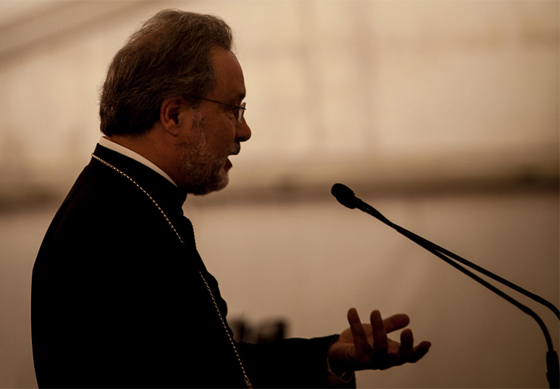 © Sean Hawkey / Holy Council Archbishkacon John Chryssavgis on a press briefing on June 21, 2016
- How, in your opinion, can the principle of consensus work if four churches are absent? How legal and mandatory will the decisions of the cathedral be?
- The cathedral does not refuse the principle of consensus. In fact, all cathedral documents will be approved by the consensus of present delegations. Not a single church cathedral needed a consensus of those who are absent. There was no Antioch Patriarch John at the Ephesus Cathedral for a long time. The Bulgarian and Russian Churches were not represented at the Cathedral of 1872. Nevertheless, the absence of representatives of individual churches did not deprive the decision of these cathedrals of legal force.
The decisions of the Holy and the Great Council are legal due to the fact that the bishops signing them represent the faith of the Church at the All -Orthodox level. But I repeat once again: collegiality is not a quantitative concept, but primarily qualitative. The reception of cathedral solutions has already begun and, no doubt, will continue in subsequent years. In Greek, the “cathedral” is called the “synod”, which literally means “joint path”, and this implies a long way to unity. Unity is a goal, not the starting point. The way to achieve this goal is the cathedral, that is, staying together and participation in an open dialogue.
-It had to be heard that the cathedral is mainly engaged in church-administrative problems and its documents are not related to the life of most Orthodox Christians. Do you agree with this opinion?
- The fathers of the cathedral (traditional naming of the participants in the cathedral. - Ed. ) Many times in their discussions turned to pastoral and daily problems. The document “The mission of the Orthodox Church in the modern world” and the message of the cathedral will be the most significant for most believers. The document “On Marriage” is devoted to church law, but, without a doubt, it will be important to many Orthodox, especially those who concern the problem of marriages with non -Orthodox ones.
But let me once again note that before addressing the issues of their flock, their countries and the whole world, the Orthodox bishops are called to first build a dialogue among themselves. If they are not capable of open and honest conversation with each other, what trust in themselves can they expect from us, from their flock? Thus, the Holy and Great Council plays a crucial role in the fact that the worldwide evidence of the Orthodox Church is unanimous and deserve confidence.
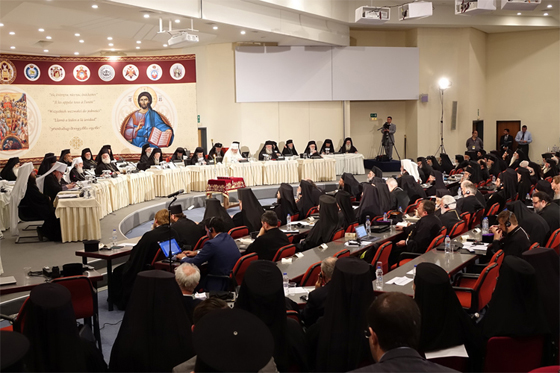 © Jarosław Chackiewicz / Polski Autokefaliczny Kouffi Prawosławny on the opening of the Long Orthodox Council. Orthodox Academy in Columbari, June 20, 2016
- What will happen after the cathedral? How do you see the future of inter -Orthodox cooperation? How often could such cathedrals gather? And what in this process the role of the synaxis of the Primate of the Local Churches?
- The cathedral laid the foundation for an important process: bishops from different local churches met, went together a certain path, and were involved in dialogue. The reality is that, starting a joint path, we need to take the first step. And this cathedral is no matter how incomplete, imperfect and even clumsy is our first, previously unthinkable, step at the beginning of this sacred path.
We hope that this cathedral will announce the new era of collegiality at the global level. The cathedral principle in the church is a strong and unchanging union of love. It is extremely important for the Orthodox Church to live this collegiality not only in theory, but also in practice. We need to live in accordance with what we preach.
-At the cathedral, Patriarch Bartholomew suggested condemning ethno-genotism (i.e., practice, when general church interests are sacrificed by national-political.- Ed. ), But not everyone agreed with his proposal. Can you comment on the position of the Ecumenical Patriarch? Today, ethnomotism is a serious problem for most Orthodox churches. The Greeks and Russians are no exception.
- The Ecumenical Patriarchate has always been consistent in condemning ethnic artisy, which puts national identity above religious. It is important to remember that in the past, all Orthodox churches in one form or another also condemned this delusion.
Ethnomatism often serves as the basis for our still continuing disagreements. At the same time, it should be noted that love for its country, if it does not supply above love for God and neighbor, is common patriotism, which is quite compatible with the Orthodox way of thought.
But we should not use sound patriotism to cover corporate interests and priorities to the detriment of church unity and ecclesiology. My anxiety is due to the fact that the inconsistencies of this kind can be observed more and more often in many Orthodox churches, especially in the diaspora. And you are right, this is not only a Greek or Russian problem. I see the same thing in the Bulgarian, and in the Georgian and Romanian churches.
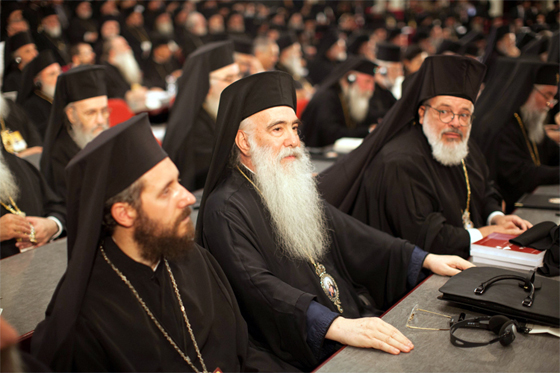 © Sean Hawkey / Holy Council at the opening of the All -Orthodox Council. Orthodox Academy in Columbari, June 20, 2016
- What can you say about the work of the cathedral? In what atmosphere did the discussions take place?
- It is pleasant to note that all performances and discussions at the cathedral were open, honest and respectful. I believe that this is the main achievement, a real miracle of Pentecost.
I noticed this right at the first session of the Cathedral, after the Blessed Trinity of the Divine Liturgy perfect on the holiday, and then on Monday at the first, according to the program, a meeting. Something began on Monday afternoon, unusual for us, but meanwhile completely normal: the Primate and bishops began to talk, express their opinion, sometimes rather emotionally, but at the same time readily listened to each other and even listen to other people's opinions.
I constantly heard from the delegates surprised exclamations like “I did not even assume that this could be in our fraternal church in Nigeria or Cameroon” or “I was surprised to find out that this is happening in Albania or Poland.” Such reactions are entirely and completely the fruits of the action of the Holy Spirit.
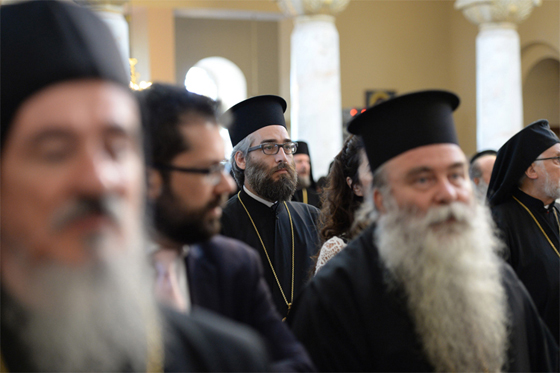 © John Mindala / Holy Council at the opening of the Long Orthodox Council. Orthodox Academy in Columbari, June 20, 2016
- Do you think that the cathedral remains all -Orthodox? If so, why?
- I have repeatedly said that the All -Orthodox nature of the current Holy and Great Council is based on the All -Orthodox decision made in January 2016 by all the Primate of Autocephalous Orthodox Churches. If the Cathedral called the Ecumenical Patriarch in a one -sided strand, then the absence of one or more churches would affect its all -Orthodox status.
Why use this weak excuse? All the churches agreed to meet, agreed on time and place, agreed on the agenda and literally every page of each of the documents, bought tickets, booked hotels, submitted lists of delegations, and suddenly something happened. The problem here is not whether the all -Orthodox status of the cathedral or not, but whether the churches are acting, with what they are agreed with and what they fasten with their signature.
- Does the Russian language remain the official language of the cathedral, despite the lack of a delegation of the Russian Church? And if so, who is working on translations? Can you guarantee the quality of the transfer of documents into Russian?
- The Russian remains the official language, and I am sure that those who participate in this work have the necessary qualifications both as translators and as theologians.
Translated from English Vasily Chernov