
Translated material
A butterfly instead of crucifixion
Russian artist and Swiss pastor turned the Protestant temple into the sanctuary of Vladimir Nabokov
The curator of the 11th exhibition of European art "Manifesto" Christian Yankovsky, who was held in Zurich, invited artists to cooperate with people who are engaged in socially useful labor, to create joint ventures with them. Exhibitions are held in a hospital, police department, restaurants, a hotel, a dentist’s office, a fire depot. Among the collaborations there are exotic ones: one art project was made at the Women's Orgasm school, the other in a hairdresser for dogs, and the cooperation of the artist and assigners ended with the creation of a sculpture of 60 tons of excrement.
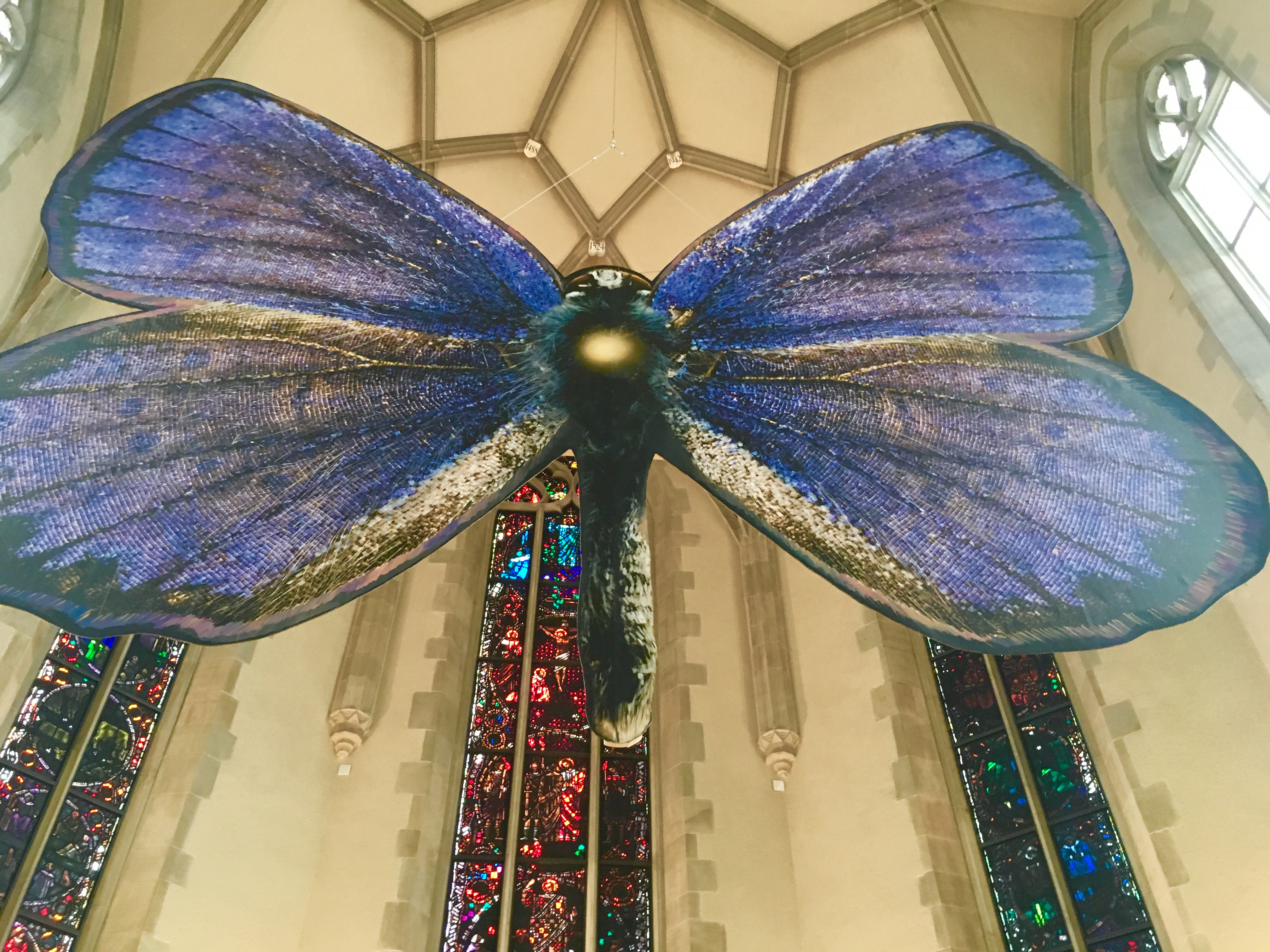
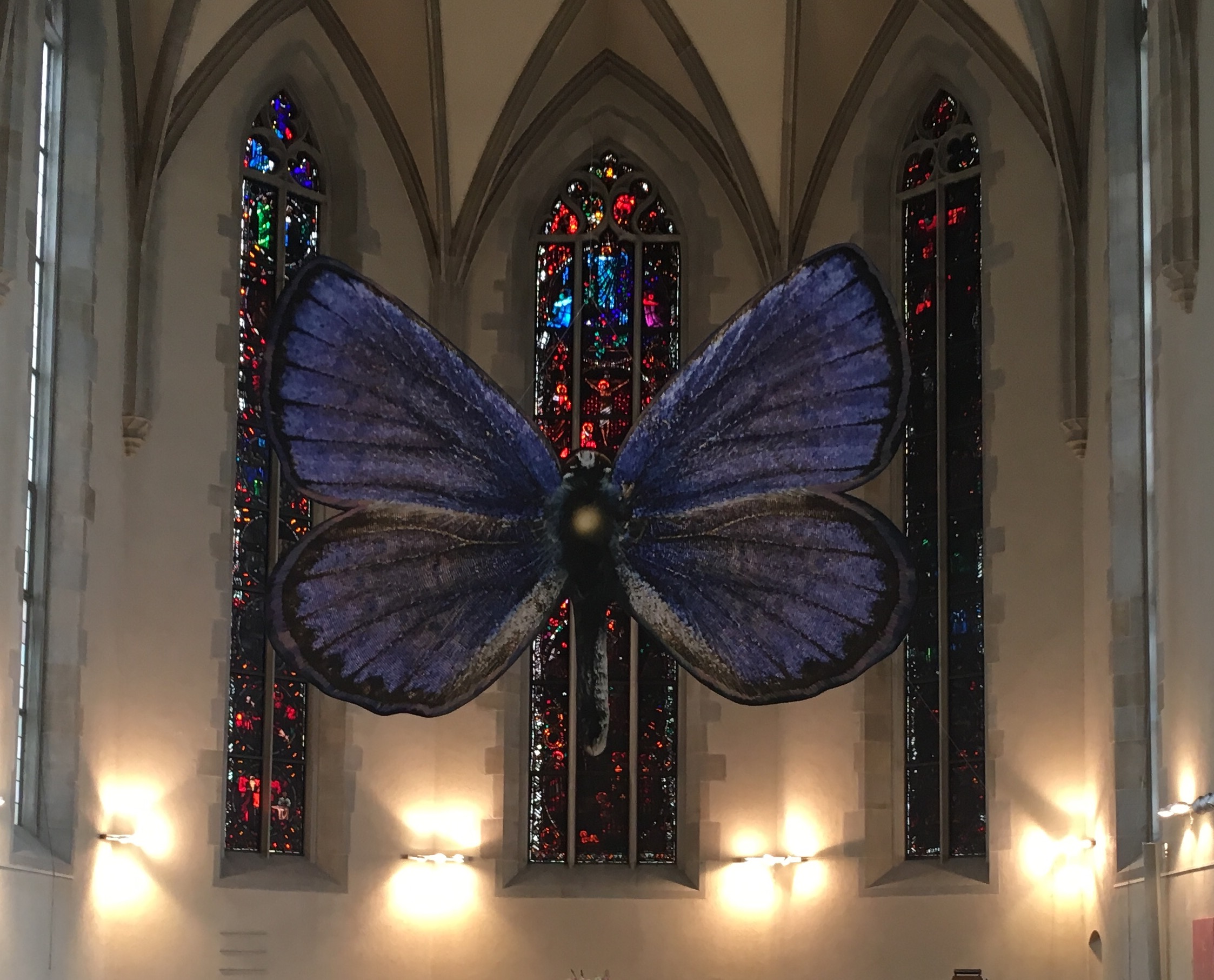
Russian artist Yevgeny Antufiev, along with the Protestant priest, created the installation of the "Eternal Garden" in one of the largest temples of Zurich, Wasserkerhe. Antufiev decided to turn him into the sanctuary of Vladimir Nabokov, the writer and entomologist. The crucifixion over the altar was replaced by a huge blue butterfly, tin from the candies appeared in the windows in which Nabokov kept his collection, as well as roses from the garden for the blind and documentation of one night conducted by Antufiev in the Nabokovsky hotel room in Montreo, including a piece of hotel soap.
Nabokov in the church?! His biographer Brian Boyd writes about the attitude of the writer to religion as follows: “For Nabokov, insect metamorphoses were neither a response to the mystery of death, nor the argument, nor the model, nor even the metaphor that should be taken seriously. One priest of the Russian Orthodox Church, which expressed the assumption that Nabokov’s interest in butterflies is due to the highest state of the soul, he answered the bold, that the butterfly was bold. Not at all, not an angelic semblance and that it sometimes even sits on corpses. "
Evgeny Antufiev told me how he raised the "Eternal Garden".
- Why did a person who said that "in religion lies the suspicious general accessibility that destroys the values of her revelation," did you decide to send to church?
-If you recall the early poems of Nabokov, there are butterflies-angels, "we are caterpillars of angels; and sweetly bite off the edge into a delicate sheet." These are rather bad verses, but, nevertheless, it is clear that this topic was interested in this topic. Why in the church? We did this project with priest Martin Ryusha, began to start from a quote from the Bible: "What is human life? Grass. What is human glory? Flower on this grass. Wake grass, and its color is fallen. The Word of God will be forever." We began to think what the garden is, what could be in the garden, came to butterflies, flowers, animals. We walked with him in the gardens in Zurich, looked, marked. We were in a wonderful garden for the blind on the other side of Lake Zurich. And Nabokov arose very strange due to the fact that it is associated with Switzerland, lived here for 17 years.
- That is, the sequence is this: first the garden, then butterflies, then Nabokov? Not Nabokov first?
- No, not Nabokov. Everyone knows that Nabokov was fond of butterflies. This, of course, was a literary pose. It seems to me that he did not love them as much as he loved to talk about them.
- At the exhibition there is material evidence of his love: a tin in which he kept butterflies. How did you get them?
- As part of the study of this exhibition, I went to the University of Lozann, I watched a collection of his butterflies. In this university, 4500, in my opinion, butterflies killed by Nabokov, are only Swiss butterflies, because part of his collection is stored in Harvard, and part in another place. Initially, there was an idea to set his collection of butterflies in the church, and nothing more. But butterflies cannot travel, they are too fragile. The caretaker told me: "Of course, we have duplicates, but he caught this butterfly on June 4, 1963, we will not be able to return this moment and will not be able to find the same butterfly." Despite the fact that they do not put this collection, it just lies in the storerooms in the dark. I begged them to give me butterflies, but they said: no. And then I saw these boxes in which the widow gave all the butterflies to the university, and asked for boxes for the exhibition.
-What are they from under?
-From under the candies. Also a strange sight: his entire collection was stored in boxes from under the candies, you can imagine how many candies he ate. There is something touching and childish in this, these boxes with treasures, with values. We got these boxes with great difficulty, with insurance. I am very worried about them, this, of course, is a valuable exhibit. I like that Nabokov now has turned into a collectible butterfly to some extent, because his things are sold at auctions; Shoes, net, pencil are exhibited at the Museum in St. Petersburg. I don’t know what Nabokov’s shoes or his pince -nez can tell us, but, nevertheless, this is a completely standard culture of memorial museums. I am in general fascinating the trash, collecting things. At the same time, people are fascinating me - In particular, writers who were absolutely not needed. Nabokov had an absolutely empty room in which the bed stood, a desk - he was his only personal thing, all the rest of the furniture belonged to the hotel.
- And where were the butterflies?
- In boxes. Four thousand butterflies in boxes do not take up much space.
- They were in the same hotel room?
- I think there. Because in the corner (I remember the photograph) some things and sakes were lying, and this is, in fact, all that was there. He shot a whole floor for his family. Montreo is one of the most expensive cities in Switzerland. Many Russian emigrants went to Montreo after the revolution, because they remembered that it was good there, but they forgot the main thing: that they have no more money. It was the most expensive hotel. For those 17 years that Nabokov lived there, he could buy a castle in Switzerland for this money. But he was not at all interested in this, he loved to live in hotels, because it removes household issues.
- So Jean to his wife moved from one hotel to another, chose the most lousy hotels near the station.
- Trumen Kapota first bought a trailer for the dog and furnished the hotel room with antique furniture. I am fascinated by a certain culture of the hotel, because there is no time in the hotel, there it is frozen, unlike personal time. There is a wonderful story how Nabokov invited Solzhenitsyn to this gorgeous hotel. He ordered a special musical living room, but the meeting did not take place by misunderstanding, Solzhenitsyn drove past.
- You turned Nabokov into a butterfly, reduced. In the window are his small shorts, boots, net ....
- I like the irony that it has turned into a dry butterfly that is studied from all sides. His boots, pince -nez in the museum are completely the same. His things are sold at auctions. An unthinkable number of books, its entire correspondence is translated up to the smallest letter. There is something painful in this.
- I saw a list of literature on your Facebook for this exhibition. Have you read all the works of Nabokov?
Very strange - in the current church a huge exposition on Nabokov with butterflies
- Honestly, I did not read anything to the exhibition, only verses. But I read quite a lot before, probably 60%. But I had to go through a fairly large volume through Google Translate, through the search according to the documents all his books in search of the word "butterfly", "wing", "flew up". Like in Mashenka: "This letter flew like a cabbage throughout Europe." I have some butterflies mentioned in his works.
- Is one butterfly named in his honor?
- Not one, but a lot. I had the idea to put butterflies named after Nabokov on the altar, but, unfortunately, they cannot be found, they are so rare. He himself discovered several species, in my opinion, about four, and quite a lot of named researchers in honor of him. Moreover,, as a rule, these are ordinary subspecies of a dovecote.
- And the giant butterfly that hangs above the altar?
“ This is a dovecite, just the one who fascinated his whole life.” Moreover, it is one and a half centimeters live - the wingspan. It is exhibited in one of the windows, it is this butterfly, the photograph of which I took to hang over the altar. It turned into a seven -meter symbol. I like that church workers are most delighted with this exhibition. They promised once a week to change the bouquets in the vase that I made for the altar.
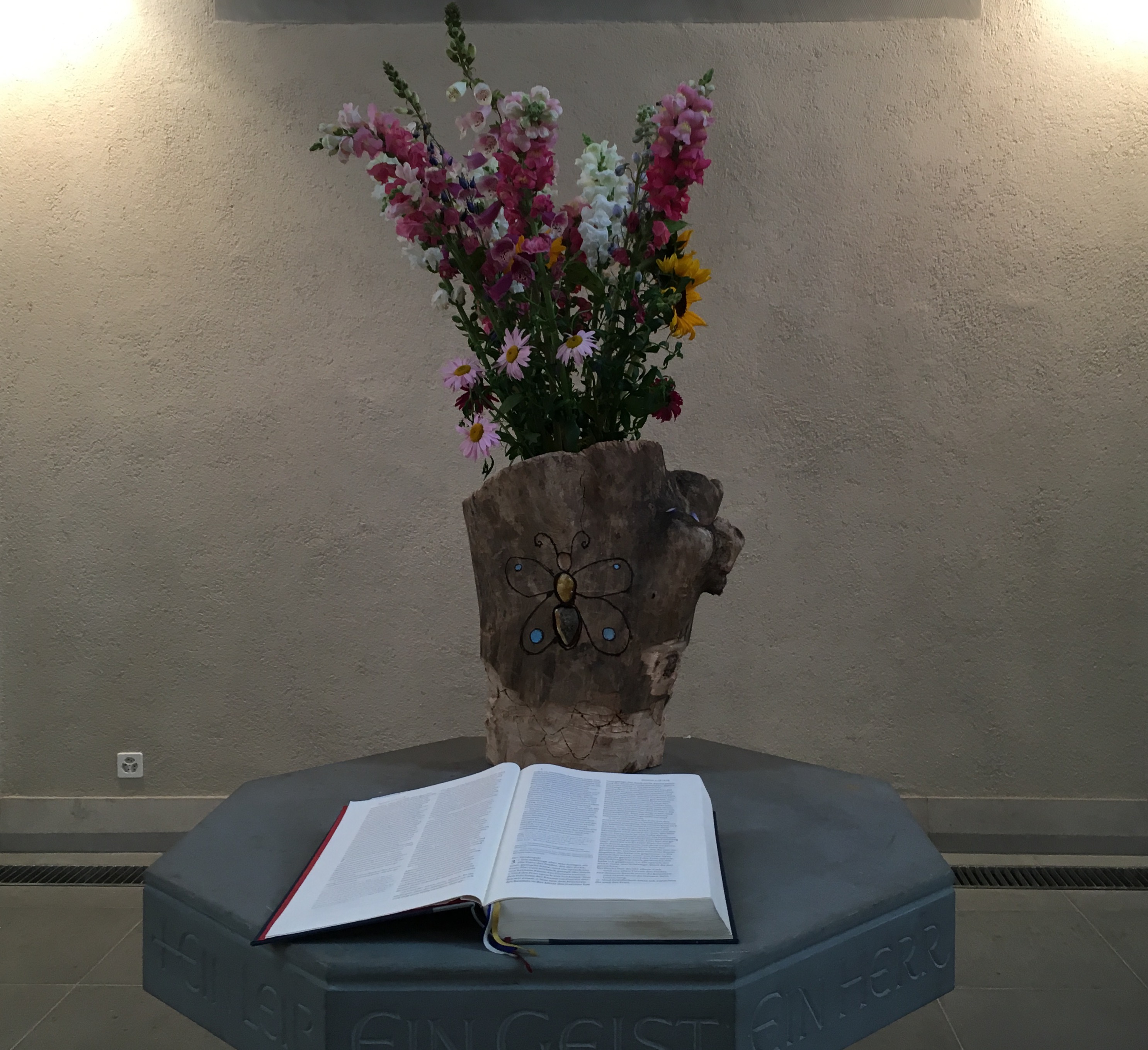
- Do the gangstones are not attacking?
- No, enormous enthusiasm from believers. They are not embarrassed by nothing, nor Nabokov, who was famous for strange works from a church point of view, neither my strange objects, nor that something was put on the altar. Despite the fact that the church is active, baptisms, weddings, services from time to time pass there. It is very strange - in the current church a huge exposition on Nabokov with butterflies. By the way, the priest with whom we came up with this project was regretted, that now in this church they do not have farewells when they exhibit a dead body. It would be good: it is lying, and a giant butterfly flies over it! During the "manifestos" there will be held services and baptism, the exhibition does not cancel church actions. I have one of the few free exhibitions "Manifesto", because the church should always be open. Moreover, installation has turned into some kind of horror, because the church cannot be closed. Some people went there, looked into the windows, there was a nightmare.
- At night it was possible to work.
- Yes, most of the night is done at night.
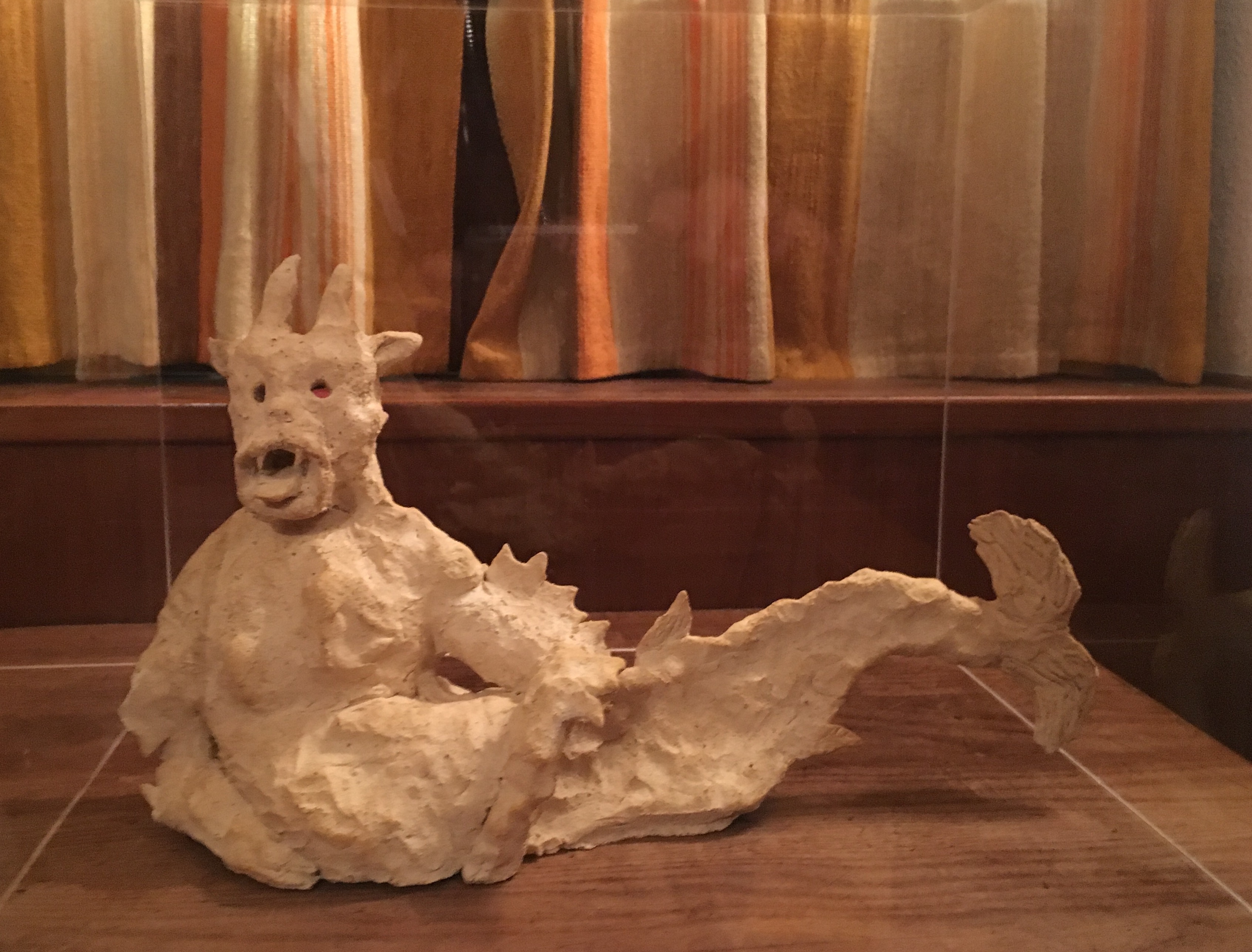
-You created a secret room, for the entrance to which you still need to pay a modest amount. What is in it?
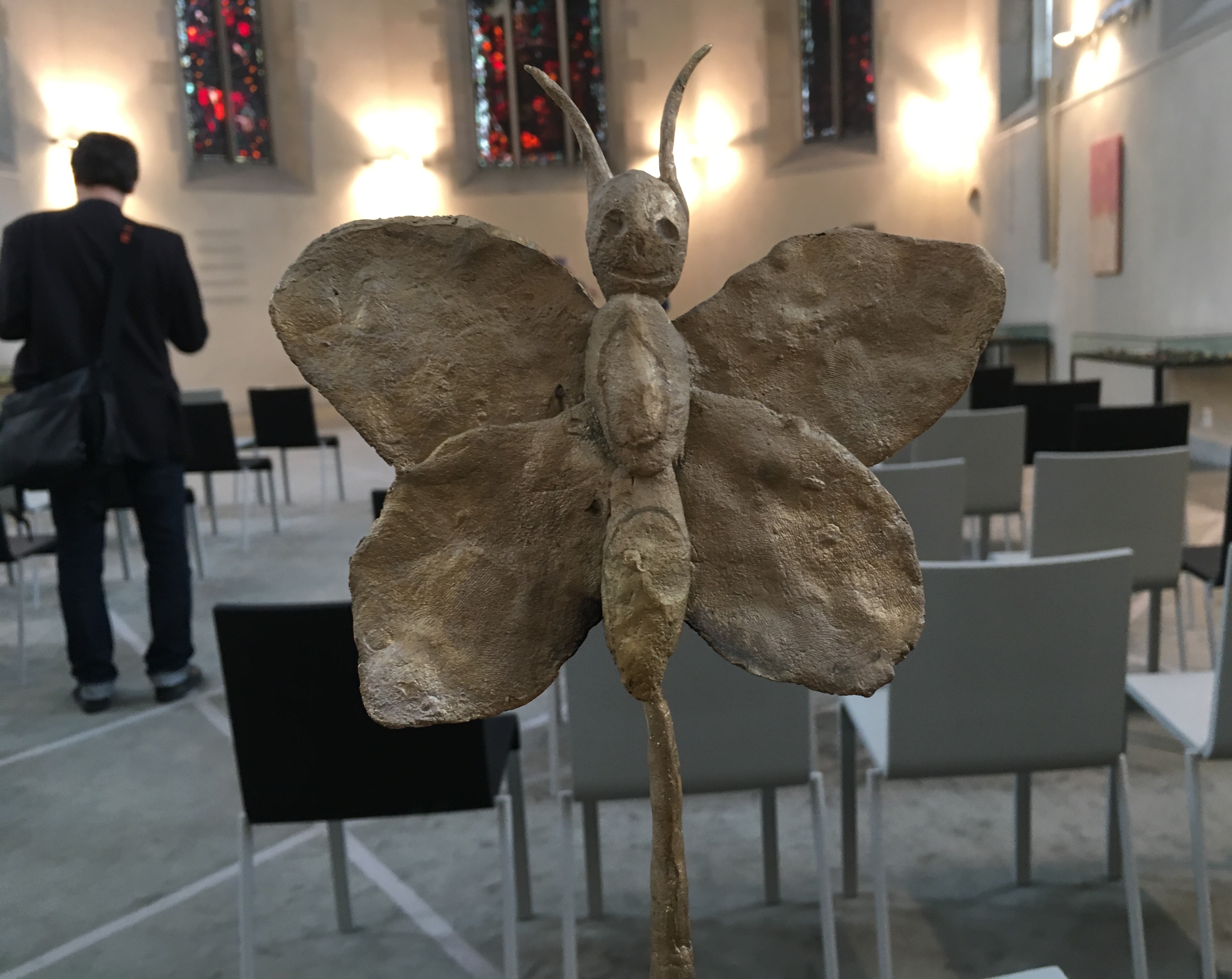
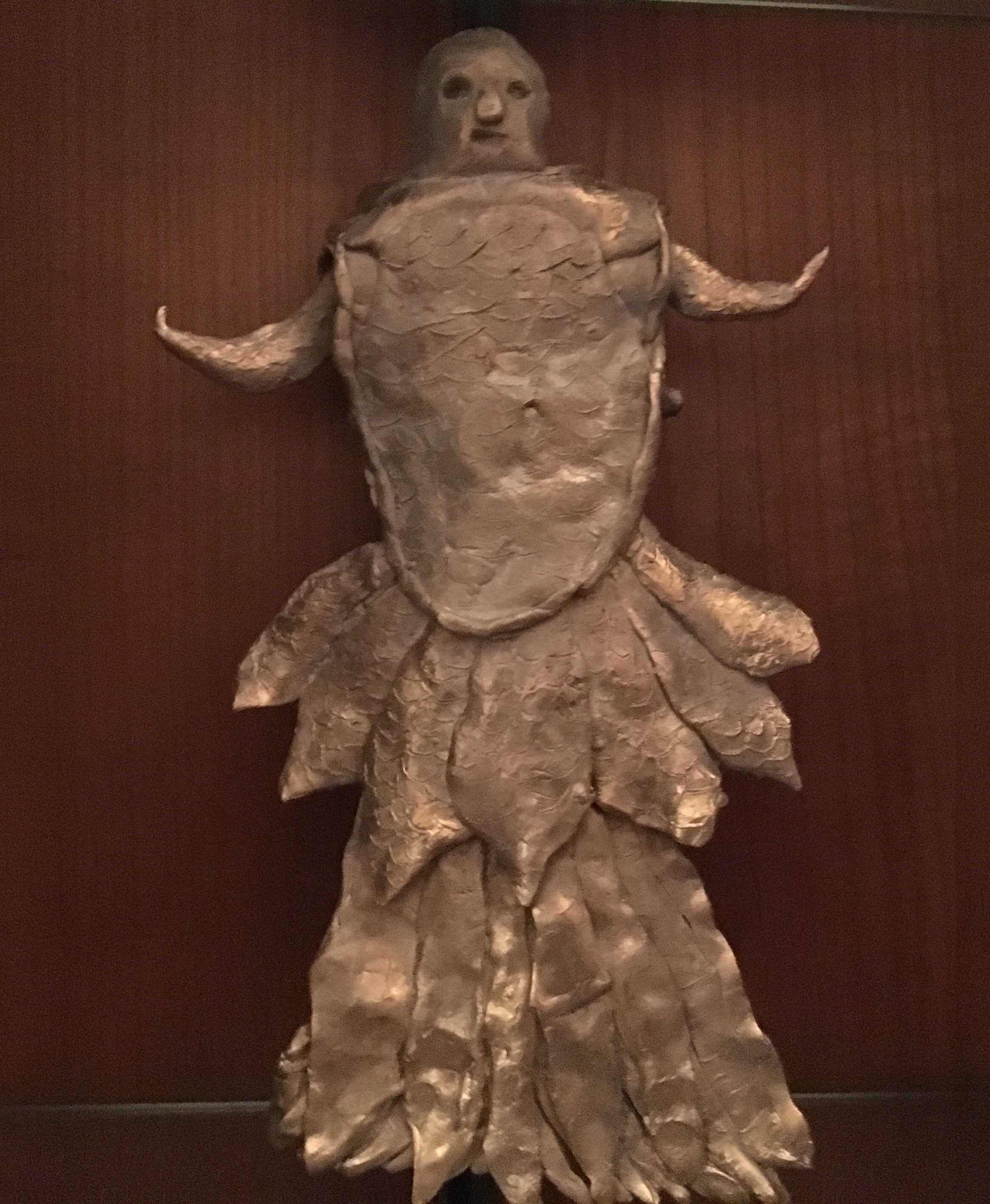
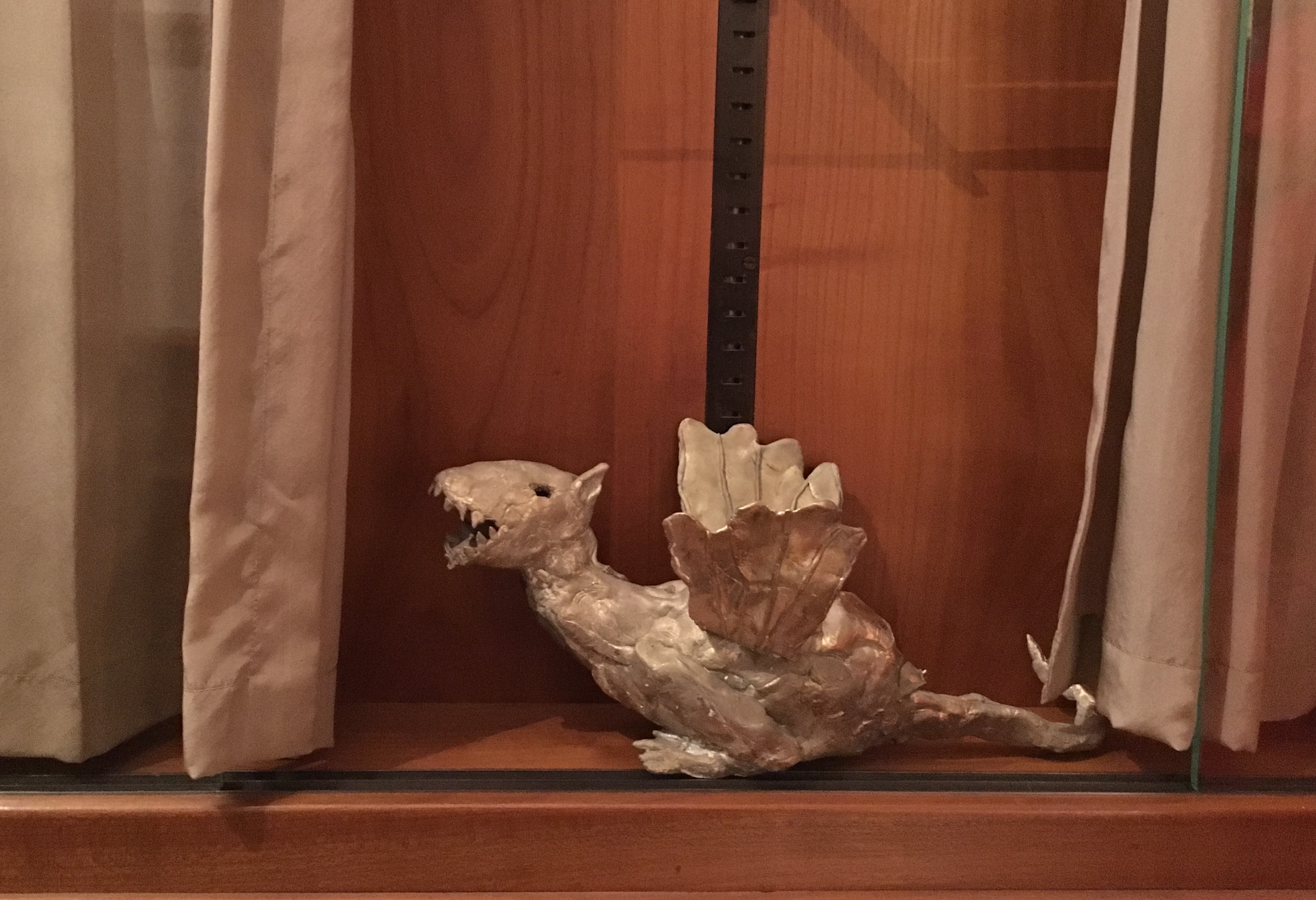
- In this secret room - copies of the monsters of Conrad Hesner, this is a Swiss naturalist, one of the first founders of botanical classifications. He is connotent with Nabokov, because Nabokov loved birds. As his son said: "Father loved birds and a word." Nabokov was proud of that any plant could determine any bird that I saw. He always had botanical and ornithological reference books in the room. In the works that are written in Switzerland, there are much more fauna and flora, before that he, as a rule, mentioned only butterflies. Hesner was also a collector, he collected everything - stones, plants, parts of animals, he was sent to dried birds, fish, from all over Europe they sent drawings of animals, which he later redrawn. As Nabokov collected butterflies, so Hesner collected monsters, he is known as the author of the atlas of monsters. He did not really believe in them, because he exposed the sewn from skins. But, nevertheless, he believed in a sea monk who lives at sea, and believed in a unicorn, even believed that he was holding his horn in his hands - and it was a horn of a nap. The priest came up with the idea to expose the monsters in the secret room, because this idea is connotent with the old story when you pay a coin in the circus or in the museum and you can look at some discouragingly false monster - in a semi-dark room with sewn hare legs. I made these monsters made of bronze and brass according to Hesner's sketches - these are not absolute copies, but a completely recognizable form. Entrance to the secret room is one frank.
- What scares some visitors.
- What scares some visitors, although the bus travel costs four and a half franc. I like that for a little money you can see a little secret. I am generally fascinated by a secret room, I probably would have made more secret rooms to future exhibitions, in which the entrance will not be so open. I like that there are secret levels of the exhibition. This exhibition has certain levels: the first is just beauty, my embroidery, vases, butterflies, a giant butterfly in the middle of the church, and then you need to read this whole story, a rather tragic story about how a person turns into a dried insect over time.
- In order to study all this, you had to spend the night in Nabokov’s hotel room. What are the sensations?
There are 3-4 thousand euros rooms, and they are in demand much more than the Nabokov room
- The sensations are strange. Because this hotel is scored by Russians, Chinese and Arabs. A strange hotel for a certain audience. This room is not the most expensive, it costs 730 francs without breakfast, and the ordinary audience is not very interested in it, because it is small. There are numbers of three thousand, four thousand euros, and they are in demand much more than the Nabokov room. As a rule, some literary critics, people who are interested in Nabokov’s work, go to it. It needs to be book in a few months. They say that everything is original, it is difficult to believe in it, although the table looks like the table that was in the photographs. There are several photos - Nabokov sits on the balcony, sits in a room with a bouquet of roses on the table and writes. I really like such a rather wild study: for the exhibition to sleep in the room, go, look at the butterflies, that is, a meaningless work that will never be used.
- You put up from this hotel - it also turned into a work of art.
-It seems to me that this is a work of art, to go and spend the night on the bed, on which Nabokov slept for 16 or 17 years, in different sources in different ways.
- Let's move on to the next window, there are roses from the garden for the blind, which you have already mentioned. What kind of garden is this, why there are so many roses and why did you decide to dry them in the window?
- This is a garden for the blind on the other side of Lake Zurich. We went there with a priest and found an amazing number of roses with the names of famous people.
- That is, he is at the clinic?
- No, this is a small city, it has a small garden, more than a hundred types of roses. In front of each rose there is a sign on which its name is written by Braille. The idea is that the blind can come, touch these roses, smell and then read the name on this plate, the roses themselves, however, without seeing. A beautiful small garden, he fascinated us, this is a direct illustration for the Bible: "What is human life? Grass. What is human glory? Flowers on this grass." Indeed, a huge number of roses are named after famous people or people who never existed, for example, there is a rose of Lolita or Rosa Margaret Merill, it is named after a fictitious person.
- So there is a connection with Nabokov through Lolita?
- She is not so important. We went to collect roses in the garden for the blind and accidentally discovered Lolita, of course, it was amazing. I had to have live roses in the church, at the last moment I decided to remove them, because it was already too much. For example, there was Rosa Tchaikovsky, Princess Diana. Rosa Maria Curie is. I generally like everything named after famous people and everything related to them. I had an exhibition dedicated to Tolstoy, "Immortality Forever", there was a hall dedicated to Anna Pavlova. All these strange artifacts, for example, are cakes, which are named after Anna Pavlova. A very strange story how the ballerina has turned into a cake that is known around the world.
- There is even an Eating Pavlova novel .
- It is unusual that in New Zealand they made a giant Pavlov weighing one hundred kilograms, called it Pavzill, Pavlova + Godzilla. They did not stop, made even more and called Pavkong, Pavlova + King Kong. I had a job dedicated to Tolstoy - this is a set of cards from Yasnaya Polyana. Almost every year a postcard is produced with the type of Tolstoy grave. I have types of postcards in a hundred years, it can be seen how the fence has changed, the trees disappeared, how the flowers change on it. The grave has not changed at all, because there is neither a monument nor inscription. There is a story, as in the Great Patriotic War, when the Germans took a clear clearing, they buried German officers next to Tolstoy. Then the Yasnaya Polyana was freed, all German officers were dug up and thrown away. There is a wonderful story, once in the very place where he and his brother Koloka were looking for a green wand on which a secret was written, how to make all people embrace and become ant brothers, he bequeathed. Stefan Zweig called this grave the most proud grave in the world. The amazingly passing place Yasnaya Polyana is now a synonym for Russian culture, purity and tranquility, a completely tourist place.
“You brought the remnants of the linden to Zurich, under which Chekhov once sat.” How did you come across this lip?
- I generally study everything related to trees. I am fascinated by the cult of benches in Russia: a bench on which Gumilev was sitting, a bench on which Pushkin liked to sit. I collect postcards, it is so written there: a bench on which I loved to sit a block. We have all the official culture in one way or another connected with literature, because there is no other particular, and cult places, as a rule, are associated precisely with literature.
- Not only in Russia, there are such benches around the world.
“ Of course, but it is Russian writers who are fascinating me.” We were in Zvenigorod, I found this tree, it was even marked on Yandex-cards, you can lay the route to the stack of Lipa Chekhov.
- She has recently become stable.
- I fell in 2013 under the wind. Everyone was very upset that such a landmark has fallen. They cut off and threw it into a ravine, there are still pieces of this tree. One piece is now exhibited in Zurich. I really like this story that Chekhov lived in Zvenigorod only for two weeks, while replacing a doctor, loved to sit under this tree, now under him a marble tablet, that he loved Chekhov under this tree. Удивительно, сколько табличек мы должны поставить по всему миру, где прошелся писатель, где он сидел, где он стоял, где он выпил кофе. Удивительно, насколько присутствие известного человека освящает место и делает его особенным. Кстати, Набоков верил в то, что за его столом в гостинице писал Флобер. Это тоже, я думаю, легенда, но она Набокову очень нравилась. Я хотел бы начать собирать такие предметы, покупать их на аукционах, но пока не имею финансовых возможностей. Дмитрий Набоков продавал коллекцию, потому что любил гоночные автомобили, тратил на них большие деньги.
– Почему рядом с чеховским пнем появились останки швейцарского дерева?
– Мы со священником приняли решение, что каждый из нас расскажет историю какого-то дерева, я расскажу историю чеховской липы, которая стоит в Звенигороде, а он расскажет о швейцарском дереве, тоже липе. Это было одно из самых старых деревьев в Цюрихе, оно было спилено, потому что местному кунстхалле понадобилось построить новое здание. Было очень много протестов, но, тем не менее, дерево спилили, там остался этот пень. Местные художники собрали какие-то куски этого дерева для своих проектов, и нам удалось получить кусок швейцарского дерева. Это история о двух исчезнувших деревьях, о двух пнях культуры. Потому что тут все очень любят деревья, для Швейцарии ландшафт – это часть культуры. Вид на водопад – такое же достояние, как знаменитая картина или з а мок. Вы, наверное, замечали: проложены туристические маршруты, шесть маршрутов вокруг горы, шесть маршрутов вокруг водопада. Это история о том, как природа и культура встречаются. Вся эта выставка – Набоков, бабочки, розы, деревья – о том, как природа и культура взаимодействуют, как культура становится частью природы, а природа становится частью культуры.
– Священник прежде не был художником? Вы его превратили в художника?
– Из него вышел чудесный концептуальный художник. У него была идея инсталляции: бросаешь монетку, и во всей церкви гаснет свет. У католиков, когда бросаешь монетку, свет зажигается, а у протестантов будет гаснуть. Мне эта идея очень понравилась. Плюс мы выставили его детские сокровища: коллекцию швейцарских марок, коллекцию перьев. Тоже интересная история, потому что он собирал их в детстве, у него была большая коллекция, а потом он ее закрыл в коробку и не открывал 30 лет. Это история о том, как меняются наши ценности, как они снова превращаются в ценные вещи в этой витрине, теперь они стали частью экспозиции. Мне нравятся коллекционеры: как Набоков коллекционировал бабочек, так же и священник коллекционировал марки с бабочками и розами. Вообще эта выставка о коллекционировании объектов. Я добавил к своей коллекции странных вещей Набокова с его бабочками и куски дерева Чехова. Они до сих пор у меня лежат дома, жена очень не любит, потому что по ним ходят какие-то мокрицы, муравьи. Большая проблема выставлять такие вещи, как пни и куски дерева. У меня друг выставлялся в Третьяковке, выставил кусок дерева, скульптуру, а из него вылезли какие-то мокрицы, и все боялись, что они съедят Малевича.
– Выставка живет в церкви в течение "Манифесты", три месяца, потом ее разбирают и восстановить уже невозможно. Это удар для вас?
– Надеюсь, что она в какой-то момент возродится, как эта бабочка. Потому что священник пригласил церковные ассоциации, которые занимаются современным искусством, очень хочет показать этот проект в разных церквях по всему миру. Не знаю, насколько это возможно. В Швейцарии, конечно, особое отношение к искусству, к культуре, к художникам. Это единственное, что их завораживает. Конечно, это удар – это огромное количество собранного материала. Я не уверен, что для другой выставки мне бы удалось получить коробочки Набокова, которые мне принципиально важны. "Что слава человеческая? Цветы на этой траве. Увяла трава, и цвет ее опал". Ничего, к сожалению, не сделаешь.