
Translated material
Ingo Nirman: "Free love is a neoliberal idea"
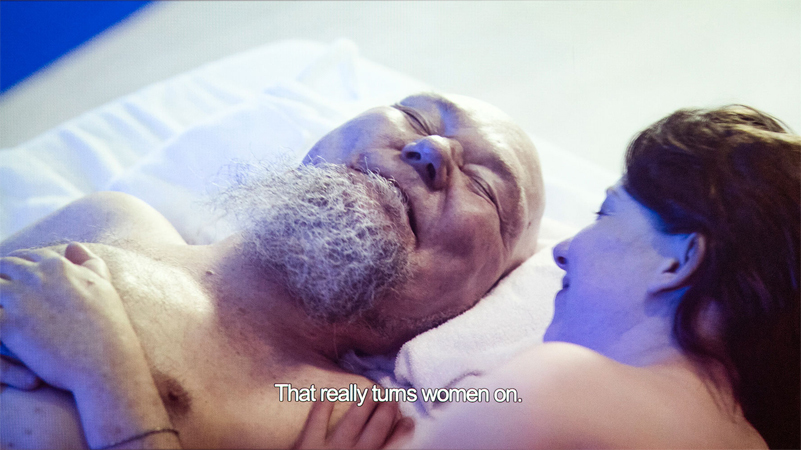
On the Berlin Biennale, the film director Aleksa Karolinski and the writer Ingo Nirman “Army of Love” is presented on the Berlin Biennale: visitors to the exhibition can watch semi -documentary video stylized for advertising or political propaganda and telling about the activities of the organization that sees its task to combat the torment of loneliness in love life. Andrei Shental decided to clarify the Ingo Nirman, as he imagines the tasks of the “army” and how seriously he believes in delivering humanity from love suffering.
- What is an “army of love”? During the presentation of the project on Berlin Radio, your co -author Alex Karolinski emphasized its fictitious character, while you said that the film presented at the exhibition can be considered as documentary.
- First of all, we had the idea of a "army of love." Then - and this is the film - we asked what those who are interested in this idea think about this idea. It so happened that everyone answered as if they were already participants in the “army”. In this sense, it is real. I meant, speaking of the documentary of the project, that we have documentary interviews, and Alex spoke about the role of fiction in the process of filming. Filming was not based only on our observation of people: we ourselves chose a place for filming, we had some basic considerations about what we can do.
- Who are the participants of the "army"? I drew attention to the editor of the E-Flux Juliet Arand, then the sex activist Mattias ...
-Yes, activist Matthias Vernaldi, sex worker Stefani Klee, people involved in performance, such as Tarren Jensen and Marie Golyuka, then several people who learned about the “army” and became interested. For example, the sociologist Cynthia is Sholten, and one guy, Hans Rosenfeld participating in the project, is in no way connected with the world of art. A blind man, Moritz Wulf, television journalist. They all have a different background.
It was very important to unify the “Army of Love”, but so that its participants do not wear normal clothes, so that even the undressing process differs from the usual one.
- The name of the Berlin Biennale “Present in Drag” (“present in the female image”), if you consider it literally, combines two logic: temporal and gender. Many works presented on it can be characterized by the word “Quir”: especially the film Wu Tsang and partly the work of Ryan Trekartin. It seems to me that in this regard, your work takes a step forward from sexual and gender problems and may be called "post-Cvir."
- In general, it seems to me that the curators had in mind called “ p asent in d Rag” not just a reference to the gender, but a more universal concept. Alex and I thought a lot about it. There is not a single transgender in our film, but he could well participate there. Inviting the people, we sent the Imila through various channels and watched who would respond to our proposal. We did not want to collect a bright mixture of sexual orientations and gender identities. It did not matter to us. What mattered was love that went beyond the usual sexual orientation of people.
- When I watched your film, all these dressed people, affecting each other, reminded me of the “flaming creatures” (1963) Jack Smith. Did he inspire you?
- You can conduct such a connection, this is a good reference. I did not mean her, but I am a fan of Jack Smith's works. We wanted to do something not very professional. The “Army of Love” is formed by volunteers, and this is an important feature of the film. And, of course, the costumes made by Hood by Air played a role - returning to your previous issue about gender, we wanted to withdraw them from normal context. We chose this spa where the artificial bluish light shines, we did not put it, it was already there, and then these costumes ... It was very important to unify the “army”, but so that its participants did not wear normal clothes so that even the undressing process differed from the usual one.
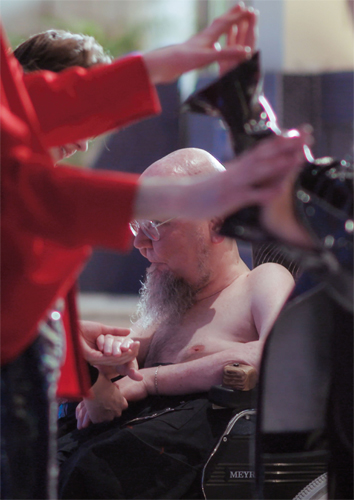 © Alexa Karolinski, INGO Niermann / VG Bild-Kunst, Bonn Frame from the Video Aleksa Karolinski and Ingo Nirman "Army of Love", 9th Berlin Biennale of Modern Art, 2016
- In the manifesto of the same name, you claim that communism did not take place, because it has socialized only material benefits. While the “Army of Love” complements the redistribution of income “equal to the distribution of attractiveness”, which many theorists and practices did not take into account. Alex also said that the principle of “Army of Love” can be described as follows: “When we can, we give, when we need, we accept” - this resembles a well -known slogan “from each by abilities, everyone according to needs”. Can this be called the determining principle of the new society? Would you call an “army of love” a revolutionary and political project?
- Yes, sure. Charles Fourier already implies such “socialism”, taking into account the personal lives of people living in communes. But presumably these communes are people who share the same views and aesthetics, and all of them, possibly, of the same age. These communes are not universal, and in this sense they confront the communist idea. While the “Army of Love” - and this is why I called the ideology on which it is founded, “completism” (completism) - seeks to complement communism.
- When I stumbled upon the term “completism”, I thought that we are talking about trusting the body that is physically inferior. But, introducing it in the search, I saw this definition: the desire to collect a complete set of things of a certain type.
- I came to this term ten years ago when I began to write a short story, which I called the “Competers”. At that time, I did not find any information about him, and when I recently double-check, I found out that the concept of “complisma” is mainly used in relation to collectors who want to collect everything from something. But this is still not such a popular term. In my understanding, completism relieves communism, relieves him with love for his neighbor, supplements his idea that people should exist for other people and over time not only for people. This is an expanded understanding of charity. Ordinary charity work excludes feelings, even if you care about someone's body. Christian charity does not imply sensual love. No, complementism has nothing to do with the humanistic idea of completing people with disabilities or adding lonely people with love. The “Army of Love” gives love only to those who need her, who want her. If you prefer to be alone with you, there is no problem in this. Some people may not need love.
 © Estate of Jack Smith Frame from Jack Smith's film “Flaming Creatures”. 1962–63
- I liked what you are talking about a sensual dimension of love, and not just about Platonic feelings. This was especially important in the context of Biennale, which reflected the oversight of bodily feelings. For some reason, your film “Army of Love” made me recall the conflict between Rosa von Praunhaim and Helga Getz, which took part in his film “Red Love”. Getz wanted to have sex with von Praneham, and when he refused her (he was open gay), she decided that he exploited her intellectually, without paying her sex, while he was offended because she showed homophobia. But how, in your opinion, could such a conflict be resolved in a complistic society? How can you overcome such problems?
- Of course, the “army of love” is only an offer, you cannot force anyone. There are several practical issues that we discussed with students during the master class in Städelschule in Frankfurt. We were preparing for the new stage of our project - a training camp, organized together with the Spanish artist, Dorra Garcia, which will be held in late August in Wiesbaden. For example, can the “Army of Love” act under the guise, like flirting guys in the performance of the Dores “Romeo” (the work refers to “Romeo” - the spies of the GDR, who seduced and recruited women. - A.Sh. ), or will it be immoral? Answering in general - this is why the "army of love" is called the army: love can be very dangerous. You offer someone your love, and then this person falls in love with you. Starting from this moment you are responsible to him, you must truly satisfy his/her need for love. We talked about this due to the fact that it does not actually work in the case of an “army of love”-this is the provision of random ties, as in the case of a sex worker. This proposal of something more durable and long, but at the same time it cannot offer people of satellites for life, as in agencies to search for partners. The “Army of Love”, rather, helps people accept love from several people so that you do not become completely dependent on one person.
Love is fraught with potential violence.
-I asked this question, because some theorists-I mean primarily Zizheka-insist that seduce another or “roll up” to someone-this is always a violation of privacy, practically harassment.
- I would not consider this problem so far. Hobble is when someone does not show interest, and the other person continues to turn to him. When someone is begging on the street and asking for money-this is not harassment. To put the problem in this way regarding any meeting with strangers is the basis of xenophobia. But yes, even if you show love in relation to someone, he likes it and he opens, the situation is not cloudless ... Love is a very strong feeling, and it is fraught with potential violence. It can turn your life upside down: and when your love is taken away, and when you yourself do not experience love anymore. In both cases, this is a cruel seizure.
-The French theorist Guy Okingham in his main book extolled a homosexual desire, because, in his opinion, it is free from restrictions and is not attached to a specific object or to any particular part of the body, encouraging the change of sexual partners. But this is the liberation of desire, which today is amplified by new technologies (for example, such applications as Tinder , Grinder , etc.), it seems to me problematic. Your description of love reminded me by the definition of love as an event in Badya. And I like that you are contrasting the “liberation” (liberation ” of“ liberalization ” (liberalism) desire as its inside out. Badya also criticized the neoliberal model of love and a pro -school.
- I agree. It seems to me that free love is a neoliberal idea. This means that there is a free market of love. Together with a free market, there is a hope that in the end everyone will receive what he wants. To a certain extent, this is true: some people lose their limbs, and then there are people who love people who have undergone amputation. For any strange body shape, there is a fetishist. But still, in general, it does not work. Not only because some people who prefer to be with someone remain lonely. Even if you have love, you are afraid to lose it once, and the “Army of Love” is a solution to this problem.
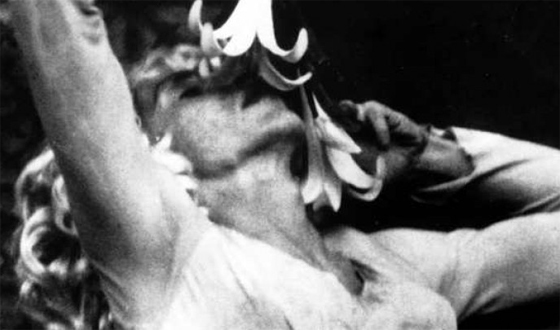 © Estate of Jack Smith Frame from Jack Smith's film “Flaming Creatures”. 1962–63
- Quir- and LGBT communities usually position themselves as horizontal and democratic, but, as I noticed, sometimes they build internal hierarchies based on the degree of attractiveness of a particular participant. In this sense, the “Army of Love” - as it is depicted in the film - overturns this situation. Especially in the scene where Matthias says that he has an unattractive body while another person undresses him. You rightly remarked: "To say to someone whose external data below the average, that he is beautiful, is like saying to the poor, that money is not the most important thing."
- Most of the ideas of attractiveness are quite stereotyped. What you find attractive, many others also find attractive. There are many incapable sex activists who say that this should be changed. But this applies to people whose attractiveness is higher than the average, who are tightened, young, have, as it is believed, a beautiful face who has a lot of hair on their heads, etc. Society cannot force love. We do not have technical means, and this is contrary to ideas about human dignity. Therefore, we need an “army of love”. Recently, I finished the novel “Completed Love” , related to all this problem. There is a Canadian Quyr-activist named Laurie Erickson, who really exists. She says that the beauty standards of our society contain many problems. But the question is how to change them. When Kristina Aguilera sings: “We are beautiful No Matter What the Say” (“We are beautiful regardless of what they say”) - this is not enough. Everything is not so simple.
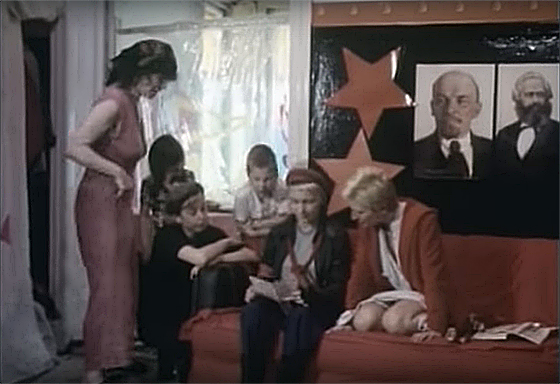 © Atlas und Zweitausendeins Frame from the film Rosa von Pranehaim "Rote Liebe". 1980
-Ha ha, I also remembered the same song when I read your text.
- When they say: “Let's finally realize that we are all beautiful” is just a kitsch. We have repeatedly discussed this while edited by a novel either during our dialogue with Alex and other participants in the Army. "Is it not the provision that some people are more attractive than others, discriminatory?" And then I said: no, this is not so, think about the inequality between the rich and the poor.
I do not think that being rich is so nice, and it is also possible that in our society people who are generally considered very attractive are not necessarily happier than others, like super -boggy not necessarily happier than everyone else. But still, this can sound extremely cynical: hey, poor people, you live in slums, and you want to be rich? You are just stupid. The rich are not happier than you. So please stay poor. Why should we provide you with anything? But we have such morality when it comes to beauty. The approach of the “Army of Love” is to inspire rich people to open the beautiful in being poor and giving their money to those who are poor and want to become rich. If there is always the opportunity to have sex with super attractive, according to generally accepted standards, people, this may not become such an interesting occupation. But before we need abundance. Everyone must have the right to know themselves.
Now we have realized how inhuman we are all.
At the same time, attractiveness can be very subjective. This is what I appreciate in the “Army of Love” - both in the film and in the group of people that we form for Wiesbaden. There are incompetent people who consider themselves very attractive, and they really attract . Matthias told me when I first met him: “I must admit that most of my life I had no problems in finding partners for sex. There were always people whom I attracted. " He grew up in East Germany, where he founded the commune that it was atypical in itself. In addition, he is a very charismatic interlocutor. He believes that he still has two problems. Firstly, does it find attractive those who find it attractive? Secondly, he has muscle dystrophy, and when his condition was aggravated, it became more difficult and more difficult for him to maintain proper relations, since it took a lot of effort. Therefore, in recent years, he had more and more sex or intimacy (like dinner) with prostitutes. At the same time, he found a humiliating fee for sex with other people. But it is here that the “Army of Love” can come to the rescue.
- As you have already said, your project anticipates overcoming the boundaries between a person and other species. How will he work with those species that do not have consciousness?
- I am convinced that everything not only has consciousness, but there is consciousness. This is what the universe consists of. What else? But, of course, the consciousness of others can be very different from ours. This is a very difficult question, and I do not have a common answer. I read a lot on this topic: from Donna Harauay to the confessions of zoophiles and objects of objects. There is a wide range of opportunities, but I am not aware enough in this. But, it seems to me, with the technological progress that is happening, we soon realize that we are all to some extent incompetent. In our society, more and more conditions are considered disabilities or mental illness. Even without genetic engineering, we become less and less people. Previously, there was an idea of humanism, according to which most people will be able to comply with the standards of full -fledged people over time, but now, on the contrary, we realized how inhuman we are all human.
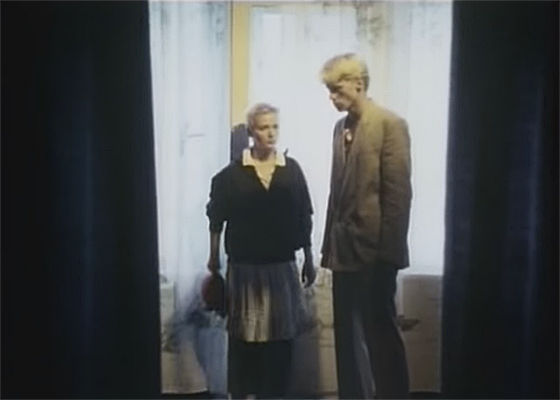 © Atlas und Zweitausendeins Frame from the film Rosa von Pranehaim "Rote Liebe". 1980
- What are your next steps?
- First of all, I am the author of art works. Sometimes I like not only to write anything, but also to advance ideas forward. I have already done this in the past with the Great Pyramid project . But I actually do not see myself as a leader or key figure in a new movement. I would like to bring it to a certain point. It is best if other people come and start from there.
Also about the IX Berlin Biennale, read the other materials of Andrei Shental:
Download the entire issue of the magazine "Disagreements" (No. 5) "On a business trip. Abroad. On the Biennale ": PDF , MOBI , EPUB