
Translated material
When Hitler was small
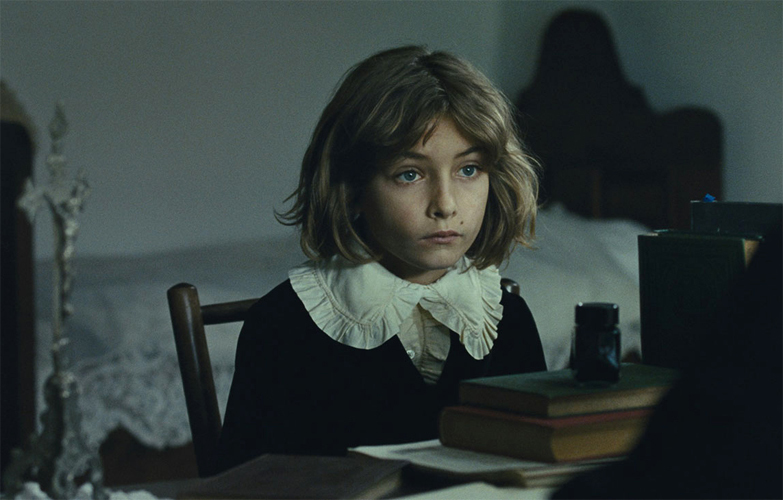
So far, Moscow Film Festival is going on - without special discoveries and even without a media forum, the most progressive MMKF program, which gave way to the mass grave in the year of the film from the dilapidated achievements of Soviet cinema - we are trying to comprehend the program of another festival of debuts, which recently ended with the Ivanovo Mirror. Representative, as always (there were the winner of the Rotterdam, the best Venetian debut, and diligent Colombian experiments in the spirit of Alonso, and the new gloomy cinema of Eastern Europe), the mirror contest this year demonstrated the well -known decline in avant -garde thought in the cinema. The winner of the festival, for example, became the film of the American Persian Babak Jalali “Radio Gogroza” that had already won in Rotterdam - the kindest movie with harmless jokes on the anger of the day, which our Ministry of Culture has long been dreamed of. To our deep dissatisfaction, in Ivanovo, the most interesting debut of the year was completely circumvented and attention - the “childhood of the leader” Breedi Corbet. We hope this movie sooner or later will arise if not at the Russian box office, then at least in our section “What to download this week”. In the meantime, Natalya Serebryakova explains why she fell in love with this daring and uneven film.
Under the tense music of Scott Waker, archival personnel of the Chronicle of the First World War are going on, the latest destruction machine is sprouting and spoke in Europe. Around the same alarming time in rural France, a blond American Prescott (Tom Swit), similar to Ulyanov’s young Volodya, is tormented from parental inattention. His father (Liam Canningham from the Game of Thrones), adviser to President Woodlon Wilson, is busy with the preparation of the conditions of German surrender in Versailles. Sometimes he plays at home in billiards with a friend's friend (or, rather, his wife) by his widower Charles (Robert Pattinson with a beard), having interesting ideas about the immanence of violence. The mother of Prescott (Berenis Begio) delegated the upbringing of her own son to Kuharke (rather a comedic French actress Ilanda Moro) and a coming girl from the village who teaches the boy to French (she is played by Steisi Martin - Casting Corbet approached with the thoroughness and talent of the major). The relationship of Charles and the mother of Prescott for the time being will remain under the veil of secrets, but his visit to the family nest is alarming from the first frame.
The “child’s childhood” has a clear structure: a short intro, three chapters (“hysteria”) and epilogue. The reason for the tantrum is mainly the luxurious curls of the baby Prescott, because of which he is often confused with the girl. But not only they. The boy is hammered by French, they are not allowed to touch the tender beauty from the "nympho"; Father and mother are cold with him, because they probably wanted a girl. How can you not appear naked at a secular reception and not demonstrate their genitals to stiff aristocrats? Together with his young hero, the Corbet-director has a long time in the dark and cold corridors of children's subjectivity and the unsatisfied ego; Their intelligible - even too much - the riveted raw interiors of an old uncomfortable French house become a metaphor.
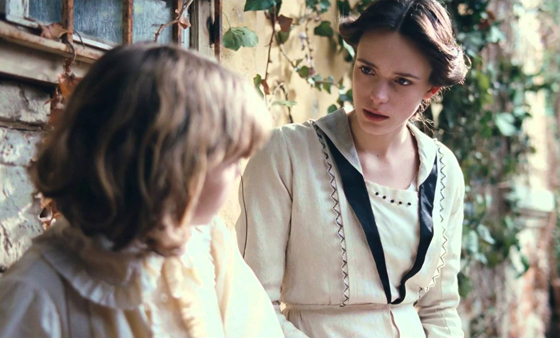 © IFC Films Frame from the movie "Childhood of a leader"
Not very warmly met in Venice by Western criticism, the cinema nevertheless deserved a prize for debut and a couple of meaningful formulations in Indiewire : “This is the most loud but far from the best film in Venice”, “Fascinating brainwalks”. The film really has a number of gaps, which could be filled with a more experienced director. But the sympathetic spectator will see in these voids, undergrowths and hints the special charm of directorial non -articulation, delicate silence, sometimes having an enigmatic, and sometimes comic effect. In the absolutely deserted frame, the rope hanging from the curtains suddenly lights up from the candle and, having demanded a minute, goes out, without discharge of a disaster that has accumulated in the house. What was it? Or the just fired cook swears: "I will devote the rest of my life to the destruction of your family." A week later, the family will safely move back to the States, and the line of revenge will break off without starting.
But the "childhood of a leader" has a number of unconditional virtues. First of all, it is impossible to reproach Corbet with non -zobble. The very name of his film, he gives the ground for intellectual allusions (and the epilogue expressing gratitude seems to be all intellectuals of the 20th century, from Jean-Paul Sartre to Hannah Arendt, already looks like a bibliography). “The Leader’s Childhood” is the story of Sartre generally written in 1939, whose main character, the son of wealthy industrialists named Lucien, is looking for his identity, being involved in Freudian psychoanalysis. Sartre watches his hero from four years old until his youth, describing a homosexual connection with the poet, joining the fascist organization and the murder of a Jew, reading “Yumanit”. All this time, Lucien is digging in himself in search of an answer to the question: "What is wrong with me?"
The hero of the film Korbet, on the contrary, is as closed from the viewer as much as possible, sealed - we see only the external results of his reflexions and self -torture, attacks of uncontrolled aggression and exhausting rabies. In the field of naive studies of the child - his own sexuality, the issue of the existence of God (negative answer) and the boundaries of adult power. In the climax, the young Hitler (Mussolini, Oswald Mosley, finally) is locked in his room for several days and crams the fable in Star French to take revenge on the world in general and the non-healing teacher in particular.
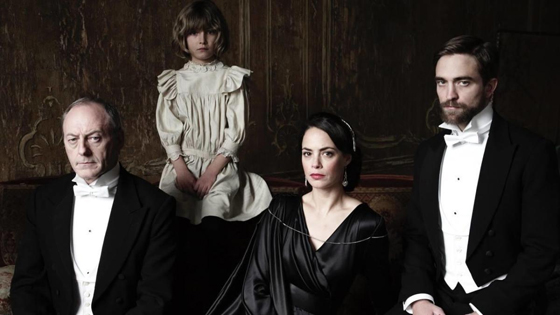 © IFC Films Frame from the movie "Childhood of a leader"
Talking about the nature of psychopathy (the bourgeois family is to blame, Corbet claims after the Hanek), Corbet, as it were, is turned over by Antonio Campos “Simon-killer”, in which he himself played, and almost his role-an American student who committed a crime on sexual grounds in Paris. Corbet seemed to create a kind of prequel to the history of Campos. At the beginning of the twentieth century, his Prescort grows up in the fascist leader. And at the beginning of the twenty-first century, when the heroes crushed, Prescott could become a Simon who scored a prostitute's girlfriend.
But we will not be too serious: in the end, on the tears of the child, Corbet does not build a tragedy, but an entertaining historical phantasmagoria. Almost all the characters in this social pastry are conditional and do not even have names: just “mother”, just “father”, “teacher” or “elderly foreign gentleman”. The young director is ironic in his perception of history, and film generation is more important to him more important than any historical truth. Consciously or unconsciously, he fills his film by many not only historical and general cultural, but also purely cinematographic allusions. So, in the dramatic, hysterical finale, he suddenly witty quotes Cosmopolis Cronenberg. And is this not a mockery of real life with its leaders and the triumph of anarchist Sinefilia?