
Translated material
Outsource war
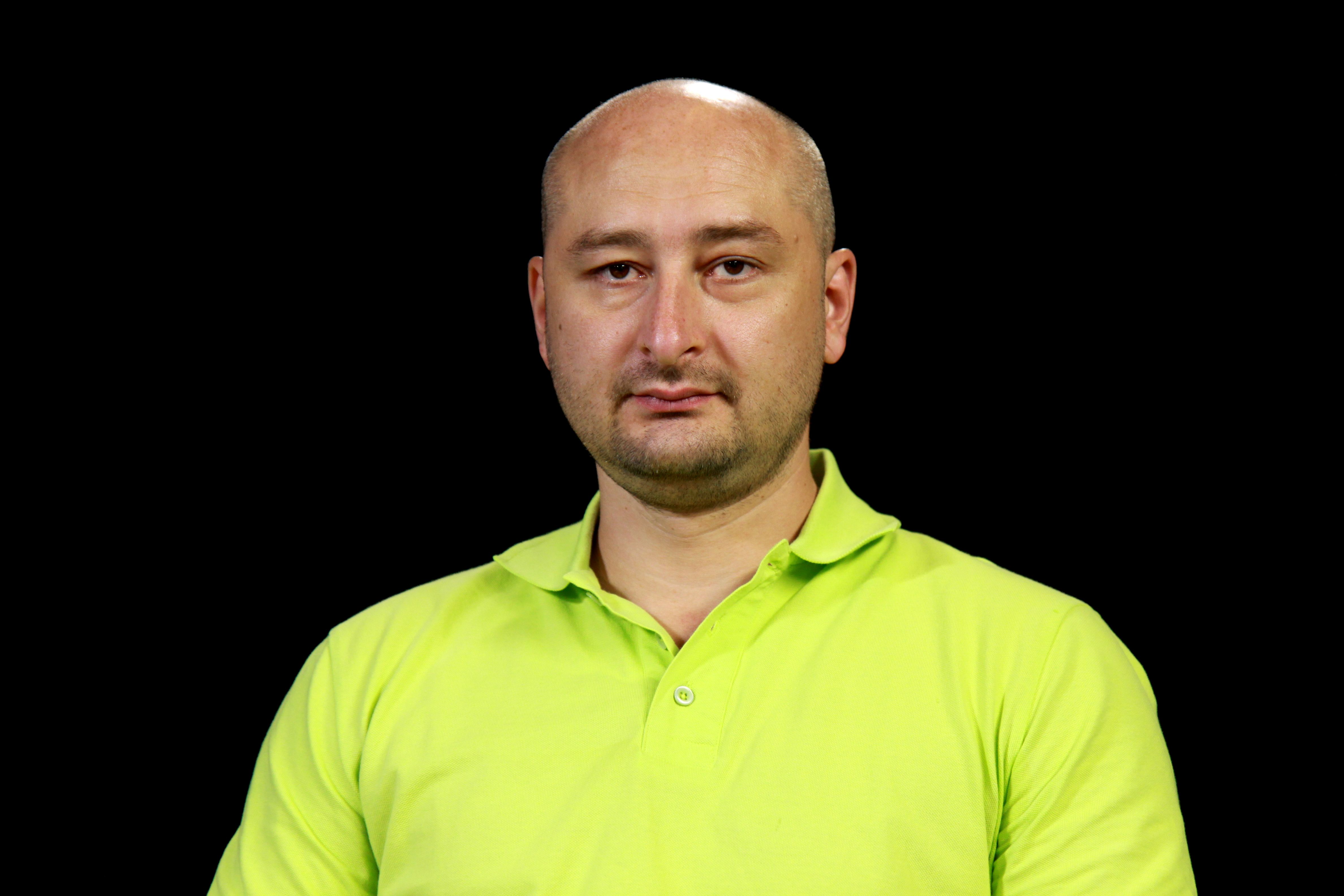
Who are private armies fighting with? Guest Radio Liberty - military journalist Arkady Babchenko
Sergey Medvedev: Some of the unexpected future in the last three years are the wars that Russia wages. The country, perhaps, unexpectedly for itself (although, perhaps, quite expected), it turned out to be in military language, in the threatened period, a period of different wars. There was Crimea, there was Donbass, Syria continues, the Russian military is involved in Iraq. Military reports fill the ether. Increasingly, the abbreviation "PMC" - "Private Military Company" sounds. For example, we learned that the liberation of Palmyra occurred with the active participation of a certain private military company Wagner.
We are talking about some interesting and large shift in the very method of conducting a modern war, when violence is delegated by the state to outsource various non-state private companies, that is, the state loses its fundamental monopoly on violence. This is an incredibly interesting moment, and we would like to discuss it today. We have a military journalist Arkady Babchenko .
Arkady, Russia is not the first on this path: as I understand it, the Americans in Iraq for the past 20 years with various military campaigns? ..
Arkady Babchenko: Russia is not the first on this path, but one of the last. I believe that we lost a lot, here we have missed a fairly large piece of the market, because Russia is a fighting country, it has all the inclinations in order to be a leader in the PMC market - this is a cheap life and a population, which, in principle, has nowhere to make himself in this life.
We could play really leading roles in this market. Now we are not going to him, but there was no legislative legalization of PMCs either. Conversations are conducted, but in fact everything remains in the place where it was, except that in reality, Russian PMCs already exist. Already a few years ago, the subsidiary of Lukoil, “Luke-a” gained people to work in Iraq. There we have two largest deposits, and people were recruited there. I thought about getting there, because there were absolutely wonderful conditions: you work six months, for six months on vacation, a salary of eight to ten thousand dollars a month and full chocolate.
We do not have a law of PMC, in fact, for some sheltered structures, they exist, all this goes into the shadow black market, where they do not exist, but they still exist.
Part of the unexpected future is the wars that Russia wages
Sergey Medvedev: There is still a law on mercenaries. If this law is seriously adopted, then many who went to fight on the Donbass fall under the action of this law.
Arkady Babchenko: The law on mercenaries is difficult.
Sergey Medvedev: Not a law, but a criminal article.
Arkady Babchenko: In my opinion, that it is used, a prevailing factor should be the desire to enrich. Many of us went to the Donbass after washing the brains with propaganda, with the desire to really kill the Nazis, Bandera, to save the "Russian world", and the enrichment for them was already the second thing.
I believe that the law on mercenaries should be, I do not think that it needs to be canceled completely, because mercenaries really exist, but in terms of PMC it should be significantly corrected, because it is quite a lot of capabilities.
Sergey Medvedev: And what about this in other countries - is this an absolutely normal legitimate practice?
Arkady Babchenko: Everywhere in different ways.
Sergey Medvedev: In France there has always been a foreign legion, but it is completely different - it is a state structure.
Russia is not the first on this way, but one of the last
Arkady Babchenko: The most severely developed PMCs in America, but they are the most deposited there, bureaucraticized. American PMCs do not directly participate in direct military operations, that is, they do not storm Palmyra. This is mostly outsors. The main mission is the delivery of goods, escorting convoys, ensuring their safety.
Sergey Medvedev: A dozen and a half, I think, the most famous.
Arkady Babchenko: Famous, highlighted PMCs are, by and large, work with pieces of paper, legislation. God forbid to violate the legislation, to see at all the local or anyone to shoot by mistake!
The second market, which is more developed, is the semi -legal PMC market. I have quite a lot of familiar veterans, with the beginning of the pirate history in the Gulf of Aden on the military theme. Wagner began there, as far as this is known, they went there simply to accompany ships. This, of course, was done semi -propelled, because there is a problem: you can’t get a weapon, you can’t get on the ship with weapons, so they went out into international waters in boats, they delivered their weapons, they spent a ship with weapons, and they also handed over weapons in international waters and returned back to the ground.
If we had normal legislation, this market, the Aden Strait could have been completely under Russia, we could become a central player there. The entire Aden Strait would now speak Russian.
The law on mercenaries should be
There are half-dark offices, for some reason they love Italy very much, where people who have passed the wars who served in the army come, mainly Serbs, Balkans, Croats, the same Russians. They are found in Rimini at the station under the clock (no one knows anyone), sitting down, going somewhere or flying, they get weapons and a task there. For example, some son of a millionaire rode a yacht, and he was taken hostage. They come there, they kill everyone, the son of a millionaire is released, returned, receive money and diverge. I don’t know whether this falls under the legislation on PMCs, or is it already mercenaries, but these are such semi -legal PMCs.
Sergey Medvedev: In general, such an extraterritorial law enforcement ... Maybe from the point of view of the state where they killed someone, this is a criminal act.
Arkady Babchenko: I think yes. But from the point of view of public morality, to free the hostage from the bandits ...
Sergey Medvedev: That is, PMCs act in the "gray" zone that has not yet been prescribed in international law, unlike chokes . Chop is such a clear law on security activities, the functions of the police, the functions of the protection of public order are divorced there.
Arkady Babchenko: In general, all special services act in the "gray" zone. The liquidation of Osama Ben Laden was also not a particularly legal operation, however, these are the state special services of the United States of America.
I divide the PMC into two types: some - "white", legal. And then we know that the very “white”, the legal Black Water eventually had problems due to the murder. They simultaneously killed 12 people in Iraq, and this served as the end of Black Water, and before that they already banged people under the noise. As a result, this company had to break up, and now it exists under some other name.
Sergey Medvedev: Is there any other private armies in Russia in Russia, except for PMCs of Wagner?
Kadyrov has his own personal army, remarkably armed, trained and motivated
Arkady Babchenko: In fact, private armies, of course, exist.
Sergey Medvedev: At the corporations, about oligarchs?
Arkady Babchenko: both corporations and oligarchs. "Luke-A" is quite a corporate private army. Five or six years ago, Transneft had talk about the possibility of issuing and using automatic weapons to protect the pipeline, oil towers and so on. I did not track this story, but I think that it has been successfully completed, and this private army now also exists.
Sergey Medvedev: And the regional? What, only Kadyrov has a private army, or are there others in the Caucasus?
Arkady Babchenko: I am not special in this matter, but besides Kadyrov, I personally do not know anyone.
Sergey Medvedev: Does Kadyrov already have a full -forming army?
Arkady Babchenko: Yes, this is its own private personal army, remarkably armed, trained and motivated. In my opinion, now, after the Russian Armed Forces, this is the most combat -ready unit in the Russian Federation.
Sergey Medvedev: How realistic is the task of integrating it into the Russian Guard?
This is an army based on loyalty to a single person
Arkady Babchenko: It is completely unrealistic. This is an army based on loyalty to a single person. So it will remain. This is an absolutely feudal private army. The Russian Guard before that was not the private army of Kadyrov, some battalions belonged to the GRU, then they entered the oil preservation regiment. Now on a piece of paper is the structure of the Russian Federation, but in fact it is still a private army. On a piece of paper, they will go from one subordination to another, and nothing will change at all.
Sergey Medvedev: When you were in Chechnya, there was nothing like this, no private companies?
Arkady Babchenko: In the first war - no, but in the second I myself already went under a contract. The Institute of the Contract Army, the Professional Army began to appear, was very much on the rise, quite a few went to contractors.
Sergey Medvedev: Is this not PMC, is this a state contract?
Arkady Babchenko: No, no one had such private armies.
Sergey Medvedev: And on the Chechen side?
Arkady Babchenko: The entire Chechen side was private.
Sergey Medvedev: What happened in the Donbass ... When you hear: on the one hand, the Azov battalion, on the other, is a ghost battalion, is it just a clash of private armies behind which states stand?
The war in the Donbass began with aggression of Russia
Arkady Babchenko: No, I do not consider this clashes of private armies. Firstly, I consider Ukrainian volunteer battalions to volunteer battalions-rather, folk militia, partisan structures, and the state was already completely absent. The war began with Russia's aggression, Russia attacked. When aggression on Ukraine began from Russia, there was no state as such, there were no president, no institutions of administration, except for parliament, the President’s position then performed Turchinov , there were no ministries or the Cabinet of Ministers. It was precisely the answer to external aggression, people themselves began to rise, arm themselves.
As for the units of the other side, there some part of the people also began to rise against the "Bandera Nazis", against the "crucifixion of the Russian boys"-they were washed with their brains, and they began to rise themselves, it was also a volunteer rise. But with all this, one must understand that weapons, ammunition, logistics, provision, command are all Russian. I consider units of the Donetsk side to hybrid divisions of the Russian army, because all the security and command come from Russia. To say that this is a civil war and some Donetsk units ... We know that there were Buryat units, but we will not say that this is the Buryat-Ukrainian war only on this basis. Of course, this is the Russian-Ukrainian war.
Sergey Medvedev: In the case of Donbass, you do not have to talk about private military companies?
Arkady Babchenko: They say that there is a Wagnerian PMC. Some structures are formed, money is invested there. But here we must understand that PMCs are legally, this is primarily compliance with the rule of law, legislation. If this is not, then these are some armed groups, private armies. In international law on PMCs, it is harshly structured what you can do, what you cannot.
Sergey Medvedev: Arkady, in structure, is it like special forces battalions, or are there PMCs that resemble an army with all logistics, with different support battalions, medical battalions?
I consider units of the Donetsk side to hybrid divisions of the Russian army, because all security and command come from Russia
Arkady Babchenko: I myself did not serve there, I didn’t do it especially closely. Again, large PMCs are rather more corporation than the army. They do not climb into the direct legal actions of PMCs, they do not storm Palmyra - this is not their task.
Sergey Medvedev: Russian stormed Palmyra.
Arkady Babchenko: The Wagnerian PMC does not yet fall under the concept of "PMC", that is, this is a kind of armed formation. Such armed formations can resemble armies with a large number, with their individual medical, sapper and reconnaissance plates. There are small semi -legal PMCs, ten people can gather at all.
My acquaintances worked in Iraqi Kurdistan, when there was absolutely an absolute; and several people gathered, agreed with the local governor, mayor or just the most important bandit, or with the most important, on the contrary, oppositionist-liberator ... people gathered, did the job, agreed with some person about the wiring of goods from one point to another, mined weapons, and then lived there, and then lived there, and then lived there, and then lived there, and then lived They just left. This does not fall under the legal concept of PMCs, but in fact, all this exists.
Sergey Medvedev: How can these armed formations be dangerous for the state? Say, in Russia there is a Lukoilov army, on the other hand, the Kadyrovsky army, there are private military companies, there are, as I understand it, a critical mass of people who went through the Donbass and are looking for their use. How much can this undermine the foundations of the state system?
Arkady Babchenko: As a low opinion about the abilities of those people who now make up the state, how low I am about their ability to manage the territory on which they managed to seize power, so I think they are well aware that these structures are most dangerous to them. Two years ago, when the war in the Donbass began, I said: guys, you say that “we will now go through the Donbass war, and then these people will begin to return, throw Putin or arrange some kind of noise,” because it will be this that the authorities will urinate the first. “Warm”-not in the sense of killing, and not let them gather in some single fist, into some associations. They will not allow the formation of any more or less strong groups, armed, united, trained and close-knit-this will not happen.
It is such structures that are the most dangerous for the authorities
Lukilov oil companies - in fact state, they do not pose a danger, work only on protecting oil pipelines, this is a pure earnings of money, they are not politicized. All the rest, if the authorities at least with a hint thinks that they can pose some danger, will be immediately defeated-what happened before our eyes in the Donbass.
Sergey Medvedev: That is, all, one way or another, under the control of the FSB? Or is some other from Russian power corporations a control, licensing body?
Arkady Babchenko: The licensing body under that bill (I don’t remember whether it was adopted or not) was directly the FSB, which gave a license to carry weapons. All other Donetsk structures, if they are not controlled, then they will definitely be covered by special services.
Sergey Medvedev: In the future, armed conflicts will not be conducted by states, but rather with such "gray" semi -legal companies, partisan detachments that participate in such uncontrolled violence?
Arkady Babchenko: I think yes. Firstly, it is very convenient for the state that can say: I have nothing to do with it, I don’t know anything, yes, this is our PMC, but some of your Persian sheikhs hired it to bang the neighboring Persian sheikh, but we did not know, did not hear. That is, these structures can be used in the "gray" zone not on behalf of the state in the same hybrid war, which Russia is now doing in the Donbass.
PMC is the absolute opposite of the draft army
Secondly, I personally only support this idea, because PMCs are the absolute opposite of the draft army. If we take the 18-year-old kid in the draft army, who, perhaps, does not need this army and this war in FIG, we send him there, and he dies, leaving no offspring, nothing, then PMCs are to send people to where they themselves want by their own free will, while earning money, paying taxes. If you choose between conscripts and PMCs, then I, of course, for PMCs.
Sergey Medvedev: And the contract army?
Arkady Babchenko: The contract army is also good, but it is more expensive, it is more bureaucratic and does not give such opportunities to use in the "gray" zone. Therefore, I think that the PMC market will develop in the world. It’s not that the future is behind them, because the professional armies will still not go anywhere, and private military campaigns will not be able to possess such capabilities, such weapons that the state army possesses, but in any case they will be a very significant percentage of the market and future wars.
Sergey Medvedev: Do you see that there will be more and more military functions of the state to outsource? For example, some aviation formations ...
Arkady Babchenko: It’s too early to talk about it, but it would be very interesting.
Sergey Medvedev: Say, some drones , automated detachments ...
The contract army is also good, but it is more expensive, it is more bureaucratic and does not give such opportunities to use in the "gray" zone
Аркадий Бабченко: На мой взгляд, сейчас Украина имеет в этом смысле гигантский задел, потому что там идет война, там пошел патриотический подъем, объединение нации, общегражданский подъем. Там нет такого захвата власти и такого контроля ФСБ, как у нас в России. Там есть возможность расти снизу, и сверху тоже дается такая возможность.
Если говорить о дронах… Этим занимается мой друг Юрий Касьянов, известный украинский волонтер, мы с ним познакомились как раз на Донбассе. Это человек, который, я бы сказал, с нуля сделал беспилотную авиацию Украины. Правда, никакой помощи со стороны государства нет, но это типичный пример того, что может сделать человек, который не имел к этому никакого отношения, создав команду. Это какие-то роботизированные системы, роботизированная пехота, роботизированные саперы.
Сергей Медведев: Там могут быть какие-то стартапы, если это частные компании.
Аркадий Бабченко: Конечно. В Америке это вообще довольно сильно развивается.
Сергей Медведев: А внутренняя безопасность? Представляете ли вы себе, что частные компании будут заниматься разгоном митингов, охраной тюрем, ведь говорят уже о частных тюрьмах. В США, по-моему, есть частные тюрьмы.
Практика показывает, что передовые государства не отдают право на насилие частным компаниям
Аркадий Бабченко: В США достаточно большой процент частных тюрем. Если отдавать на аутсорсинг содержание преступников, и общество будет за это платить, то я в этом тоже не вижу никакой проблемы. Но в сфере разгона демонстраций, полицейской функции государства… Мой либерализм все-таки заходит не так далеко. Я считаю, что в этом смысле право на насилие должно принадлежать только государству. Практика показывает, что передовые государства это осознают и не отдают право на насилие частным компаниям.
Сергей Медведев: В России те же самые казаки или те, кто нападал на правозащитников в Чечне, в Ингушетии, – это какие-то абсолютно не идентифицированные формирования.
Аркадий Бабченко: Про Россию в этом смысле вообще сложно говорить, потому что, на мой взгляд, в России вообще не существует государства как такового. Что здесь будет, какой из вариантов Уганды или Руанды будет здесь, сказать сложно. У кого автомат, тот и прав.
Сергей Медведев: Насилие будет продолжать растекаться при сохранении нынешней политической, социоэкономической ситуации? Мы идем к такой неофеодальной ситуации?
90-е уже к нам пришли
Аркадий Бабченко: Да, я считаю, что на данный момент это наиболее вероятный вариант развития событий. 90-е уже к нам пришли. Вспомните, три-четыре года назад не было такого, чтобы на улице Питера сжигали инкассаторскую машину, "Сбербанки" грабили чуть ли не каждый день, чтобы опять начинались перестрелки... Изменился вектор развития общества. Если три-четыре года назад еще было прилично бандитам ездить с белыми воротничками, отвечать "извините", если говорили "товарищ, ты не правильно припарковался", то сейчас все возвращается обратно: достал пистолет, выстрелил в башку...
Предпосылок, которые могут изменить эту ситуацию, я не вижу. Предпосылки обусловлены тем, что государство должно быть открытым, образованным и демократичным, а этого я не вижу. Я вижу, что мы движемся в сторону авторитаризма, значит, насилие будет возрастать, а стало быть, будет возрастать и бытовое насилие, и насилие государства и его неконтролируемость. Все эти люди, которые живут в норах, чувствуют, когда государство слабо, и начинают вылезать на свет. Я думаю, наше ближайшее будущее таково.
Сергей Медведев: В этом смысле ЧВК могут быть как раз способом канализации, вывода этих людей и отправки их в какие-то горячие точки. В свое время Донбасс был таким рентгеном, который вывел этих людей из нор.
Государство должно быть открытым, образованным и демократичным, а этого я не вижу
Аркадий Бабченко: Безусловно. Именно поэтому я говорю, что поддерживаю идею ЧВК. У нас замечательный ресурс, у нас полно агрессивных молодых мужиков, которым нечем заняться, жизнь которых ничего не стоит, и они не видят здесь для себя никакого просвета. Это просто идеальный вариант для штурма той же самой Пальмиры. В этом смысле я поддерживаю вагнеровскую ЧВК.
Сергей Медведев: Вместо экспорта нобелевских лауреатов Россия может заниматься экспортом головорезов?
Аркадий Бабченко: Чем богаты, тому и рады.
Сергей Медведев: Социологи говорят о распределенном образе жизни – точно так же можно говорить о потенциале распределенного насилия в России, которое прорывается в новых возвращающих 90-х, в различных криминальных практиках. Не исключено, что здесь есть возможность как-то это структурировать и через частные военные компании ввести насилие хоть в какие-то минимальные легальные рамки. Это довольно пугающая перспектива, тем не менее, на нее нужно смотреть спокойно и трезво, чтобы понять, в какое будущее мы входим.