
Translated material
The writer Eli Visel died
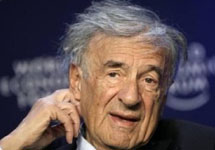
On July 2, Jewish writer Eli Visel, author of a number of books about the Holocaust, died in New York at the age of 87. It is reported by Radio Liberty.
Visel was born in the fall of 1928 in the Romanian city of Siget (now Siegeta-Marmation), the historical region of Transylvania. In 1940, Transylvania was annexed by Hungary, and in 1944 the Visel family, like all the Jews of Siegette, the Hungarian authorities under the pressure of Germany sent Auschwitz in Poland to the concentration camp. The mother and younger sister of the future writer died there.
The screech with his father in the winter of 1944-1945 was sent to the Buchenwald concentration camp in the vicinity of Weimar. In April 1945, Buchenwald was liberated by American troops. However, the father of the screeching a week before died. Thus, only two older sisters survived from the writer’s family, who, after the liberation of Auschwitz, got to Paris, and from there moved to the United States.
Visel himself also ended up in Paris. In 1948-1951, he studied at the Sorbonne. At the same time, he began to work as a journalist in newspapers in Yiddish and French. From the late 1940s and early 1950s he was the Parisian correspondent for the Israeli newspaper "Ahronot". In 1955, he settled in the United States, continuing to work in the "Ahronot" as an American correspondent. In 1963, he received American citizenship.
His first book - “And the world was silent” (in French and English translations - “Night”) - the Visel published in Yiddish in 1956. In the future, he wrote over 40 books in French and English. Most of his works are documentaries about the Holocaust. Visel also taught at a number of American universities, including Yale University (New Hive, Connecticut) and the New York City College.
In 1965, the Visel made a trip to the USSR in order to study the situation of Soviet Jews. According to the results of this trip, he wrote the book "Jews of Silence", in which he urged the world public to support the Jews of the USSR and oppose the policy of the Soviet leadership.
In 1978-1987, the Visel headed the Presidential Holocaust Commission, which established the annual days of commemoration of the victims of Nazism, and also planned scientific programs. In 1980-1986, he headed the American Memorial Council for the Holocaust. Since 1988, he was the envoy of the UN world.
In 1986, the Visel was awarded the Nobel Prize of the World for speeches against violence, repression and racism. Among the other awards of the writer are the Golden Medal of the US Congress (1985) and the American Presidential Medal of Freedom (1992), as well as the French Order of the Legion of Honor (2000) and the Romanian Order of the Star (2002).
In 1986, after receiving the Nobel Prize, the writer, together with his wife, Marion Esther Rose, who also passed the Nazi concentration camps, founded the humanitarian fund of Eli Visel. In 2008, the Fund said that as a result of the fraudulent frauds of financier Bernard Madoff lost almost all his funds - over $ 15 million. The same fraud absorbed a significant part of the personal savings of the screech and his wife.
In February 2007, in Boston, 22-year-old Eric Khant, the Holocaust negative, beat and tried to kidnap the screech. A few weeks later the offender was found and arrested.
In 2010, the writer initiated an international campaign in support of the ex-head of Yukos Mikhail Khodorkovsky.
In 2014, the Prime Minister of Israel Benjamin Netanyahu invited the screech to nominate the presidents of the Jewish state, but he refused.