
Translated material
The ECHR rejected Russia's appeal to the payment of compensation in the Kirovles case
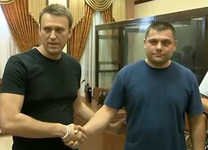
The European Court of Human Rights refused to send Russia's petition to transfer appeal to the Great House to the decision in the Kirovles case. This was reported by Interfax with reference to the press release of the court.
The decision on compensation in the amount of 80 thousand euros to the leader of the Party of Progress Alexei Navalny and entrepreneur Peter Officer enters into legal force. The case itself will have to go to the Supreme Court for consideration together with the decision of the ECHR.
The defense of Navalny believes that his verdict in the "case of Kirovles" should be canceled by the Supreme Court. “We welcome the current decision of the ECHR, and now definitely the sentence on Kirovles should be canceled, and Navalny and officers are justified,” said Olga Mikhailova’s lawyer.
“Thus, the legal fact:“ The Cirules and the Court case ”is a politically motivated fabrication and fake,” Navalny himself wrote . “Once again, thanks to everyone who supported us and the officer during the process.
On February 23, it became known that the ECHR decided that during the consideration of the Kirovles case in 2013 , the rights of Navalny and Officer to a fair trial were violated (Article 6-1 of the European Convention on Human Rights). The court decided to pay Navalny and Officer 8 thousand euros compensation for damage. They also compensate for legal costs - 22 and 48 thousand euros, respectively.
“The court found that as a result of the allocation of a criminal case against an accomplice of the theft accused of conspiracy with the applicants and his conviction in the order of special proceedings, the applicants were deprived of significant guarantees of their right to a fair trial,” the document was noted. “In addition, the Russian courts found the applicants guilty of a crime that consisted of committing actions irreversible from legal entrepreneurial activity; In other words, an arbitrary interpretation of the law was allowed in violation of the rights of the accused. "
In addition, the ECHR noted that the charges against Navalny were related to his social activities. “It is obvious for the European court, how should it be for domestic courts, that the public activity of the first applicant and the decision of the Investigative Committee are connected against him. That is why the duty of the national courts was to carefully investigate the approval of the first applicant about political pressure and decide whether, despite this connection, the true basis for holding it is accountable,” the court was noted.