
Translated material
Gref and virtue
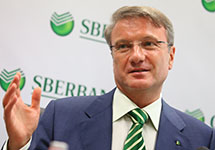
The state should compensate citizens with losses caused by the monetary reform, which was carried out in 1991 by the Prime Minister of the USSR Valentin Pavlov. According to RBC, such a statement was made by the president and chairman of the board of Sberbank German Gref at an online conference with users of VKontakte.
One of the users announced the need for Sberbank to "pay off the Russians on 1991 debts not with small handouts, but at least with a coefficient of 1 to 150 and extinguish interest in 26 years."
Gref recognized the justice of such a requirement. “This is a robbery, an open abduction of someone else's property,” he described the Pavlovsk reform. “The authorities of the Soviet Union once openly stole other people's money.”
However, the official continued, the claim should not be addressed to Sberbank, but to the state. According to him, Sberbank of the USSR was robbed with its depositors. “In this sense, we are on one side,” Gref said.
At the same time, he noticed that the optimal decision would be to pay compensation to Sberbank depositors with shares. “But, as you know, this task is not so simple,” the official concluded.
In January 1991, Pavlov, just appointed by the Prime Minister, initiated a cash exchange of 50- and 100-ruble bills for a new-sample banknotes. The confiscation reform was appointed by Decree of the President of the USSR Mikhail Gorbachev from the 22nd day of the same month. The exchange was carried out in a short time - from January 23 to 25; At the same time, it was free to exchange only up to 1000 rubles per person. For the exchange of amounts that exceeded this limit, it was required to prove to the special commissions the legality of their origin.
At the same time, the limit was introduced to withdraw money in Sberbank - from one account it was allowed to withdraw no more than 500 rubles at a time.
A few months later, Pavlov spoke one of the organizers of the August coup. On August 23, 1991, the official was arrested and placed in the Sailor Silence in the pre -trial detention center, but in January 1993 he was released, and in February next year - amnestied by the first convocation of the State Duma. Subsequently, Pavlov worked in banks. He died in 2003.