
Translated material
One article for all

As an article by the Code of Administrative Offenses, written to suppress rallies, beats in all indiscriminately - from musicians to fitness lovers
On July 4, the Tver court of Moscow fined 10 thousand rubles of street musician Ivan Kharkov. A few days earlier, the cellist Semyon Lashkin was subjected to the same punishment - his business received a great resonance . They are both accused of committing an administrative offense under Article 20.2.2 of the Code of Administrative Offenses "Organization of mass simultaneous stay and (or) the movement of citizens in public places that have entailed a violation of public order." But the affairs of the musicians are far from the most absurd in law enforcement practice under this article.
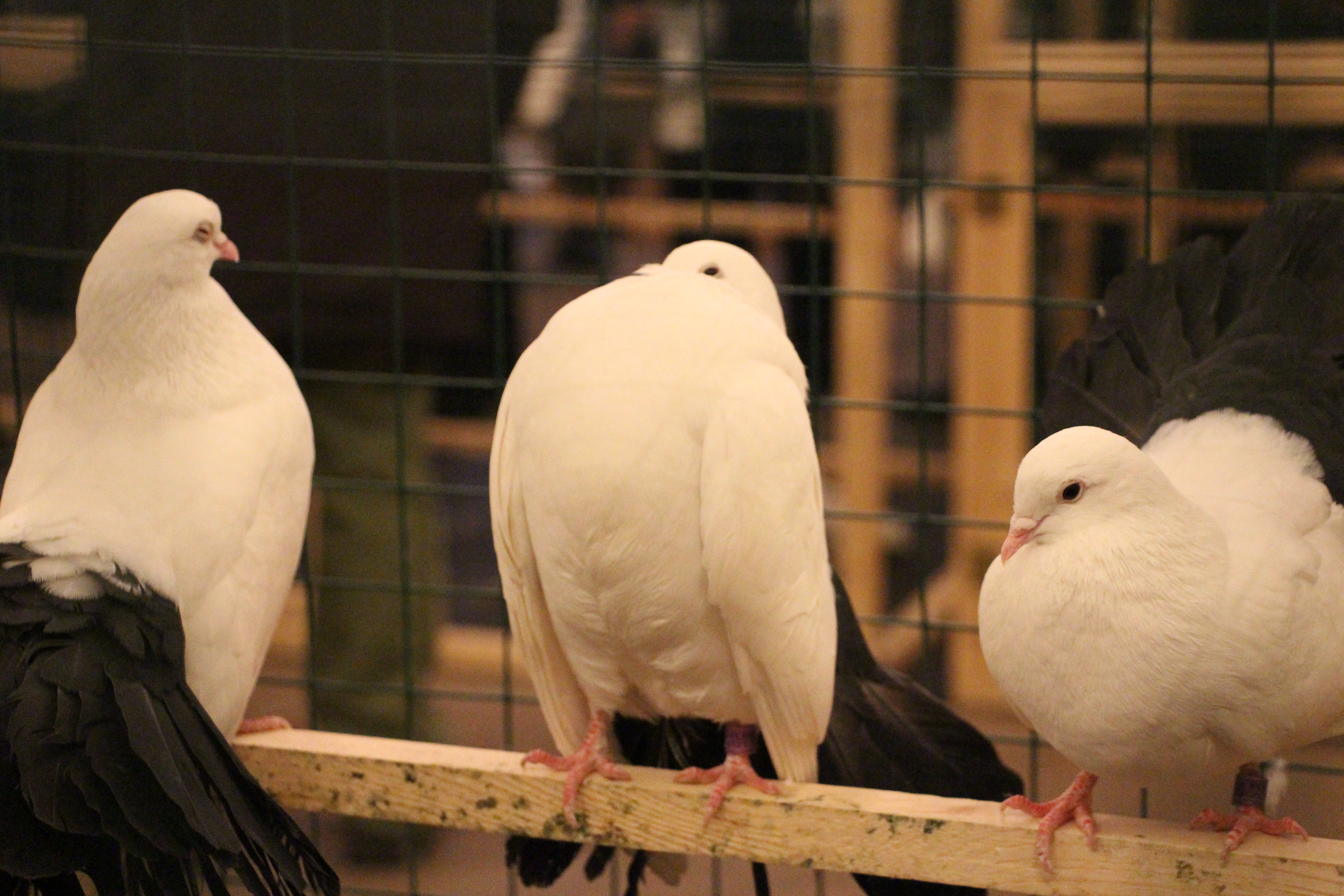
In December 2015, V.O. Lapshina suggested that passers -by to take a picture with hand pigeons in the center of Moscow and thereby, according to the court, "organized a massive simultaneous stay of citizens in the amount of about 20 people who was not a public event ... thereby creating a hindrance to the movement of pedestrians and the passage of citizens to social infrastructure objects." Actions Lapshina V.O. qualified under Part 1 of Art. 20.2.2 Administrative Code of the Russian Federation. The first instance court ordered the woman to pay a fine. The second instance, the Moscow City Court in the person of Judge Orekhova, left this decision in force.
The “hindrance to the movement of pedestrians” was created by the A-4 A-908/2014, unnamed in the Decree of the Samara Regional Court, who decided to stretch. "As it is seen from the materials of the case *** 04/06/2014, he took part in an organized mass public event (charging), which created a hindrance to the movement of pedestrians [...] the arguments of the applicant about the absence of an administrative offense in his actions were aimed at revaluing the evidence available in the case, which were studied in full. Avoid administrative responsibility for the offense, that is, it is a way of protection. "
Citizen of Belarus A.N. Kuzmina was detained in June 2015 because he sang songs in the Neptune costume, "thereby creating interference with pedestrians and the access of citizens to social infrastructure facilities located in the pedestrian zone."
In such a situation, readers , gussels , Krishnaites and drummers have already found themselves. And all of them certainly "created interference with the movement of pedestrians and the access of citizens to the objects of social infrastructure."
Moscow lawyer Grigory Vipan works at the Institute of Law and Public Policy. He is engaged in the monitoring of law enforcement under Article 20.2.2 of the Code of Administrative Offenses and acted as one of the defenders in the case of Semyon Lashkin .
- According to this article - 20.2.2 - you can now detain us while we communicate, and in general anyone?
- Yes, it is. The text of the article is written in such a way that almost any action committed in public space falls under the composition of the offense. If we turn to the decision in the case of the cellist Semyon Lashkin, who was detained in the center of Moscow, the full text of which we received today, you can see that in fact the constituting signs of the offense are three circumstances: he called friends, invited them to take a walk; He sat on Nikolskaya Street, next to the cafe and restaurants, that is, objects of social infrastructure according to the logic of the court; And the third - passers -by stood around him. These three factors, according to the Tver district court, are enough to find a person guilty under article 20.2.2. And this, of course, is seriously difficult to somehow comment, because it is already a complete absurdity.
- Why is this happening? Blurry formulations?
Even now we are already creating a crowd in the interview format
- This is an article that appeared in the Code of Administrative Offenses in order to fight political protests, with the opposition, but since political protests can take various forms, it is so difficult to determine the composition of the offense. Therefore, under article 20.2.2, everything began to fall in a row. The Constitutional Court of Russia has already applied to the interpretation of Article 20.2.2, and he, while in the format of a refusal definition, gave a generally binding interpretation of this norm. The Constitutional Court says that at least two elements must be present in order to have an offense under article 20.2.2. Firstly, the mass event, which is organized, should have a predetermined goal, and participants must profess a single plan. And the second element - clearly expressed negative consequences should be present, they are listed in article 20.2.2: interference with pedestrians, interference with transport, violation of sanitary norms and rules. All this is listed there. The problem is that the position of the Constitutional Court today is quite obviously ignored by the courts of general jurisdiction who understand these criteria purely formally. That is, even now we are already creating a crowd in the interview format, and according to the logic of the Tver District Court, this already interferes with the movement of pedestrians.
-But even in the ruling of the Constitutional Court there is some kind of unclear. A crowd of tourists still gathered with a specific purpose-to see the city, and they will probably interfere-take pictures with a selfie stick, for example.
If we are not satisfied with the behavior of another person, we are free to leave the place where it happens
- That's right! From my point of view, Article 20.2.2 should not be at all! Because any violations of the public order that are called to be punished with this article, they fall, one way or another, to other norms of the Code of Administrative Offenses. If people lit up in a public place, this will fall under an article about violation of sanitary norms and rules. We have an article about petty hooliganism. In the context of street musicians, for example, articles of regional codes on administrative offenses are relevant, about violation of silence and peace of citizens at night. All these norms are already in the legislation, and the needs for additional norms that would prohibit once again that which is already prohibited is not. That is, this article, in principle, obviously does not make sense. As the European Court of Human Rights says, this article does not have a legitimate goal. Here we must make a reservation that in the public space, including according to the legal positions of the ECHR, the principle should act: if we are not satisfied with the behavior of another person, we are free to leave the place where this happens, for example, some kind of musical performance. Nobody forces us to listen to the cellist on Nikolskaya Street, we can go further. By this, public space is different from personal space. From the home, for example.
- And now what to do musicians? Not to get together?
- A good question ... We believe that such a kind of performance of musical works, and not only musical ones, in general, the performance of art works on the streets of Moscow, in squares, in parks, it itself is protected by the legal system. Our constitution contains article 29 - on the freedom of expression, freedom of speech, and it contains article 44 - about the freedom of creativity, including freedom of artistic creativity. Accordingly, any restrictions that are introduced by laws should be strictly proportionate, should pursue a legitimate goal. Musical performance, especially spontaneous, for which tickets are not sold and which is not in the strict sense, a mass event should not be regulated in principle.
-But in fact, if now someone else wants to go to Nikolskaya, what will you advise? Do not go out?
One detention is enough so that the musicians themselves would not want to go out onto the streets.
- Here, unfortunately, it is necessary to state that such detention of musicians who have taken place in the last two weeks create what the ECHR calls the "cooling effect." One detention is enough so that the musicians themselves would not want to go out either to Nikolskaya Street, nor on Arbat Street, or to any other streets. And this is a completely natural effect, and it is quite natural that the musicians will not want to sacrifice their freedom, to be at risk of detention for up to three hours, the risk of removing their musical instruments that represent a great material and intangible value for them. Therefore, the effect that this norm will have on the behavior of musicians, the behavior of citizens is completely understandable. Another thing is that such restrictions are unfounded.
- You have your answer to the question "Why?" Why detain a guy who sits and plays cello?
- Well, you know, the answer is simple, in fact. This is degradation, an improper understanding of the norm at the bottom level. The norm was created in the State Duma in 2012, it was created for some goals, but the norm of law, released in free swimming, always begins to live its life. The legislator, fixing a particular norm in the law, should always foresee the consequences to which this or that formulation will lead. In this case, we have a case of an unscrupulous interpretation of the provisions that simply predispose to be interpreted. What was invented for political goals at the underlying level turned into an urgent people.
- You talked with Moscow officials. What is their position?
Everything that does not fit into the licensing and approval regime is declared beyond the legal regime
- On Saturday, there was a discussion about city musicians. The position of those officials who acted is that Moscow is interested in the fact that public spaces are used by representatives of creative professions, but all this should be clearly regulated. There should be regulated places for performances, time for performances, genre of performance. There are two fundamental objections. The first objection consists in censoring content, so to speak. It is very strange that in the parks that belong to us all as the inhabitants of Moscow, some differentiation is introduced on the basis of the content of the performed creative works. And secondly, those rules that are developed by the Moscow authorities, with all their logic, contain one important drawback. They do not take into account, in the principle of such a factor in the performance by street musicians of their works as spontaneity. The case of Semyon Lashkin is just the case when a person who does not earn a living by performing musical works goes out onto the street to play simply because he is a cool musician and thus wants to conduct leisure time. The model we encountered does not take this factor into account. Everything that does not fit into the licensing mode, obtaining preliminary permits and approvals, is declared beyond the legal regime.