
Translated material
Unacceptable lessons in the fight against terror
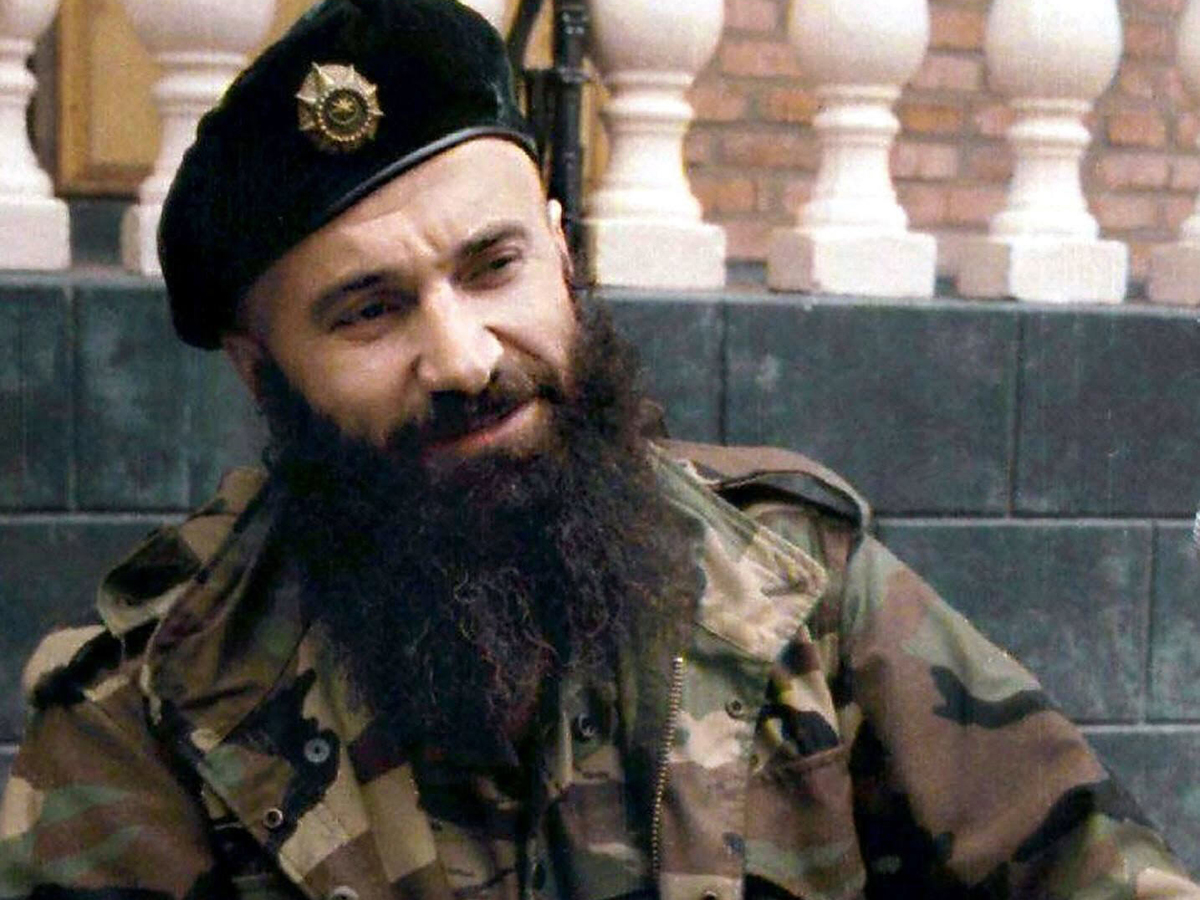
Ten years have passed since the death of one of the leaders of the Chechen militants Shamil Basayev
Liquidation, and according to other sources - self -break, "terrorist No. 1" Shamil Basayev occurred on the night of July 10, 2006. In the area of the village of Ekazhevo in the Republic of Ingushetia exploded KamAZ, accompanied by Basayev with weapons and explosives.
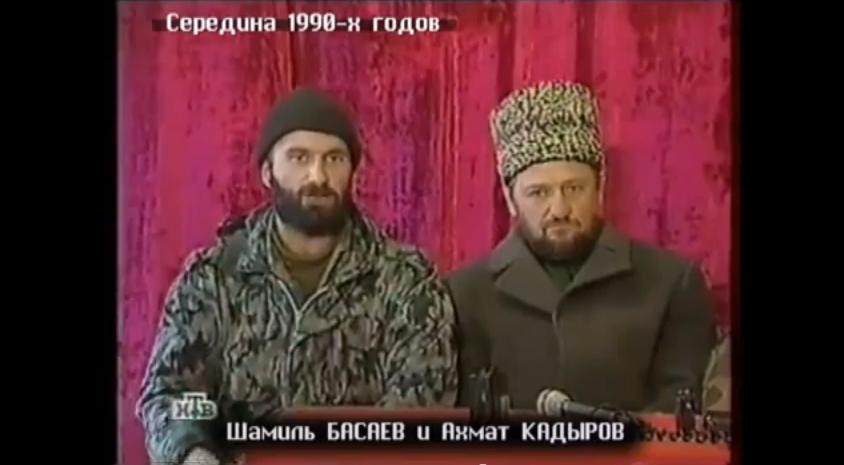
Shamil Basayev led the raid of militants to Budennovsk in 1995. Basaev took responsibility for the capture of the theater center on Dubrovka in October 2002, for the separation of a truck with explosives near the Government House in Grozny, for the capture of school No. 1 in Beslan in 2004 and for a number of other, no less bloody terrorist attacks.
The death of Shamil Basayev was reported repeatedly. For the first time - in 1995. Then Basayev was "buried" in 2000, 2002 and in 2005. The real destruction of Basayev in 2006 was perceived by the Russian authorities as a turning point in the fight against terrorism. The President of Chechnya in 2004-2007 ALU Alkhanov said the next day that the liquidation of Basaeva "brings a line under a counter -terrorist operation in the republic."
The Minister of Defense, at that time, this post was held by Sergey Ivanov, was more restrained in estimates: "The destruction of this terrorist does not mean that the gang underground is at all finished. There is still work. Such work is underway. But the destruction of Basayev, I repeat, is our Ben Laden."
Rather, for our security forces, this was an unexpected gift
The observer of the Moscow Komsomolets newspaper Vadim Rechkalov cited the following version of Basayev’s liquidation: “The truck that went to Basayev with a weapon was charged with our explosive device, which could be driven at a distance. I think that it really was led and really undermined when it climbed into the truck, when it turned out to be close to the truck. The Chekist was not in ten hours - this is the FSB again in favor of the version. The person who worked for them, in order to eliminate Basayev, also had to leave, to create some kind of alibi. "
Chairman of the Council of the Human Rights Center "Memorial" Alexander Cherkasov gives another scenario:
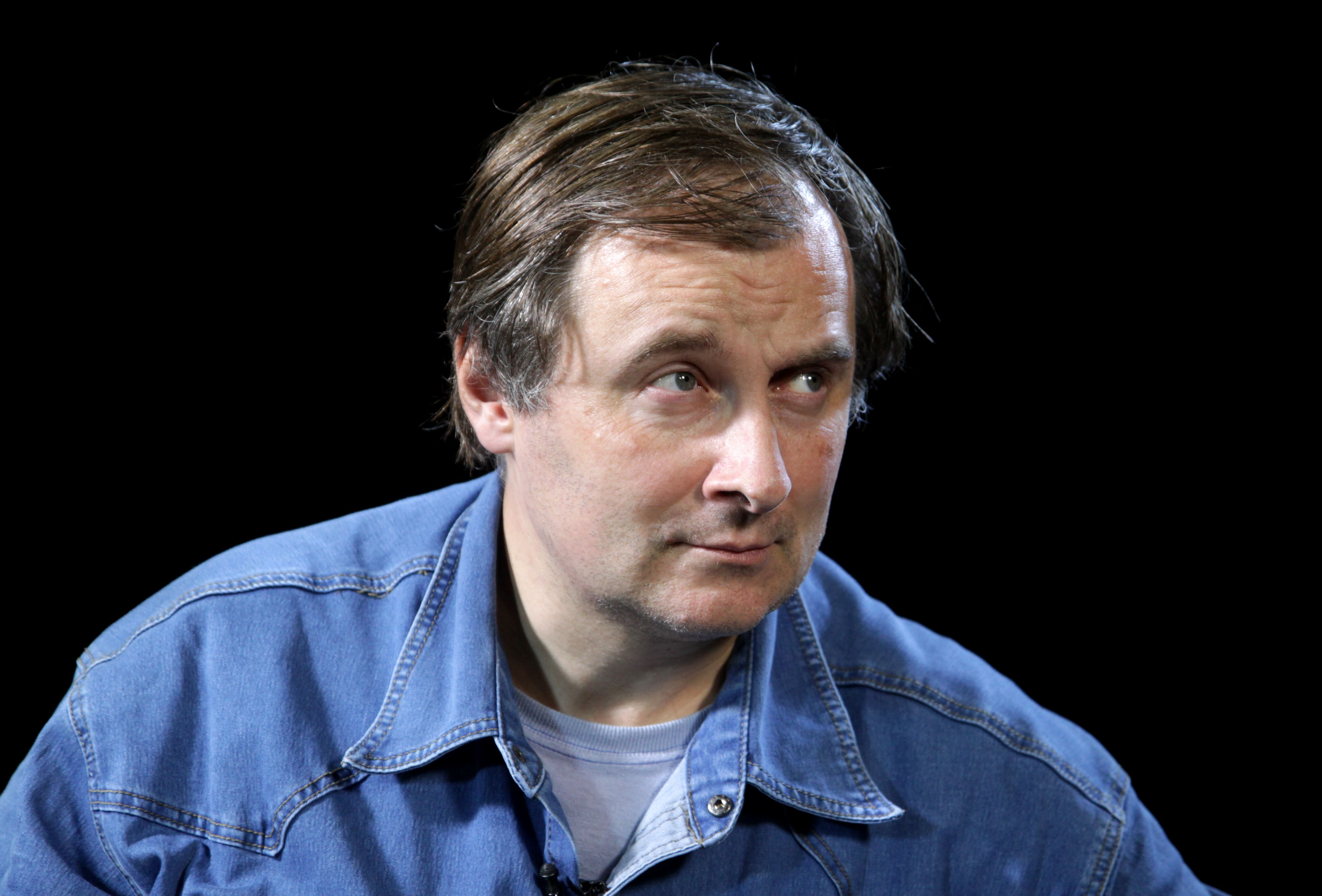
- Soon after the death of Shamil Basayev on the night of July 10, 2006, the Russian special services said that this was their brilliant special operation to eliminate the terrorist. However, the small details that I and my colleagues managed to find out, having visited the place of Basayev’s death in the following days, indicate that, rather, for our security officials, this was an unexpected gift.
- And what was it manifested?
- If it were a planned operation, it is obvious that a thorough examination of the place of Basayev’s death and the removal of all possible material evidence would follow. The investigation group, who arrived at the place, did not cordon it off and did not collect everything that was needed. It turned out that after the explosion, tens and hundreds of uncontrolled reactive shells remained on the spot, which are usually used from attack aircraft or from helicopters. And these shells were not collected, but lay in the surrounding fields, representing a danger to the inhabitants. Our driver turned to the republican riot police, and they were sent to the place of sappers, sappers for many days, as agricultural workers, gathered these reactive shells through the fields and undermined their portion by a portion. These shells had an interesting feature: they were all prepared for manual start. Manually on them, wires were attached to them with the help of island so that they could be launched not from standard guides for uncontrollable missiles, but in other ways. And all this wealth was in the van. The explosion occurred next to the van. Basayev sat near the place that turned into a small funnel, he was torn off both hands and head, apparently, he did something with a powerful explosive device.
- What could it be?
- It seems that the number one terrorist, known for his addiction to different technical innovations, has encountered complexity. But then, apparently, the “Master of Samodelkin” was baking with a home -made explosive device. It is clear that after a massive start to the place they will be sent an outfit of security forces. The standard tactics of militants in these conditions are to put a landmine in order to have the arrived security forces, the investigation group is blown up. It seems that Basayev worked with such a powerful explosive device and was blown up on it. Hands flew off in different directions, his head is still somewhere.
- Together with him four more militants died.
Shamil Basayev was not only a formal leader, but also the brain of this terrorist activity
- Yes, several more militants died with him, and even a few days later, when I climbed there along the surrounding slightly collapsed buildings, I found a fragment of the skull of another comrade. I asked the Sapers of the Ingush riot police to convey this fragment of the investigative group, well, you never know, they suddenly identify who it was ... The investigative group was clearly not ready for what I found. And in the following days, new outfits were not sent, so that all-all-all, all the information that Shamil Basaev took with him, collect and introduce to business. And later even more entertaining facts became known, proving that we live in Russia. Basaev, as they say, was torn off his hands, and they were preserved in formalin so that it could remove fingerprints. When the fingerprints were removed, it turned out that in the case there were simply trite prints that need to compare that in a decade and a half, that Basayev had to be wanted, no one bothering to take his fingers and put in case in case the body had to be identified. In general, we rather deal with hack and success, which sometimes turns face to hacks.
-But still, it was after the death of Basayev that the security forces began to make some real successes.
- Yes, indeed, after the death of Basayev, the armed underground for some time was very disoriented. Shamil Basayev was not only a formal leader, but also the brain of this terrorist activity. Obviously, there was no adequate replacement after that. And underground without bright leaders was doomed to a miserable existence. Which we saw in subsequent years. In any case, after Basayev underground changed a lot. The fact that in 2009 the regime of a counter -terrorist operation was canceled in Chechnya was the recognition of significant successes.
- How did the structure of the underground over the years change?
“If in the first half of the zero separatist movement turned into a part of such an Islamist movement that imagined itself to be a component of world jihad, then the pendulum movement in the other direction took place-to, if you like, the nationalist component:“ Still, we have our own business, we have our own problems, we solve them here. ” And these were the actions of the Chechen militants primarily against the Chechen security officials. I don’t know what will happen next. Because there was a shift, rebranding of the entire underground, and now most of the underground cells swore allegiance to the Islamic State ( the group is recognized as terrorist and prohibited in Russia. - RS ). And on the other hand, we cannot talk about some single trend throughout the Caucasus. And we must consider underground itself in these republics, and the tactics of administrative and power structures in these republics in the fight against underground separately and in detail, and not talk about something one. Yes, indeed, there is a formally single underground in the entire Caucasus, and there are federal power structures of the Russian Federation that fight this underground, but there are nuances that cannot be missed.
- In Ingushetia, for example, they used the tactics of “soft power”, which, as I understand it, had its fruits.
We see the triumph of tactics of total control in Chechnya, which gives some visible stability
- In 2004, many hundreds of militants participated in attacks on the facilities of the Ministry of Internal Affairs and the Ministry of Defense in various settlements of Ingushetia. And after the head of the republic became Yunusbek Evkurov, who went to the counter -terror with a human face, this affected all a year later. When Yunusbek Yevkurov was blown up in the summer of 2009, and he was between life and death, nothing happened in the republic. And in the future, conducting the previous course to restore Salafi communities, to give the opportunity to leave the forest that did not commit serious crimes to militants, Yunusbek Evkurov made Ingushetia the most safe Republic of the North Caucasus. On the other hand, in Dagestan a similar course, taken a little later, was carried out not so sequentially and was folded somewhere at the turn of 2012-13, and we see that there are completely different trends. And finally, we see the triumph of the tactics of rough power in Chechnya, tactics of total control, which gives some visible stability. But what is provided with - an outflow of militants and from possible sympathizers from the North Caucasus to the Middle East or real stability - we cannot say. It seems that in the mileage of the Caucasus after 2012 this side vector - the possibility of migration to Turkey or Syria - he played no less significant role than the actual activity of the special services.
It seems that the tactics of rough power only creates a mobilization base for the organizers of the underground, which can use it if desired and if necessary. The history of the counter -terror in the North Caucasus is already quite rich in order to learn from it. Only it seems that no one wants to learn these lessons.