
Translated material
There is no money, but you are treating

The Russian regions do not have enough funds for the purchase of drugs for HIV-infected citizens
Contrary to the statements of the Minister of Health of Russia, Veronika Skvortsova that the costs of drug support for Russians are a public obligation and cannot be reduced, in the spring of 2016, the regional authorities began to experience problems with the federal budget for the purchase of antiretroviral drugs. This became known to reporters of the Kommersant newspaper , who report that the regions are forced to curtail already announced auctions for the purchase of drugs for HIV treatment.
In particular, the sources of the publication report that about 10 percent of funds for the purchase of special drugs are frozen in the Perm Territory: from about 605 million to 544 million rubles. “All contracts concluded in the amount of over 544 million rubles should be terminated,” the newspaper writes. Journalists have at the disposal of the Tula regional AIDS-center to a complaint of one of the patients: "The center is experiencing a shortage of antiretroviral drugs due to the untimely receipt of the subsidy from the federal budget to the Tula region for their purchase." A similar situation is reported in St. Petersburg, but the amount of reduced funds is not given.
The head of the Federal Center for the Prevention and Combating of AIDS Vadim Pokrovsky spoke about the possible consequences of the suspension of federal funding for antiretroviral therapy of Radio Radio.
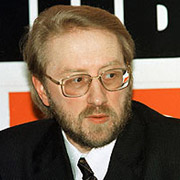
- The problem will be somewhat compensated by the fact that, as expected, this year the cost of drugs for the treatment of one patient will decrease. This is a natural process, it is generally reduced in all countries. In addition, in Russia, there will be more generic drugs (drugs sold under an international non -launched name or under the patented name, which differs from the company's branded name of the drug. - RS ). But this in general does not solve the problem, because those therapy standards that are so far used in Russia are lagging behind a global trend. Now the World Health Organization recommends treating all patients as soon as they have an HIV infection, and we are waiting for a certain decrease in immunity indicators, and only when the risk of AIDS is already obvious, treatment is prescribed. And according to these standards, about 220 thousand people out of 850 thousand registered officially HIV-infected people receive therapy.
- Does this mean that other people simply did not seek help and did not register?
Only when the risk of AIDS develops already becomes obvious, treatment is prescribed
-No, about the fifth of them often did not turn, did not register, and some people are still waiting for their immunity to decrease and drugs will be prescribed. By the way, they are free. In general, the time of Russia is also to switch to the standards of an earlier onset of therapy, but this, of course, will entail an increase in expenses. Therefore, the question, of course, cannot be limited only to a decrease in the cost of treatment. But still, in the future, in order to somehow overcome the consequences of the epidemic, you need to increase the budget to combat HIV infection. And not only for medicines, of course, but also on the training of the population and other preventive measures.
- You said the "epidemic." A lot was said about the HIV epidemic in Russia at the beginning of this year, and then a variety of officials of various levels and some deputies of the State Duma stated that there was no epidemic.
-The epidemic is the process of spreading HIV, and this process in Russia has been going on for many, many years. Therefore, here we can only talk about different phases of the epidemic. We distinguish three phases - the initial, concentrated, when mainly risk groups are sick, and generalized when the epidemic applies to the entire population. And now we are just in the intermediate phase - between the concentrated, when the drug users were mainly affected, and the generalized, when there is a great risk that the virus will begin to spread from these drug users.
Mortality from HIV infection will increase if the treatment begins too late
- In this situation, what can the reduction in the financing of the procurement of antiretroviral drugs can lead to?
-Only to one-mortality from HIV infection will increase if the treatment begins too late. And this will not work on the main epidemic, because only very high coverage of therapy can affect the spread of the virus. For example, when 90 percent of all infected ones will receive antiretroviral drugs. Up to this point, better well -known preventive measures are important - teaching the population to safe sexual behavior, the use of condoms, the use of pure syringes by drug addicts and the like.
-How much money does it take at least in order to maintain an existing program for providing HIV-infected special preparations in Russia?
- Now 20 billion rubles have been allocated for this. This money can support the situation in its current phase, but in order to look more or less relevant modern requirements, it will probably require 100 billion rubles, that is, financing should be increased by five times.
For patients with HIV risks increase
- Do I understand correctly that now even these 20 billion is cut?
- We do not know yet, the year has not ended yet, but the situation is not very good from all sides. Because, I repeat once again, it is advisable to start treatment as early as possible. And when there are not enough drugs, the consequence, of course, is always a belated treatment. Therefore, for patients with HIV, risks increase.