Date
Author
Владислав Моисеев

Preserved copy
Translated material
The North remembers. Four stories about the connection with reality
Text and photos : Vladislav Moiseev / July 13, 2016 
 Thank you! This text was written thanks to Megafon and their big connections
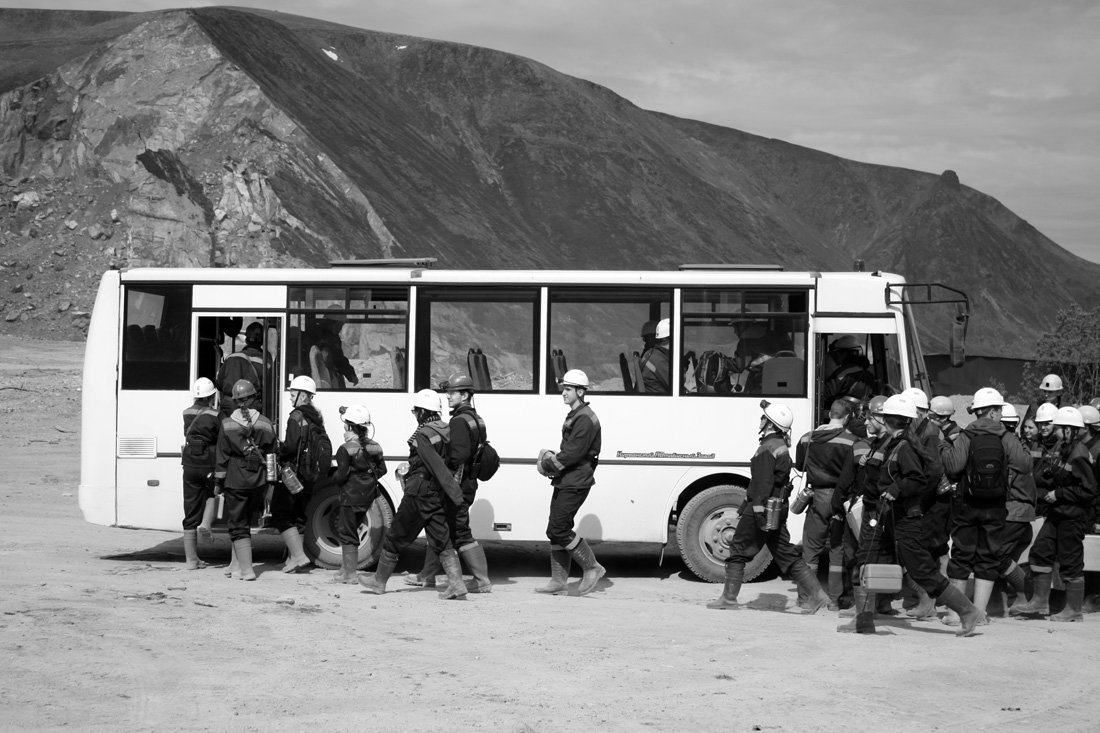 The development of the Russian North has always occurred in the regime of colonializing guest visits. The envoys of the metropolis came to reconnaissance and, if they found any resources, were fixed and established communications with a large land. Something like this was born a whole scattering of polar working villages. At the beginning of the twentieth century, large deposits of apatito-nefelin ores were discovered near the Khibinsky mountains, and literally in a matter of years small villages grew into entire cities. And for almost a hundred years, deep branched mines inhale and exhale people.
The stories of the Monogradov of the Kola Peninsula, like their everyday life, are practically indistinguishable: ore - man - ore - six months day - six months at night. The biggest and, perhaps, the only surprise here happened eighty years ago.
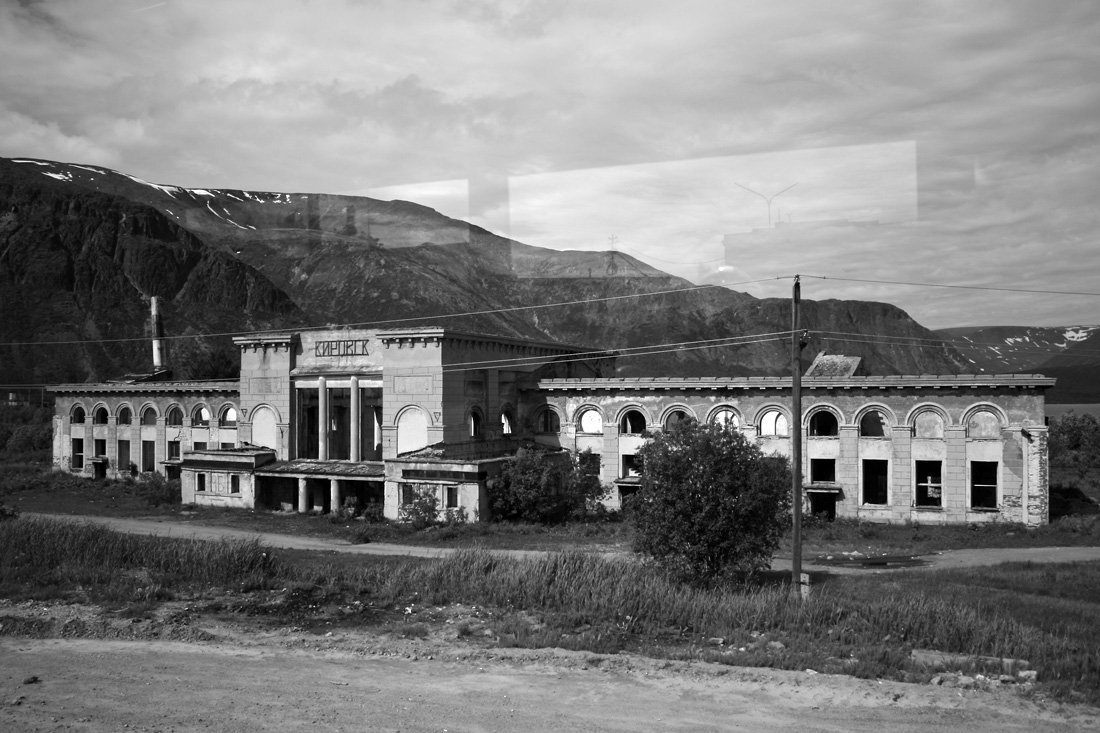
The city of Kirovsk has never been a developed cultural, infrastructure and transport center. In the best years, its population did not exceed forty -six thousand people. What was the surprise of local residents when a large -scale construction in the best traditions of Soviet gigantomania unfolded in their small mining settlement. They built a huge railway station, which in size is not inferior to the metropolitan.
Today, the Kirovsk station looks in surprise at the world with twenty empty windows. Halfly disassembled, half looted, he has long grown nettles and moss. Once there were cash desks, storage rooms, shops, waiting rooms and a luxurious restaurant. But today only huge columns at the central entrance are reminiscent of the former greatness. Although the “former greatness” is strongly said: the fact is that this station has never been put into operation, trains did not leave it to all ends of the country. Occasionally there was a trailer wagon to Leningrad and several electric trains per day. The rest of the time, the Stalinist giant was empty and looked silently at the mountains.
 The Polar Landscape somewhat reminiscent of the surface of Mars: gigantic quarries-cracers, mountains, hills and lowlands, huge boulders are in the clean field brought here with a fugitive glacier. And the absolute nothing.
Gradually, the road to Teriberka turns from an absurd provincial unevenness with interspersed asphalt into a gravel, dotted with pits and bumps. The farther from Murmansk, the fewer traces of civilization are on the way, and at some point you understand that no one has ever been here, this land does not belong to anyone and exists in parallel reality. But this is not so.
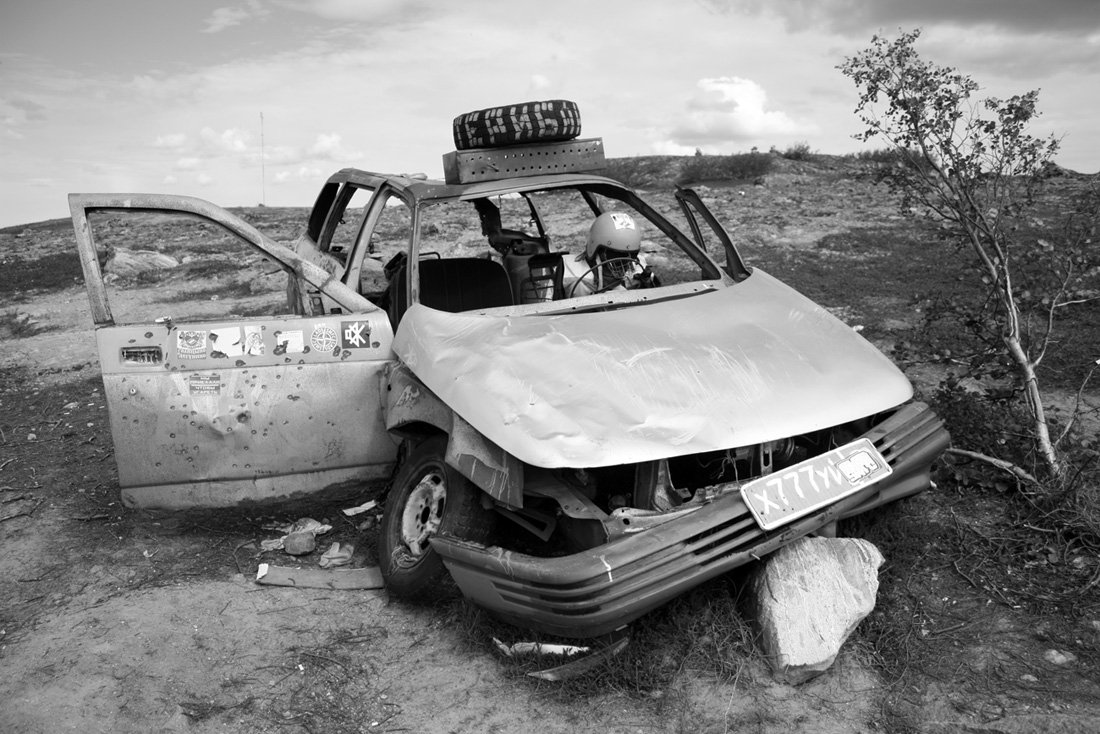
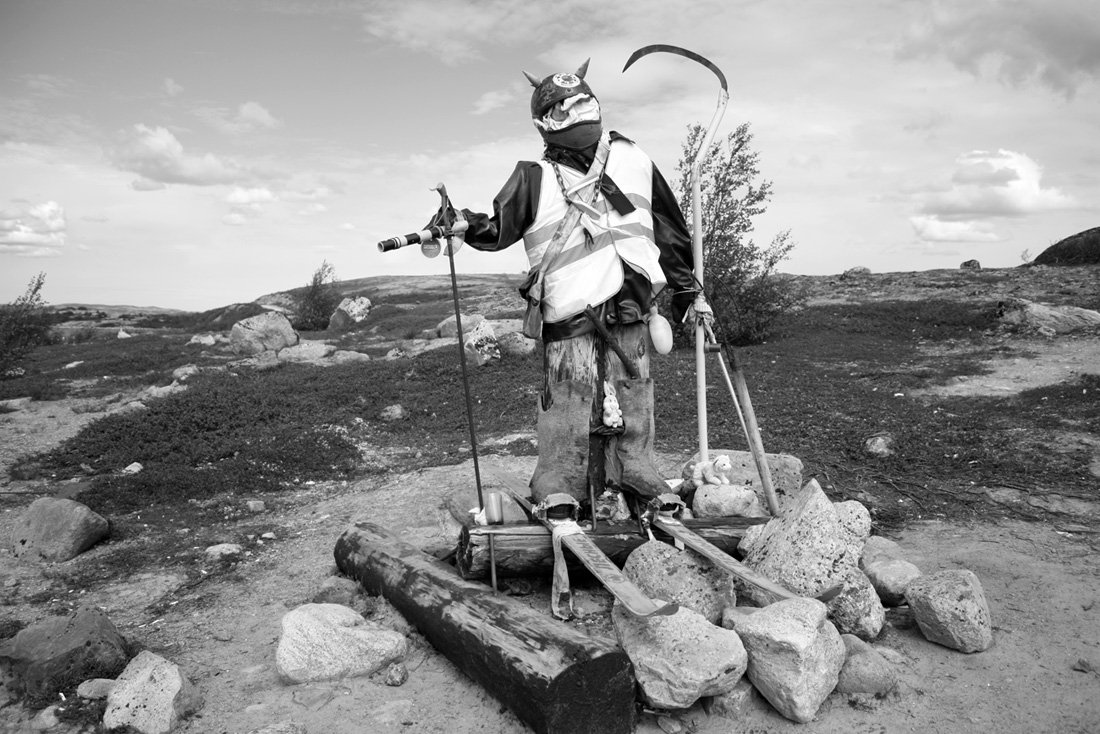
When it seems that there is no longer ahead ahead, then only a cliff and outer space, the owner of the north appears on the side of the road. He is low, on the head of the horns, in the left hand of the braid, in the right striped rod, on the legs of skis. The owner of the north is dressed in a bright yellow vest, which is visible for a hundred meters. Locals call him a monument to the policeman. Nearby stands a broken car with a blue number “X777uy”, on the door also three letters - “DPS”. In the car, resting his head on the steering wheel, someone in the helmet of an American football player sleeps eternal sleep. Neither before nor after this installation of direct indications of the existence of an active civilization here. Only these two are at the side of the road. They seem to be enchanted and cannot move, but they see everything, feel and understand. This is perhaps the best expression of the attitude of local residents to the idea of control, power and the state.
 In 2014, it became finally clear where the true spiritual Mecca of Russia is located. Of course, we are talking about the village of Teriberk - there the director Andrei Zvyagintsev removed his Leviathan. Not all local residents liked this film, some were outraged by the fact that their small homeland was discredited, they hung a label of hopeless depression and drunkenness. And partly they can be understood.
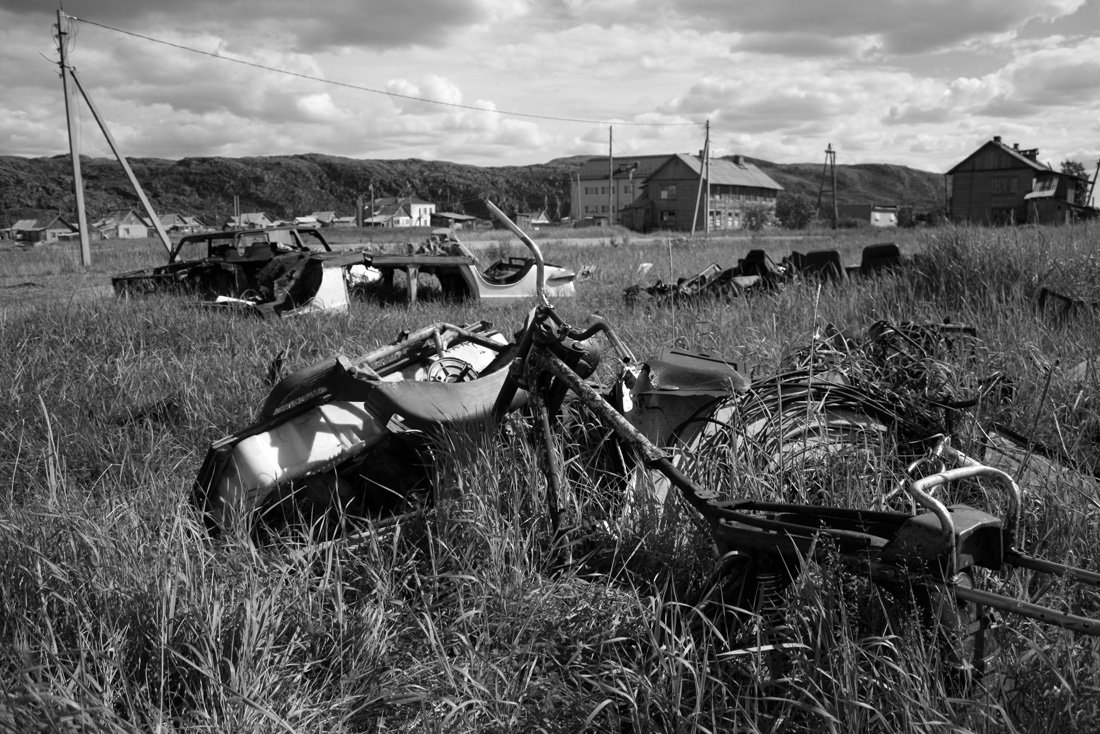
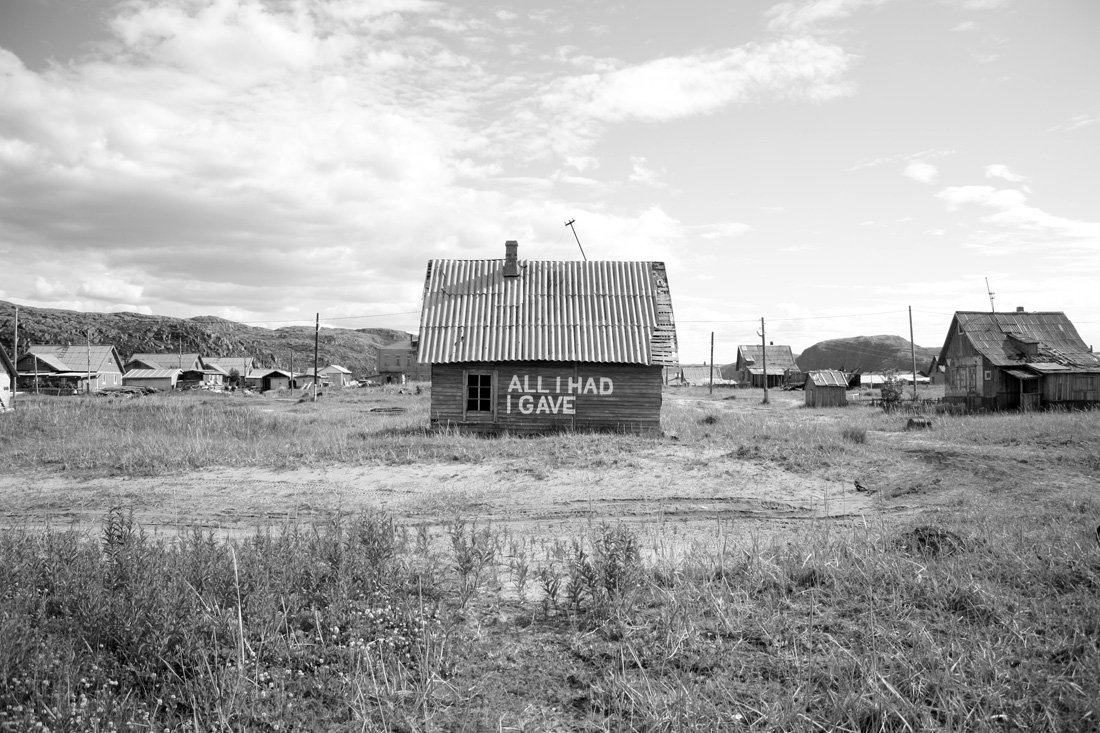
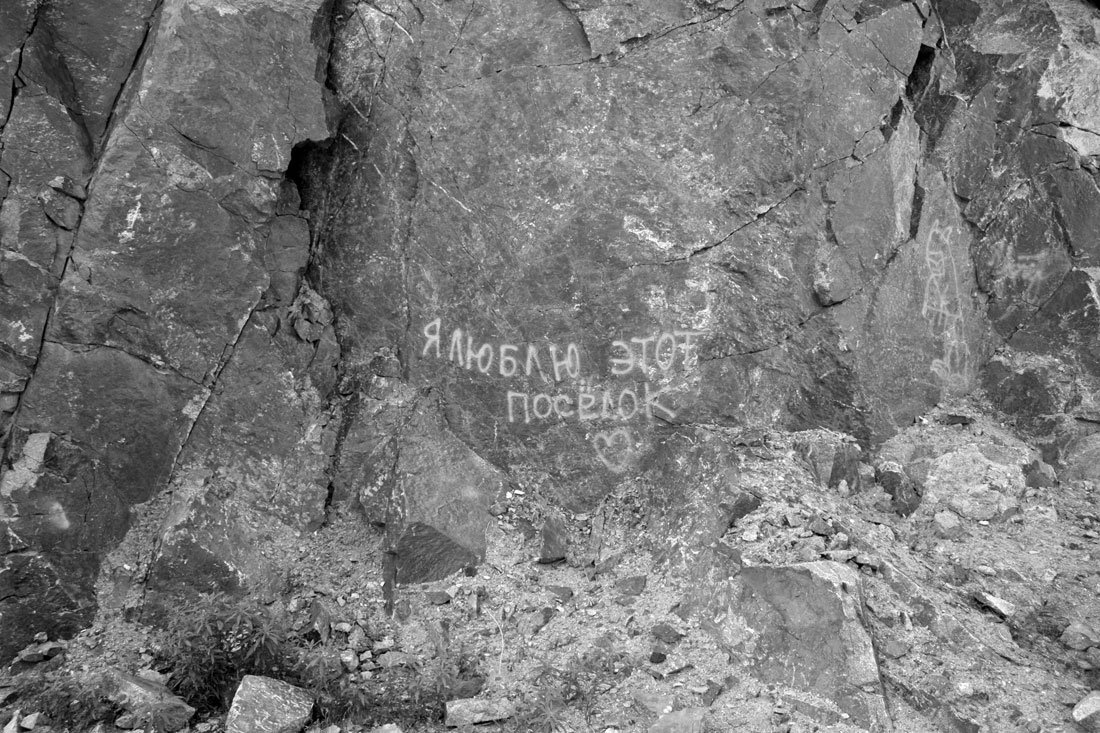
Teriberka is divided into two parts - old and new. If in the new one you can really indulge in depression and drunkenness, then in the old one there is definitely nowhere to do this. This is a real Disneyland of the Apocalypse. To see how the world will look after its logical end, you can not wait for the beginning of a nuclear war or something like that, but just come here.
 Text and photography Vladislav Moiseev Moscow
Thank you! This text was written thanks to Megafon and their big connectionsPost -apocalyptic studies often lead our samizdat to the most amazing places in the planet: abnormal zones, scorched villages, damned swamps, wild steppes. When you travel through the non-tourist nooks of the world, you often ask you that more real-a huge, ever-swinging capital or thousands of square kilometers of abandoned land around, where life stopped a long time ago or did not start at all? What is the true state of the world - desperate attempts to escape on the islands of concrete or perfect timelessness and death? The director of the departure of the misanthropy and despondency Vladislav Moiseev finally took us out with these questions, and we sent him for answers to the very heart of Rus' - the Murmansk region, the village of Teriberka and the surroundings. For the transportation of Moiseev and the care of him, we thank our friends from Megafon, who, as it turned out, are no less interested in good texts.
Instead of a preface
When they talk about the loss of connection with reality, they usually have in mind that someone went beyond the ideas about the norm and practicality in favor of his own irrational whip. When they say that someone has gained contact with reality, they mean that he realized himself within the framework of a certain system and lives taking into account its logic. But the problem always lies in the fact that, from the point of view of one reality, the other is not such.When you find yourself behind the polar circle, you quickly understand what it means to lose touch with reality. And it’s not even about the night that lasts six months here, and not about the mysterious Nordic temperament. The fact is that rare, like the teeth of a centenary, settlements of the Arctic is the best example of how the world of post -apocalypse looks.
I.
The development of the Russian North has always occurred in the regime of colonializing guest visits. The envoys of the metropolis came to reconnaissance and, if they found any resources, were fixed and established communications with a large land. Something like this was born a whole scattering of polar working villages. At the beginning of the twentieth century, large deposits of apatito-nefelin ores were discovered near the Khibinsky mountains, and literally in a matter of years small villages grew into entire cities. And for almost a hundred years, deep branched mines inhale and exhale people.The stories of the Monogradov of the Kola Peninsula, like their everyday life, are practically indistinguishable: ore - man - ore - six months day - six months at night. The biggest and, perhaps, the only surprise here happened eighty years ago.
The city of Kirovsk has never been a developed cultural, infrastructure and transport center. In the best years, its population did not exceed forty -six thousand people. What was the surprise of local residents when a large -scale construction in the best traditions of Soviet gigantomania unfolded in their small mining settlement. They built a huge railway station, which in size is not inferior to the metropolitan.
Today, the Kirovsk station looks in surprise at the world with twenty empty windows. Halfly disassembled, half looted, he has long grown nettles and moss. Once there were cash desks, storage rooms, shops, waiting rooms and a luxurious restaurant. But today only huge columns at the central entrance are reminiscent of the former greatness. Although the “former greatness” is strongly said: the fact is that this station has never been put into operation, trains did not leave it to all ends of the country. Occasionally there was a trailer wagon to Leningrad and several electric trains per day. The rest of the time, the Stalinist giant was empty and looked silently at the mountains.
There is not a single rational reason why this palace was supposed to appear in this small town. There are several versions that at least somehow explain what happened. The official says that in the 30s the grandiose international congress of the miners was supposed to take place here (which, of course, was not). But local local historians claim that the solution is much simpler: the station in Kirovsk was built by mistake-someone misunderstood something, did not hear, and instead of the Kirov region and, probably, the city of Kirov was erected here. Subsequently, the head of the construction site was shot, and the station remained, until 1996 he functioned by inertia, but did not gain connection with reality.
II.
The Polar Landscape somewhat reminiscent of the surface of Mars: gigantic quarries-cracers, mountains, hills and lowlands, huge boulders are in the clean field brought here with a fugitive glacier. And the absolute nothing.Gradually, the road to Teriberka turns from an absurd provincial unevenness with interspersed asphalt into a gravel, dotted with pits and bumps. The farther from Murmansk, the fewer traces of civilization are on the way, and at some point you understand that no one has ever been here, this land does not belong to anyone and exists in parallel reality. But this is not so.
When it seems that there is no longer ahead ahead, then only a cliff and outer space, the owner of the north appears on the side of the road. He is low, on the head of the horns, in the left hand of the braid, in the right striped rod, on the legs of skis. The owner of the north is dressed in a bright yellow vest, which is visible for a hundred meters. Locals call him a monument to the policeman. Nearby stands a broken car with a blue number “X777uy”, on the door also three letters - “DPS”. In the car, resting his head on the steering wheel, someone in the helmet of an American football player sleeps eternal sleep. Neither before nor after this installation of direct indications of the existence of an active civilization here. Only these two are at the side of the road. They seem to be enchanted and cannot move, but they see everything, feel and understand. This is perhaps the best expression of the attitude of local residents to the idea of control, power and the state.
Among the hills and lowlands, these two look natural aliens from another dimension. In the same way, everything else looks here that at least indirectly belongs to the category of human - cars, towers and wires, garbage and rare tourists with giant backpacks on their shoulders. In these places, you very clearly understand that this is not the north in touch with the reality of the metropolis, and the metropolis has lost a connection with reality, which looks like that - seas, lakes, hills, mountains and plains, harsh and adamant, they will live forever, but we will not.
III.
In 2014, it became finally clear where the true spiritual Mecca of Russia is located. Of course, we are talking about the village of Teriberk - there the director Andrei Zvyagintsev removed his Leviathan. Not all local residents liked this film, some were outraged by the fact that their small homeland was discredited, they hung a label of hopeless depression and drunkenness. And partly they can be understood.Teriberka is divided into two parts - old and new. If in the new one you can really indulge in depression and drunkenness, then in the old one there is definitely nowhere to do this. This is a real Disneyland of the Apocalypse. To see how the world will look after its logical end, you can not wait for the beginning of a nuclear war or something like that, but just come here.
The following is the shortest guide for Teriberi's sights:
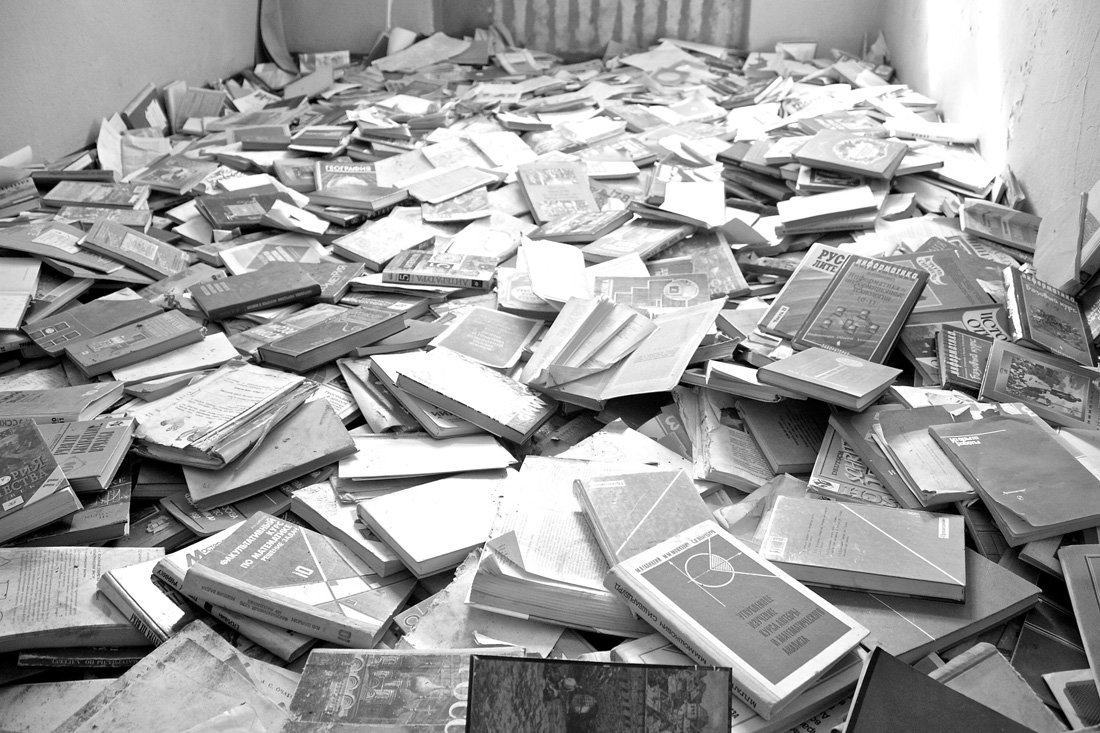
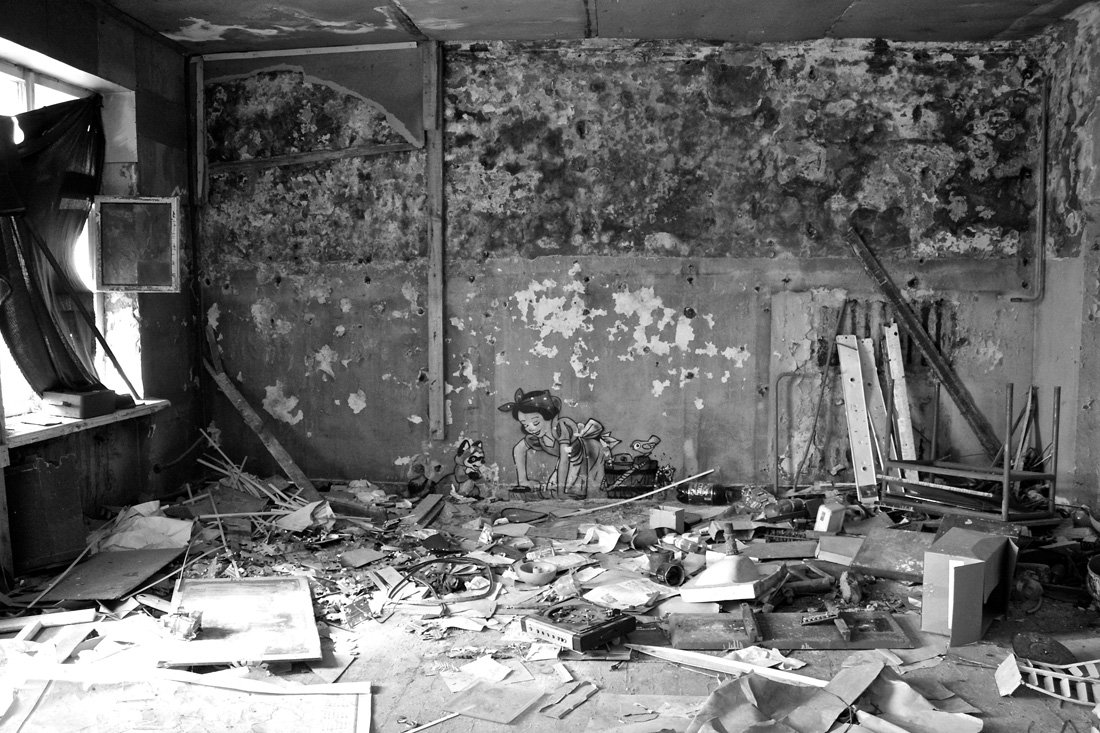
1. Unfortunately, the main attractions of the village - a huge skeleton of the Old Testament monster - has long been gone in Teriberk. After filming, he was bought by a mysterious St. Petersburg businessman and took him away in an unknown direction. This, of course, is a severe loss, but not fatal, because what is dead - cannot die. 2. The old wooden boat half lies on land, half - in the water, like a dead whale, dropped ashore. Its casing has long rotted and crumbled, ribs of the frame appear through the holes of the sides. Next to this vessel are other rusty boats and ships, fish heads and incomprehensible mucus. 3. Not so long ago, Gazprom planned to build new facilities near Teriberka and breathe a new life into the village. But this did not happen. The project was frozen, barely starting. The workers only managed to lay a small section of the road that leads from the cemetery straight to the rock. Locals call it dear to nowhere. 4. Thanks to Zvyagintsev, people from around the world headed to look for the Russian Leviathan, tourists became interested in Teriber. On the shore, several small red guest houses and a large restaurant with excellent cuisine immediately grew up. In combination with ruins and rusty inverted skeletons of cars, they perfectly reflect the current state of affairs in the world.There are many amazing places and almost art objects in the open air in Teriber. But the most important thing is the temple of sciences. It is difficult to say when exactly the huge three -story school was finally empty, but, apparently, this happened in the last century. What are the textbooks scattered through the peeling offices. The collected works of Tolstoy, Gorky, books in mathematics and chemistry - they all seemed to be specially thrown into a huge heap to burn with one big bonfire, but there were no matches. In this mass of damp books, special interest is the textbook for grades 10-11 “World in the twentieth century”, which explains the economic, cultural and socio-political transformations of the world at the turn of the century. In the introduction, the authors write the following: “The asynchronism of economic, political and cultural processes in various countries of the world determines the connection of modernization and traditions, various pace and forms of transformations. This process gained special dynamism in the second half of the twentieth century. The preservation of the colonial system up to the twentieth century detained the entry on this path of the countries of Asia and Africa (India, Indonesia, Nigeria and others). <...> By the end of the twentieth century, modernization has become a determining factor in the unity of the world with the prospect of the formation of a unified global civilization. ” And there is nothing to add here.
IV.
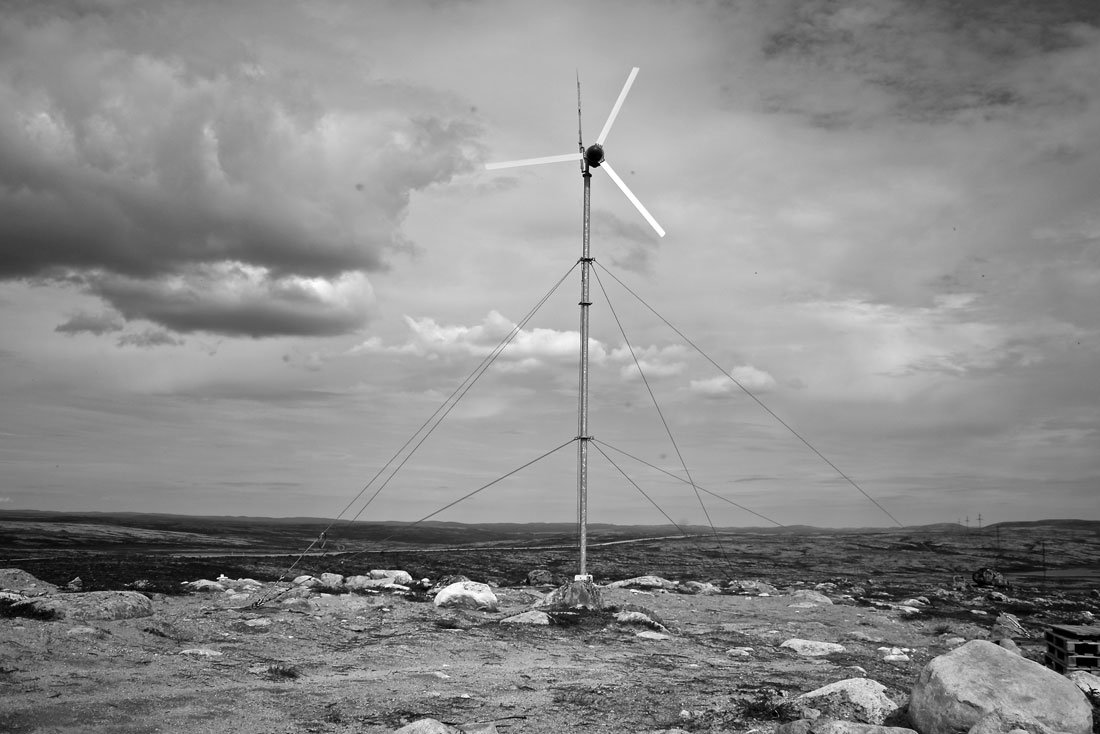
The land of the North in color resembles a moldy cheese - green, white and gray mix into a homogeneous mass and cover entire hills. On one of the highest there is a wind generator. A tall white rod and three blades, lazily wrapping in a weak wind. Around the small lakes, kilometers of moldy cheese and only indirect traces of civilization-rusty pieces of iron and rods are scattered nearby, as if a flying saucer crashed here a long time ago. The wind generator continues to rotate phlegmatically - it nourishes a cellular tower. It gives a signal for many kilometers around. That's just one small problem - there is practically no one and nothing. Occasionally, mushroom pickers and fishermen pass, in the winter, when the roads are filled with avalanches, this is the only way to contact a large land, but the rest of the time there is silence, calmness and absolute emptiness that you can dream of. And the blades continue to spin, more and more. This wind generator is a real monument to humanity, the symbolic meaning in it prevails over practical. The blades will spin and spin before the appearance of a nuclear mushroom on the horizon, they will continue to generate energy and after the dust settles and the civilized world will finally gain a connection with the reality that the North so well remembers.
Text and photography Vladislav Moiseev Moscow