
Translated material
Teresa May and her team
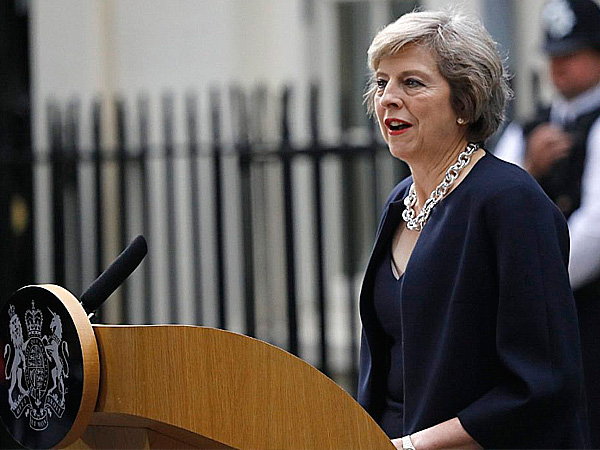
The leader of the Conservative Party of Britain Teresa May officially took office. Thus, the authorities were in power, who did not take the position through general voting. And now May should withdraw the country from the EU, despite the fact that she herself supported the campaign in order to stay in it. Media commentators are discussing the current configuration.
The Economist writes that May’s path to the premiere post turned out to be much easier than any other Prime Minister of Britain, but her service in this position promises to be the most difficult over the past few decades. The extraction of Britain from the EU is a complex diplomatic event. A no less difficult task is to resolve the situation within the country: no matter what the output conditions are, EuroSceptics will most likely remain very unhappy. Public discontent can also aggravate a recession in which the British economy will probably be.
Along with many other commentators, the author notes that a slight victory in terms of obtaining a position presents a tactical problem for May. Due to the fact that she came to power in fact without competition and not following the results of the elections, she may not have enough legitimacy in the eyes of both her same party people and the public. But May immediately refused to conduct early elections as an instrument of legitimization - and the author said correctly, because the country has already been too strong in the intensity of political passions.
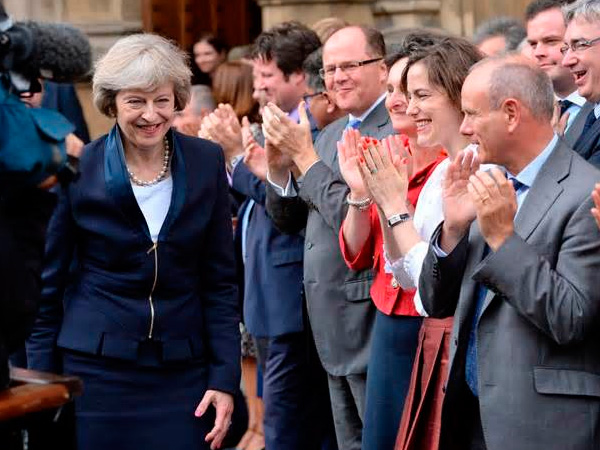 Teresa May, Prime Minister of Great Britain /Flickr.com
Nevertheless, this feature of its position, of course, will be used against it, first of all, euroskeptics. When she returns from Brussels with a transaction in her arms, she will be accused of treachery and betrayal. To soften these future attacks somewhat, May has already taken several prominent Euro -attacks to her office - in particular, Boris Johnson for the post of Foreign Minister.
Financial Times describes the May team. The negotiations on Britain’s separation from the EU will be observed by the special minister for withdrawal from the EU David Davis. Davis is a violent EuroSrkeptic and, to put it mildly, optimist, comments on FT. He believes that Britain, first of all, should conclude trade agreements with all countries outside the EU, including with the USA and China. Thus, according to Davis, the world's largest merchant block will be created. And then Brussels himself will come and offer Britain access to his single market, not requiring any migration concessions from it.
The new trade agreements will be engaged in Liam Fox, also a EuroSrkeptic. He insists that no trading contracts should include messages on freedom of movement. The treasury was the chancellor of the Treasury, a former Minister of Foreign Affairs. Here, the author notes, the main specificity is that the former head of the treasury George Osbourne, according to the results of the rearrangements, dropped out of the government completely.
But Boris Johnson appeared again in the political arena. The fact that he appeared on it as a Minister of Foreign Affairs caused great puzzles among some observers. In matters of diplomacy, the Johnson’s track record is very colorful, the author explains. For example, he received a prize in a competition of insulting poems addressed to Turkey President Recep Erdogan ( Limerick Johnson developed the theme of Zoofilia in Turkish policy). When US President Barack Obama spoke out against the exit of Britain from the EU before the referendum, Johnson said that such a position of the American president was explained by the “hereditary hatred” of the Americans to the British Empire.
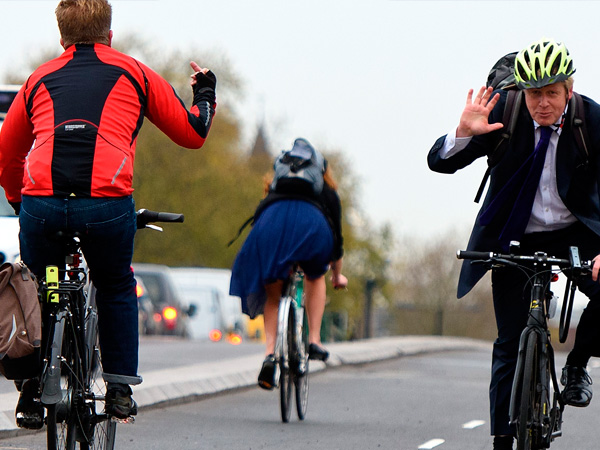 British Foreign Minister Boris Johnson / Reddit.com
During foreign trips, Johnson also noted that he had once left without paying the bill, and another time tried to break into the front line with the “Islamic state” (terrorist organization, prohibited in the Russian Federation), but he was not allowed there. The author, however, stipulates that in fact, Johnson will not have so much power in a new position. He will not be engaged in negotiations with Brussels and the conclusion of trade transactions. The Minister of Foreign Affairs is rather a symbolic and media position, so Johnson is quite suitable for this role.