
Translated material
The 20th century continues
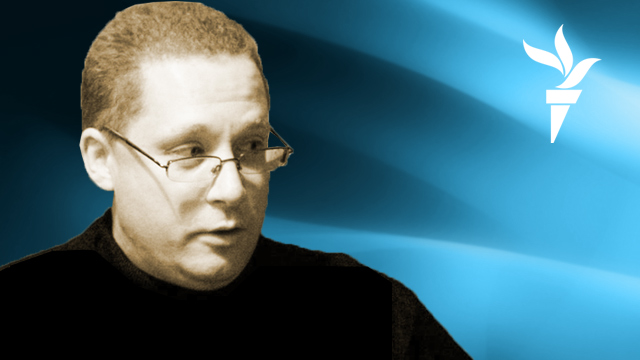
Yaroslav Shimov - about democrats and coups
There are still more questions than answers surrounding the attempted coup in Turkey on the night of July 16th. What did the putschists want, besides the overthrow of the current authorities? How true are the claims of President Erdogan, who remains in power, that the influential Islamic theologian Fethullah Gülen , who lives in exile, and his Hizmet movement are behind the mutiny of part of the armed forces? And wasn’t the coup attempt itself a performance staged by Erdogan in order to strengthen his own power and further tighten the screws (this version, after the failure of the putsch, sounds quite loudly in the press and social networks)?
At first glance, the military tried to return to the Turkish political realities of the last century. Then the army took power into its own hands three times (1960, 1971, 1980), and once again (1997) it so clearly expressed its dissatisfaction with the government that its then head immediately resigned. By the way, it was the moderate Islamist Necmettin Erbakan , in many respects Recep Erdogan’s political teacher.
The authorities claim that a “small group” of soldiers rebelled - however, almost three thousand people have already been arrested. The Turkish army was not united in the past: for example, in 1960, a coup against the popular Prime Minister Adnan Menderes (the putschists hanged him) was organized by a group of mid-level officers, while most of the generals were no less surprised by what had happened than the government. But, unlike July 2016, in the 20th century the military was consistently successful. Perhaps this time they lost because Erdogan has been “cleansing” the army for several years, rightly seeing it as a threat to his own authoritarian and increasingly Islamist power.
However, one should not see the Turkish military democrats either. Their actions, both in the past and now, were directed against forces that enjoy the support of the majority of the population, but for political or ideological reasons do not suit the army. Whether we like Erdogan or not, since 2002 he and his party have consistently won elections - perhaps not exemplary, but much more democratic than, for example, Russian ones. I say this not unfoundedly: I had the opportunity to communicate with foreign observers who worked on elections in both countries in different years.
In a political sense, the 20th century really hasn’t ended – and not only in Turkey
Although the rebel military, no matter who was behind it and no matter what its goals, failed to overthrow Erdogan and his government, the coup attempt signaled that, in a political sense, the 20th century was indeed not over, and not just in Turkey. The army has intervened in politics (as an independent force or on the side of one of the participants in political confrontation) throughout the last century in a variety of countries. In this regard, Polish Marshal Pilsudski ( 1926 ), Spanish General Franco ( 1936 ), Chilean Pinochet ( 1973 ) and “the best defense minister of all time” Pavel Grachev ( 1993 ) stand on the same level.
All of the above events and their participants have one thing in common: the deep crisis of the democratic regimes that preceded the coups. In this sense, Turkish Prime Minister Binali Yildirim is not entirely right when he called the coup attempt “a stain on Turkish democracy.” There were many stains on it even before July 16, and it was Recep Erdogan who “decorated” Turkish democracy with most of them. Because if you compare the current Turkish order not only with the Russian (or Chinese, Cuban, Turkmen, not to mention North Korean), then there is nothing to rejoice at: the crackdown on opposition demonstrations, the triumph of “administrative resources,” the arrests of objectionable journalists, and attempts to block social networks under Erdogan have become commonplace.
Therefore, the president’s call to citizens to take to the streets and oppose the putschists in the name of democracy sounded very hypocritical on the night of the putsch. People nevertheless came out; and not only supporters, but also opponents of Erdogan. Apparently, even the current democracy, lame on both legs, seemed more acceptable to the majority of Turks than the military regime. The irony of fate is that right now the Turkish president has the opportunity to finish off not only the putschists, but also democracy. Naturally, in the name of stability, security and the fight against the machinations of external enemies - the usual repertoire of authoritarian rulers, in uniform or without (Erdogan’s recent reconciliation with Putin looks absolutely logical in this light: two politicians so similar in views and methods simply cannot be enemies). It is characteristic that among those arrested on the first day after the Turkish coup were not only military personnel, but also several dozen judges, and Erdogan has a long-standing conflict with the judiciary.The 20th century continues. And not only because the military still interferes in politics here and there (before Turkey, this happened three years ago in Egypt ). But also because democracies themselves remain fragile. The popularity of charismatic leaders in many societies, including Turkish and Russian, is higher than respect for laws and institutions, and democracy is constantly interpreted as the power of democrats - more precisely, those who loudest call themselves such (even if their actions have nothing in common with democracy). In these conditions, all that remains is to wait for the next time soldiers and tanks appear on the streets of Ankara, Cairo, Kyiv or Moscow.
Yaroslav Shimov – historian, international commentator for Radio Liberty
Opinions expressed in the "Author's Rights" section may not reflect the views of the editors