
Translated material
Windows to the future
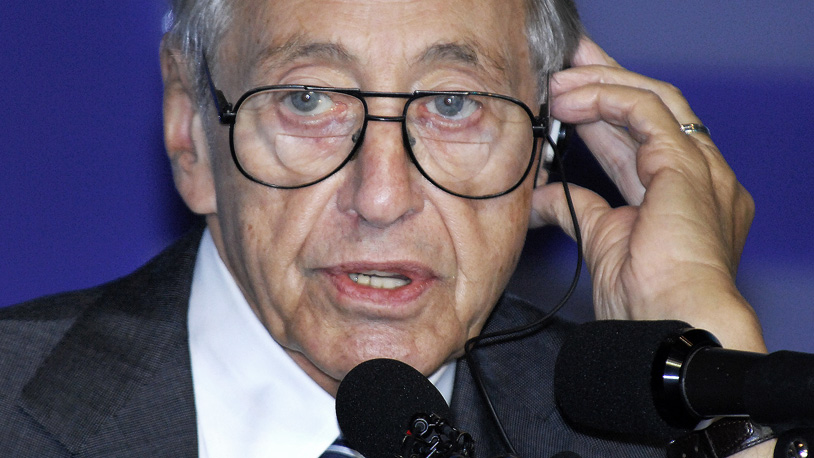
Memory of Elvin Toffler
Sergey Medvedev: Today we have an Ombage program in which we want to pay a debt to a person who has given the name of our program. "Futuroshok" is the name of the key book of Elvin Toffler, which is sometimes still translated into Russian as the "shock of the future." Toffler died just a week ago at the age of 87 in a dream in his house in Los Angeles. I would like to recall Elvin Toffler and talk about his main ideas and books, about how they illuminate our modernity about how he was a prophet at one time.
But before we start and I will introduce our guest, I would like to say a couple of things about Toffler himself. He is from a family of Jewish immigrants from Poland, his father was a scorch, they lived in Brooklyn. Then, already at the very beginning of the 50s, Toffler entered the University of New York and quickly became interested in left-handed ideas. Against the backdrop of left-wing and protest ideas, he met a Washington Square in the New York University with his future wife. They began to work together.
At some point, he threw the university and decided that in order to find out life, you need to be closer to this life. She and his wife went to the industrial average West of the United States, Cleveland, Ohio, is one of the United States’s trade capitals, a very business trading city on the Great Lakes. There they were engaged in various work, he was an installer, a welder, worked in virtually ten years and only after that he began to write a little for various magazines, and then his wife persuaded him, finally, to graduate from the university.
By the end of the 60s, Toffler formed the idea that the industrial civilization ends, a new, post-industrial
Having received such a life education, knowing the industrial civilization, Toffler by the end of the 60s formed the idea that the industrial civilization ends, a new, post-industrial civilization arises. And a series of his legendary books followed. 1970 is the book "Futuroshok", in which he predicted a lot from today's world: cloning, the appearance of the Internet and the computer itself, cable television, television and television, that people will sit home and not go to the office.
Then, ten years later, his book “The Third Wave” was published, in it he described the post -industrial society, which replaced agrarian and industrial. This book also made an explosion. I will say only one thing: it was studied in China in fact as materials from the Communist Party. Seminars, conferences were arranged, in China this book was published by the second number of circulations after collecting works and quotes Dan Xiaopin. The result, I think, you see now - what is happening with the present China ...
In the 80–90s, he wrote a lot about the war-the books "Metamorphoses of power", "War and Antivon."
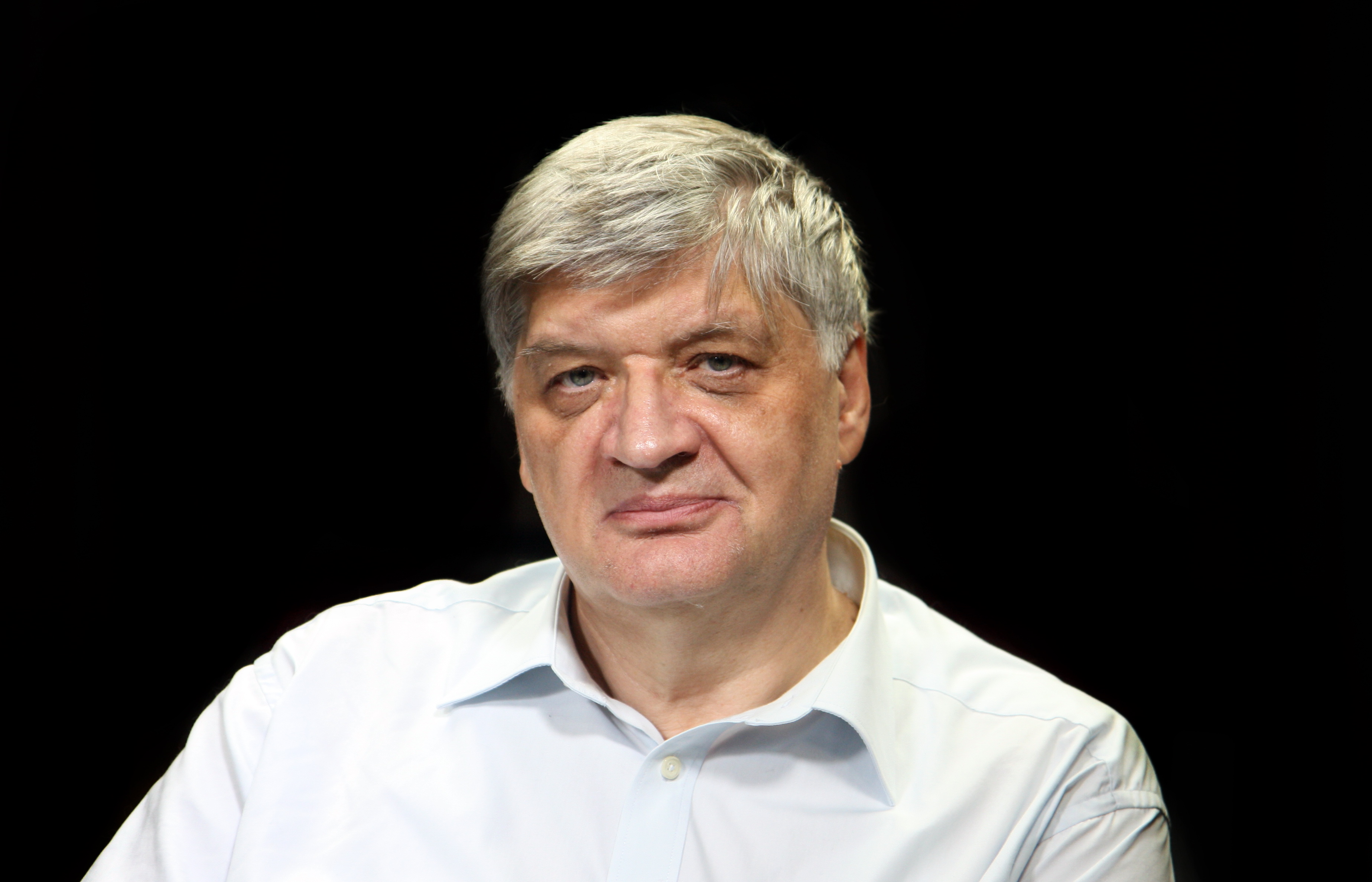
Today we want to discuss the basic ideas and the main method of Toffler, futurology - to what extent this is a science, which is its method. To do this, we called the leading futurologist Alexander Neklas , the head of the intellect project. You do not mind such a definition, do you consider yourself a futurologist?
Futurologist is something between artistic comprehension and information in some complexity
Alexander Neklas: a futurologist - a definition that is not related to me. Futurologist is something between artistic understanding and information in some complexity. The word "forecast", the current representation of the future, dominates here. I would divide thoughts about the future into two streams. One stream can conditionally be called paper - these are well -compiled expositions of existing thoughts, ideas. And the second stream, not so much futurology as active forecasting is a practical activity.
There is even some point at which this can be distinguished. Futurologists write books. By the way, another rather close galaxy adjoins futurologists, which also writes books, arts. There are many different lines.
Sergey Medvedev: Arthur Clark , for example.
Alexander Neklas: Yes. But I would single out anti -utopias, which sometimes very accurately hit ... Orwell hit not only with this world; About this totalitarian society, the world that compresses a person, wrote both Zamyatin and Haxli . Surprisingly, in 1948, Orwell writes a book and articles, where he uses the expression "Cold War", he generally turned out to be its author. He defines this in an interesting way: a world that is not the world.
But I am more attracted to another direction-this is an active forecast, which exploded literally in the 60s. If we take well -known names, then this is Daniel Bell , who in 1967 determined the parish of a post -industrial society.
The second figure, perhaps, is more sharp, energetic and visionary - this is Zbignnev Brzezinsky . In January 1968, his work "America in the Technotronic Age" was published in his journal, where amazing predictions were made. This is not just reasoning in general and not a technological line, like Clark, but he simply describes which world is coming, offers the realities of the new world. This is the world in which the elite will dominate. This is long before the work of Lash about the uprising of the elites, this is the idea that there will be some world regulatory body that he defines as the union of leading states, that is, not a global dominant power, not some body that is of the nature of the universal parliament, but such a specific union of states. All predictions are soon implemented.
Surprisingly, in 1948, Orwell writes a book and articles, where he uses the expression "Cold War"
And, finally, the third that remains overboard: in 1967 he actually writes that, apparently, the matter is going to create a global tax system. And this even before the world currency system changes its character, acquiring the nature of new money, a new issue.
Sergey Medvedev: That is, in fact, what economists like Tobin are talking about - that you can introduce a single tax, and on the other hand, financial technologies.
Alexander Neklas: Blockchain , Bitcoin ... Brzezinsky was in the epicenter of political events, which at that moment reconstructed the entire previous project. Since the second half of the 19th century, a person felt industrial power. This project acquired an additional measurement after the Second World War, when a new system of world order, a new economy, a new security system arose. It is the central role for me that the 60s play for me.
Sergey Medvedev: What was in this core of the 60s from which Toffler was born? Bells of Bella, Brzezinsky appear, then the Internet is conceived, the first idea of the RS appears, a private video player. In the 60s there was some kind of core from which an explosion spilled, and we still live in it?
Alexander Neklas: in conversations about forecasting and futurology, in the very text of many futurological works I see a certain flaw. They are really very often focused on phenomenology, and the phenomenology of the economic and technical type. Almost everyone we have listed, with the exception of Brzezinsky, sin with it. At the same time, in the 60s there was a fairly sharp change in the existence of people that spilled into a mass society. Why, in fact, the millions of circulations went? Because people became interested in the image of the future. Thinking the future means thinking differently. A person is not arranged to think about another, for this you need a certain effort. There were events that predetermined the new nature of the social attitude to the future, the future has become an urgent problem.
Since the second half of the 19th century, a person felt industrial power
In 1961 there were many events. I'll call two. The first is a person’s exit into space, the flight of Gagarin, such an optimistic stream in futurology. And the second event is the king-bomb. On October 30, a megbomb was blown up, 56 megaton above the New Earth, this is the most famous "Kuzkina Mother". Two realities - missile technology and atomic bombs - are united and for the first time in human history a new situation arises in relation to the future, in relation to the present, in relation to humanity. Humanity for the first time receives not a performance, not the idea that this can happen, but the opportunity to simply physically destroy the world, humanity. From this moment, not just a new anti -utopia arises, but a completely new stream that concerns everyone.
Brzezinsky worked with Lindon Johnson in the administration, and just from that moment his career, and intellectual take -off begins. He was an intellectual before, but here he becomes a practical intellectual.
Lindon Johnson, in my opinion, is a very underestimated American president. I will name three things that he tried to do. The first is the project of the Great Society, a grandiose project that was forn out as a result of the Vietnamese War and Colossal costs. The second project, which was implemented and gave a fantastic result literally after 40 years, is an act of civil rights, that is, the equality of the black population of the United States, the destruction of segregation. But with the third project, it turned out very interesting.
We associate the discharge policy with the name of Nixon: Nixon, Brezhnev, the Detant - while the author of the discharge policy is Lindon Johnson. He has been doing this literally from the beginning of his reign, and this is precisely Zbignnev Brzezinsky, this is his task - the construction of bridges with the East. In 1965, this problem was discussed by the Council on International Relations.
Thinking the future means to think differently
1962 is the Caribbean crisis . Only now, and not then, we understand the threat of the Caribbean crisis. There was a black Saturday, the confrontation during the blockade, but what became known ... I will allow myself a little remark to the side: two names, in fact, two Russian heroes - this is Vasily Arkhipov and Stanislav Petrov. One is the hero on October 27, 1962, the senior commander on a diesel submarine.
Sergey Medvedev: Which did not launch the rocket?
We are on the threshold of human changes
Alexander Neklas: an interesting situation has developed there. Evgeny Savitsky, the commander of this ship, made a decision (it was not completely accepted) to answer with an atomic torpedo, because the aircraft of American aircraft fired at the submarine, and the instructions given to Arkhipov were quite fuzzy. Yes, this did not happen, but this could happen.
Sergey Medvedev: In the 60s, the limits of human existence are recognized, and then the limits of growth. As a matter of fact, the limits of civilization are recognized, and this forces Toffler and other forecasters to think about the future.
Alexander Neklas: this forces the President of the United States of Lindon Johnson and, to some extent, part of the Russian leadership to begin social construction. This is not literary, paper futurology, but prognostics of futurology, working with the future.
On October 7, 1966, Lindon Johnson acts with a speech in which he makes a very specific text. He says that "we must establish relations with the East and move from narrow coexistence to wide cooperation." And in 1967, the diplomatic tour de Fors began.
In the 60s, the limits of human existence were recognized, and then the limits of growth
Sergey Medvedev: An interesting chain of events, which fits an increased interest in the future, and, on the other hand, the discharge policy and instructive discharge.
I would like to return to the second main book of Toffler, The Third Wave, in which he speaks of a post -industrial society. The first wave is an agrarian society, the second wave is an industrial society, an industrial revolution, and the third wave is a post -industrial, information society. As for post -industrialism - does the post -industrial redistribution of the world continue or is it already consisting of post -industrial civilization? To what extent did Russia fit into it?
Alexander Neklas: what I like in American works related not only to futurology, this is a clear formation of a label, the name. "Futuroshok", "third wave" - they live their own life. This is actually such a phenomenon as memes : we strive to speak clearly, briefly and meaningfully. Moreover, the meme has more power than the author invests, so it spreads - this is a viral distribution.
As for me, “Futuroshok” is what is happening in the early 60s and at other moments of history, awakens interest in the future, so the concept of “third wave” has a slightly different meaning. We can talk about agrarian society. What I would like to highlight here: humanity has survived two waves.
The new state of the world allows you to treat the universe of man differently
The first wave - when it suddenly gained an idea of its industrial power. For me here, the central figure is Jules Verne and "80 days around the world." It is precisely the communication euphoria, when the railways, radio, and worldwide communication, up to the Internet appear - this globalization is actually going on. There is a really strong industrial moment, although there is also a social one.
The second wave begins after the Second World War. The post -industrial society is being replaced by the industrial one, which means that the industrial is leaving to the side. No. When we take off the rocket, we have three steps, two steps, one step, and here in a sense the opposite process occurs: we have one step - industrial power, the second step appears not as a superstructure, but as a certain synthesis, that is, post -industrial does not exclude the industrial. Before the label "post -industrial" appeared, the label "highly industrial", "industrialized" and so on appeared.
This new state of the world allows you to treat the universe of man differently. Firstly, centers appear, the same Roman club that comprehends a new wave. The Second World War introduced what I would call anthropological pessimism, doubt. This is industrial power-like 1961: on the one hand, Gagarin, on the other hand, is a king-bomb, and Gagarin is part of a military project. And here, against the background of this pessimism, it appears ... you know the expression "Theology after Auschwitz"? This all permeates the subsequent, but simultaneously with industrial enthusiasm. There is a distribution of previous institutions, attitude to technology and the very understanding that the central figure is a person, a man of culture, I would say.
At the moment when Toffler wrote, a person was a carrier of knowledge, this is now some kind of computer cloud is already being formed
Sergey Medvedev: The transition from the power of mechanisms to power of people, including because these are people who own knowledge. At least at the moment when Toffler wrote, a person was a bearer of knowledge, this is now some kind of computer cloud.
Alexander Neklas: now it’s generally interesting, because now it is in doubt that a person is, no matter how wild it sounds, what such knowledge also sounds wild. After all, knowledge and science are quite different things, and knowledge can be rational. Irrational knowledge is very appreciated, which is personal, not alienated from a person, a personal examination that no one can do but a person. At the same time - technology.
Previously, the image from Alice in Wonderlands was appreciated, when Alice talks with the Red or White Queen and says: "I am running, but I can’t catch up." The queen answers her: "Girl, if you stand, you will go back, if you run, you will be at the same distance. You have to run extremely quickly." And this approach, as it turns out, is wrong. Humanity fled until some moment very quickly-who could and who could not. And it turns out that it is important not to run, the turtle may well overtake Achilles, acting according to other rules.
There is a global revolution, a coup, we are approaching a certain state, which is the horizon of events. This condition is called singularity . The main assessment is that it will be technological singularity, because colossal problems are artificial intelligence. Artificial intelligence is a deceptive concept. Digital intelligence, another intelligence, which is something better in something, in some ways, but this is alternative intelligence.
Sergey Medvedev: By the way, I wonder why artificial. It is no longer artificial, but natural.
Knowledge and science are quite different things
Alexander Neklas: all the time there were landmarks - whether a person can create another person. And a person created another intelligence that acts according to other rules. This is a state of novelty, a universal state ...
By the way, interesting processes are going on in the same China. Everywhere in different ways, what I would call the "futuristic tornado." We enter another world, we change as people, the human universe becomes anthropological. What does it mean? They reasoned that national states were dying. They do not die, as they exist and exist, simply become less relevant. New political entities arise.
Но самое главное – возникают человеческие кооперации, корпорации, причем слабо формализованные, но влиятельные, которые действуют с новым инструментарием, по-новому строят мир. И это понимают даже в таких странах, как Китай. Ведь Китай – очень жесткая структура, не просто корпоративная, а построенная на колоссальной истории. Появляется работа. Реформа структуры, реформирующей системы, является наиболее важной. То есть не инструменты, не технологии, даже не правила игры – самое главное в этом мире, а люди, которые способны менять и инструменты, и технологии, и, главное, правила игры.
Сергей Медведев: То есть это переход к высокоинтенсивному человеческому развитию.
Происходит глобальная революция, переворот, мы приближаемся к некоторому состоянию, которое является горизонтом событий
Александр Неклесса: Я бы сказал, что это антропологическая сингулярность. Мы стоим на пороге изменения человека. Человек превращается не то что в новое существо, не в монстра, он вдруг пробуждает свою полноту.
Сергей Медведев: То есть нас ожидает не технологическая, а антропологическая сингулярность?
Александр Неклесса: Совершенно верно.
Сергей Медведев: Это очень интересный вывод. Я думаю, здесь зачин нашей будущей передачи. Интересно, что мы начали наш разговор с Элвина Тоффлера… Действительно, разговор об этой фигуре, о его книгах подвигает вперед настолько, что мы выходим за горизонт Тоффлера. Мы говорим о том, о чем он не писал, хотя он, подобно Бжезинскому, очень многое предсказал в своих книгах. В любом случае, это хороший повод вспомнить этого человека, который во многом описал реальность, которую еще не видел, в которой мы сейчас живем, прожил долгую счастливую жизнь и, в том числе, дал заглавие нашей программы, за что мы ему очень благодарны.