
Translated material
1916 - century later
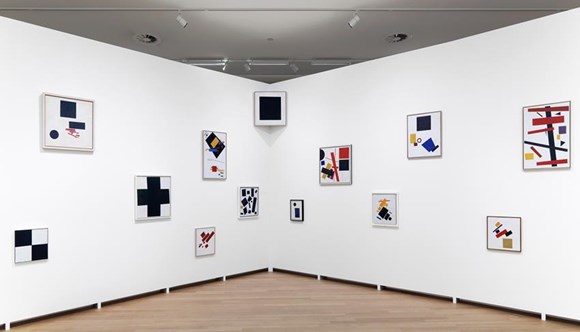
The “square” of Malevich. “Petersburg” White
Alexander Genis: On the air - a new release of our cultural and historical cycle: 1916 - century later: paradoxes and parallels
Faulkner said: "The past is never dead. It has not even passed."
Having taken the famous aphorism into the epigraphs of the cycle, we plunge in the eternally living time of the past, which has reached us in the form of historical events, artistic movements, musical directions, fateful books and an important part of each transmission, which, perhaps, are best able to convey the spirit of time.
Looking into the past, we are not looking for escapism, allowing us to relax in the long -past, but lessons that allow you to better understand the present and look into the future.
The traditional questions that these transfers ask the past sound like this:
What happened?
What happened?
What could be?
(Music)
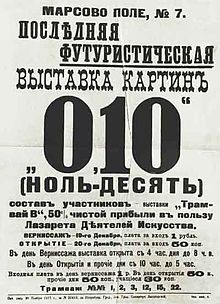
Alexander Genis: I propose to start today's episode with an exhibition, a century of which has been widely celebrated all over the world. Both in Europe and in America, they note the centenary of the exhibition, which many art historians consider the most important in the history of avant -garde art. This exhibition took place in the winter of 1915-1916 in snow-tied Petrograd, as it was called then, it was an exhibition of futurists, and Malevich’s works were exhibited on it. Since then, the history of modern painting, painting of the twentieth century has not been complete without this exhibition. And now, in connection with its century, a variety of events related to Malevich and his followers take place around the world.
All this is also interesting because it surfaced among the history of Malevich’s painting such an episode. In 1927, Malevich went to Germany and brought with him more than a hundred works for the Big Berlin exhibition. There he received a letter from his wife, who said that he could not return to Russia, since Stalin was attacking avant -garde art and must remain in Berlin. Instead, Malevich returned, leaving the paintings in Berlin. As you know, he became a victim of persecution and died in 1935. Only many years later, some of these paintings were on the surface - when his heritage became the most famous in Russian art in general.
I once had the honor to talk with the director of the Guggenheim Museum, whom we know, because they gave him the Liberty prize. His name is Thomas Krens, or Thomas Krens, as he loves to call himself, because he has Russian roots. I asked him: “Why are you never organizing exhibitions of Russian painting?” He says that we are arranging them all the time. I say: "But without Malevich." He says: “Without Malevich? Yes, this is strange without Malevich. " It never occurred to him. I must say that shortly after this an exhibition "Russia" was arranged, where the Wanderers were represented, in my opinion, for the first time in America. The exhibition enjoyed great success, and Malevich was not there, but there is, of course, Malevich is at all other Russian exhibitions. It came to the point that the Black Square has become a symbol of Russian civilization. After perestroika, after the cancellation of censorship, Malevich became the main artist of our time. I remember how I was at the Frankfurt Book Fair, whose honorary guest was Russia - it was 10 years ago. I was also a guest of this fair, and I saw with my own eyes as a symbol of the fair made a "black square." That is, it was Malevich who represented all the Russian culture, whether it be Pushkin, whether it was the Bolshoi Theater, whether it was ballet - Malevich reigned. How do you feel about this?
Solomon Volkov: negative.
Alexander Genis: Clever you immediately shake all the glory of Malevich. But you are not alone.
In this regard, I wanted to remind you of the essay of Tatyana Tolstoy. She wrote it in 2000. He is about Malevich and is called the "square". I think this is the best example of her essays. A fat wonderful storyteller and a very sharp essayist. Sometimes she writes offensive things, sometimes funny, but she never wrote such angry things as Malevich’s “square”. I want to quote:
“Malevich became the author of the most famous, most mysterious, most frightening picture in the world -“ Black Square ”. He once and for all spent a non -transmitted line once and for all, designated the gap between the old art and the new, between man and his shadow, between Rosa and the coffin, between life and death, between God and the devil. In his own words, he "brought everything to zero." For some reason, zero turned out to be square, and this simple discovery is one of the worst events in art in the history of its existence. The devil prompted the artist a simple formula for nothingness. ”
Here I will put a point. Is this really a form of non-being, do you think?
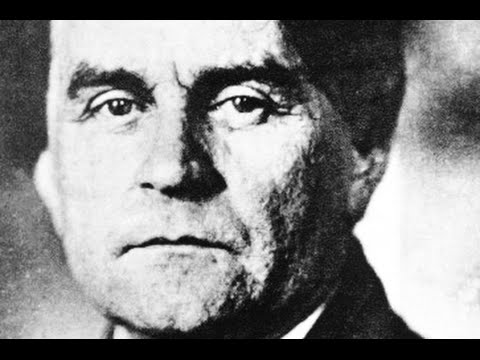
Solomon Volkov: This is a form of anything. This may be the genius of this picture, this may be its attractiveness. For this reason, this picture acquired the meaning of the symbol. And indeed, at the moment, when a “black square” hangs somewhere, you say this is Malevich. In the same way as if you see the image of Marilyn Monroe or Mao Zedong, you say - this is Andy Warhol.
Alexander Genis: There is a big difference, because Andy Warhol depicted a jar of soup - this is a tricky conceptual painting, he portrayed not soup, but a can of soup, not contents, but a label. This is, of course, meaningful, a profitable topic for curators, because you can argue, write, talk about it.
Solomon Volkov: In the same way, the story with the “square” of Malevich, he can be endlessly analyzed, it can be infinitely arguing about him, which takes place, at the same time there is an attractiveness of the symbol in it. Every artist dreams of creating something that will become a symbol of the era. The symbol of our era in the form in which it exists even now, which is interesting, continues to remain the "black square" of Malevich. And this - argue, do not argue - a fact. I recognize the genius of this picture, I recognize the significance of this symbol. Another thing is if they ask me - is it pleasant for me whether it is good for me, whether I agree that this picture becomes a symbol of our time, yes, I may agree, but it will be a negative reflection of our era. The fact that its symbol has become a “black square”, that this is recognized by everyone and around this is written at the moment hundreds of works, at least, indicates the deepest crisis in which our modern civilization is located.
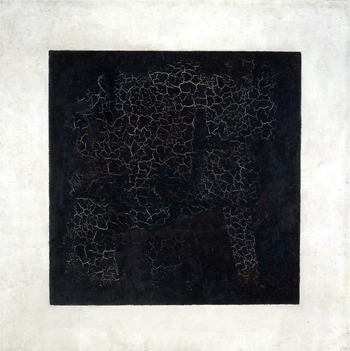
Alexander Genis: It seems to me that there is hope. The fact is that the Black Square set a point, this is not a square - this is a point. And this is what is happening with every great work of art: it does not open a new topic, but closes the old one. After the "black square" there can be nothing. And in this regard, a fat law is really a “formula of non -being”, because the “black square” has drawn into itself all world art, turned it in geometry. He begged art to the square, there is nowhere to go further. Interestingly, Suprematist compositions are presented with interpretations. After all, they write a lot about them, I read art history discussions about how one Suprematist composition differs from another, I understand that it makes sense. But one way or another, it is impossible to leave further than the “black square” - this is a point.
You know, Solomon, such a funny story happened to me once. I traveled in the fall of New England, and in the local small towns there are always antique shops where you can buy a funny trifle. Once I saw a picture that was vividly reminiscent of Malevich, was written in oil paints and was signed by some unknown artist. I bought this work for several dozen dollars, and hung it at home, which brought the guests in amazement, because everyone said: do you have a real Malevich? I say: if I had a real Malevich, I would be engaged in philanthropy. But what is interesting that this decorative picture was very decorated with our house. She still hangs with me, I am surprised to find in her aesthetic virtues that I did not see in the Black Square. After all, the Black Square itself does not claim to be aesthetic value, it claims to be philosophical value.
Solomon Volkov: You are completely wrong here, namely what claims. He claims to be aesthetic and symbolic, he claims to close the era and open a new era, he claims to be everything. And the horror of the situation is that the Black Square has become such a symbol, it’s even scary to utter, because if you recall, at the Black Square exhibition hung in the corner, where the icons have been hung in Russia, and it was a conscious move.
Alexander Genis: Tolstoy about this also curiously wrote:
"Malevich deliberately hung a black hole in a sacred place: he called his work" the icon of our time. " Instead of “red” - black (zero color), instead of a face - a failure (zero lines), instead of an icon, that is, windows up, in the light, into eternal life - darkness, basement, hatch into the underworld, eternal darkness. ”
Tolstoy, of course, made Dostoevsky from Malevich. But Malevich himself was a philosopher, he has a lot of philosophical treatises that I cannot understand.
Solomon Volkov: stated in such a tongue -tied language.
Alexander Genis: Absolutely. I tried to read, but I did not understand anything.
Solomon Volkov: This is tongue -tied.
Alexander Genis: Nomerbs can be great, like Platonov’s.
Solomon Volkov: Platonov had a sophisticated stylization of tongue -tied tongue, he could write absolutely not a tongue -tied one.
Alexander Genis: I understand, but in Platonov in this tongue -tied, he saw a cosmic depth. Perhaps Malevich too. He said: I can’t read philosophy, I don’t understand her, so I invent her. Of course, behind the Black Square stood a big one and, I would say, a wild thought, it is difficult for us to get into this thought, therefore, that we tamed Malevich, letting him on the service. In the Guggenheim Museum, you can buy a cup and a saucer with a sandy -sized motive. So we reduced the greatness of the “formula of non-being” to the coffee service-this, in my opinion, is the safest thing we could do with Malevich.
One way or another, nothing more significant in world painting than the exhibition of 1915-1916, at which Malevich’s Black Square was presented, was not in art or the world. And this already indicates what kind of jump Russian culture made at the beginning of the twentieth century.
(Music)
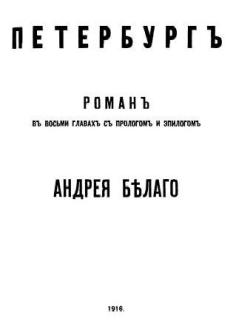
Alexander Genis: And now I propose to move away from fine art (if Malevich treats him, I think that he is wider than fine art is an art of cosmic size, maybe this is black art, but it is black as an freezed sky) I propose to move to literature. In 2016, a complete edition of one of the main novels of Russian modernism was published: “Petersburg” by Andrei Bely.
Solomon Volkov: This novel was met by a friendly critical choir. I am very interested in the state of Russian culture in the pre -revolutionary years, because it was then that culture for the first time in Russian history became the property of a relatively wide circle, a mainstream reader appeared, who later Solzhenitsyn will call the word “education”. Solzhenitsyn conceived him as such a contemptuous definition, I absolutely disagree with him. The word is wonderful, but I completely deny its negative connotation.
Alexander Genis: You cannot fight the suffix, because when we add the air suffix “Shin”, there can be nothing good. Therefore, Oblomov gives rise to a caricature - Oblomovshchina. The same with the education. I will never forgive Solzhenitsyn, because education is the best that could happen under the Soviet regime. My parents were an education. Education is primarily people of scientific and technical education, and not humanitarian, who were the best. These were people who knew their profession and knew how to do something. My father, for example, was a professor of cybernetics - this was a very important thing, because thanks to him there were hundreds of specialists who know what computers are, and now computers. But these people were not so much interested in their profession as with culture, literature, art, they all passionately loved this. Who collected libraries, went to theaters, bought records - education. And the fact that Solzhenitsyn called people who did not share his sectarian religious and national ideas, in my opinion, is offensive.
Solomon Volkov: But the return to the education of the era that we are now discussing with you, the education of 1916. What amazes me is the polyphony of critical reviews, there are many of them, they are all different. Daily newspapers of that time, very popular, diverged by huge circulations, they all placed thoughtful large, detailed reviews.
Alexander Genis: Of course, both Blok and Berdyaev - all were printed in newspapers.
Solomon Volkov: In connection with the release of Bely's Roman, many reviews have appeared, signed by names that are still key in the history of Russian culture. Berdyaev wrote about Beloyev about “Petersburg”, Vyacheslav Ivanov wrote about “Petersburg” by Belo. Interestingly, both call this work brilliant, but with very curious reservations, which almost already negate the initial definition of genius. I will quote Berdyaev, he writes in the “Exchange Vedomosti”.
Alexander Genis: Pay attention - it's the same as in Kommersant to print an article.
Solomon Volkov: That's what he writes:
“Petersburg” is the most remarkable Russian romance since the time of Tolstoy and Dostoevsky, the artistic work of the Gogol type. Over time, his genius will be recognized, large, not capable of creating perfect creations. ”
See what an important reservation: genius, which is not capable of creating perfect creations. "But striking with his new sense of life." That is, it is, as it were, both ingenious and not perfect at the same time, but amazing. "Andrei Bely loves Russia with destructive love and believes in its revival only through death." By the way, note, there is a parallel with our discussions about Malevich’s “black square”. In its own way, Petersburg is white, paradoxically, it was a certain parallel of Malevich’s Black Square.
Alexander Genis: I drew attention to this only now, when I re -read “Petersburg” before our program, I looked through this huge romance, and drew attention to what unites these two works - geometry. The fact is that for Andrei Belo Petersburg is primarily a geometric city. Listen to how the book begins:
“Senator's nerves, excited by both the home and helpless circle of rotation of our state wheel, reassured the systematic and symmetry.
Harmonic simplicity was his tastes.
Most of all, he loved a straightforward avenue; This avenue reminded him of the course of time between two life points; And one more: Other cities are a wooden bunch of houses, and Petersburg is strikingly different from them. ”
Then he writes that if Petersburg is not the capital, then this is not a city. In Moscow, one and a half million inhabitants, but this is not the capital, because the capital is one: Petersburg is a portrait of sovereign as such. This geometry of St. Petersburg for Andrei Bely is the main property of the city. The background on which the action of the novel unfolds, the main symbol of both the novel, and the whole of Russia is state straightforwardness.
We grew up in Riga, and Riga is the city of Krivoy. The medieval city is always a funnel, which is twisted and leads to the central square, in our case, the Domeskaya, on which the Cathedral stands. Perhaps that is why, when I came to St. Petersburg, I could not cope with its geometry - the straightforward streets are not for a person, they are intended to look at them from above. Vladimir Uflin, a wonderful Leningrad poet, whom Brodsky loved very much, once told me: "Here you are praising Petersburg, and here it always blows and nowhere to drink."
Solomon Volkov: It was he who, like Gogol, spurred: “The wind blows from all four sides.” What, as we know, cannot be.
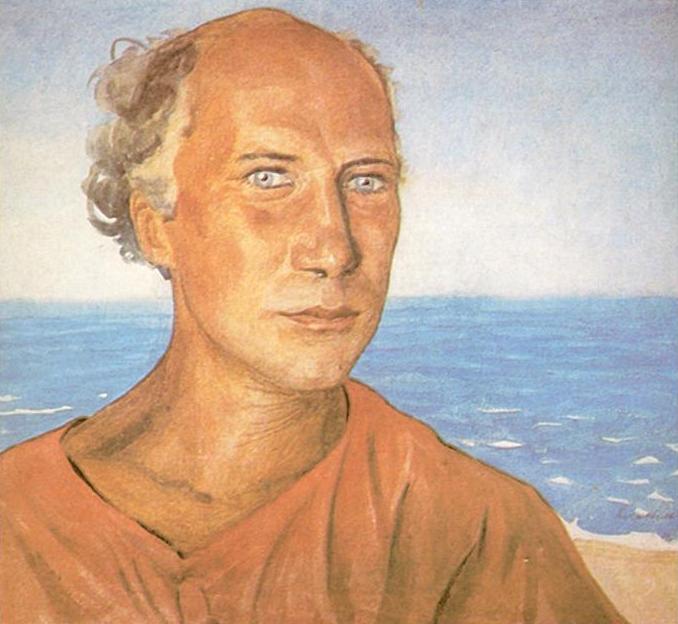
Alexander Genis: Absolutely, but it is. By the way, of course, it was the Gogol's view that Andrei Bely adopted, who was distinguished by the fact that he read Gogol, perhaps, more attentive to everyone. Gogol has reasoning that "you can’t recognize the city completely, having come all its streets, for this you need to rise to an elevated place, from where it would be visible, as in the palm of your hand." Later, White in Arabeses determines this elevated place in one of the parts of the cycle as a metaphor: “on the pass”. This very pass and is the novel “Petersburg”: the view from above, white soars over its novel. (By the way, Andrei Bely loved the mountains very much, and what was especially pretty to me, going to the mountains, he put on a tie and a frock coat out of respect for the mountains). And he looked at the flat swamp city from the pass of his novel, creating his own myth of St. Petersburg.
It is curious that this novel is still considered the pinnacle of Russian modernism in the West. He is often compared with Joyce Ulysses. But this always happens: when a modernist big novel appears in culture, it is compared with Ulysses.
Solomon, you, the author of the cultural history of St. Petersburg, do you think Andrei Bely managed to create the myth of the city?
Solomon Volkov: I’ll tell you that, in my life I tried and even managed to determine my tastes and sympathy on my own in art. But in some cases, I deeply perceived and absorbed some remarks of the people with whom I was lucky to meet and even cooperate, I perceived the remarks very close to my heart, and they determined my further view of these works, I already looked through the eyes of these people. So Shostakovich once, I remember, told me that the “stone guest” of Dargomyzhsky can be calmly compared with Mozart, that these are equal works. It never occurred to anyone, and it would not have occurred to me, but after I heard it from Shostakovich - all that is in me, I absorbed it, it became my position too.
В случае с «Петербургом» Белого решающее воздействие на меня оказала Ахматова. Я заговорил об этом романе с Анной Андреевной, она мне абсолютно с некоторым спокойным презрением, как она умела это делать, сказала: «Ну какой же это роман о Петербурге, ну что это такое? Быть сему месту пусто? Это все ерунда, это не имеет к Петербургу никакого отношения». И я таким и вижу сейчас этот роман, этот замечательный образец модернистской прозы.
Я должен сказать, что я очень люблю Белого прозаика, но больше всего я люблю его мемуарный трехтомник, которому очень не повезло с читателем, потому что когда его напечатали в советское время, он оказался совершенно не ко двору и его замолчали. Я этот трехтомник Белого в библиотеке брал, мне давали его, что называется, из-под полы в библиотеке школы, где я учился, домой можно было взять, на меня этот трехтомник произвел грандиозное впечатление. К «Петербургу», у меня такое отношение: нет, это не роман о Петербурге, это - памятник отечественной российской модернистской школе.
Александр Генис: Мне не повезло услышать это от Ахматовой, но я совершенно согласен и с вами, и с ней. Дело в том, что миф города — тонкая штука, это не значит написать книгу о городе, это значит создать город таким, каким он может существовать сам по себе. Джойс это сделал с Дублином. Он сказал, что если Дублин сотрут с лица земли, то он останется в моем романе. ,Соломон Волков: Скромное заявление Джойса.
Александр Генис: Мегаломан Джойс. Но и в русской литературе я знаю удачные случаи, когда был создан миф города. Самый удачный — это, конечно, Булгаков, который создал миф двух городов: миф Киева и миф Москвы. Есть понятие булгаковский Киев и есть понятие булгаковская Москва.
Еще один человек, который создал миф города и великолепно это сделал — это, конечно, Бабель, его миф Одессы. Белый именно к этому стремился, не зря название книги «Петербург». Так или иначе именно эта книга 1916 года вошла в канон. Шла мировая война, страшная война, и в то время печаталась такая изысканная, сложная, к тому же это - толстенный роман. И он находил своего внимательного читателя и внимательного критика. Опять повторяю то, что мы только что говорили о Малевиче: как разнообразна и богата была культурная жизнь Серебряного века.
Соломон Волков: Примером этого разнообразия литературно-критического той эпохи для меня будет высказывание Петра Перцова, такого подбрюсовского, если угодно, критика, довольно заметного, он напечатал рецензию на роман Белого «Петербург» в «Новом времени» - это вообще считалась газета для мелких чиновников, кухарок, мещан того времени. Смотрите, что там было написано по поводу Белого и «Петербурга», его романа: «Опять эта истерика, интеллигентные всхлипывания и кружение кликуши. На-до-е-ло. Вы проспали войну», - сказал он Андрею Белому. И закончил он ее так: «Был Андрей Белый и сплыл Андрей Белый». То есть можно было наткнуться и на такое несправедливое мнение, потому что он совсем не сплыл с этим романом, а наоборот, может быть. Именно это произведение - то, что Андрея Белого удерживает на плаву в современном дискурсе. Представьте себе, что нет «Петербурга». О трехтомнике мемуарном очень немногие будут сегодня вспоминать, немногие сегодня читают стихи Белого, его поэмы и уж совсем редко его статьи о символизме.
Александр Генис: Которые настолько замучены теорией, что их прочесть нельзя.
Соломон, а что с музыкой, какую вы нашли параллель этому ряду?
Соломон Волков: Вот тут наш вечный вопрос. Когда мы говорим о модернизме в литературе русской, когда мы говорим о модернизме в живописи русской предреволюционной, подобрать музыкальную аналогию очень трудно, потому что эти отрасли культуры неравномерно развивались. В особенности живопись этого периода, она вдруг рванула так далеко вперед, не знаю, к лучшему или к худшему — это другой вопрос, что за ней даже литература почти не угонялась. Хорошо, пусть «дыр бул щир» Крученых можно сопоставить с «Черным квадратом» Малевича. Уже «Петербург» Белого — это все-таки немножко из другой оперы, а музыка была наиболее традиционной сферой тогдашней российской культуры, и в ней в конце концов действовали только два великих модерниста — Стравинский и Прокофьев. Но они тогода проходили через импрессионистскую стадию и шли через нее к экспрессионизму, который у Стравинского и у Прокофьева выражался совершенно разными способами, хотя, конечно, были неизбежные переклички. Стравинского мы уже знаем, мы не раз показывали его «Весну священную», которая была, разумеется, наивысшим проявлением модернизма в русской предреволюционной музыке. Прокофьев создал так сказать свою «Весну священную» - это был балет, заказанный Дягилевым. Он назывался «Ала и Лоллий”
Александр Генис: Это - имена скифских богов, которых, конечно, никто не знал, Это все выдумка Городецкого, который сочинил либретто.
Соломон Волков: Балет был Дягилевым в итоге отвергнут. Он был написан в 1915 году, Дягилев его долго морозил и в конце концов так и не выпустил этот спектакль. Практичный Прокофьев сделал из него симфоническую сюиту, которую назвал «Скифская сюита». В этом качестве сочинение, конечно, не завоевало такой символической популярности как «Весна священная» и не оказала того ни с чем не сравнимого влияния, которое «Весна священная» оказала не только на всю современную музыку, но и до сих пор продолжает оказывать влияние. До сих пор ты можешь, слушая музыку самых новых композиторов, 1970-80 года рождения, понять, что они все под крылом Стравинского.
«Скифская сюита» очень своеобразное сочинение — это была заявка Прокофьева на независимость от Стравинского. В чем-то она ему удалась, в чем-то нет. Вот фрагмент, который мы можем соединить в нашем сознании с «Черным квадратом» Малевича и с романом Белого «Петербург» - это все создания одного времени и пространства.
(Music)