
Translated material
Not a word from the first person
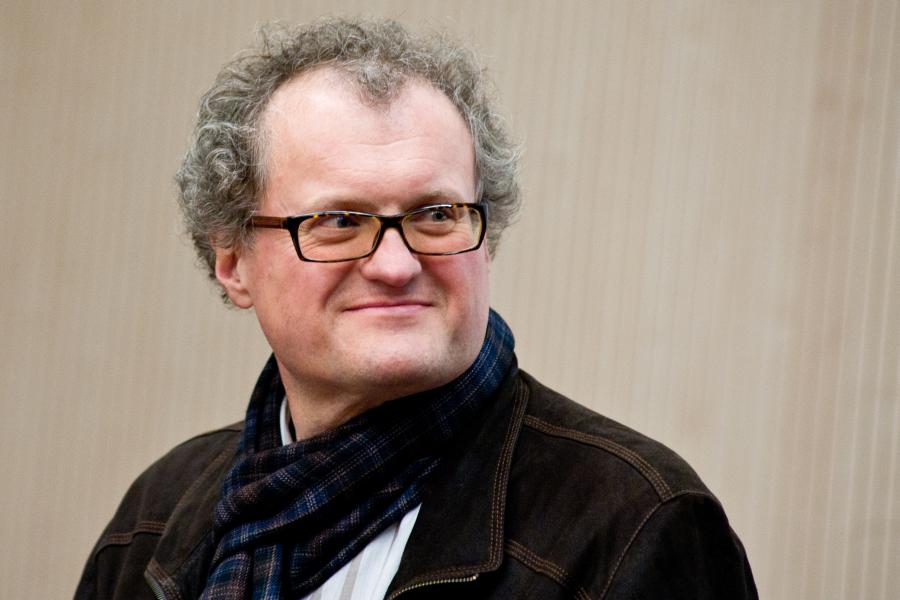
The experience of Leonidas Donskis
Leonidas Donskis. Small Map of Experience: Harvesties, Maxima, Aphorisms / Translation from the Lithuanian Thomas Chepaitis; The introductory word Thomas Ventzlovs. - St. Petersburg: Publishing House of Ivan Limbakha, 2016. - 160 p.
Essentially, each fragment in this small book (the size is often in one sentence) - an unusual philosophical, even more precisely - an anthropological treatise. Almost all of these mini-tractats with from extremely general judgments seem to be outside and all upright (yes, perhaps all-spatial-"somewhere in Europe", as Cyril Kobrin used to say about such cases). In fact, they, of course, are very closely attached to the cultural state that gave rise to them. Moreover, to Lithuania as such, perhaps, to the smallest degree (although the author also has direct-sometimes simply journalistic-straight, to coarse-statements about current Lithuanian circumstances, like: “The inferiority of politics and the lack of personalities in the political class of Lithuania produce stars from scandalists who do not know how to make a coherent proposal ...”). We are talking about the circumstances of the universal European (however, a claim to universality, the desire for it) belongs to the very essence of Europeanism).
Before us, of course, is a map of experience (“little” which is a consequence of exclusively compressive formulations), but what exactly is the experience? What kind of person is captured by his short, volatile notes by the author? (By analogy with the "lyrical hero", here it is quite possible to talk about the hero of metaphysical.)
You never alone, on the contrary, no one prevents you from seeing and heard the world alone
The man of Donskis is a classic European individualist-introvert in a situation where the limitations and vulnerability of such a position (or: such a mental-musical type) has already been repeatedly proved and confirmed. It is proven, confirmed - and the type is still reproduced. He appreciates his own loneliness as an integral and non -replaceable organ of perception of the world: "alone, you will never be alone, on the contrary, no one prevents you from seeing and hearing the world." (It seems important that this is the first phrase of the book, setting up reader's perception to everything that will follow). Others here are not hell, but rather, some, not too dramatic interference: "Loneliness among others is a true obstacle on the way to things and to oneself."
With all this, the “metaphysical hero” of Donskis is deep and fundamentally social: socially oriented and socially decorated. All with the same reservation: this is sociality, illuminated, even enlightened through the awareness of its restrictions.

“Others”, on the one hand, represent for this “metaphysical hero” value - at least speculative - moreover, in their individuality and uniqueness: “What is wisdom? When you see the face of every person who speaks with you and hear everything that he says” (you want to think: utopia). On the other hand, they are a fundamentally unbridled difficulty, an unresolved problem, which can be cope with the only way - to accept as it is. Others require their own existence to the efforts of reconciliation: "What is happiness? The reconciliation of your character and personality with the world is especially with those whom you love." The idea is directly related to the “others”, it is directly related to the value of “freedom”: “genuine personality freedom is most often manifested in politeness and respect for another - not from fear, but from the understanding that you yourself are limited and imperfect.” The theme of “others” in her relationship with the theme of “freedom” is primarily about distances and boundaries (therefore “politeness and respect” are words that seem to make you think about social conventions that the author, as we will see further, does not please too much).
With one of the many parties, “others” are an irreversible (and irremovable conflict) condition for the individual’s self -incentive - both in a positive and in a negative sense: “a genius is partly those who recognize him”; "Exaggerated criticism is just the ability to rise due to someone else's talent, you become an object of attention only when you refute the one who is better than you."
The individual of Donskis, it seems, is an isligiosen (although the concept of the “spirit”, different from the concept of “thought”, that is, the mind, he has) and does not hope for posthumous life, but the more acutely he appreciates the life of the local, preliminary: “The intensity of the spirit and thoughts reconciles with the freedom of being and at the same time foresee it.” He does not seem to not at all to the highest interlocutor - this addressee does not even exist for him as a hypothesis.
This individual is a bit and critical to the conventions of society, to his games and masks (it shares authenticity and non -denial, undoubtedly giving preference to the first). He builds a distance between himself and society; It monitors the ways to control society over it, trying to neutralize them if possible: "If we let us seriously draw ourselves into power games, our successes and failures become masks of fate and happiness, behind which public control is hidden." Donskis returns to the theme of the mask - invariably fought with the topic of control (and, therefore, lack of freedom): "exaggerated severity is just a mask of instructive virtue that hides grimaces of force pressure and public control."
Social conventions - such, for example, as a quarry, - the author, genuine in a person, suspects, suspects, suspects, separates him from real life. "What is a dizzying career?" - asks himself a person who has made a completely dizzying career (Donskis is a professor at the University of Kaunas and an honorary doctor of several universities in Europe, including the British University of Bradford; the author of more than thirty monographs, whose works are translated into fifteen foreign languages, he himself writes in two - Lithuanian and English; while he is not the slightest degree The intellectual producer-for five years, in 2009-2014, was a deputy of the European parliament, in which, according to the author of a small preface to the book of Thomas Ventzlov, he actively "opposed the aggressive nationalism and" policy of power "-that is, a person who, according to all signs, in excellent relations with them. He knows how to handle them and even knows how to treat them and even knows how to handle them To use.). This is “a dizzying transition from enjoying every moment of being to planning life for months and years in advance.”
If we were given to repeat some moments of our life, many would have chosen moments of joy and happiness, although the latter would have lost its meaning if they had not been preceded by periods of sadness and failure
For no one famous reader, it seems to be belonging to losers, Donskis, however, in his own way, is sensitive to the topic of failure . He is looking for her, on the one hand, he searches for the paths of neutralization (failure is a mask, behind which the ubiquitous public control is hidden), on the other hand, understanding and excuses: "Be given to us to repeat some moments of our life, many would have chosen minutes of joy and happiness, although the latter would have lost its meaning if they had not preceded periods of sadness and failures." Well, at least the consolation in her: "The success will never be final. The true failure is not at all fat. If we really fail <...>, we become a little more wise and mature." This thought can not be called fresh even with a great and sincere desire, but, apparently, for some reason it was important for the author to speak it.
He does not trust the spoken word too much - one of the main human conventions. A faithful learner of the 20th century, he convicts the word in cunning typical for his native century by means, here you can not even refer to the Freudians - Donskis from those for whom their ideas have long been part of a common conceptual instrumentation: “Just as endless speeches of sex, the speaker’s melting in this area, and endless speeches of religiousness testify to the desperate an attempt to overcome disbelief in himself, simultaneously hiding frustration and even hatred of calm and adequate believers or unbelievers ”; And again: "First of all, those who need it to control the thoughts and behavior of other people are publicly and willingly ranting about their faith." We will learn from him training from another mentor of the twentieth century, so to speak, one of his main speech -formers, who determined both topics and the language that is michem of them, Michel Foucault. Here, for example, is a characteristic move connecting power and vision: “The classic form of power: you will see me only when you will be worthy or guilty. To see me is mercy or punishment. The formula of power in modernism: I see you so much and when I want, and you cannot answer me the same. The postmodern formula of power: I will force you to see me, and when I need it; You won’t see me when you want, all the more as you would like to see me. ”
The hero of Donskis, so to speak, is resolutely. Extremely appreciating the categorizing, analytical mind, gratitude to go through his school, he constantly realizes his restrictions and indicates them. A characteristic way for the insurance person, he is attentive to the possibilities of bodily understanding, the body as a source of meanings, speaks of a “smart body” as a special reality, which, as one should expect, often can’t cope, with all their minds, “thinkers and brilliant speakers”: they often do not know what to do with their hands. Most often they do not like to dance and do not understand at all and completely do not understand what they do Beautiful sport. Condemns such incompleteness. Appreciates integrity. Life is organized for him non -regional - and at the same time everything is meaningful through and through, at least - potentially, the main thing is to make efforts: "There are no necessary and unnecessary segments of life. There is only their effort that connects them, impossible without imagination and dreams." Alone, the mind, therefore, can’t cope so much that he would be - left alone with being - is doomed to defeat - which, fortunately, cannot happen, since the mind in a person will never be alone and will never be lonely. The most important thing, if you should listen to his statements, is located for him outside the “head” mind: “Good, truth and beauty,” he claims, “never call themselves these names,“ they let us see, hear and understand the world, and not divide it into dual categories. ”
Lord, he is an idealist. He believes in good, truth and beauty. It believes, because he does not seek their rational justification. In general, the belief as a position (and it is faith, not spoken in vain, as we have already convinced) is very important for him: speaking of contributing wisdom and maturity of failures, he adds: "But we do not cease to believe in the meaningfulness of our choice and labor because of this." ("When, - I want to answer the author.) Completely (might think) archaic, to naivety, to vulnerability: in this sense he believes in love! - I would even say, with some characteristic of post -practice and resistant Western man by its revaluation. "In fact, we love that which we cannot rationally explain, but without which we cannot gather our personality into a coherent whole. <...> you love when the logic of the heart whispers to you: this is the only way to collect our personality and conduct a meaningful existence." The only one!
One of the through, not always pronounced directly, different names called its values - authenticity, contact with it, leading both reason and conventions, and any positions occupied: “maturity in the sphere of aesthetic experiences,” he says immediately after the thought of good, truth and beauty, “full -time with originals, whose stands, whose original You enjoyed reproductions in childhood and youth. " As for the positions held, he is not that he is looking for reconciliation of those that claim the opposite of each other, but at least is attentive to the validity of each. "The individualist is sure that a person comes to the world alone and one leaves him. Everything else is success, the connection with others, the memory is only a fragile shell that does not mean anything to the old man who comes to the world, nor for the old man who leaves him. Naga and lonely, you are abandoned, naked and lonely leave it. The traditionalist claims that, on the contrary, we would not be able to without the direct participation of other people. To be born with dignity to this world, no doubt, a liberal thought was close, the second - the most funny that both of them are right. " (It is immediately thought that both described type of worldview for the author is own.)
What is characteristic: no confessions, in any case - obvious. All judgments here are not about yourself. No "I" is not a word in the first person. Nevertheless, everything is only about yourself: it is true, not as a person who has happened once in its unique features, but as a human type.
This, of course, is a way of self -realization. However, arranged in such a way as to everyone. Including those who do not agree with what was said.