
Translated material
The layout of the New World
Restoration of the Central Park
Having lived to the advanced 157th age, the central park has been decorated and needs overhaul. Having agreed with this, the city administration of New York has begun a ten-year total restoration, which will cost $ 300 million. It is characteristic that a third of this huge amount was introduced by Philanthropist and Banker John Paulson.
“No other area,” he said, “charity does not bring such clear fruits that so many people always enjoy and freely.”
Indeed, only in the last third of the century the number of visitors to the central park has grown from 12 to 42 million. Having become the most popular city park in the world, he served as an example for many, but remained a unique New York attraction, because there is no more metropolis with such a huge hole in the city landscape.
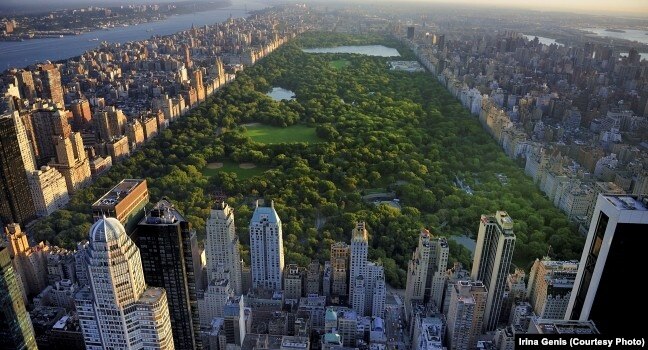
A neatly carved park in 43 hectares is stretched by fifty quarters. Starting at the Statue of Columbus on 59th Street, he stretches to the entrance to Harlem on the 110th. But, permeating the city, the Central Park does not apply to it, for it lives in harmony only with its own aesthetic laws and philosophical theories.
In Europe, the park is the result of expansion and evolution. Growing up, the city was seized, like Paris - the Bolest Forest, the surrounding nature or planted it. But in America, the parks sometimes just changed the names. Returning labels, the forest was turned into a park. This happened in Bronx, where a pristine grove was surrounded by a fence and included it in the botanical garden.
Even in Manhattan, on the northern outskirts of the island, there is a densely overgrown hill that remained the same before white people came here, including me. Having lived next to him, the first 15 years of American years, I enjoyed him like a summer resident. In the spring he collected lilies of the valley, in the fall - mushrooms, in winter (meat in the cold!) He frying kebabs.
In greenhouse conditions of close Manhattan, the central park was to become a wild West for the internal use of citizens
But the central park is another matter. He is unique in the plan. When he was invented, the new light was not only new, but also not tamed. In the Wild West, which began, as the proud residents of Manhattan still think, behind the outskirts - on the other side of the Hudson, - the monks rode, the bison roamed, the scalpes were filmed and cowboys worked. The first New York people admired the zoo, secondly appreciated for smoked languages, examined the thirds in museums, read about the fourth in western, which were popular novels, until they got to Hollywood.
In the greenhouse conditions of close Manhattan, the central park was to become a wild West for the internal use of citizens. He was an artificial, but real reserve of virgin America. As a theater in the theater, Central Park exaggerated nature. Concluded in a stone box, she blossomed with a paradise, neglecting price and benefit. Not like Disneyland with its caricature geography, not like national parks with their untouched beauty, not as romantic gardens with their poetic arbitrariness, but as a model of a new world in full size.
Strictly inscribed in the correct figure, the park demonstrates its intentional origin. But nature that has fallen inside lives at large. In the Manhattan line-drawn line, the central park gives a life-giving break from geometry.
This contradiction creates a unique nature of New York. It is easy to do without the main one, such as red in Moscow or Tiananmen in Beijing, Square. In New York, it is a large clearing of the Central Park.
Admiring it, the president of the restoration committee Douglas Blonsky proudly said: “If you do not raise your head, you will never believe that you are in the middle of Manhattan.”