
Translated material
An experimental drug for cancer treatment will help with atherosclerosis
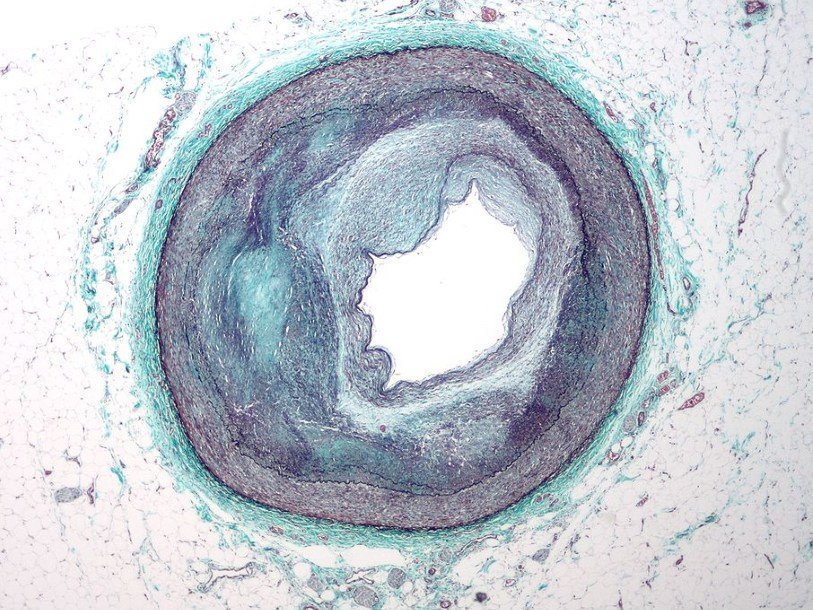
The drug, which is already undergoing the first phase of clinical trials as a remedy for cancer, can probably be used to treat cardiovascular diseases associated with cholesterol deposits in blood vessels. The authors of the new study found that the mechanism that the tumor cells and the cells of arterial plaque are used to hide from the immune system is based on the same molecule. This signaling substance prevents the destruction of dead cells inside the arteries. The experiment showed that when blocking such a signal, the number of arterial plaques in laboratory mice decreased.
“This will be a new therapy platform, and not just the next drug that reduces cholesterol,” says Nicholas Leeper, vascular biologist from Stanford University and the leading author of the new study.
Although cholesterol contributes to the occurrence of atherosclerosis, the history of the development of this disease is much more complicated. When fat deposits damage the walls of the arteria, cells of the immune system are activated, in particular macrophages that destroy dead and damaged cells. But soon the dead muscle cells and macrophages join the plaque growing on the wall of the arteria. In its center there is a section of necrosis, filled with dead cells. It destabilizes the rest of the arterial plaque and can lead to its rupture, which is dangerous to potential blocking of the artery and, therefore, can cause a heart attack or stroke.
Liper and his colleagues studied cellular communication between dying cells and macrophages. Previously, they found two molecules on the membrane of these cells, which serve as a signal for macrophages that this cell must be destroyed. Now they found out that there is a molecule that signals that the cell is healthy and there is no need to touch it with a macrophage. They suggested that it would be much easier to get rid of this signal molecule than artificially cause the appearance of molecules that stimulate macrophages.
At Standford University, antibodies are already tested, which block such a signal molecule (it is denoted by CD47) in tumor cells. Researchers of atherosclerosis decided to check whether the CD47 blocking will be effective in the fight against arterial plaques. The Liper team analyzed samples of arterial plaques in people who underwent surgery for deposits in the carotid artery. It turned out that in arterial plaques the level of CD47 is much higher than in healthy arterial tissues. To find out whether the blocking of CD47 will help stop the growth of plaques, scientists have used anti-cancer antibodies for experiments with several groups of laboratory mice, which have simulated cardiovascular diseases. With a high content of fats, these mice quickly develop plaques in the arteries, since they do not have a gene that regulates the exchange of cholesterol. Intravenous administration of anti-CD47 antibodies was able to reduce arterial deposits by about half.
The result makes these antibodies a promising candidate for the role of medicine for atherosclerosis. The study is published in the journal Nature.