
Translated material
The Constitutional Court allowed the protesters to seal his mouths with tape
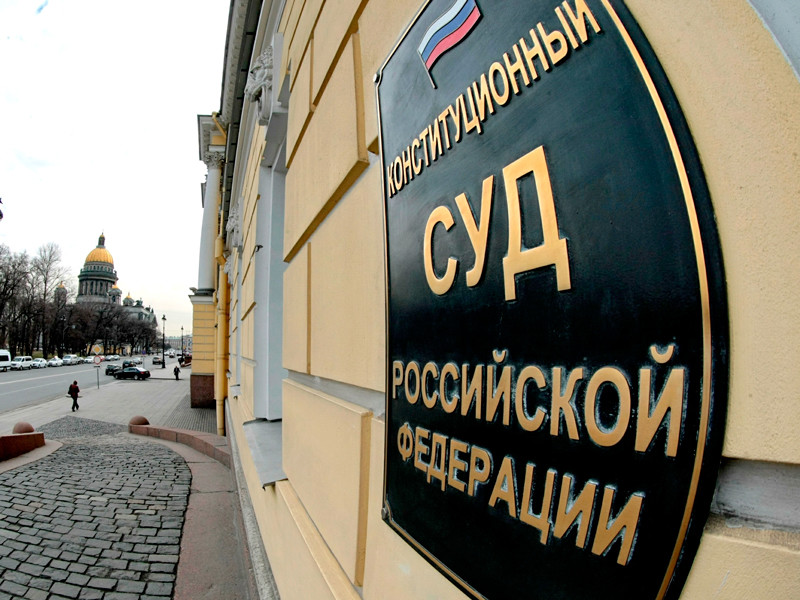
The Constitutional Court (Constitutional Court) of the Russian Federation allowed the protesters to glue their mouths with tape, make drawings on their face or stick stickers on it. The court considered these methods an expression of the opinions of shares, contrasting them with the use of masks, balaclava and objects that are designed to hide the face, reports RAPSI .
The Constitutional Court studied the norms of the law on rallies on the complaint of students from Samara - participants in the action against the discrimination of "Silence Day", held in 2014 in the Pushkin Samara City Park, which by local authorities was defined as a guide park.
Young people sealed their mouths with tape, but police officers considered this form of civil expression of violations of the law, since tape, in their opinion, is a disguise of the participants. As a result, the protocols on the protocols on an administrative offense were drawn up, despite the fact that all participants in the shares submitted their documents to the police on the first request.
Students asked the KS to figure out whether the attributes are to express their opinion with a masking, as well as to verify the legality of the obligatory notice of the authorities about the upcoming actions, especially when only five people participate in them.
The applicants considered that paragraph 1 of part 4 of Article 6 of the Federal Law "On meetings, rallies, demonstrations, processions and pickets" and part 5 of Article 20.2 of the Code of Administrative Offenses of the Russian Federation contradict the constitutions, as they allow the administrative responsibility of the participants of the public event for the concealment of their person on formal grounds, whether they had intent and motive to hide the person, whether this was part illegal actions or caused by the theme of the action or the weather.
The Constitutional Court agreed that the norms of the Hyde Park of restrictions for different types of public events are not contained, Kommersant writes. The concealment by the participants in the public event of a part of their person "may not necessarily be connected with intentions to complicate the identity."
The “rationality principle” is brought into the ban on the concealment of the face: scarves and dressings for medical reasons are allowed
The KS recalled that the ban on concealing by a participant in the public event of his person was established not only in the Russian Federation, but also in the legislation of other European countries (Austria, Belgium, Denmark, Germany, Norway, Finland, France, Switzerland, Sweden, etc.) and he is dictated by observing safety measures.
“Such a ban objectively prevents the emergence of the possibility of impunity of unlawful actions in the protesting sensations and helps to ensure the conditions for an inevitable occurrence of liability for a violation of the established procedure for a public event, and therefore cannot be considered as not consistent with constitutionally significant goals,” Rapsey quotes the decision of the court.
However, the Constitutional Court urged to be guided in this matter by the principle of rationality. The court recalled that the shares participants can cover their faces with scarves and scarves due to weather conditions or use bandages, gauze dressings or respirators for medical reasons.
The KS pointed to the right of the protesters to use their persons as a subject of visual agitation. “Since the law allows participants in public events to use posters, banners and other means of visual agitation when they are conducted, they, accordingly, are not deprived of the opportunity to place separate elements of visual agitation on their face, in particular to apply drawings (inscriptions), stick applications (stickers), apply other campaign accessories,” the decision said.
The KS called on the police and courts to pay attention to the motives and goals of such actions and to regard whether the use of objects or drawings on the face of a violation of security standards. "The administrative responsibility of the participant in the public event for concealing his person does not imply a purely formal approach and imperatively obliges the bodies and officials to clarify all the circumstances with which the concealing by the participant in the public event of his person was fraught with, especially if it did not entail significant obstacles to the identification of his personality," the court noted.
The court noted that the authorities should not excessively control the activities of organizers and participants in public events and unreasonably limit people in the right to freedom of peaceful assemblies. “In cases where the organizers or participants of the public event behave destructively, clearly intend to perform or, moreover, commit any actions that threaten public order and (or) public security, the state should use to prevent and suppress manifestations that do not meet the creatures of peaceful assemblies, all legal funds,” the KS believes.