
Translated material
Free dinners and queue for universities
How the most advanced school system works - Finnish
Russian Deputy Prime Minister Olga Golodets in mid-July stated that two-thirds of Russians did not need higher education; According to her, for many professions there will be enough average special - however, only if its effectiveness and quality increase. The words of Golodets caused a discussion about whether the transition from primary education to secondary and higher was correctly arranged in Russia. At the request of Medusa, journalist Vladislav Voronin studied how education works in Finland, whose system is considered one of the best in the world and where many residents refuse to obtain higher education.
Government costs and school development
The Government of Finland controls the development of the child from birth. To begin with, each family is sent a gift box where everything you need is collected - from a winter jacket and shoes to books and toys. In addition, parents receive child allowance - at least 95 euros per month. In terms of mortality rate of children under the age of a year (2.52 per 1000 people), the country is one of the best in the world, below mortality only on Bermuda, in Norway, Japan, Singapore, Iceland and Monaco.
All the steps of education in Finland are free, moreover, schoolchildren are fed with a big dinner and brought to the house by bus. In cities, children usually do not waste time on the road: in Finland it is not customary to choose schools, and everyone goes to the nearest to the house, since the difference in teaching is minimal. Finland is a leader in Europe on the balance of school. According to the Organization of Economic Cooperation and Development (OECD), the quality of training in the best and worst Finnish schools varies by only 6 percent (the average indicator for the OECD is 37%). This is expensive to the government: the expenses of education are 12.2 percent of the entire state budget. In Russia, this figure is three times lower - about 4 percent. The main part of the costs in Finland (7.6 percent) falls on school and secondary specialized education.
Finland avoids a sharp division of schools into good and bad, as it supports the prestige of the profession of a teacher. Now there are ten times more people who want to teach children than affordable jobs, and the competition for the Pedagogical Department at the University of Helsinki has long been at the level of 20 people per place. It is even more important that 90 percent of existing teachers are completely satisfied with their status, and 60 percent believe that they are very much appreciated in society (this indicator is only in South Korea, in the UK and the USA - significantly lower). The salary at the school is higher than the country in the country: an ordinary elementary school teacher receives 3,500 euros per month, 4500 in vocational school (the average Finn salary in 2014 is 3,094 euros).
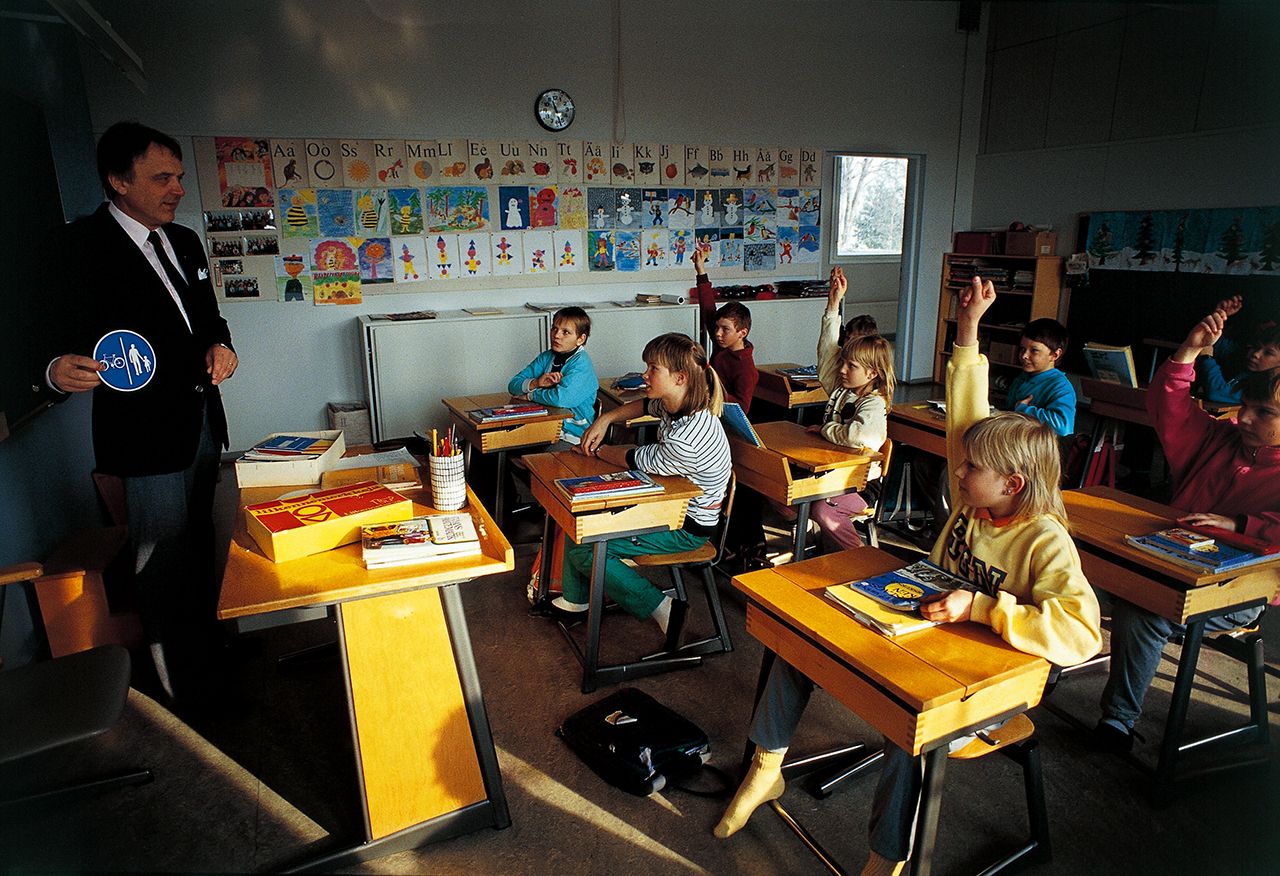
The main feature of the nine-year school curriculum is that the psyche of Finnish children is not subjected to constant stress due to inspections and exams. Homework is always small, and in the first six grades no one pays attention to performance. “The main thing is to show how to study, look for information and find your calling,” says Finnish scientist Pasi Salberg.
In Finland there are no strict regulations that teachers are obliged to observe strictly: everyone can dilute the program with their own methods and choose the most suitable textbooks - regardless of the recommendations of methodologists.
Secondary education is the basis of the entire system
Immediately after school, it is impossible to submit documents to the university - first, secondary education is required. About 95 percent of graduates follow him (the third indicator in the OECR after Portugal and Slovenia). Secondary education can be obtained in two ways: in gymnasiums in which there is an in -depth study of theory and preparation for admission to the university, and in professional schools, where emphasis is placed on practical skills for a future profession.
Private companies and factories collaborate with schools - they sponsor educational institutions and select trainees among the most talented students. Many students engage in special instructors individually. As a result, a significant part of the training is occupied by projects based on their own observations. The most popular schools related to technology and transport (36 percent of students), business and administrative management (19%), health and social projects (17%).
In gymnasiums, everything is a little different. Students go to theoretical courses that can be freely chosen based on their own preferences, and they themselves make up a schedule. Three -year training ends with the first large -scale exam. It contains four stages: native language (required) and three options for a choice (second national language-Finnish or Swedish; foreign language; mathematics; any of the humanities).
The number of training places in universities and institutions is regulated by demand in the labor market, so many applicants are eliminated, the rest have to wait for admission to 2-3 years. The average age of a first -year student is now 21.5 years old, and 20 percent of those who received is over 26 years old. Secondary education in Finland is not considered something inferior and allows you to find decent office work, so about half of the Finns is quite satisfied with this option.
At the same time, it is never too late to return for the desk: a quarter of the adult population of Finland (from 25 to 64 years old) continues to study now. After the end of the vocational school and in the presence of work experience, you can go to in-depth professional courses or get a higher professional and technical education.
Complex system of higher education
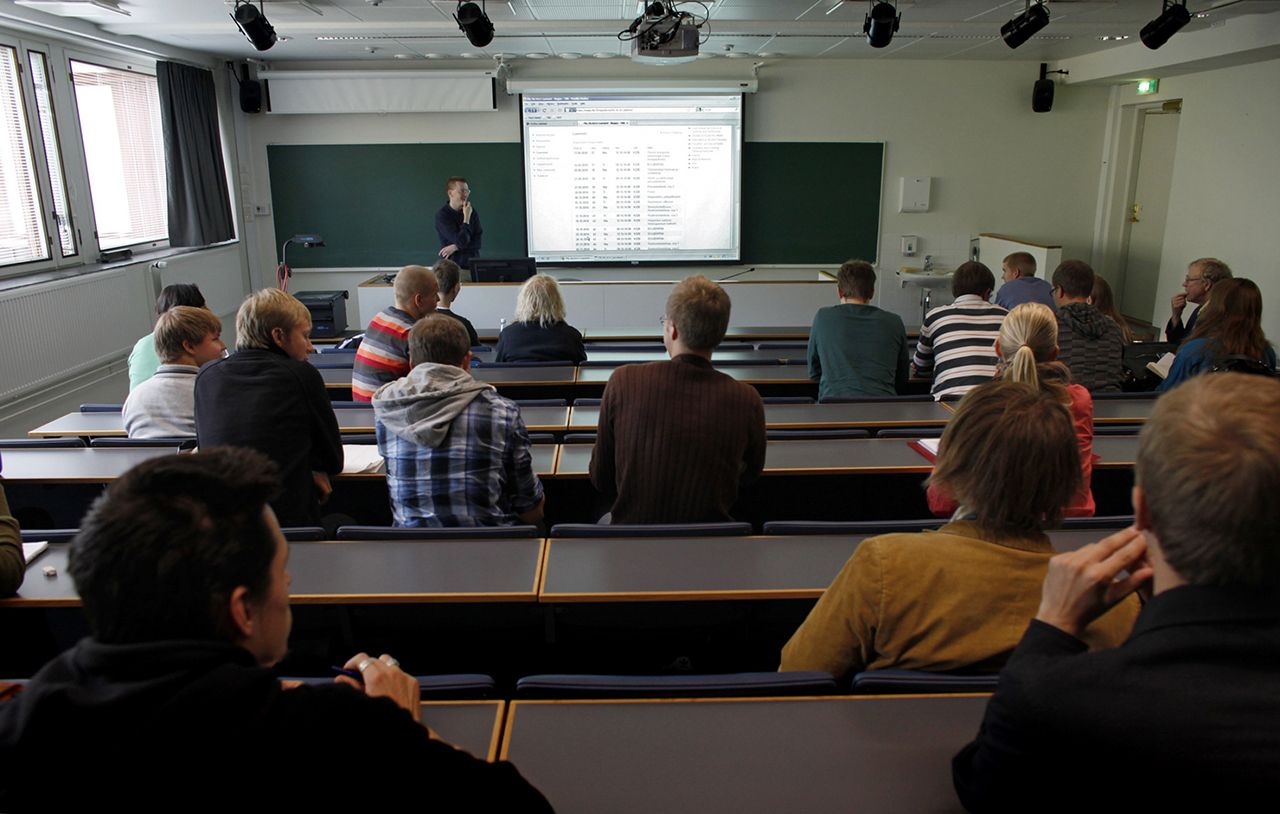
In Finland, 14 state universities and 24 vocational Institutes for 5.5 million people of the population.
Universities are concentrated on scientific work and research (3 years before the Bachelor diploma + 2 years of study at the master). The latter give a professionally oriented education in more than 50 disciplines - from art to technology. Studying for a bachelor in this direction takes from 3.5 to 4.5 years, and the title of a master can be claimed only after three years of work on the profile.
Finland spends significantly more than the main partners in the OECD: per year, one student accounts for 16,714 euros (the average indicator for the organization of economic cooperation and development is 13,528 euros). Most of the amount is covered with the state, and only 4 percent takes on business (on average in OECD - 32%). Now-due to the economic crisis in the country-state spending on education is reduced, which causes dissatisfaction with residents and leads to crowded protests.
Finland, unlike most countries, does not seek to sharply increase the share of people with higher education. From 2000 to 2012, the number of adults (aged 25 to 34) who graduated from universities and institutes has grown by only one percentage point - from 39 to 40. The global dynamics was much higher : Korea pulled by almost 30 percent (37 - 66), Norway - by 10 (35 - 45), Netherlands - by 14 (27 - 41).
Calls of the education system in Finland are primarily associated with unemployment - it has been at a record high level since 2000. According to the Eurostat, the unemployment rate in Finland exceeds 10% - about 280,000 people, 22.7% of them are young people. It is unprofitable for many Finns to get a temporary low -paid job, because then they lose social aids, which on average amount to 600 euros, and in some cases they can reach 1,500 euros.
There are no plans for reforming the education system due to high unemployment in Finland yet. But the authorities want to change the principle of the payment of social benefits and the first in the world to introduce “unconditional income ” at the state level - guaranteed “salary” to each Finn in the amount of 550 euros. “Unconditional income” should replace all other manuals and stimulate the population to search for interesting work and open their own business.
In the initial version of the article, actual mistakes were made regarding the size of children's manuals, the number of exams at school and several others. Now they are fixed. We apologize to the readers.
Vladislav Voronin
Moscow