
Translated material
Valery Anashvili: "My life is" Logos ""
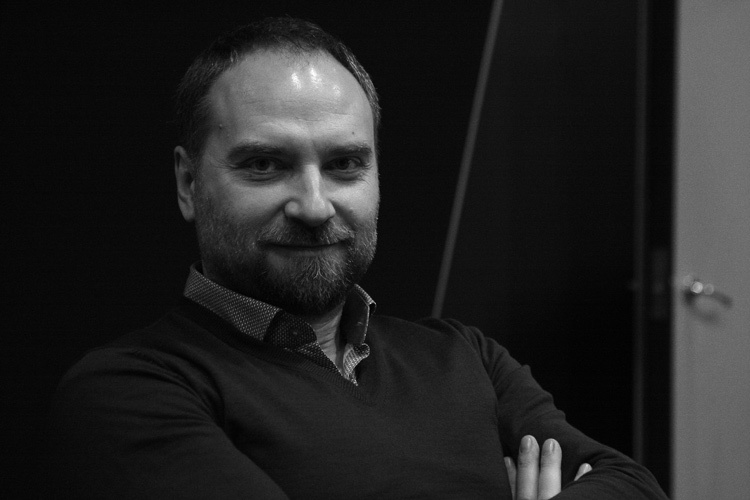
The most non-standard philosophical publication in Russia, the Logos magazine, celebrates the 25th anniversary. Colta.ru talked with the initiator and permanent editor of Logos Valery Anashvili.
- Tell us how the Logos appeared.
- In general, I made magazines at school, in high school. Then he studied at the MAI for a couple of years, and there we made the magazine “right now”, which was selected by the teacher from someone at the lecture and fell into the hands of the administration. He was cheerful, typewritten, and then they were still very cautious about such materials, I was calculated and called to the rector. Then it sounded very frightening: Vice -Rector, the first department. Somehow they intimidated me there, but I didn’t even understand what it was about-I was never a dissident, I did not even know what it was, I did not know such a word. In general, I was not deeply interested in politics. The words "metropolis", "Solzhenitsyn" sounded and so on that for me then it was an empty sound, I did not know who it was.
“What was he talking about, your cheerful magazine?”
- Well, what could young people write? Something cheerful, mocking, something with obscenities, about life-about love and death. Mat, maybe he scared someone. Although it was unlikely that they were worried about what was inside - it was frightened that these were four typewritten copies sewn in a brochure. This was already enough to scare people in the leadership of the Moscow Aviation Institute completely to death. Nevertheless, these people were peaceful, vegetarian, and they did not create any problems, they just asked not to do this anymore.
And when I began to study at the Faculty of Philosophy, my friends and I had the idea to create a magazine more serious, philosophical. We were not original. Then, in the late 80s, everything published magazines. It was, on the contrary, it was strange not to publish a magazine. Any statement of a particular group of like -minded people or even an individual person was packaged in the format of the magazine.
Initially, this was to be a magazine called completely wild-“Insight” (“Logos”-in a sense no less wild name, but slightly more harmonious and historically justified: we considered ourselves the successors of the pre-revolutionary, “Logos” Stepun and Yakovenko), and we decided to do this magazine with my two philolgod friends. Actually, the definition of the “philosophical and literary magazine” remained from that version of the project. Some literature (prose, poetry) and philosophical texts were supposed to be printed there. I was responsible for the philosophical part and was the editor -in -chief of the project, my friends were responsible for literature. They themselves were already interesting authors, one is a poet, the other is a prose writer, and they organized it so well that for the first number we received an interview with Dmitry Prigov, interviews with Leo Rubinstein, poems and stories of completely different people from Parshchikov to ... I don’t remember if we had a text, but we got two from Victor Erokin, and we got two story. The scale of the project was such that if we released this number, we would become a key literary (and not underground) magazine in the country. Because then the “clock” and “Mitin magazine” somehow temporarily lost their significance-there was already a publicity-river, and there was no longer a large stir around the underground samizdat, and new interesting magazines have not yet appeared.
Serious scholars after all these endless Erofeevsky phalluses, sticking out of the magazine will simply stop talking to me.
The problem arose with the texts of Erofeev. One of his stories - “Mother” - sent Gorky to the same name, only in the interpretation of Erofeev there was a very tough incest with the constant rape of his son’s mother and a detailed description of the physiological nuances of this process. I understood: if we print all this, then we become so well done and very cool, but then I will not print a single philosophical text from my teachers from the Faculty of Philosophy, because serious scholars after all these endless Erofeevsky phalluses will simply stop talking to me. I still made a choice in favor of philosophy and suggested abandoning this text. Naturally, my friends were upset, and we broke up. And that magazine did not take place.
However, after a year and a half, we, with the new team, released another magazine-it became known as Logos, and he had the subtitle remained from the previous version of the publication. And this “Logos”, published in 1991, somehow suddenly sharply became a very popular philosophical publication (in the presence of very quickly appeared very strong competitors-the magazines “Way”, “Steps”, “New Circle” and others, now, unfortunately, rested)-again in the strange meager state in which the country and its humanitarian thought were. The magazine "Questions of Philosophy" then continued to be wildly reprehensible - 30-50 thousand, probably there was a circulation. By the way, now it is 400 copies. The country's main philosophical journal is 400 copies.
- And what is the circulation of Logos?
- Now from 1000 to 2000 - depending on the number. We have everything in the public domain on the site, but nevertheless, the paper circulation is sold.
- And what was the first circulation?
- The circulation of the first issue was 5,000 copies, it sold in a few weeks, the second number came out with a circulation of 10,000 copies and also sold in a few weeks. The first issue was presented at the Institute of Philosophy, about which there was even a twenty -minute report on the first central television channel in the program “Under the sign of“ Pi ”. Then television was still interested in some humanitarian and even philosophical projects.
- And did not need any special measures for promotion?
- No. The PR was already beautiful in our country: representatives of the older generation of philosophers, especially the razor, such as Renata Galtseva, quite quickly wrote reviews of our magazine. Like, such a fascist publication publishes Heidegger, some kind of absolutely absolute nonsense. We still love this review, the link on our website hangs .
- And how did you imagine your audience then? Who did you make a magazine for?
- The first issue of my closest friends and employees Igor Chubarov and Oleg Nikiforov was released “for ourselves”. When we studied at the Faculty of Philosophy, in the late 80s-early 90s, to read, if we talk about real philosophy, there was simply nothing in the country. No translations, nothing, all in special guards, inaccessible to us. Therefore, we decided to make a magazine that it would be interesting for us to read - for our own education and for people who were close to our interest in scientific philosophy in general and in phenomenology in particular. So in the first rooms were Gadamamer, Heidegger, Husserl. And suddenly it turned out that there were a lot of people like us. Instantly sold showed that there really was an incredible hunger in the country, there was not enough free publication that could handle a philosophical theme, not based on any dogmas, Marxist-Leninist or, conversely, religious and philosophical. And then these new dogmas began to spread, the Russian religious philosophy was already going on the country with its iron tie. Now these steps are silent, fortunately, it turned out that this is also a little interesting thing, and although some people continue to shout something from the Russian-philosophical religious vocabulary, but these are already marginal cries. If now someone in the corridor of the Faculty of Philosophy begins to swing Berdyaev, it will be clear that a person is a little out of himself. And then all this seemed very serious and rather dangerous for genuine science.
 © Tatyana Mitsuk
-Now, after 25 years, you are summing up for yourself? What are you, as they say, came to this anniversary?
-We did not set ourselves any goals that we can now say: we have achieved them. Or did not reach. Nothing like that - we simply engaged in self -education and some types of research that are impossible outside the magazine. Around the Logos there was a community of people who were important to demonstrate some research methods or to read specialists who are significant for them.
- Well, do you think Logos think a successful media project?
-The success of the media can be evaluated from the point of view of its influence or visibility-“Logos”, of course, is not the media, but nevertheless with all the reservations, if we evaluate it in this aspect, then, probably, we achieved something. Many people know about us, many read us, many treat us well. Moreover: there is a whole galaxy of people of different generations who hate us. This is even more pleasant for me.
- That is, hostility to publication is an indicator of success?
- hostility to the publication, especially if it is sharp, - of course, an indicator. So, it fulfills its mission to cleanse the brains from any intellectual rubbish. We, it seems to me, of those few who are trying to sweep this rubbish from the scientific community. Especially a lot of her in the heads and written tables of all administrators from philosophy, with whom other publications are simply forced to put up. And we are not, because we can express what we consider necessary. We are not afraid of anyone.
- What does Logos magazine personally mean to you personally? How did he affect your life?
- Speaking pathetic, then, in general, my life is the Logos. We have been together with this magazine for two and a half decades. Here is a constant mutual influence: I influence the "Logos", it affects me. In fact, this is my main life project. I did something else-of course, together with my colleagues, friends. We have released a lot, almost a thousand books, organized several publishing and educational projects, departments, research laboratories and centers, made exhibitions, concerts, recorded disks with music, but nevertheless, the Logos, of course, is always in priority.
- Do you have a big edition? How many people make a magazine?
- People who take part in the selection and selection of texts, in selection, a sentence of one or the authors, - the editorial board is ten people. The magazine in the proper sense of the word, as a certain final product, is made by six people. And there were periods when we did it with someone together. I closed myself, read, sent to a printing house, took the circulation from the printing house, and took it to shops. Fortunately, this time has passed - of course, in none of these actions I was a professional. In general, non -professionals took up publishing activities - philosophers, philologists, sociologists, psychologists, anyone, but not professional printers and managers. A professional era is coming now. Those who remained in the publishing business became specialists, and in addition, people appeared who began to introduce professional norms in this area, although this is a slow process.
-Is there anything that you could not do in the magazine, what would you like to change?
- In fact, the magazine has changed a lot and changes over the years. Now Logos is not what he was in the 90s. Then it was more likely almanac, who published important and inaccessible texts - they might not have left without our efforts. In the zero years, the magazine was rather a platform for bright statements on some relevant topics, sometimes completely burning and, at first glance, have no direct connection with academic science. And now it is no longer possible to say that if we do not print some text, then it will not be published-there are many publications that work in related areas, are interested in the topics close to us.
- Can you call them?
- Say, the excellent magazine “Sociology of Power” or the magazine “State, Church, Religion” is also very good. And also - “The Blue Sofa”, “The inviolable stock” to a certain extent, the St. Petersburg magazine “Lacanalia”, another St. Petersburg magazine Stasis. There are five to ten publications that somehow fulfill the same tasks as us. I appreciate these publications, and it is very bad that there are so few of them.
What competition is there to talk about? The struggle for the same reader who will buy one magazine and will not buy another? Such competition does not exist at all.
- Do you consider these publications competitors of the Logos?
- They are not competitors precisely because in our country it is unrealistic, it is impossible for little humanitarian publications of the federal level - which are read not only in Moscow or in St. Petersburg, which can be significant and noticeable in the country. In this sense, Logos - like all our colleagues - is in a very difficult situation. When you make, for example, a philosophical magazine in Europe - around a hundred other magazines. One, say, 50 years has been studying the twelfth book of Aristotle's Metaphysics. Another - for example, by the philosophy of Chalmers and only writes about it. The third is dedicated to Porn Studies ” , the fourth - biopolitics and so on. There is specialization, segmented knowledge. And when you start some kind of project of a philosophical publication, it is very easy for you to decide: you see already busy niches, you occupy the one that is important to you and is currently free. And our situation is absolutely reverse: all niches are empty. That is, for whatever you take, there is nothing. Even with a pair of magazines involved in analytical philosophy, there is no publication on analytical philosophy, which would be absolutely authoritative and people are in hearing. The purposefully phenomenological publication, for example, has recently appeared - the Horizon magazine. While it was not there, the Logos was at the very least performed some tasks related to the representation of the phenomenological strategy in philosophy. Now we, thank God, are not obliged to engage in phenomenology, there are qualified people who do this in our journal (nevertheless, we still released another number dedicated to phenomenology this year - we looked at it from our bell tower, quite critically). But still, we continue to be forced to engage in many, very different, topics.
And what competition is there to talk about? The struggle for the same reader who will buy one magazine and will not buy another? Such competition does not exist at all. And with the existing (imaginary) excess of information, there is a shortage of what does the Logos - a thorough selection of statements. Just count on the fingers how many magazines we have. I mean not only philosophical publications, but wider - humanitarian. 50 for the whole country, for 150 million? Fifty publications that are in one way or another selection of information. This is very little. And all of them cannot compete with each other - simply because the needs of readers interested in their work are much wider.
- That is, there are reserves for the growth of the audience of Logos?
- First of all, there are reserves for distribution growth. Unfortunately, this continues to be a problem. Those magazines that I mentioned come out in very small circulations, and not because they are uninteresting - but because people do not know about them. In our country, there is no review of the review of and there is no normal distribution. In any educational institution, people, in theory, in their university kiosk or university library anywhere in the country should see all these magazines, they must be laid out and stand on the shelves. Then teachers and students have a chance to open them, to become interested. Alas, this is excluded with us, these magazines cannot be delivered anywhere. "Logos" in the very least is delivered somewhere, I am talking about others.
- And how exactly is he delivered?
- Our magazine writes out a certain number of libraries, there are very few of them now, before there were more, now we have only about 150 subscribers in Russia. Therefore, the Logos is mainly sold in retail. And, in addition, our magazine is integrated into our publishing project, the publishing house of the Gaidar Institute, and our books are actually present everywhere-and the magazine along with them at least somehow take books distributors. What for other humanitarian magazines is extremely difficult if this is not a “new literary review” or “inviolable stock”.
- How does the publication “Logos” pays for itself?
- The Institute of Economic Policy named after Yegor Timurovich Gaidar is the founder of Logos and accordingly finances the magazine. This gives us the opportunity to exist, although in general the magazine is practically paying off.
- How important is it to remain paper for the magazine?
- Principly. I do not believe in the death of paper publications; Well, in fact, what to believe in it or not to believe in it - there are numbers, the death of the paper is canceled. In the world of book publishing 2014, in my opinion, the year was a turning point, then sales of e-books fell seriously in the United States-and that’s all, the dynamics went in the opposite direction. And the production of Kindlov and other readers closes, these technologies turned out to be dead -end.
-Well, actually this is a convenient thing.
- And how is it comfortable? To steal a book on a torrent (I’m for!), To scroll quickly, to understand what it is about-and go to the store or order a paper version on the Internet. In this sense, readers are useful. But a tablet or smartphone can cope with this, it is not necessary to have a reader. Arguments in favor of readers can be refuted very easily. Well, how can one read the “criticism of pure reason” in it either “war and peace”? This is a tool that does not allow you to interact with the book, with the text. Service tool.
- Do you plan to change the format and structure of the magazine?
- This year, once again we change the design. And a little of this, in my opinion, everyone is already tired-both we and readers. Надеюсь, нынешний вариант мы на какое-то количество лет сохраним, пока опять не начнем экспериментировать. Структура издания нам кажется устоявшейся и вполне приемлемой — одна-две ключевые темы на номер в обрамлении контрастирующих текстовых арабесок. Разве что критики, рецензий у нас пока маловато. Это самое трудное.
 © Татьяна Мицук
— Как и где вы продвигаете «Логос»?
— Стараемся участвовать во всех заметных книжных ярмарках — либо делаем презентации номеров, либо просто присутствуем на стенде Издательства Института Гайдара или дружественного нам издательского дома «Дело». Представляем журнал на разных площадках, университетских или открытых городских, тематические номера, которые могут быть интересны конкретным специалистам или широкой публике.
— В этом году «Логос» проводит фестиваль. Лекции и концерты в парке — для научного журнала в наших широтах не рядовой вид активности, обычно такие вещи делают популярные издания. Для чего вы это затеяли?
— Нам просто интересно встретиться с другой аудиторией, новой, с которой мы еще не знакомы. Я примерно себе представляю, кто читает журнал «Логос» или хотя бы смотрит на его обложку.
— И кто же?
— Это молодые люди, студенты, аспиранты гуманитарных факультетов тех вузов в нашей стране, которые могут условно называться продвинутыми. И, разумеется, профессорско-преподавательский состав этих вузов, люди, интересующиеся современной наукой или занятые какими-то современными исследованиями, «Логос» так или иначе знают, потому что мы касаемся важных для современного научного состояния тем и трендов. Наконец, наши читатели — просто бывшие гуманитарии или люди, которые интересуются какими-то непрофильными для них темами: скажем, у нас были номера про сериалы, про видеоигры, про спорт, про музыку — их прочитали или обратили на них внимание даже те, кто далек от науки и занят своими профессиональными делами.
Но есть все-таки еще какие-то потенциальные читатели, о которых не знаем мы, а они не знают о нас. Вот аспирант из, условно говоря, педагогической академии какого-нибудь глубинного города или даже Москвы не знает о существовании журнала «Логос», ни один преподаватель ему про него не скажет, так как сам не знает. Мы хотели с ними встретиться вот на открытых городских площадках, очно или через видеоотчет в сети. Мы пытаемся увидеть такую аудиторию, почувствовать, что ей может быть интересно. Мы не ставим своей задачей выполнять какой-то специальный запрос, от аудитории идущий, — но тем не менее нам любопытно услышать мнение людей, узнать, что их интересует.
В Музее Москвы мы выбрали для дискуссий темы, о которых интересно поговорить в связи с городом: смерть в городе, город в городе (как репрезентируется город сам по себе), секс в городе, еда в городе и звук в городе. Приглашаем социологов, антропологов, филологов, философов, и у зрителей есть возможность задавать вопросы. А в проекте с парком «Музеон» мы в привязке к конкретной теме устраиваем концерты с приглашенными музыкантами. Говорили о Ницше в связи с выходом книги Рюдигера Сафрански «Ницше. Биография его мысли», а затем — едва ли не впервые в нашей стране! — устроили официальный концерт с музыкой Ницше. Мало кто знает, что Ницше был композитором, написал огромное количество музыкальных произведений. Презентовали юбилейный номер журнала — мы его сделали перпендикулярным всей предыдущей истории «Логоса» и посвятили исключительно блюзу, он и называется «Логос. Blues". Собрали музыкантов, записали диск и вложили в номер. И поговорили о блюзе с точки зрения социологии и культурологии, а после был блюзовый концерт. В августе мы поговорим о подделках в изобразительном искусстве и в музыке, а потом будет концерт музыкальных подделок. А еще в августе будет разговор об искусственном интеллекте — очень актуальная тема, выходит много книжек об этом, сейчас вообще меняется представление о том, что такое искусственный интеллект и каковы его перспективы. А после будет концерт: сначала люди сыграют музыку, которую написали роботы, а во второй части программа сыграет то, что люди написали, — аранжирует и исполнит по-своему. В сентябре намечается дискуссия о том, как изменилось понимание города за последние сто лет, — и мы пригласили людей, которые расскажут, что изменилось за этот век в джазе, максимально связанной с городом музыке. А на концерте музыканты продемонстрируют развитие джаза за последние сто лет. И еще будет дискуссия, связанная с выпуском первого тома «Черных тетрадей» Мартина Хайдеггера, знаменитой и очень обсуждаемой сейчас его работы, — поговорим о тоталитарной философии и тоталитарной музыке и устроим концерт с музыкой Пауля Хиндемита, который странным образом мало у нас известен, будучи при этом вообще-то одним из знаменитейших немецких композиторов ХХ века.
— Есть ли у «Логоса» издания-ориентиры, на которые вы равняетесь?
— В нашей стране нет изданий, на которые мы можем ориентироваться; скорее, другие могут ориентироваться на нас, поскольку «Логос» — флагманский журнал. С иностранными изданиями сложнее — мы не можем полностью на них ориентироваться, не можем идти по накатанным дорожкам, как это принято во всем мире. Мы не можем быть обычным университетским журналом в западном понимании, но и не можем быть популярным западным гуманитарным изданием, лежащим во всех киосках и супермаркетах. Мы должны все время соблюдать баланс: стараемся не закукливаться в узкоспециальной терминологии, делать тексты максимально читабельными, но, с другой стороны, выбираем темы, которые всегда так или иначе обкатываются в университетских сообществах, в исследовательских группах. Не все понимают, что статьи о film studies или porn studies (научные исследования кино или порнографии. — Ред. ) не связаны с какой-то их особой пикантностью — это совершенно респектабельные университетские исследовательские темы.
— И тем не менее такие темы, как тот же блюз, футбол или телесериалы, не выглядят такими уж очевидными для научного философского издания. Вам, наверное, пришлось долго приучать к ним наше академическое сообщество.
— Не уверен, что мы его приучили. А вообще по части приучения сообщества к чему-то есть задачи более важные. Вот, например, несколько лет назад возникла новая тема в философии — спекулятивный реализм. На Западе многие авторы уже стали классиками этого направления. Это любопытное направление, о нем много говорят. А в нашем академическом сообществе оно оставалось абсолютно неизвестным, непризнанным. Старшее поколение было не в курсе — им особенно неоткуда было это узнать. Но вот есть молодые ребята, которые интересуются, читают западные книжки, начинают заниматься, скажем, конкретно спекулятивным реализмом, — студенты, аспиранты в Москве, Санкт-Петербурге, Перми. Пытаются написать дипломную работу или диссертацию по спекулятивному реализму, а научный руководитель говорит: не понял, это вообще о чем? И эти молодые люди оказываются в академическом вакууме. Они ездят друг к другу на конференции, но остаются маленьким замкнутым сообществом, они не могут повлиять на ситуацию, добиться, скажем, чтобы о спекулятивном реализме говорили на лекциях и семинарах. What are we doing? Готовим номер журнала «Логос», посвященный спекулятивному реализму, чтобы продемонстрировать сообществу в целом, что это респектабельная тема. Ну все-таки я себя тешу мыслью, что если что-то появляется в «Логосе», это становится респектабельным. Или, по меньшей мере, дискуссионным.
Нужно разделять политические убеждения и интеллектуальную деятельность. Самое мерзкое заключается в том, что нас приучили, будто это разделять не нужно. А это нужно делать.
— То есть влияете на развитие отечественной философии?
— Да, можно скромно уточнить, что мы влияем на развитие отечественной философии в ее перспективных зонах. При том что, скажем, «Вопросы философии» на это, увы, никак не влияют, эти старые официальные журналы сейчас превращаются просто в какие-то ваковские свалки, где люди печатаются только для того, чтобы получить пресловутую ваковскую публикацию. Это никому неинтересно, их никто не читает, они сами себя не читают. А журналы, которые могли бы хоть как-то на что-то влиять, действительно по пальцам можно пересчитать, и «Логос» — не потому, что мы такие хорошие и правильные, просто мы самые старшие — оказался флагманом среди такого типа изданий.
— События последних лет сильно поляризовали общество — люди разошлись по разные стороны баррикад. Как в этом смысле обстоят дела в философском сообществе? Ощущаете ли вы какие-то изменения в среде, например, авторов журнала?
— Среди авторов журнала — нет, во всяком случае, я пока не сталкивался с таким, чтобы кто-то из них вдруг сказал: нет, я с вами не буду сотрудничать, потому что у вас печатается имярек. Но я, конечно, вижу — в соцсетях и по общению в офлайне — конфликты между людьми, которые еще недавно находились в приятельских или даже дружеских отношениях, более того, занимались одним делом. И это очень печалит. Сама эта ситуация ослабляет и так довольно слабые интеллектуальные связи в нашей стране. Люди, которые могли бы совокупно создавать сильный интеллектуальный продукт, теперь уже его никогда не создадут. And it's terrible.
— И что интеллектуалам с этим делать?
— Нужно разделять политические убеждения и интеллектуальную деятельность. Самое мерзкое заключается в том, что нас приучили, будто это разделять не нужно. А это нужно делать. Пожалуйста, не разговаривай или не общайся с человеком, критикуй его, если у тебя не совпадают с ним политические убеждения, но не смей конфликтовать, если ты находишься с ним в зоне какой-то интеллектуальной работы.
— Как вы считаете — всякое ли явление подлежит философскому осмыслению?
— Я думаю, всякое явление должно осмыслять себя философски. Не философия должна что-то осмыслять. Простой пример: какие-нибудь политики, писатели, общественные деятели, скажем, начала ХХ века — они как функционировали? Брали тексты философов — Маркса, Ницше, Гоббса, Макиавелли — и так или иначе выстраивали свою политику или тексты, основываясь на мыслях философов. То есть реальность выстраивалась на основании философских концепций, не наоборот. Ваш вопрос свидетельствует о том, что радикально, на 180 градусов, все поменялось и мы сейчас почему-то должны считать, что философы обязаны эту реальность как-то осмыслять и объяснять. Nothing of the kind. Она должна строиться исходя из философских концепций. Философ — человек, который производит смыслы. Без философа они родиться не могут. Потом уже они начинают воплощаться в деятельности человечества. Собственно, человечество для того и существует, чтобы так или иначе реализовывать философские концепции. Оно об этом раньше знало, но просто забыло. Если мы возьмем античную Грецию — общество знало и помнило об этой своей миссии. Общество XVII века знало, общество XIX—XX веков тоже. Есть Маркс, допустим, — и надо строить жизнь по Марксу.
— А почему общество об этом забыло?
— Потому что философия ослабла. Нет сильных идей, сильных личностей, которые могут стянуть на себя внимание огромных общественных масс, или политиков, или писателей. Действительно произошло обмельчание, в том числе из-за того, что философия неправильно интерпретировала свою собственную задачу и стала заниматься ровно тем, о чем вы говорите: пытаться описывать, объяснять, толковать или придумывать какую-то реальность. Это просто не ее задача.