
Translated material
Diary of July. Nothing personal
I would like to start for a repose in order to finish for health, namely, with the mention of two trends, which were extremely clearly outlined in Russia in Russia in the summer. The first is the gradual erosion of the boundaries of contemporary art in the territory, on the one hand, of academic art, and on the other, the so -called street. In the direction of the Academy, the Academy has been designated in such phenomena as: the exhibition “And yet I believe” in the Central House of Artists as part of the exhibition of the Union of Artists “Youth of Russia”, at the opening of which the young generation of the art community was noted; The appointment of the head of the expert council of the Moscow Biennale of the rector of the St. Petersburg State Academic Institute of Painting, Sculpture and Architecture named after I.E. Repin Semyon Mikhailovsky; Large -scale projects of curators and artists from academic higher schools, such as the “place of crime” and “threats” passing with mimicry under the discourse of contemporary art; And, finally, an increasingly massive coming to the schools of contemporary art of former graduates of these same schools. A similar trend seems to be a non -binding one, and if in the case of Mikhailovsky it seems to be as it is understandable, then in other cases it comes to its own turn, and discourse and thirty years as not released to the will of contemporary art is diluted with the old art of non -existent country. Apparently, just as the unofficial, the ideological soil of the Soviet Union, also now the Academy of Revanchist, acts in the opposite direction. The question of the consequences remains open.
Frankensteinovo connection of the "Russian wooden" with the post-anti-art.
As for the so -called street art, it can be said briefly about it: in August , the II Biennale of street art “artmossfer” will be held in the Manege; In the expert commission, representatives of contemporary art institutions. I don’t know if it is necessary to clarify what is called “street art”, but just in case I will explain: these are formal searches deprived of any internal content, in essence passing in the rank of decorative and applied art, visually exclusively saturated. Due to their first quality (lack of meaning), the nomenclature from the Ministry of Culture is already serious about the “street art”, due to the second (visual brightness), it is very popular among sixteen and older. The question of the consequences is attached to the issue of consequences above.
With the second trend, things are more interesting. Let us call it like this: Frankensteinovo combination of the “Russian wooden” with the post-anti-art. Modern young (and I’m talking only about young people here), Russian artists, who are still their heads in the discourse “Systems of Situations”, “Research of Problems” and neat, painless work on the first-order association method, at the formal level decided to connect themselves to the post-anti-art, thereby mixing hard with sour. This is the current exhibition “Okhlubny weeds” at the “Start”, such in the curatorial work “Planned obsolescence” in the Miltronic Club gym on color.
This is not such a “fresh blood” of the curator Antonina Baver - a qualitatively done project that set the task that it is high time to put us: to attract, no matter how, in the territory of the modern art of those who know what is the post -isnet and what Vetements trade, but does not want to know anything about the “poor Russian”. We will be honest: for the past twenty-five years, Russian art has been engaged in those (and this work is as ungrateful as it is necessary) that the foundation pit is falling asleep almost sixty-year-old vacuum of modernism and postmodern in the art and its theory, formed in the USSR in the mid-1930s. This is clearly manifested on the formal, and at the semantic, and at symbolic levels. We, of course, can handle it, but we can handle it under one condition: we will not deny the presence of this task. Therefore, in particular, the formal copying of the work of the post-end-art, which was the result of artistic discourses of the 20th century, who did not know significant temporal failures, are so unabled to the local context.
It doesn’t matter, it doesn’t matter how, to the territory of the contemporary art of those who know what the postinternet is and what Vetements trade.
At this place I would like to move on to the conversation for health and the main topic: V Moscow Biennale of young art. Among the two strategic exhibitions, a brilliant, in my opinion, the project “G and Psk and” Portuguese curator Zhuan Liaya was made. The project, an extremely visionary, rich and convincingly working on the territory of objectively oriented philosophy, talks about how “we have become entities among other entities in the continuous process of formation” and how “the concept of anthropocene equates the activity of a modern person with the geological phenomena of the global order”. The discourse of becoming in the world after a person is exclusively human, but, obvious, by a different humanity: the one that, putting a person in the production of the media on the rights similar to the rights of all other objects, gives a person to experience, so much unknown to him, and, as a result, turns over experience that is already existing. I recall the calculations of Merab Mamardashvili about the “text generating the text”: this is the text of Heraclitus for him, such is Kierkegaard and Alexander Goldstein for me. It is such texts that often cause difficulties when trying to not just interpret them, but assimilation as such. We are talking about such a text that does not give (and, importantly, does not pretend to be) finished formulas and narrations; This is a text aimed, first of all, to the production of media, focused on the creation of events that are developing into a mobile, each time reconciled structure without a center (which is characteristic: not problematizing this mobility, as, say, Cortasar, but having it implicitly, a living one). In such a structure, the horizontal prevails over the vertical, and the impashing of the situation is contained in the accents placed on equal removal from each other. In a sense, such a generating network was the “fresh blood” of the baver and completely and completely - “g and the pelting of Laya”. The question of the question here is replaced by the duration of the work, and this is that in a key way it distinguishes these biennal projects from the main one , which still continues the method of the answer question, academically hanging in the false steamers of work in a row.
Having believed how the birds of heaven, which, as you know, do not sow and do not get, we move forward, or rather, we jump forward.
Speaking of the horizontal, I cannot help but mention the IX Berlin Biennale made by a group of DIS artists. In attempts at its absorption, many observers and criticism feel indigestion. She is accused of various sins: of excessive irony; in failure to read context; in a superficial and one -way approach; in the absence of a current political agenda; In a claim to update without an attempt to move the biennal car somewhere from its place. In my opinion, such claims are stuck, not noting that the method of production of contemporary art itself in its change has already reached the complete institutionalization of this change. DIS as curators and how artists do not “interact” with institutional machines and, obviously, do not see the point of asking the thousands of questions about migrants and capitalism (the failure and speculativeness of claims of contemporary art in this sense perfectly demonstrate actual events in Western Europe). DIS is made both easier and more difficult at the same time: they show the viewer of his own in the duration of the presence. No irony, everything is extremely serious: we are what we are now, and that’s all. Neither the formulated projects of the future (only, let’s say, projects of projects, like the work of bitcoins and augmented reality, as well as the fashionistry of the DIS themselves under the Telfar label), or reflection of the past. But in a strange way, Dis produce such an environment, inside which art, mediating the present, does not prescribe the future, but - captures it, reflecting as much as the future contains in the present. And the spectator, the layman, an ordinary and unusual person-in short, any of us, recognizing ourselves in a girl who removes the selfie of his own fifth point, will lie if he refuses to recognize in himself with a similar selfie-makeing, unfolding all the topic of today: migrants, malicious capitalism, unprotected pectorica and an ugly lies of the biennal machine. Agree, the fifth point from this Instagram does not get worse, but the situation in which all the above topics, including the fifth point, begin to swim on the horizontal axis, is only confirmed.
Strictly speaking, DIS did what it was impossible to do. The mirror of the present, they, like the first modernists, collapsed, forgive my French, sacred with professional art, removing the vertical, on the axis of which, after a short circuit of 1939, modern art is held. The Second World War, in practice, having implemented the covenants of the modernist art exit to the square with subsequent shooting in the crowd, clearly showed what happens if you delete the gap between the aesthetic program of art and ethical life. Such a collapse, as it became clear, cannot be done, fraught, dangerous, and to save us in this loop of return to the modernist paradigm can only postmodern surplus knowledge of the same perspicacious object -oriented ontology: when there is no more person, who can we lose and what to fear? And further: who in this case ask questions and from whom to expect something? The penetrating DIS does not ask them and do not wait, and this, oddly enough, becomes an exceptionally painful experience for those who are still trying to explain something from their personal positions.
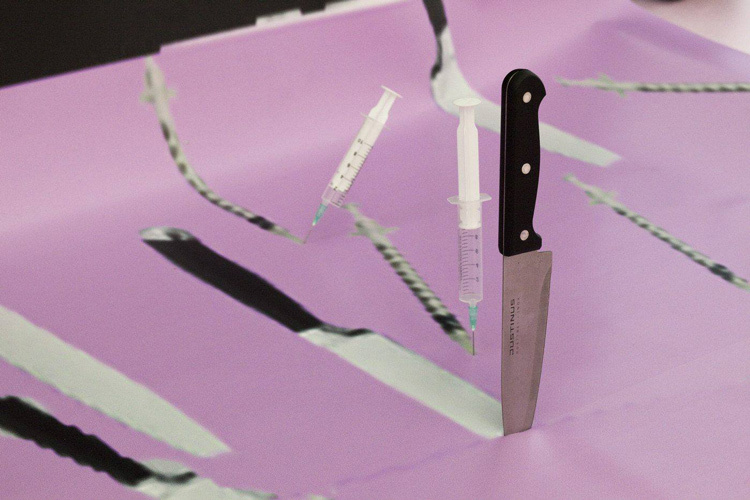
In my recent text, I wrote about the victimity of the environment of contemporary art in Russia. This time I would like to say a few words about fear. In the magnificent Kierkegaard, his “concept of fear” ends with the head “Fear as a saving power of faith”, which says literally the following. There are two types of fear; One is a fear of absorbing when, in desperate attempts to deal with what is happening around, painfully feeling his duty and by this, we will ultimately drown in disbelief in world storage or, captured by mimicry, at all costs we are trying to catch someone else explained by the tail; This fear is akin to bad infinity, self -reproaches, formal copies and citation. Another fear is a saving fear, when, having believed how the birds of heaven, which, as you know, do not sow and do not revel, we move forward, or rather, we jump forward, knowing that we do not know, and that ignorance, we will deeply take our way. My friend miraculously illustrated the latest calculation in our conversation: so Indiana Jones in search of the Holy Grail, nothing hesge, he jumps into the abyss, and under him a bridge appears for his undoubtedness, while countless poor knights, worshiped by fear, fell and broke on the stones. So, the illustrations of the first fear are contained at the beginning of this text, the second - in the “G and P R S E Y I X” and the Biennale DIS , as well as in the touching project of Pamela Truda “Loneliness of Primesical Numbers” in the main project on the Trekhogorka. In order to take from thousands of sheets of profiles of people who want to fly to Mars forever, one must go to the center of the mirror circle, where, if you are a girl in a skirt, everything that you currently have under your skirt will be reflected right away. So the topics of someone else’s, distant, essentially a faceless single being, who does not see the point of staying on this planet and ready to exchange it for the unknown, simply and instantly come to your intimate physicality, in essence, it is not known why you and this one.
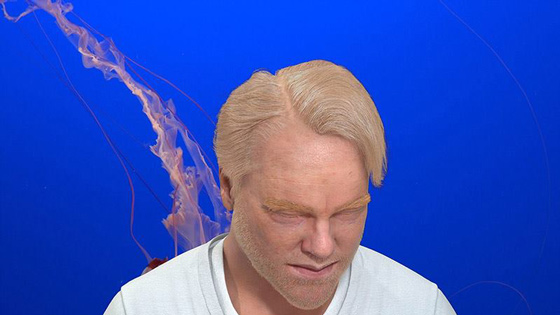
And this is a curious moment. The post-human and supersencept is performed by the Adornian Kunshtyuk, in Modernist, erasing the border of non-participation and involving your personal experience in living in the duration of the showed duration. Another example of such a turn is the installation with the key object-video of the artist Cecil Bi Evans on the "G and Pskov I." (by the way, the name of the exhibition is borrowed from this work). The dead but now forever lively actor Philip Seymour Hoffman Minorno talks about lengthy things to the sounds of applause, an Anna Karina, storm on the city beach and walking chambers through green gardens; At the end of the video, an anime-girl intensively dances in the spirit of Britney under the Japanese cover “Forever Young” . My nerves got stronger from summer vitamins, but, I admit, the Stendhal syndrome on the chorus overtook me.
The editor recalls that his opinion does not always coincide with the opinion of the authors.
Download the entire issue of the magazine "Disagreements" (No. 6) "God died. Long live God! ”: PDF , mobi , epube