
Translated material
The European Commission excluded the possibility of joining Turkey to the EU in the near future
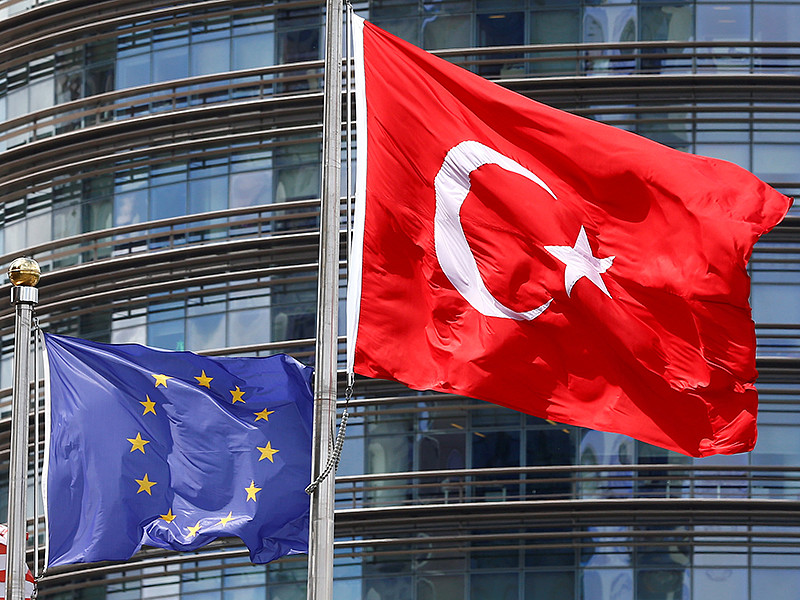
The Chairman of the European Commission Jean-Claude Junker said that Türkiye is not in the position to become a member of the European Union in the near future. If the Turkish authorities again introduce the death penalty in the country, all negotiations on joining the EU will be immediately terminated, the head of the EC warned. Earlier, the Turkish leader Recep Tayyip Erdogan claimed that the membership in the European Union is a "strategic goal" for Ankara.
Junker made his statement regarding Turkey on Monday on the air of the France2 channel, reports Reuters. “I believe that Turkey, in its current position, is not able to become a member (European Union. - Note Newsru.com ) in the near future and even after a longer period,” the head of the European Commission admitted. According to him, the country that includes the death penalty in its legislative arsenal has no place in the EU.
The Turkish Foreign Minister Mevlut Chavushoglu in response to the words of Junker said that the European Union cannot threaten Turkey on the death penalty, reports Reuters. The chairman of the European Commission, according to the Foreign Minister, should not look at Turkey down.
Two days earlier, Erdogan, in an interview with the France 24 television channel, said that he considers the EU criticism regarding his actions in response to an attempt by a military coup. "They make conflicting statements. They are biased and continue to act biased in relation to Turkey," said the Turkish leader (quote for Interfax ). Erdogan noted that his security measures to ensure security are quite comparable to the actions of Western countries as part of the prevention of terrorist attacks.
Erdogan also criticized Brussels for reluctance to work more actively on the issue of Turkey membership in the EU. “For the past 53 years, Europe forced us to wait,” the Turkish leader explained. According to him, over the past decades, some countries have received members of the European Union, which have much less met the EU requirements than Türkiye.
Meanwhile, on Monday, the Turkish authorities issued an arrest order of 42 journalists, Reuters reports citing the NTV television channel. According to the channel, a well -known commentator and the former parliamentarian Nazili Ilijak got into this list.
After a failed coup attempt in Turkey, mass repressions began. More than 60 thousand military, police officers, judges, teachers and civil servants were removed from their posts, detained or were under investigation. To clean the state apparatus and other structures from supporters of the rebellion, the Turkish authorities decided to suspend the European Convention on Human Rights in the country.
In addition, after the failed coup, the Turkish leader Recep Tayyip Erdogan warned that the death penalty may return to the country's constitution in connection with the attempt of a military coup. Speaking at the funeral ceremony of the victims of the rebellion in Istanbul, the Turkish president specified that this is happening at the request of the people. The country's prime minister Binali Juldyrym stated that the issue of restoring the death penalty for participants in the rebellion will discuss the Constitutional Council of Turkey.
This caused criticism from the European Union. In particular, the head of European diplomacy Federica Mogherini said that no country could enter the EU if it introduced the death penalty.
On the night of July 16, a group of rebels attempted a military coup in Turkey. The main confrontation unfolded in Ankara and Istanbul. A few hours after the start of the rebellion, the Turkish leadership announced that the putsch was suppressed.
According to the latest data, 246 people were killed, apart from the patchists, 2185 people were injured. On July 21, a state of emergency for the next three months was introduced in Turkey.
EU membership - "Strategic goal" Ankara
In early May of this year, Erdogan called the EU membership in the "strategic goal" of Ankara, RIA Novosti reported. At the same time, the head of state noted that the introduction of a visa -free regime for citizens of his country will accelerate the process of joining Turkey to the European Union. But after the failed attempt by a military coup in this country, the EU leadership excluded the introduction of a visa -free regime this year.
It is worth noting that the contradictions on the issue of canceling the EU by the European Union for Turkey arose even before the attempt of a military coup in the country. A visa -free entry into Europe for Turkish citizens was one of the most important conditions in the refugee agreement between Brussels and Ankara. It was expected that the EU could cancel visas for Turkey from July 1, 2016.
In accordance with the agreement, Ankara pledged to accept illegal migrants who penetrated into Europe in exchange for legal refugees. In exchange for the Turkish side, additional funding of 3 billion euros and the resumption of negotiations on joining the European Union were promised.
In April, the Turkish authorities threatened the EU with a refusal to fulfill obligations under an agreement on illegal migrants if Brussels does not keep his promise and does not introduce a visa -free regime for Turkish citizens in 2016. Nevertheless, in May, the European Parliament suspended work on the abolition of visas until Ankara fulfills the remaining obligations under the agreement.
The EU requires Turkey to fulfill all 72 conditions for the introduction of a visa -free regime. Of these requirements, five remain unfulfilled, in particular, the reform of anti -terrorism legislation, which Ankara is not going to change.
At the end of May, information appeared in the media that the European Union would not provide Turkey with a visa -free regime until 2017 . After that, Erdogan froze all the steps to regulate the migration crisis as part of the agreement, until the EU shifts the question of canceling visas for Turkish citizens.
Türkiye announced the desire to join the EU back in 1963. In the late 1980s, Ankara filed an official application for the entry. Negotiations on this issue between the European Union and Turkey have been underway since 2005.