
Translated material
Orthodoxy, morality and calculation
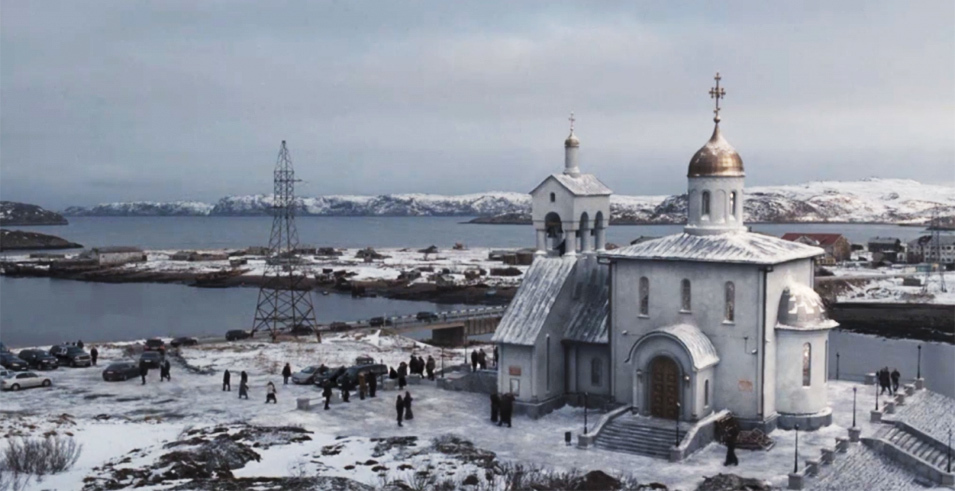
The German researcher Tobias Koltner conducted a twelve -month field study in one of the typical cities in the European part of Russia - where he tried to understand the motivations of businessmen who make the donations of the church.
Who does not know the typical Russian landscape, where the bulbous domes of Orthodox churches are visible. During the time of socialism, many churches in Russia were destroyed, declined or used for other purposes, for example, as warehouses, production workshops, radio stations or museums. Today, the Russian Orthodox Church (Russian Orthodox Church) is an institution that enjoys the greatest trust in Russia (Dubin, 2006: 84). There is a return of church buildings seized in the past and the construction of new ones, including in the places where they were before the October Revolution. Although many people support the return of the ROC buildings, some have doubts due to the fact that this process will entail the disappearance of many good museums, and new buildings will be in demand only by a small number of parishioners.
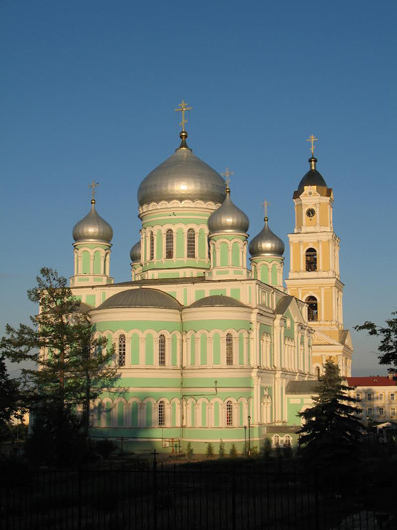 Cathedral in Diveeva, which was created using a private company
The most serious problem that the Church is faced with is financing construction work. According to the Constitution of the Russian Federation, the church is separated from the state, in connection with which money cannot be unhindered to the church. But since the beginning of Vladimir Putin’s presidency, the official division between the state and the church has lost clear boundaries, and the state began to support the Russian Orthodox Church in many ways. One of the ways to support is the declaration of church buildings with an architectural heritage, which allows the Russian Orthodox Church to receive state funds to restore them. Nevertheless, the Russian Orthodox Church is still highly dependent on the donations of private entrepreneurs. In particular, the construction of new church structures requires large material costs. Only in a few cases, the parishioners managed to restore independently, without the help of the diocese and wealthy businessmen. In such cases, the contribution is made in the form of labor, and not in the form of money. The parishioners make up a close circle of people, many of them spend every free minute on the construction site and help restore the church.
Donations are an attempt to pay for perfect sins and justify their wealth before others.
Charity, physical labor and donations of the Russian Orthodox Church are purely moral obligations and are largely moral in nature. Therefore, I connect the donations of businessmen and physical labor with the field of morality. Morality, according to Jeret Tsigon (2011), can be divided into three different but interconnected aspects: 1) institutional; 2) public discourse; 3) an embodied way of thinking (embodied predisposition). In this article, I am mostly interested in the second aspect - public discourse.
In this article, I will focus on the donations of entrepreneurs, because My study was aimed precisely to this category of people. I will show that a distinctive feature characteristic of entrepreneurial donations is a combination of religious, moral and selfish motives. Thus, donations are an attempt to pay for perfect sins and justify their wealth before others.
Church of the Kazan Icon of the Mother of God
When I began my research, the first stone of the new church was already laid on the site of the old, destroyed during the time of socialism, in 1970. The new church is not so far from the city center, on one of the central squares, next to the eternal flame [1] . The church is dedicated to the Kazan icon of the Mother of God - one of the main icons in Russia. It was “built on gold”, as local people told me, because two entrepreneurs, in addition to other people, donated money for construction work. Each of them donated 10 million rubles, but most likely this was not enough, since the expected cost was from 25 to 28 million rubles.
Archbishop, mayor, local head of the United Russia faction and entrepreneur Gennady attended the official opening ceremony of the church.
When I was present at the blessing and consecration of the church, the construction was already completed, but inside it was still empty. There were no iconostases, murals and icons yet. At the insistence of the archbishop, the consecration took place on the day of the Kazan Icon of the Mother of God - November 4, until the official opening of the temple. There were many people at the ceremony, most of them arrived earlier than the appointed time. In addition to local politicians and high -ranking clergymen, the main part of those present were elderly women from nearby areas, who had to go to the very center before to visit the church, and therefore they approved the construction of a new church in the neighborhood.
The archbishop, mayor, local head of the United Russia faction and businessman Gennady, one of the sponsors of construction, attended the official opening ceremony and made speeches. The archbishop and mayor expressed gratitude to Gennady and all other philanthropists [2] For their help, they praised the church building. When the mayor named the name of Gennady, he asked him to take a step forward to present to everyone present. Gennady briefly spoke about the construction of the church and the problems that arose, but it seemed glad to complete his speech and take a step back. Then the archbishop read the prayer and sprinkled the church with holy water, then followed the procession around the building. At the end of the ceremony, the archbishop again thanked Gennady and gave him the icon of the Kazan Mother of God. Gennady expressed response and emphasized the importance of the church for people in the area.
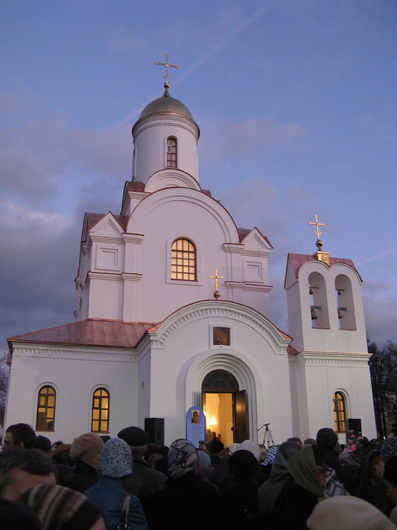 The opening of the Church of the Kazan Icon of the Mother of God
Three interpretations of donations
The religious motivation of donations is the dominant interpretation both in academic and church literature, and in everyday conversations. First of all, donations are perceived and described as a form of repentance for their sins. Only through repentance is it possible to save the soul. Historically, there was an understanding of donations as, first of all, a form of repentance. Platonov (1995: 25) argues: "In the minds of Russians there is the idea of repentance or atonement for wealth, because wealth is always associated with sins." In order to justify this statement, Platonov quotes Russian proverbs that reflect the ideas about wealth: “The abdomen (wealth) is not a cop, but the soul is not Mori” or “Get the soul to hell - you will be rich” (1995: 25–26). Indeed, such a vision of the situation to one degree or another still makes sense, because the wealth of modern entrepreneurs is perceived as illegally acquired, many put methods of accumulating money into question.
The second important aspect of donations, relevant for Gennady, is political motivation, that is, the possibility of increasing influence and power thanks to donations in favor of the Church. According to Bourdier ([1983] 2001), charitable donations of the Church can be interpreted as a way to turn economic capital into social, increasing the social status and prestige of the donor in the secular world. Then, when he became, for example, a deputy (as Gennady acted), increased social status and prestige can be turned into political influence. Such perception is shared by many Russians.
In addition, the third aspect of donations was amazing for me. Gennady noted that the archbishop addresses him personally and calls it by name. Here, close relations between them become obvious, and it seems that the archbishop plays almost the role of the spiritual father of the entrepreneur. The proposal to give money for the construction of the church often makes an adviser, and, in fact, the archbishop suggested doing this to Gennady. Both already knew each other before and went to business meetings together [3] . After the construction was completed, the archbishop gave Gennady the old icon in gratitude for his generous donations.
Benefits from donations
In anthropology, donations are often designated as “Pure Gift” (Parry, 1986; Parry and Bloch, 1989; See also: Malinovsky, [1922] 1994: 177–78, the concept of “pure gift”) without calculation for profit. Like an occasion in India that Parry quotes, in Russia there is also a strong ideology of unhappy; In particular, priests try to reject the ideas of spiritual blessing as a corrupt phenomenon and deny any personal benefits from donations. In fact, donations bring to philanthropists various benefits. The most common way to thank the donor is to give him a certificate. These certificates are often put on public display in the office. Sometimes, for example, precious icons are presented in response or consecrations and prayers are held. The names of the donors for a certain period of time (40 days, a month or a whole year) are publicly announced during ceremonies in the most famous monasteries. In addition, philanthropists often stand out a privileged place in the cemetery, right next to the church. White (1988) mentions similar return gifts in his description of donations to the monasteries of France back in the 11th and 12th centuries. He also distinguishes the temporary aspect and draws attention to the fact that the church or monastery, being an immortal community, can store and return the gifts forever.
Nevertheless, the interpretation of donations and return gifts as a trading exchange is erroneous. Based on the given Gragori (1982), the difference between gifts and goods, I regard the donation of the church as related to gifts. Gregori claims that "commodity exchanges establish relations between exchange items, and gifts establish a connection between people." The relationship between Gennady and the Archbishop, obviously, indicate the latter. In addition, one cannot measure the value of the exchange of gifts and donations. For these gifts there is no universally recognized price, their value can be established only by changes in social ranks that they attract (see also 67–69). It would be pointless to calculate how many prayers are in proportion to the donation. Nevertheless, the differences in the status of return church gifts really exist and can be ranked from the point of view of the duration of reading prayers (40 days or all year) or the prestige of the monastery. Thus, I argue that entrepreneurial donations in favor of the Church can be either a disinterested gift and a means of realizing personal benefits. Both aspects are inseparable from each other and are two sides of the same activity.
The most common way to thank the donor is to give him a certificate. These certificates are often put on public display in the office.
In addition to “invisible results” and church blessings, the growth of prestige and social status in secular environment attracts attention. The post -socialist transformations led to changes and instability of the social status, and nouveauux riches faced with the dilemma “Due to the discrepancy between economic resources and social status” (Sampson, 1996: 93). In order to achieve an elite status, entrepreneurs are trying to “solve the problem of the mismatch of material resources they have acquired by the absence of cultural leadership” (see 94). Donations of the Russian Orthodox Church and various other institutions help to overcome the discrepancy and make it possible to participate in public events, which ultimately leads to an increase in prestige. Since the Russian Orthodox Church is an institution with a high level of trust, donations in its favor are preferred in the formation of a morally approved social status. A similar explanation of the situation is applicable to medieval France, when “secular princes ... used the foundation of the abbey ... as a means of increasing the level of their prestige in the secular world and as a way of establishing, uniting and expanding their political power” (White, 1988: 30). Therefore, an understanding of the donations of the Russian Orthodox Church as a means of transforming their capital (Bourdier, [1983] 2001) is quite justified. Economic capital through donations is transformed into social, providing a higher level of prestige. And prestige, in turn, is the key to political success in the elections, which can bring significant advantages.
Nevertheless, I would also like to show the limited attempts to create a positive image of entrepreneurs and a new elite through donations. Many efforts of businessmen do not lead to an increase in prestige, and quite often in the eyes of the people entrepreneurs remain unworthy of moral confidence. Discussions that try to shed positive light on the business donations of the Russian Orthodox Church are faced with reasoning, for example, a socialist understanding of trade as speculation and immorality of excessive use of wealth. Therefore, I described entrepreneurial donations as a mixture of religious motivation, morality and calculation.
Notes
I want to thank the Institute of Ethnological Studies of the Society. Max Planck in Galle (Germany), who, through his financing, made this study possible. I also want to express my gratitude to Vladislav Vladimirova, Andreas Emachev, Kirill Istomin, Agate Ladykovskaya, Ani Sing, Peter Shteger, Chris Hannah, Chravoy and Lyala Yalchin-Gekman for their help and useful comments on the early versions of this article.
Bibliography
Bourdier, Pierre. [1983] 2001. Forms of capital. Sociology of economic life, editors: Mark Grenvetter and Richard Knowberg. Bulder Tso, in the west press.
GRAGORI, Christopher A. 1982. Gifts and goods. London: Academic press.
Dubin, Boris. 2006. Light burden. Mass Orthodoxy in Russia of the 1990s-2000s. Religious practices in modern Russia, editors: Katya Roussel and Alexander Agadzhnyan. Moscow: New Publishing House.
Malinovsky, Bronislav. [1922] 1994. Argonauts of the western part of the Pacific Ocean. Prostk Hates, Il: Vaifland press.
Parry, Jonathan. 1986. A gift, an Indian gift and an “Indian gift”. Maine 21, No. 3: 453–73.
Parry, Jonathan and Bloch, Maris. 1989. Money and moral morality. Introduction to “Money and Morality of Exchange”, editors: Jonathan Parry and Maris Bloch. Cambridge, Ma, the press of the University of Cambridge.
Platonov, Oleg. 1995. 1000 years of Russian entrepreneurship. From the history of merchant genera. Moscow: Contemporary.
Sampson, Stephen. 1996. Turn money into culture. Differences between East European Nutorish. Search for lost definitions ... Anthropology of labor and business in changing Europe.
White, Stephen D. 1988. Customs, kinship and gifts are rich. Laudatio Parentum in Western France, 1050-1150. Chapel Hill, SK: Press of the University of North Carolina.
Tsigon, Jeret. 2011. Multiple forms of morality and religion in post -Soviet Russia. New York and London: Berghan.
[1] The eternal fire in the memory of the victims of World War II was installed at the old place of the church. The new church is located in the former section of the cemetery.
[2] Although more than 200 people donated money for the construction of the church, Gennady and his acquaintances paid the most part.
[3] One of these trips - to Italy, to bow to the relics of St. Nicholas - was jointly organized by the diocese, the city administration and several entrepreneurs.
Download the entire issue of the magazine "Disagreements" (No. 6) "God died. Long live God! ”: PDF , mobi , epube