
Translated material
After the eruption of the volcano
Svetlana Bronnikova, psychologist, specialist in working with injury, told “such matters” about how to help children who survived burn injuries
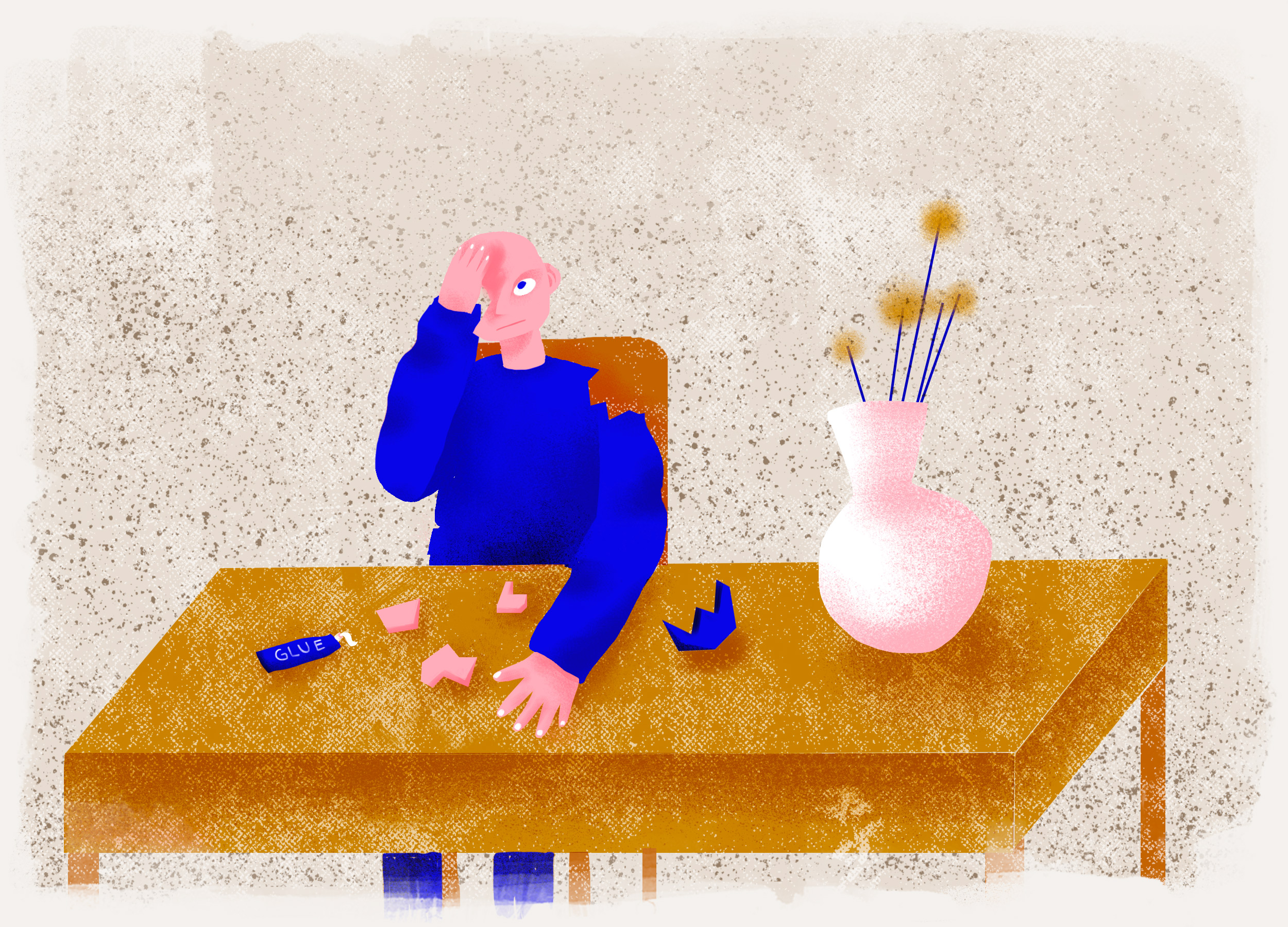
Help the children's hospital helpOnce, a boy of David nine years old was brought to me for a consultation. David had beautiful dark eyes and the face of the cherub. He looked as if he was born crystal, and once someone awkwardly dropped and broke it, and then collected and glued from small fragments. In a sense, it was-a year ago, David received severe burn injury, 45% of the body was burned. Long -term treatment, rehabilitation in a burn center and - a referral to work with a psychologist. No one expected from the boy that he, like a phoenix bird, would rebel from the ashes the same, but no one was ready for the changes that came when David, according to the conclusion of the doctors, was able to begin to return to normal life.
David’s life, before what happened, is an ordinary cheerful child who was fond of geology (it was this hobby that became an indirect cause of injury - the unsuccessful model of the volcano caught fire, and the boy received vast burns of his face, arms, chest), with a return from the hospital changed beyond recognition.
Just like himself.
Parents coped with the fact that their David now looked completely different, but were not ready for psychological changes.
There were two main ones. Most of the time David was now afraid.
He was afraid to wash, because the tap has hot water. He was afraid to return to school because he was sure that classmates would tease him. He was afraid of pain. Any. Over the past months, he survived so much pain that the jacket that pricks and which needs to be worn in cold weather caused a protest with tears and hysteria. David was afraid of death, his own and relatives, was afraid of accidents, was afraid of doctors and was afraid to be outside the availability of medical care.
Most of the time David was now afraidThe second change was that David became irritable. Very. Outbreaks of anger, previously not seen behind the boy, became permanent in his communication with loved ones. David annoyed everything - why they removed the book from the table and put on the shelf why he lost his dad in football, which is why his red T -shirt in washing. He broke into a scream, clapped the door, locked himself in the room. Sometimes I broke things. It was very scared by his mother.
There were other changes. From the cheerful boy, David turned into a sad and thoughtful child. He had nightmares. He could be silent for a long time. And he avoided looking at himself in the mirror.
In the hospital, David took a course of post -burning rehabilitation, which included six meetings with a child psychologist. But this was not enough.
In my office, David sat in a chair and began to look around warily. Bookcases, a lamp, a table - it seems that nothing caused him fears. He looked with weak interest at the aquarium in which the swordsmen swam. “Tell me about the volcanoes,” I asked. David looked at me in amazement - from the moment of the accident, no one has spoke about it with him. He began to say uncertainly about the signs of the current volcano, hesitated, reaching the description of the boiling lava, carefully looked at me and fell silent.
- What happened, Dava? (He said that his friends call him so)
-Well, somehow strange. I used to really liked volcanoes.
- And now?
- Now I always think that it is dangerous. That where there are volcanoes, you can’t live. That you can suffer and ...
- ... it will hurt.
- Yes! - Dava clenches his fists. “I think all the time and I can’t stop thinking.” That I myself am to blame. That now I have another face, that my mother is crying all the time, that my friends ... - he sobs, turns away.
“What will they not want to be friends with you anymore?”
- Well, this is not me anymore. They did not see me like that. I don't want to go to school.
- Do you want to become yourself again?
He turns his eyes to me, full of tears and hopes.
- Can I?
- Can. Your face will not be the same as to burns. But you can feel yourself again.
- How?
- We will meet and talk twice a week. We will play, draw. Maybe even build volcanoes - you will have to teach me because I do not know how.
- I'm afraid!
- Then first I will build, and you will just look. From afar. Vooon from there (I point to my desktop - the most remote place from the chair where Dava is sitting). This is the safest place. There, outside the door, a tap with water.
- And all?
- No. Sometimes you will become very sad and you want to cry. Sometimes you will be terribly angry with me, for this accident, at my parents, for the fact that this happened to you. And if you can tell me about these feelings, it will become easier for you. And one day you will feel whole again.
“How do you know how I feel?”
- I don't know for sure. It seems to me that you feel split into pieces. And as if each piece lies separately. And you do not really know what to do with it, but you really want to collect yourself.
Dava is silent and kicking the table leg with a boot. Then he gets up, comes up to me and silently extends his hand pulled with scars, a hand that broke into a thousand fragments and collected again. I have to collect all my courage in order to take this hand calmly, not giving the look that I am afraid to hurt him, and to shake it. Everyone is treated with Dava as with a broken vase, everyone is afraid to hurt. He has no other choice but to feel split.
Multiple or extensive burns are a complex psychological trauma consisting of many pieces. The first piece is post-traumatic stress disorder that develops in 25-33% of “burn” children. Post -traumatic stress is not just a psychological problem, it is a disorder that completely changes all the functioning of the child, reflected on all aspects of life. As a result of the shock, pain, fear, shock in the brain of the victim, foci of constant pathological arousal are formed, determining reactions to daily events. Such children become anxious, suppressed, they turn into unbearable, capricious children. From the outside it may seem that the child is “spoiled” by the careful and attentive attitude of others and therefore behaves opposition, but in fact the reason is different.
I have to collect all my courage to take this hand calmlyThe next part is the problems associated with the stress of the body image. The image of the body is my idea of how I look, and the totality of my relationship with my body and its individual parts. When my body changes, it always causes anxiety, especially in our obsessively fixed culture on bodily beauty. If these changes are sudden and frightening, like suddenly appeared scars, to cope with them is even more difficult. Many children begin to avoid themselves in the mirror, others, on the contrary, examine these changes for hours. The child’s identity throughout childhood is just forming, he constantly asks himself questions - what kind of me, who am I, how I look? Post -burned scars and other changes in appearance can cause the child to answer these questions “I am ugly”, “I am mutilated”, “I am the one with whom no one wants to be friends”.
Another piece is social anxiety. The fears that the changed I will not be accepted, the avoidance of events in which many people participate, the desire for loneliness, and even in sociable children, introvertion, and even in sociable children.
It should be noted that the family, like the child himself, is experiencing severe trauma, so psychological rehabilitation should concern not only the child, but the whole family as a whole.
That is why the psychological rehabilitation of such children is the work of the multidisciplinary team of psychologists, psychotherapists, art therapists, social workers.
Since one of the important components of rehabilitation is to teach pain management, it is impossible to overestimate the role of awareness skills. Unfortunately, in Russia, yet, awareness is not an integral part of the rehabilitation of patients with pain with pain, doctors and parents trust painkillers more. In fact, meditation skills allow post -burning children not only to learn how to cope with pain themselves, and therefore, use fewer painkillers, but also reduce the level of anxiety and depression, improve the image of the body.
Therapy with eye movements (EMDR), carried out in the first weeks after the injury, allows you to soften, reduce the severity of painful memories of what happened, find the incident in your memoirs and begin to treat it less painfully.
Art therapy allows you to touch more long-term injury effects, continue to work on its adoption and its own restoration and leave it behind. For young children, game and sand therapy become important steps to normal life.
And, finally, family therapy allows the whole family to learn how to treat the injured child not as a small disabled person, but as a person who has experienced the misfortune and coped with him.
In Moscow, there is a children's burn center that provides children with burns, not only medical, but also socio-psychological assistance. Now the center really needs money to purchase rehabilitation materials, compression clothing, for the full equipment of rooms where classes with rehabilitologists are held. You can help “burn” children by simply transferring any amount - 100, 500, 1000 rubles - to the work of the Children's Hospital charity foundation.