Today, in the Stopocalpse Entrepreneurship series, the history of the company that decided to change the attitude of the Russian person to death and began to make capsules for the funeral - those in which it is most convenient to go to eternity. Like our samizdat, Voyager Coffin can first shock or make fun, but upon closer examination, it turns out to be serious with an important mission - perhaps the most important in the world. Thanks to our friends from the button for help in preparing the heading!
1
This heading has a sponsor thanks to the button for good texts a button a few years ago, when designer Iskandar Kadyrov was already finishing working as deputy director of the Stanislavsky Theater and was going to work closely with his advertising company, he suddenly called from a ritual agency and asked if he was engaged in theatrical scenery. It turned out that one of the customers prepares a funeral for his daughter. She was still alive at that time, but suffered from an incurable disease - it was clear that she would pass very soon, the score was already literally for days and watches.
“It was a girl who graduated from a theater university, but never had time to become an actress,” says Iskandar Kadyrov. -And the father finally wanted to arrange her something like a benefit, the first and last performance. It may seem to someone that it was wild, but he loved her more than anyone else and was ready to give everything he has to be beautiful. We came up with a story in the spirit of a “sleeping beauty” with a crystal coffin. They built a mini-scenes in the courtyard of their country house, on duty at Moscow warehouses to get suitable flowers-they needed a lot of certain varieties. We ourselves sewed, made, made and painted something from the scenery, rented something in the theater. By some miracle, we met on time. From that moment I thought about how people in Russia and around the world are treated. Indeed, for example, in the West it is customary to think about such things in advance - when a person dies, his relatives do not have to run in a panic at the last moment and arrange everything. Yes, and the cemeteries look completely different-it is not scary to come to them. We also once had it-before the revolution. And then coffins appeared, upholstered in red kumach, and graves with rickety hedges painted in strange colors.
Now Iskandar Kadyrov is working in Voyager Coffin, which he himself founded. Having transferred all business questions into the hands of partners, he is engaged in design and, as he himself says, “the philosophy of the enterprise”.
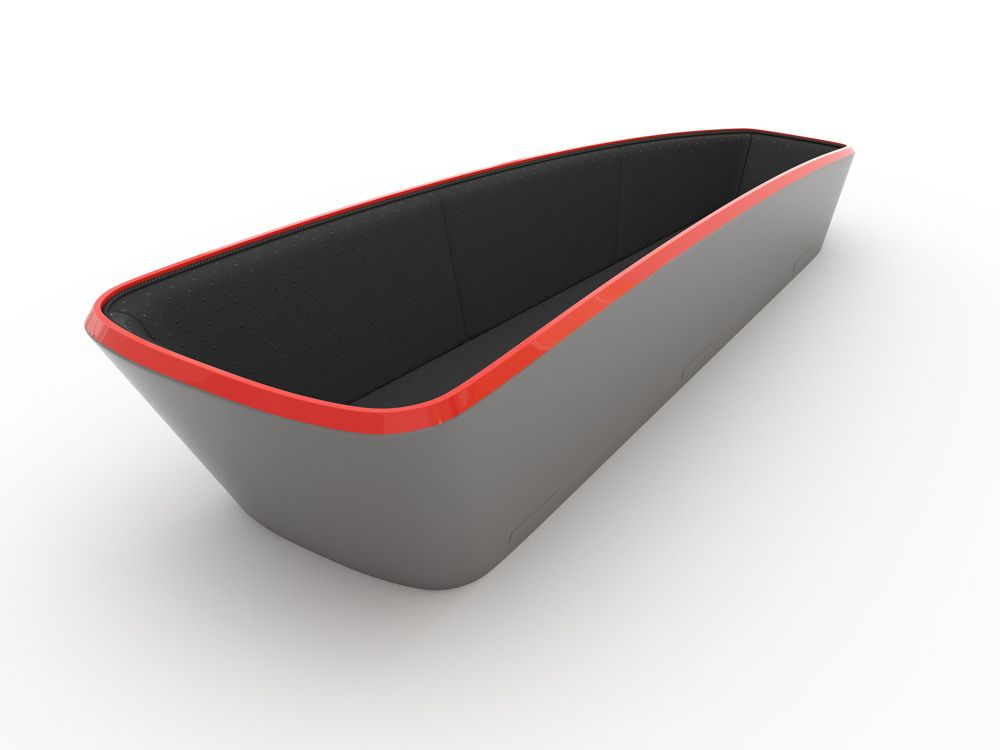
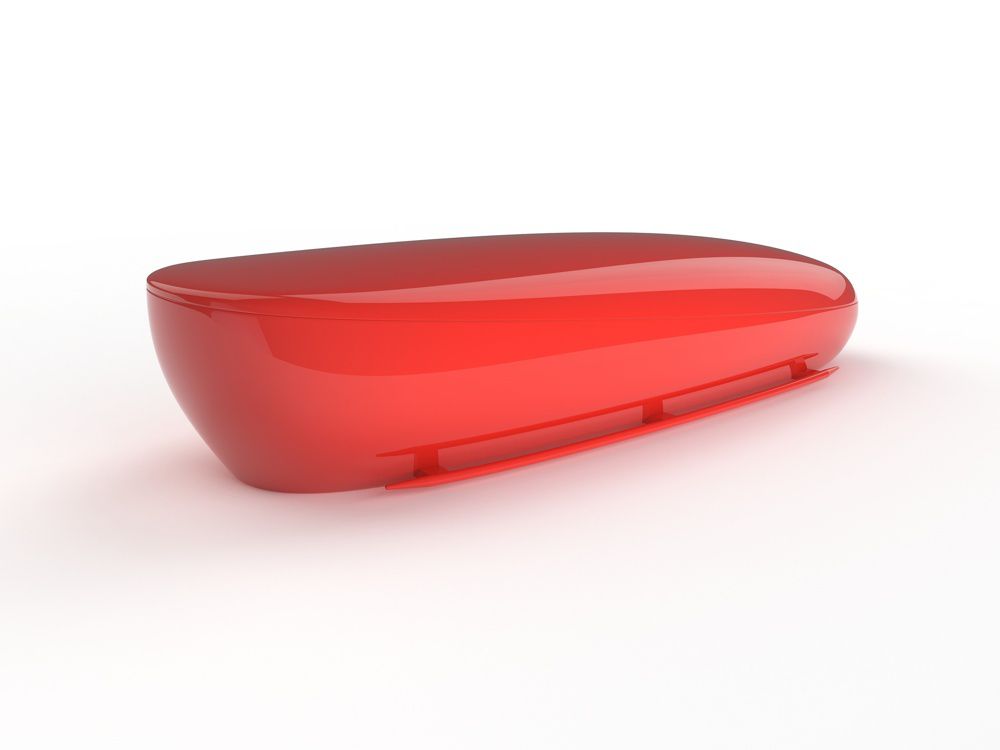
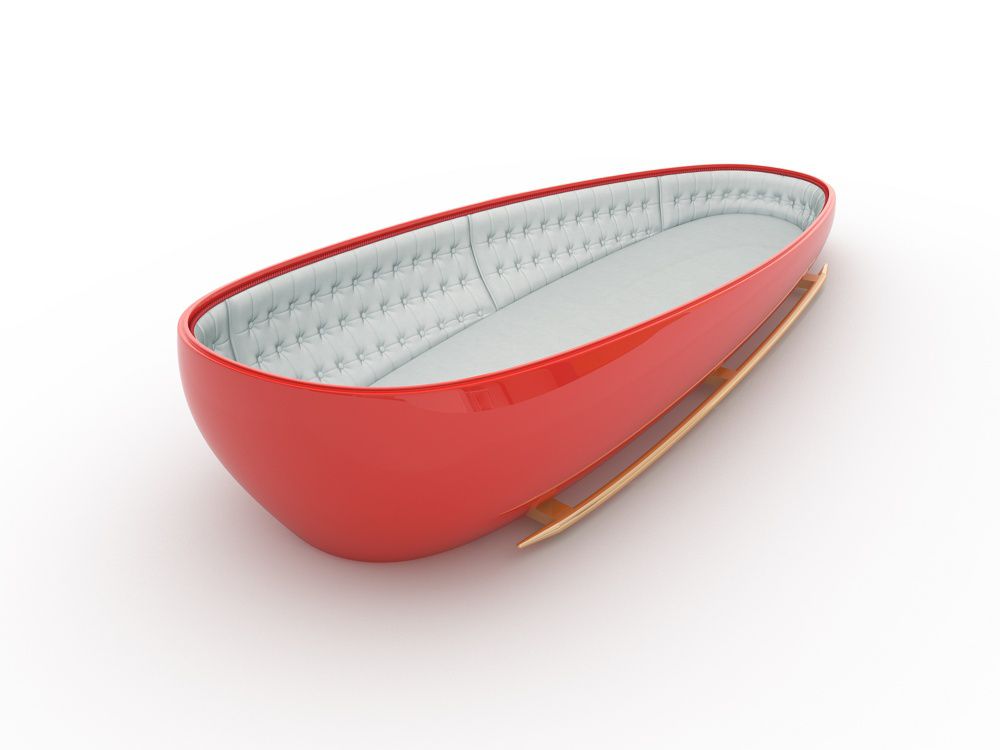
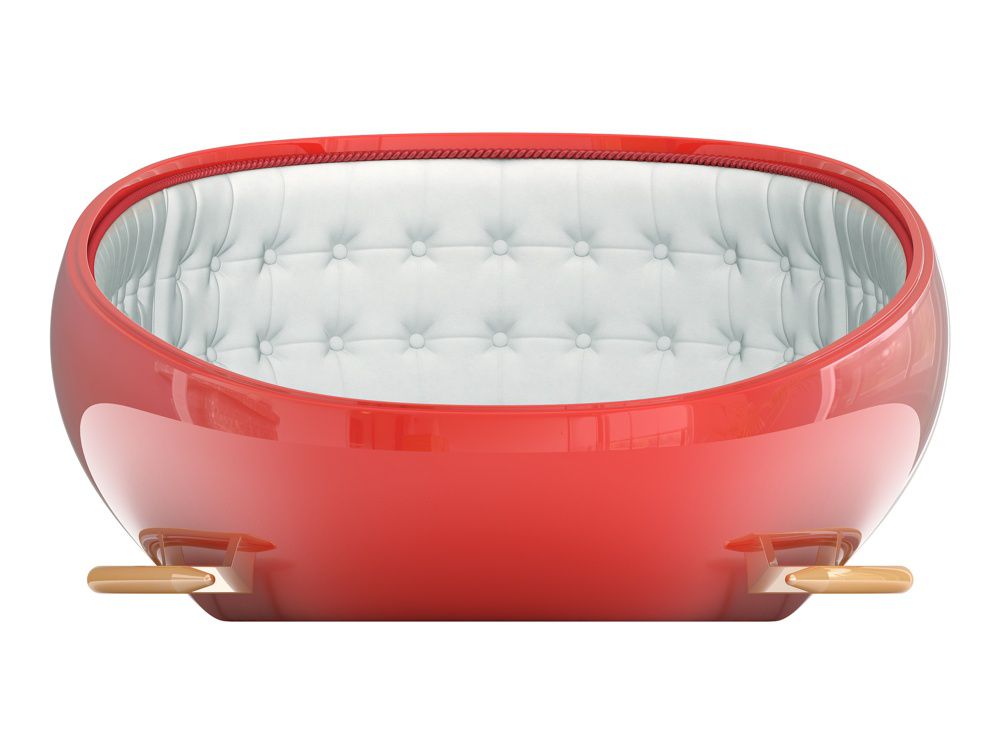
“We basically do not call our products the word“ coffin, ”Kadyrov explains. - These are capsules. After all, a person does not really die, this is his body ceases to exist. And the soul remains, she just makes a trip to eternity. And for such a trip - through time and space - capsules are needed. And it’s better to take care of them in advance - we often don’t think about it, but the line between our life and eternity is very thin. It can be crossed at any second.
2
In one of the recruiting companies in Seoul, workers to relieve stress imitate their own funeral: they dress in white hoodies, write farewell letters to their loved ones, and then fall into the coffin with their own photograph in their hands. Employees gather around the "deceased" and mourn it. It is believed that this helps people rethink their own lives and begin to appreciate it more. Those who went through this ritual say that he helped them think about themselves and their actions and to arrange priorities in a new way. It is possible that after that it becomes easier for them to accept the fact that life will once break off.
In Russia, as Iskandar Kadyrov explains, most people are completely not ready for this. If in the West it is customary to draw up a contract of the last will in advance (80-90% of people do this) and paint everything in detail-how the funeral should look, who to invite them and so on, then in Russia, leaving life is something like a forbidden topic.
“I remember in childhood I lived next to the cemetery,” says Kadyrov. - And it looked very scary. Some artificial flowers ... But in Europe and the USA it is most often green lawns with laconic monuments made of white stone, there are always candles and living plants. Yes, and we have ancient - pre -revolutionary - cemeteries are very beautiful, with tombs that look like works of art. Previously, people wore beautiful clothes and traveled in beautiful carriages. So they treated death the same way. And after all, this approach allows you to perceive leaving life calmer - as part of a natural cycle.
3
One resident of Taiwan, escorting her husband on the last journey, ordered Striptizirsch to the funeral. They danced around the coffin under the song Maroon 5 "Moves Like Jagger". Those who came to these funerals almost unanimously condemned this woman: a farewell ritual is not a place for dancing. At the same time, everyone knew that she was very devoted to her husband and after he suffered a heart attack, she sat at the bed of the dying man until his death. In fact, her actions were explained very simply - she wanted to make her loved one a gift that he would like.
In China, ordering an erotic dance for the funeral until recently was quite normal practice. The ancient belief says that the more people come to say goodbye to the deceased, the better his fate will develop in the afterlife. And where is striptease - there is a crowd of guests. But the Ministry of Culture of China, drawing attention to such a tradition, ruled that it could destroy the country's social climate, and decided to ban it. To turn the departure from life into a forbidden topic and deprive the mourning ceremony of the aesthetic component is generally very typical of communist countries. When Iskandar Kadyrov became interested in the topic of funeral rituals and traditions, he traveled many countries, talked with specialists and realized that the aesthetics of the funeral and the attitude of society to death are closely interconnected.
“Previously, in the Russian Empire, like in the West, people were buried in black coffins upholstered by velvet,” he explains. - Everyone had a special arcaser who was engaged in both the will and the ritual itself. And all this was connected with religion: people went on sermons, and there they were told that death should not be afraid - this is just a stage. When the Church went underground under the Soviet Union, this attitude disappeared. And now Russia is just starting to return to those traditions slowly-the funeral industry was stuck somewhere in the 90s. Then, when I received the first order and we made theatrical funerals, I thought: I can try to change this situation, make people start a funeral rite differently. In my power to change the world a little. Now, if you go to our site, there is absolutely no negativity and mourning. After all, a funeral is like a birth, like a wedding. The natural stages of life. And if a person can somehow evade the wedding, then from birth and funeral-no.
Voyager Coffin Dreamer | Original Gradually, Kadyrov found like-minded people and investors-as a rule, people who themselves wanted to arrange for their loved ones a truly beautiful farewell. Now Voyager Coffin has already quite a few orders - mostly foreign, but sometimes they come from Russia. According to Kadyrov, this means that Russian society is still gradually changing its attitude to death and funeral.
“Usually, visitors to our site do not understand the plan the first time,” he says. “They come in and think that this is some kind of horror, madness.” But then they return to the site, show him to their friends, and gradually the idea that this is generally not so strange, it seems to fit in the heads. And people begin to think: maybe there is something in this? After all, everyone at the subconscious level is worried about the topic of death, and now, in the age of technology and information, it should already stop being forbidden.
The Voyager Coffin | One To open their own business, Iskandar Kadyrov and his like -minded people traveled many foreign factories and production. Italian masters helped them develop form and design: now Voyager Coffin has two standard capsules for which you can order individual upholstery and elements. All products are made of biodegradable material - in order to enter the international market, it was necessary to comply with the most stringent Western standards. The simplest capsule model costs a little more than a million rubles, but in the near future a new line will appear-economy class.
“So far we are only making premium models,” says Kadyrov. “And it’s not scary that not everyone can afford our products.” If someone, having learned about her, will begin to change their attitude to the very idea of the funeral-this is already good, this is our mission.
The company's management-about twenty people-work in Moscow, but the masters who work with Voyager Coffin live throughout Russia: in Moscow, in St. Petersburg, and in Yekaterinburg. Many of them specially went to study abroad to get acquainted with the latest technologies. Everyone who wants to order a capsule is sent to a questionnaire, filling out which he tells about all his tastes and wishes. Then the client can see a 3D model and make an advance payment.
“We do not compete with other companies that make such products,” Kadyrov says. -Firstly, our goods are luxury items, and no one else has such. Secondly, we are the only ones that the Russian Export Center is engaged in, that is, we are present in both the American and European markets.
According to research, in Russia, most people under the age of forty -five, fifty years do not really think about what will happen to their body after death. Most often they want to be cremated. But about fifty to five years, as Kadyrov explains, they revise their attitude to this issue. Only now not everyone who begins to think about such things up to fifty years old manages to prepare.
“In the West, it is considered completely normal if a person at twenty is going to a notary public and chooses what kind of coffin he will have and whom he would like to invite to his funeral,” says Kadyrov. - Then the information is gradually updated, updated. This is a calm and responsible attitude that we have to come to. And it is precisely for this that we created Voyager Coffin. I know that many who find us on the Internet laugh, joke over the site and products. But for me it means only one thing - that we do everything right.
PS:
If you had a fantastic business idea, you do not need to be shy. Start acting. And if you do not know where to start, you can always ask for advice from the button. BUTTONOther cool businesses:
1. A real dog from the Internet . The story about the website Teddyfood, which looks like Tamagochi, but, unlike it, you can feed real animals there

 This heading has a sponsor thanks to the button for good texts a button a few years ago, when designer Iskandar Kadyrov was already finishing working as deputy director of the Stanislavsky Theater and was going to work closely with his advertising company, he suddenly called from a ritual agency and asked if he was engaged in theatrical scenery. It turned out that one of the customers prepares a funeral for his daughter. She was still alive at that time, but suffered from an incurable disease - it was clear that she would pass very soon, the score was already literally for days and watches.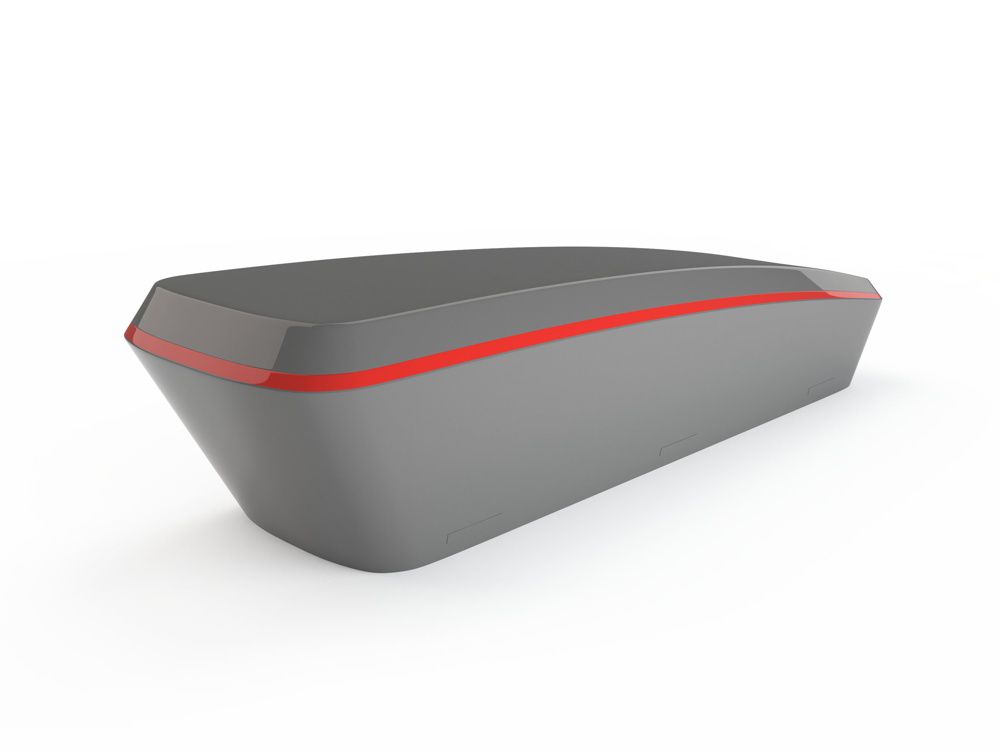

 Text Julia Dudkin Moscow
  Illustration Natalya Yamshchikova St. Petersburg