
Translated material
Loud wires
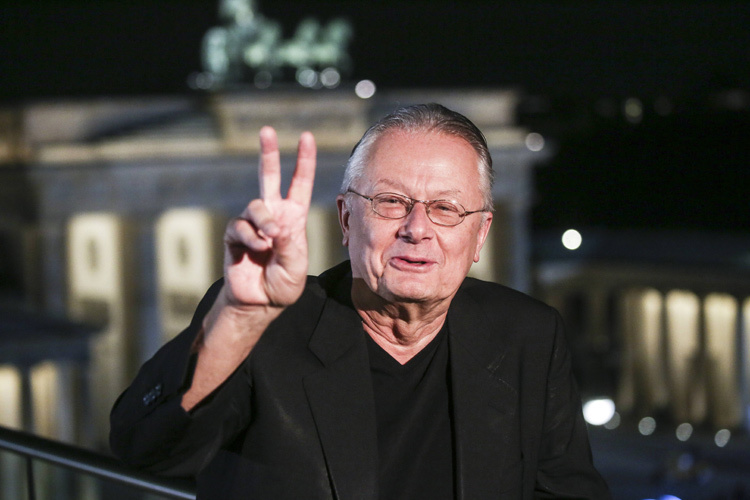
On July 17, the director Frank Castorf was 65 years old. This is not only an anniversary, but also a kind of border: according to the laws of Germany, Castorf reached retirement age. And from this absolutely predictable and absolutely ordinary circumstance for a long time grew and finally finally grew up a typically Castorf scandal.
Pension in Germany is sent punctually - unemployment is high, and, unlike the metro, those who are older are inferior to the place. In creative professions, this rule is distributed with traditionally great restrictions. The restrictions in this case look like this: the Senate of the city of Berlin could ask Castorf ahead of time to remain in the post that he now takes - as an quarter -by the Folksbune theater. The Senate did not ask.
But this is just not a scandal - and not even a great surprise.
 © Getty Images
1.
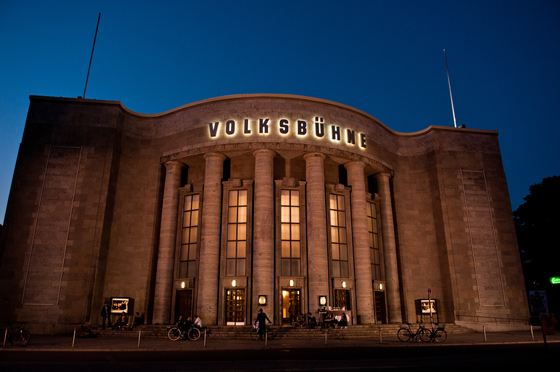
Frank Castorf has been heading the Volksbun Theater since 1992, this season is his 25th anniversary. If my memory serves me, in Germany today there are no longer there intensities with such experience, and even before have not been very much. The fact that the director, his theater and his audience were tired of each other have long been known. Moreover, this fatigue, let’s say, is the electoral-the public is still ready to love Castorf as a director, but is no longer very interested in his activities as an quartermaster. And, of course, fatigue can only be called in comparison with the adoration of past years - most of the directors do not live before the degree of recognition, which in the case of Frank Castorf and Volksbune is considered cooling. It’s just that Castorf is no longer asked that his new theater can offer the city and the world.
But on the eve of the hour X, this function decided to take on the Department of Culture of the Berlin Senate. And everything happened according to the great aphorism of Karl Kraus: "The scandal begins when the police put it to an end."
The Berlin Department of Culture really had an extremely unbearable task - to find a person in the place of legend. The Senate, apparently, in advance, assuming that this problem has no correct solution, he chose between the solution a banal, fraught with a groan of disappointment, and a creative, fraught scandal. Choose creative.
Instead of Frank Castorf, the Senate decided, the Volksbune will be headed by the Belgian Chris Derkon, not a director, not an actor, not a theater producer, but the current chief curator of the Tate Modern gallery.
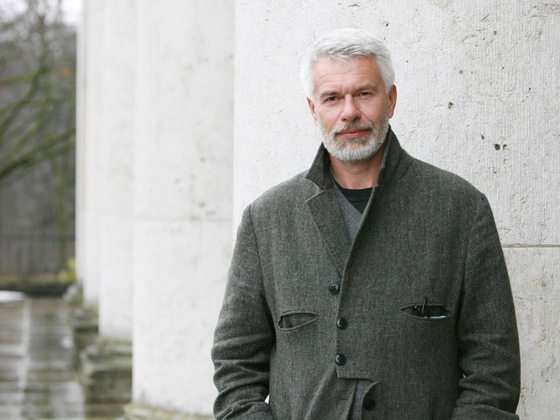 Chris Derkon
A few months after Dercon’s candidacy was approved, all consent was received, and the contracts were signed, an open letter of the former and current employees of the Volksbune appeared. They demand from the Senate of Berlin what in this city did not happen: to revise the already released decision, to pay the deron the penalty, without a doubt, is huge, and to carry it back with God back to London.
Since then, the scandal has not subsided, theater -goers and critics have been divided. Frank Castorf can be satisfied - conservatives are standing for his theater, for whom he was always a bone in his throat. This is called dialectics. The culture senator is non -stop for us to make statements, each next is more awkward than the previous one. And gradually everyone has an unpleasant sensation that is quite familiar to us in our own theatrical life: "Something went wrong."
In order to explain that it is, you need to make a very lengthy retreat that, in fact, is in the place where Chris Derkon is now going to curately, which, frankly, will not envy.
2.
Over the past 25 years, Castorf himself and his theater have achieved everything that the theater and director can achieve, in principle, together or separately. Regalia can not be listed, their list is much longer than the average modern play - but behind unnamed regalia there is a reality that needs to be called. Castorf and his team not only formed the theatrical consciousness of the whole generation of the European public, but also quite strongly influenced the professional self -awareness of the European theater.
During this time, they managed to create not one, but as many as two full -fledged phenomena. The phenomenon of “Frank Castorf Theater” and the phenomenon “Theater of the Volksbune”. These are two different things created at the same time with the same group of people on the same sites. The description and analysis of this split does not fit into the framework of one text, but in any case the circumstance itself should be noted: the Frank Castorfa Theater and the Folksbun Theater is one and the same, but only to a certain extent.
The anniversary reason, at least spoiled by the scandal, as if implies what needs to be said about the first: the phenomenon of Frank Castorf, about his personal contribution to the world theater process. However, the birthday person, if you ask him, will probably say that the best expectations are deceived expectations. We will not make its principles.
In order to avoid misunderstandings and in order not to return to this anymore, I will only say that I consider Frank Castorf an outstanding director who staged several great performances. One of the few directors who do not have their own style, but their own method is not his fault, that the modern decorative perception is practically unable to distinguish these two things.
The “Folksbune phenomenon”, in the most general terms, consists of three parts, as befits a self -respecting phenomenon living in the homeland of German classical philosophy.
Part the first can be called localization in the unloved castorf in the language of global markets.
The Folksbun Theater at Castorf is the theater "On Röhn" with worldwide potential. The universal unifying and triumphant power in its performances is “local”. Pursuing the theater, which for some time was probably the most radical in the world, Castorfu based most of this radicality based on the fact that one should never try to look like a citizen of the world, but always-a citizen of Prentzlauer-Berg. Castorf’s interest in the plot, in the atmosphere is always a concrete interest in the gateway, backbone, kiosk, corner bar: it was not without reason that its great performances were the production of Dostoevsky and Tennessesses Williams. And his own “rayon” always remains the starting point. The recently deceased Bert Neuman, the chief scenographer of Castorf, was able to configure this optics unmistakably. Whether it is the eatery under the California palm trees or the Petersburg backyards - in the scenography of Neuman, it was always the backyards and palm trees seen from East Berlin from the Square of Luxembourg.
In general, the consideration is that the local is global and if you do not see the world from the window of your semi -basement, you will not see it in the porthole of the round -the -world liner - very German. Verification words here are “Kant” and “Koenigsberg”. For the fact that Castorf knew how to defend provincialness as a legitimate and universal cultural position over time and year after year, not only the inhabitants of the “rayon” loved him. In addition, in the case of Volksbun, this topic also has a political aspect. Having headed the theater shortly after the unification of Germany, Castorf, one of the most not fascinated by a single political system of people, turned it into the point where Eastern Berlin resists its annihilation in the Western. And for this, the audience also appreciates him very much - from both parts of the country. By the way, it was not without reason that Western actors always successfully succeeded in the local chic of his productions - Bavarka Sophie Roys, Westfalet Martin Wottte, northerner Folker Spengler and many others.
The Folksbun Theater at Castorf is the theater "On Röhn" with worldwide potential.
The second part of the Volksbune phenomenon is versatility. A huge theater building, forever remembering that he was built on popular donations, is it bad, good, but fit into Berlin Speer and Berlin Honecker. In new circumstances, she turned out to be an restless mammoth who had to tame and comprehend it again. I must say that the concept that appeared immediately after Castorf’s accession, then tried to adopt almost all Germany theaters regardless of the size - not only Germany. Just because of her great success. It was based on the fact that the public should not come to the performance, but in the Volksbun. Castorf was the first to turn his theater into a place of meeting of the city. The primacy of the repertoire itself was not called into question, but the green interior, the red salon, the small scene, the pavilion, the forester - all these spaces inside and nearby, marked as an integral part of the theater, were sequentially filled with daily events that formed the poster of unprecedented saturation. In that unit of the theater, which we traditionally call the liter, and the Germans-the dramatic department, worked five to six permanent, very professional curators who were responsible for the quality of this posters. Cinema, readings, rock concerts, performances, tour, classes of the children's group-the meaning was to accustom people to go in the evening in the direction of the Volksbun, without looking into the program before that. You probably knew that in one of the halls there would be something for you-today, tomorrow and every day. The success of this concept, we repeat, was fantastic. At some point, the theater generally preferred instead of advertising individual performances to put in the city invented by Neumann a series of image.
If desired, here, of course, one can also notice the East German and local trace - the idea of a district recreation center, twisted to Rabelazian splendor. Actually, for several age groups of the German public, Volksbune in his best years and was a kind of Rabelazian, Telemetic paradise. Paradise has long ended, but many have the feeling that they are finally expelled from it now.
An important property of this abundance - it was not unsystematic. Different parts of the poster were formed in patterns and lines that make up the unheated, but significant unity. Unity, based not on centripetal maintenance of “main” events, but on the kinship of views and tastes, on the general understanding of what is relevant today, on a very close acquaintance with its public. And this is a good point to go to the last part.
Here we again fall into the socialist conceptual camp. The third part of the Volksbune phenomenon is solidarity.
Self -sufficient individualist Frank Castorf has a fantastically highly developed - and annoying many - the ability: “his team” is always proud that she is his, and the fact that she is a team. And he tries, as they say, to justify trust.
For a rather long time, this applied to the “his” viewers - which is just not too surprising: the audience not only creates success, but also loves to be part of it. But, surrounded by Castorf, the belonging to the team were proud of the monitorers and buffets, secretaries and the service of the hall. And - more importantly - Castorf retained their solidarity at a time when success ceased to be so impressive or even ceased to be.
This is probably due to individualism. With the gloomy excitement of confrontation: "You will dance to me." The people who united around Castorf united under the slogan “We will show them”, no matter to anyone - everyone. But this “show” was not necessarily aggressive, as he heard. On the contrary: not a single theater, it seems, had no such friendly service of the hall, which could “resolve” absolutely everything. In no other Berlin Theater, there were no tickets who at the beginning of each season demanded a detailed story about all the planned productions - to be able to advise the audience. No other theater had workers of the scene who could take excursions with historical comment.
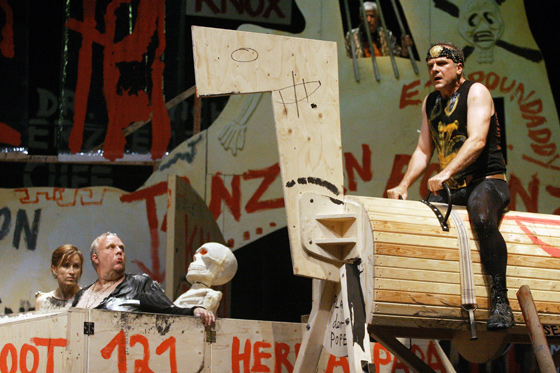 © Getty Images Scene from Meisterszgerers Frank Castorf
Corporate solidarity inside the Volksbun was legendary and even had its own stage embodiment in the repertoire. Wagner Castorf set the “Meisterings” in 2006 with the same gloomy cheerfulness-“You will dance to me.” Or rather, "now we will sing to you - you will not be happy." The score was transposed for copper and piano. Jonathan Mezie, artist, made the scenery and props, in particular, an excellent plywood tank, which, if necessary, turned into a tribune on wheels. Dramatic actors were sent to vocal lessons-as a result, Castorf forced them not to sing, of course, but in full voice to play the whole Wagner, in which the Schiller’s rebellion, and the Nazi pathos, and the excitement of the student-Bolshevik “to the foundation, and then”, and the creaky kakophony of the post-revolutionary XX century lived. In the middle of all this, a rather significant gang on the stage periodically reached the premium, designated in the program as "the choir of workers of the Volksbun." From my point of view, these were the best minutes of the performance - impressive to tears: there were dozens of people from all the workshops on the stage, from the workers of the stage to the directorate secretaries, from the archivist to the head of the dining room. With regard to excitement, the willingness to die, but to finish, individual heroism and a sense of a common cause, this Wagnerian choir did not have competitors. But there was no actionism in it, no “will do so”: the Choir of the working people rehearsed with an invited accompanist completely seriously and pulled the score completely. Not like a professional opera choir, but as an amateur. People's.
Solidarity is the most important property of the Volksbune under Castorf. It is only necessary to remember that the theater remains the theater, and to the Volksbun, each line of the Bulgakov “Theater Roman” was also always applicable. Solidarity did not cancel either complicated intrigue, nor a parade of pride, no backstage (in all meanings of this word) contractions. The flip side of solidarity - in the Volksbun, they always knew how to “be friends against”, in particular, against an intensive care unit. But everyone who worked in this theater knew quite accurately when in his personal working graphics there was that soundless click that canceled all the pride and struggle of private interests. A click, after which it was just necessary to go and do what they ordered or asked. Because: a) “it is so accepted”; b) "Frank said so."
It is absolutely not necessary to be touched by this property, but to understand the situation, it is important to know: for the past 25 years, the Volksbun consists of people who have been accustomed to all situations to be aware of what they do and why.
And at this point, in fact, you can return to the anger of the day, having finished the retreat about the Folksbun phenomenon - which, in fact, of course, is much more interesting than this very malice.
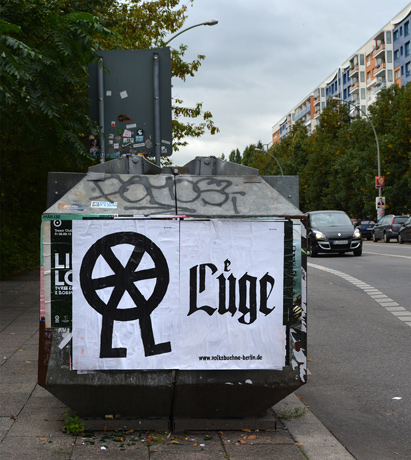
3.
The appointment of Chris Dercon, a high-ranking international art-curator, means that the “Volksbune” phenomenon should either disappear or turn into its opposite.
We cross out locality and solidarity immediately, I think that no additional explanations are needed here. The universality of the program, it would seem, should look like a continuation of the tradition - the Senate probably thinks so, ignoring the substitution. The Volksbune Castorfus let into those artists, musicians, writers who were supposed to fill and complement the theater house. Chrisa Dercon needs the theater house to correspond to the projects that he will “settle” there, that is, turn the theater into a well -functioning international center of art. Not because he is somehow specially configured against the theater, but because he does not know how to: create such centers and lead them-this is his specialty.
The trap is that in this building itself, just expensive repaired and re -equipped, nothing decisively adapted to the International Center for Arts. This is a classic theater building, a very spacious, but organized around the scene. Therefore, in fact, with any variety of the program, the Volksbune never threatened to really turn into a recreation center - the theater’s priority is laid here in the architectonics, in the structure of space. Yes, there is also Pramter, a cute, repaired club theater in the center of the Kabatsko-Student Berlin, but this is a rather modest space that does not allow any curatorial scope. Already announcing the appointment of a dercon and having listened to the first reactions, the Senate added to his sensational decision no less sensational postscript: Chris Derkon will receive not only Volksbun, but also the mothballed Berlin-Templehof airport. Templehof - oh yes, here, of course, is possible. One of Albert Speer’s buildings preserved in Berlin is a headache, it seems, the fourth municipality is already in a row. The giant architectural complex, the beauty and pride of Nazi aesthetics - you can populate any number of projects here and admire how they will survive in Speerovsky megasarcophage. But what does Volksbun have to do with it? Why couldn't it just be given to Dercon Tempelhof? How and why did it occur to someone that both of them can be under one guidance?
The appointment of Chris Dercon, a high-ranking international art-curator, means that the “Volksbune” phenomenon should either disappear or turn into its opposite.
Вообще говоря, «хор трудящихся Фольксбюне» был вполне в состоянии пережить и то, что театр подчинят этой новой международной супердирекции. При одном условии. Если бы Крис Деркон обнародовал программу, из которой следовало бы, каким образом он собирается добиться того, чтобы Фольксбюне снова назвали самым радикальным театром Европы. Потому что, напомним, именно это и была та проблема, которую поначалу собирался решить сенат города Берлина. Вместо этого Деркон чистосердечно рассказал, что из всех видов сценических искусств важнейшим считает современный танец, а в качестве программы первого сезона после раздумий назвал Бориса Шармаца , 84-летнего небожителя немецкого кино Александра Клюге, банального начетчика Ромуальда Кармакара и успешную, но не выдающуюся Сюзанну Кеннеди. Позже еще где-то за кулисами прозвучало: Деркон хочет открыть свое интендантство постановкой Жерома Беля « The Show must go on » — вещью, имевшей большой успех на международных фестивалях аж в начале 2000-х. Все это, честно говоря, для Берлина совершенно не революционно и откровенно вторично. Стоило ли так долго рассуждать, что замены Касторфу быть не может и поэтому — готовьтесь — сейчас придет что-то совсем новое, а потом предъявить довольно случайный набор персоналий вместо программы? И да — это действительно программа международного фестивального центра, который можно с одинаковым успехом разместить в Мюнхене, Лондоне или Париже, а совсем не программа универсального театра.
Разумеется, все рано или поздно заканчивается — биографии целых театров в том числе. Разумеется, о том, удастся ли Крису Деркону выстроить что-то новое и жизнеспособное на старом чужом месте, мы узнаем только через пару лет. Пока еще не вполне понятно, удастся ли ему вообще вступить в должность, — и, откровенно говоря, по-прежнему совершенно непонятно, нужно ли ему этого желать. Кстати, к числу тех подробностей, с которыми новый интендант не был знаком до своего назначения, относятся и подробности немецкого трудового законодательства — а оно устроено так, что с большей частью хора трудящихся Фольксбюне ему придется в любом случае как-то договариваться.
Ну и, помимо всего прочего, одного взгляда в Википедию достаточно, чтобы убедиться: берлинский дебютант Деркон всего на семь лет младше берлинского пенсионера Касторфа. А это значит, что с учетом всех немецких формальностей уже через пять лет сенату города Берлина придется решать, просить ли нового интенданта остаться в своем кресле после наступления пенсионного возраста.
PS Библиография «берлинского театрального скандала» все удлиняется и удлиняется — читающие по-немецки могут посмотреть полную подборку на сайте nachtkritik . de .