
Translated material
Memory. Edita Pieha
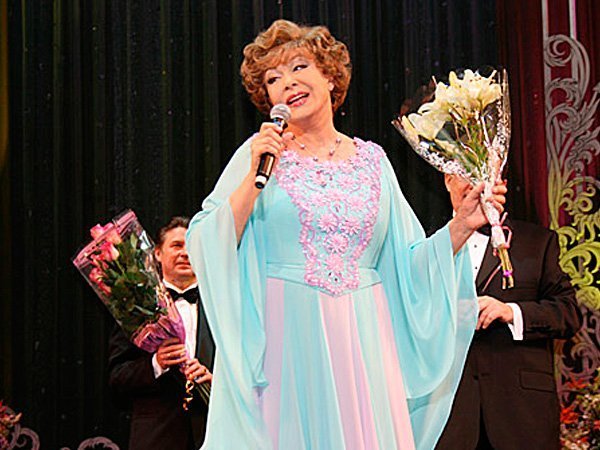
July 31, 1937, singer Edita Piekha was born
Personal business
Edita Stanislavovna Piekha (79 years old) was born in the town of Nueel-Su-Lans in the north of France, 200 km from Paris in the Poles family who came there in the 1920s. Father - Shakhtar Stanislav Piekh, died of a professional disease of mining - silicosis - in 1941, when the girl was only four years old. Edita remained with her mother Felicia and her older brother. To survive in occupied France, the mother was a cleaner in the military unit with the Germans and washed the laundry. So that the family did not lose housing, the older brother of Edita, 14-year-old Paul, was forced to go down to the mine-the day after the funeral of his father. Having worked in the mine for three years, in 1944, at 17, he died of tuberculosis. The owner of the mine turned out to be a decent person and appointed Edite an orphan pension, which she received until 18 years old. In addition, after the death of his brother, he allowed her to live with her mother in the official house until she again got married. Soon, the mother married again - for her compatriot Miner Yana Golomb.
Two years later, stepfather decided to return to Poland. In 1946, the family moved to the Polish mining city of Bogushov in Silesia. There, the girl had to learn to read and write in Polish living in France, Edita at home spoke in Polish, on the street - in German (there were many German children in the town), and at school she studied in French. Despite the difficulties, she graduated with honors from the pedagogical lyceum in Valbzhikha, the submissive really wanted to become a teacher. In parallel with study, she sang in the choir and went in for sports.
In 1955, after the qualifying competition in Gdansk, Edita Piekh received a referral to study in the Soviet Union. She wanted to study only in Leningrad - at the Pedagogical Institute. Herzen at the Faculty of Psychological. But upon arrival in the USSR it turned out that in that year there was no set to the Department of Psychology, and Edita entered the Leningrad State University named after Zhdanov to the department of psychology of the Faculty of Philosophy. She taught the Russian language, signed up for the choir of Polish fraternity, and later was invited by the head of the ensemble of the conservatory students Alexander Bronevitsky to the ensemble.
On New Year's Eve, 1956, at the invitation of a student of the conductor-choric department of the Leningrad Conservatory, Alexander Bronevitsky, she performed in the conservatory with an ensemble of students with a song in Polish "Red Bus" (Autobus Czerwony) Vladislav Spilman.
This performance became a stunning triumph of a Polish student - she sang "on BIS" four times, and literally the very next day and the student team already knew all of Leningrad.
So Edita Piekh became the soloist of the ensemble “Friendship” - an amateur musical team created in the spring of 1955 by Alexander Bronevitsky and a group of young musicians - students from Eastern Europe.
In the same 1956, she married Bronovitsky, and in 1961 they had a daughter of Ilon.
However, frequent concerts interfered with studies at the university, and vice versa. Edita achieved to be allowed to study in absentia, for this she went to Moscow for an appointment with the Minister of Education. “Because of the tour, she began to miss lectures. They called to the dean’s office: "Either quit singing, or deducted!" And I went to Moscow. I spent three nights at the stations, and during the day I was on duty at the Ministry of Education. Finally, the secretary drove tea and missed an appointment with the minister. I said in a broken Russian: “I want to sing and study!”, - the singer recalled about this trip.
Already in 1956, Pieha starred in the documentary “Masters of the Leningrad pop” with the songs “Red Bus” and “Love Guitar”, in the same year its first grampes were recorded on Lenglastmass. In 1957, with the program “Songs of the Peoples of the World”, the ensemble “Friendship” with Edit Piekha won a gold medal and the title of laureates of the VI World Youth and Students in Moscow, after which he became a professional team of the Len Conforders.
However, the artist counts his professional creative career since the fall of 1957 - when she first saw her name at the poster.
Together with Friendship, Pieha performed in dozens of countries, including Poland, Czechoslovakia, Germany, Finland, GDR, Hungary, Austria, in Cuba, in Honduras, Bolivia, Peru. She sang on the stage of the Parisian Olympia at the invitation of B. Kokatrix, performed in Mongolia, the USA, Afghanistan.
In 1959, the ensemble was disbanded for the propaganda of jazz. In the new composition, he resumed his activities only after a review in the Ministry of Culture, thanks to Alexander Bronevitsky.
In 1968, at the IX World Festival of Youth and Students in Sofia at the Political Song contest for the song “Huge Sky”, the singer received three gold medals, and the song by the composer V. Uspensky “The following!” In her performance she received the first award in the competition organized by the festival committee of the fight against fascism.
Over the 20 years of work, many musicians have been replaced by the Friendship ensemble. Only the leader of the collective Alexander Bronevitsky and soloist Edita Piekh remained unchanged.
But in the summer of 1976, Edita Piekha broke up with armored vehicles, after which she also left Friendship. She organized her ensemble, the musical director of which was a graduate of the Leningrad Conservatory Grigory Kleimits. In the same year, she married the captain of the KGB Gennady Shestakov.
I was in Afghanistan three times. For the first time - in 1979, on the anniversary of the April Revolution. Edita Pieha sang songs for Afghans not only in Russian, but also on Pashta and Dari. The then leader of Afghanistan called it "the first Soviet khanum who won the hearts of the Afghans." In 1983 and 1986, she performed concerts in front of military personnel of the Soviet troops in Afghanistan (Kabul, Bagram, Jalalabad, Kunduz). For these performances, she was awarded the Order of Friendship of Afghanistan and the Medal “Warrior-Internationalist”.
In December 1987, in Leningrad, and in January 1988, Edita Piekhi concerts dedicated to the 30th anniversary of creative activity were held in Moscow. The artist called the program "my friends." With this concert program, she performed in Kyiv and other cities of the USSR, and brought her to Moscow 5 times - to the State Central Concert Hall "Russia".
On October 13, 1988, Edy Piekhe was awarded the title of People's Artist of the USSR.
In 1994, the first CD album of Edita Piehi “I love you”, and then the albums “Pierkh is familiar and unfamiliar”, “It's great!” And "those who love Pieha."
In 1996, the singer became the laureate of the National Musical Prize "Ovation" in the nomination "Living Legend".
In the fall of 1998, in Moscow, a ceremony of the opening of the name star of the artist was held at the Stars Square near the GCZ “Russia”.
In 2000, Edita Pieha with Lyudmila Senchina, Nina Brodskaya, Vadim Mulerman, Eduard Hille, Nikolai Gnatyuk, Jadwiga Poplavskaya and Alexander Tikhonovich took part in the international festival "Stars of our century", which walked in six cities of the United States: from Boston to Philadelphia.
In 2007, her 70th anniversary and 50 years in the stage celebrated in St. Petersburg grandiose concerts at the Oktyabrsky BKZ and Palace Square.
Edita Pieha lives in his own house near St. Petersburg, continues to perform concerts.
Daughter of Edita Piekhi Ilona Bronevitskaya is an artist and presenter. The grandson Stanislav Pieha is an east artist, the granddaughter of Erica Bystrova is a designer. The singer also has great -grandchildren.
What is famous
One of the most successful and famous singers of the Soviet Union. For Soviet people, Edita Piekh with her inimitable accent, style and majestic manner of holding was perceived as a foreigner and was loved, including for this non -official.
Piekha became the first performer of many songs of the best Soviet authors: she worked with composers by A. Flyclarkovsky, O. Feltzman, M. Fekin, A. Petrov, G. Portnov, S. Zamzhlakov, V. Uspensky, J. Frenkel, A. Pakhmutova, poets R. Rozhdestvensky, I. Shaferan, E. Dolmatovsky, N. Dobronravov, L. Oshaninin, L. Osaninin, L. Osaninin, L. Osaninin, L. Osaninin, L. Osaninin, L. Osaninin, L. Osaninin. I. Korneluk and others.
The singer recorded more than 20 giant discs at the company "Melody", the songs of which were included in the Golden Fund of the Soviet and Russian pop. Many songs were released by gramus firms in France, in Cuba, in the GDR, Poland, and other countries. Toured in more than 40 countries. Twice performed on the stage of the Paris Hall "Olympia" (including 47 concerts in a row).
At the international musical fair in the Midem in Cannes, Edita Pieha won the main award for the company Melody - the nephritic plate for record, millionth circulations of gramplasts with the singer’s records.
What you need to know about
Edita Piekha was nominated seven times by the public to assign her the title of “Honorary Citizen of St. Petersburg”. With letters in support of her candidacy to the Governor of the city and the chairman of the Legislative Assembly, honorary citizens Alisa Freindlich and Oleg Basilashvili, as well as the people's artists I. Kobzon, S. Kryuchkova, M. Boyarsky, A. Rosenbaum, L. Senchin, Yu. Stoyanov, ch. The conductor of the Symphony Orchestra of St. Petersburg Filarmony A. Dmitriev, ballerina A. Osipenko, poet A. Kushner, Satyric writer S. Altov, composer I. Kornelyuk, ch. Director of the youth theater on Fontanka S. Spivak, the artistic director of the St. Petersburg Estrada Theater Yu. Galtsev, photographer E. Rozhdestvenskaya, international grandmaster M. Taimanov, fashion designer I. Dancerin, singer T. Bulanova, actor A. Urgant (from three generations of the famous dynasty), choreographer B. Aifman, film director V. BOTROTKO, alliance. composers, the Union of Artists, etc.
According to media polls, the candidacy of E. S. Piekhi annually recruits the majority of the votes of the city residents, but she was still not assigned the title of honorary citizen.
Direct speech
About childhood in occupied France : “Mom was given a bowl of soup for work, and on the cards - rotten cheese and sour dry wine, which she boiled so that it could be mixed with water and pour me instead of juice. There were Czechs, Russians, Ukrainians, Algerians, Poles in the colony of miners. At that time, everyone was afraid of each other and kept their tongues behind their teeth, even children, so they did not let me go for a walk. All my early childhood passed in the locked room. For two years I was a home prisoner. The strongest fantasy developed from this: I came up with the elves who live behind the bed, climbed onto the closet and made a doll there. ”
About youth : “I almost never appeared at home: my mother let me go, if only we would see a little more often with my stepfather. We lived with him "on knives." He was a village man, his parents once beat him with a stick, and he also tried to teach me a belt.
Once the conductor of the lyceum choir said: "You will be a famous artist." I objected: "I will be a teacher. The stepfather says that you can’t earn a life for life." And when they gave a ticket to Leningrad University from the lyceum, she chose psychology. ”
About the suspension of the activity of the ensemble "Friendship" : "I" distorted the Russian language ", the musicians were" dudes ", and I" Kabatsky singing ", which was supposed to be washed along the neckline. And also a "propagandist jazz" and "negative phenomenon on the stage." We have not performed a year until my husband achieved the viewing of our program in the Ministry of Culture ... ”
8 facts about Edy Piekhe
- In the Nuael-Su-Lans City Hall, the metric of Edita Piekhi was preserved-it was called Edith-Marie. Edita - at the request of her father, Maria - in honor of grandmothers.
- The name "Friendship" for the ensemble was invented by Edita Pieha herself. Before the performance on March 8, 1956, the children were asked how to declare them in the Philharmonic. And Edita suggested: "announce that" friendship "is acting."
- For 10 years, Edita Piekh as a citizen of another state could not act with an ensemble in closed cities, military units and other places forbidden to visit foreigners. Only at the end of 1967 did she receive Soviet citizenship. And the very next year she was awarded the honorary title “Honored Artist of the RSFSR”.
- Edita Piekha starred in the films "Incorrigible LGun" (1973), "Diamonds for the dictatorship of the proletariat" (1975), "Intercessor" (1976).
- The first in the USSR to perform a foreign song in Russian. It was “only you” by the author-composer and the head of the ensemble in the style of Du-vap and the Soul The Platters Back Ram. The first to take off the microphone from the rack, began to move on stage and talk with the public.
- Edita Pieha fluidly speaks Polish, German, French, sings in dozens of languages of the world.
- In 2014, without the consent of the artist and members of her family, the production of the Edita television series about the life and work of the artist was launched, in connection with which the singer’s legal service intended to apply to the court with a demand for the ban on showing a series on television. On October 12, 2015, on the TV channels Russia-1 and Russia-HD, the premiere of the series “Born by the Star”, whose heroine is very reminiscent of the biography of Edita Piekhi. The creators of the project, however, insist that the image of the main character is collective and they managed to accommodate the character traits of Maya Kristalinskaya, Aida Vedishcheva, Anna German, Tamara Miansary and other stars of the Soviet scene.
- In July 2016, the media took place that Edita Piekha was going to participate in the elections to the Legislative Assembly of the Nizhny Novgorod Region. This was announced by the representative of the Nizhny Novgorod regional branch of the Just Russia party Alexei Yakimov on July 7. According to him, Edita Piekh is put forward to the elections in the Z. But in the district No. 15, as well as on the party list of “Fair Russia”. However, Edita Pieha herself said that she knew nothing about the proposal to go to the elections to the Legislative Assembly of the Nizhny Novgorod Region.
Materials about Edity Piekhe
Official site Edita Piekhi
Edita Piekha taught Russian by “capital” Marx
Edita Pieha. Russian accent. Transfer of the channel Russia
Article about Edye Piekhe on Russian Wikipedia