
Translated material
Flashmob #I am joking
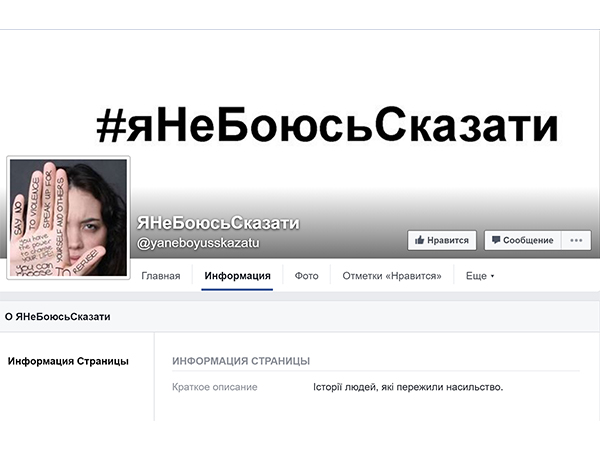
The recent wave of women's stories on social networks about the cases they have experienced, gave rise to many significant attempts to understand what was happening. Among the articles according to its results are the texts of such different but significant authors as psychologist Lyudmila Petranovskaya, economic journalist and social thinker Dmitry Butrin, sociologist, specialist in the field of gender research Irina Kosterina, political scientist and publicist Sergei Medvedev and others. The material of Victoria Schmidt, a candidate of psychological sciences, a researcher from the University of Masarik (Brno, Czech Republic), co -author of a study on home violence in Belarus, expert of the Know Violence in Childhood, can also take their place. We hope that its publication will contribute to the continuation of the substantive discussion.
I am a flash mob #I will get a reaction and the reaction to it enter the post -Soviet space into the global trend - we are amazed at how it indulges in a public anathema remains widespread practice.
But is the rape of the worst of possible crimes against the person? This question was asked the audience of the Public Philosopher program professor of political philosophy of Michael Sandel BBC 4 channel, held in March 2013 [1] , the inhabitants of India, discussed the problem of rape after group rape of a young woman in the bus, which attracted the attention of the public not only in India, but throughout the world [2] .
Having become one of the most noticeable problems at the international level, sexual violence against women often provokes commentators to neglect contexts. While the understanding of these contexts is significant for the prevention and minimization of the consequences of violence - in a certain period of time and certain locality. A public reaction to a flash mob can be considered as an example of such unsafe decontextualization, which ultimately led to ignoring both the topic of rape and the needs of women - in the texts of those who greeted and supported.
The identification of rape with an injury , its understanding as a remnant of the past, not distinguishing between violence of different types, simplifying the connection of violence against women and children - far from a complete list of decontexualizations that are observed in the publications of Lyudmila Petranovskaya [3] , Sergey Medvedev [4] , Irina Kosterina [5] , Dmitry Butrina and many others.
General cliches in the judgments of the authors about the problem of rape indicate that it will not be superfluous to clarify what to consider sexual violence. Rape always includes threatening behavior, both verbal and non -verbal, aimed at humiliating, intimidating and subjugating the victim during a sexual act and after.
It is important not so much the frequency with which the rapist uses such behavior as the repertoire of manipulations, to which the rapist appears (Walkate and Brown 2011). This definition directly indicates the need for contexts - without which it is difficult to understand how this or that manipulation of the rapist becomes an effective means of pressure, forcing the victim to sex. Those who analyzed the flash mob in public space often without such work - preferring to replace contexts with personal experience, such as the Belarusian publicist Julia Chernyavskaya [6] , or common cliches - like many others.
Psychological trauma: universal propaganda
In the Russian public sphere, as in the whole world, the injury has acquired all the features of tropism - a stable explanatory structure, claiming universality, regardless of time and place. It is known that until the mid -1970s the concept of psychological injury and a subscription disorder was practically not used in the practice of working with those who suffered from sexual violence. Actually, even in the texts of the feminists of the first wave, you can find comments that rape is far from the worst thing that can happen to a woman. Moreover, this kind of comments were accompanied by very activating messages in favor of coping with the experience of rape.
The host of the BBC 4 Michael Sandel program asked the participants the question of whether the violence is considered the worst crime. Interestingly, the Indian audience gave clearly more diverse answers than if the question was directed to those who commented on the flash mob in social networks.
So, one of the participants, who answered the question “yes”, pointed out such insurmounts of Stigma and the inevitability of the alienation of the family, that the rapist should kill her victim. However, her opponent noted that “we live in a society that subjects sexuality to such repressions that women are used to thinking that, along with innocence, they also lose life:“ Nonsense - here you can lose their hands! And if I am the only child who should take care of his parents? ... By attributing such significance to rape, you deny my identity - which certainly does not come down to innocence ... ". It is noteworthy that in turn, such an argument as a violation of the bodily integrity that blocks the freedom of a woman also sounded.
In the early 1970s, psychiatrists began to show an active interest in reducing the consequences of violence for psychological deprivation and a storage syndrome. They received support from those who participate in the feministic movement of the second wave. One of the arguments in favor of applying the concept of psychological injury to sexual violence was the origin of the concept of psychological trauma. This concept primarily correlated the experience of war and his experience with a white man.
The application of such a concept in relation to female experience was thought of as one of the possible ways to achieve public attention and positioning of sexual violence as as unacceptable as, for example, military operations.
Joanne Bourke [7] , which analyzed the story of how the concept of psychological trauma was unprecedented in the practice of helping the victims of violence, indicated significant advantages from using the concept of injury - for both therapists and patients.
In fact, reducing the experience of the experience of violence for injury allows you to circumvent such a delicate question as the possibility of women themselves to prevent violence and cope with its consequences. According to the researcher, agreeing to the monopoly of injuries as an explanatory scheme of the experience of sexual violence, women prefer the innocence of their subjectivity, from which the therapy industry and the simplified propaganda of feminist values won.
It is noteworthy that Irina Kosterina shares this choice, preferring not to blame men and women, but to consider them "victims of the patriarchy rooted with us." A striking example of the fact that the experience of violence is not reduced to injury, and attributing to a woman a traumatic syndrome makes her defenseless before institutionalization can be considered the film by Vera Hitilova “Kapkan, Kapkan Kapanachi” (1998), in which the main character experienced violence.
She understands that she does not have to wait for justice and creates it herself, in accordance with her ideas, castrating the rapist and his accomplice. Hitilova without outlines shows the daily neglect of female bodily bodily in society as a background of violence - when a rapist and his friend humiliate their partners for what they menstrue, do not know how to cook, make love correctly, etc. The imposition of the main character of the traumatic syndrome makes it defenseless and deprived of any support in the experience of what happened.
In the reaction to the flash mob, violence was very often identified with injury, which was easy to leave the interests and problems of women on the side of attention and go to structural violence or violence against men - after all, everyone is experiencing an injury: both the boys who are pouring and the people suffering from poor raping power or from fuel feminism: “since it is not so much and not so much not so much. About women, their pain, fear, humiliation. The problem is that we do not know how to talk about injury at all. ” Dmitry Butrin, the author of the text “Woman without signs of nervous breakdown [9] ”, is also echoed by Medvedev: “It's not even about sexual violence proper. A public structure is subjected to criticism, making it a variant of the norm. ”
It is logical after the interests of women to get rid of the accusation of men. Therefore, Dm. Butrin emphasizes that “the world is charged with an intelligible charge, in which real rape, harrasment, family beatings, and aggressive persecution of unwanted fans, and pedophilia are interconnected. It is to the world, not men: very few record authors have claims to “male” as such. ”
Butrin ignores the Belarusian segment of a flash mob - which does not fit into his logic of accusing the world, because the Belarusian participants chose to indicate not only the names and surnames, but even the addresses of their offenders. Irina Kosterina also prefers to switch from discussing the topic of rape on criticism - but already liberals who refused to discuss the topic of sexism before the flash mob : “They ( liberals - V.Sh. ) wrote: it is not the time to discuss sexism. We have a war with Ukraine, we have a difficult foreign policy crisis, and you are discussing your sexy stupid sexism. ”
Perhaps those who enthusiastically picked up the western trend did not think that injuries vary - both in terms of the duration of action and in accordance with different sources of trauma. It is doubtful that domestic publicists considered it necessary to track the evolution of the application of the concept of injury to the problems of rape - otherwise, for example, Lyudmila Petranovskaya would not have limited themselves to a remark regarding the fact that the depth of injury depended on how close the one who injured to the one who suffered from the injury was.
Already in 1980, the concept of injury in relation to the problems of violence began to transform in the direction of involvement of communities and cultures. The Trauma Membrane concept is introduced into everyday life - a membrane of injury, a temporary barrier that protects the victims from constant pushing on injuring memories. Not a specialist, but the close and nearest environment are responsible for creating such a membrane, and gradually support the one who has gained the experience of violence, to learn how to cope with what may and will remind of such an experience.
The former reduction of the experience of sexual violence in injury in its classical clinical understanding was excluded by the possibility of discussing how people who survived violence cope with it, for example, without the help of psychologists, how diverse strategies for working with such experience are. It is worth addressing examples of coping with the experience of violence by women from the zones of military operations - who began to live together, developing methods of protecting their community as in Rwanda or work with families in which women survived violence - as in Serbia.
The idea that psychological trauma should be experienced by everyone who has suffered from sexual violence can be considered an element and cultural violence. After all, even stories inside the flash mob go beyond such a hard cliche that rape leads to psychological trauma. The inability to achieve justice, ignoring the problem from others - including the closest, can cause no less, if not more damage than the experience of the injury. And you can minimize such damage not in contact with a psychotherapist, but in collective action.
The inability of the victim of violence on such an action as the main trigger of hopelessness tells the story of Viktor Astafyev “Lyudochka” (1987), whose heroine, devoid of justice, understanding and support, is decided on suicide. The reprisal against her rapist in the story remains retribution, but not by justice - which the writer himself writes about without outskirts: “The oppressed, robbed [11] , scratched, cut, broken, living the inhabitants of the railway village will now breathe outlinedly and will live more or less before the coming of the new Strekach and them. nurtured. "
Even before the flash mob, such realities as the routine of the Iron Dark village, described by Astafyev in the “Lyudochka”, became accepted to label as a terrible and backward past. However, in the reaction to the flash mob, the contrast of the past and the future acquires special importance - because violence begins to be identified with the global past, not only the camp past of the former USSR, but also the past of humanity.
The narrative, who identified the rape with a psychological trauma, began to be embedded in a variety of manipulations by historical facts - in favor of monopolizing the only and almost wonderful way to cope with violence. If violence is created by the subhuman who remained in captivity of the past, then progress in favor of universal humanization is the only way out.
In progress, in progress: the underlife of the past in favor of selection for the future
Very often, violence is considered as a relic, a terrible heritage of the past. Irina Kosterina offers to look at the attitude to rape as a litmus piece of paper to evaluate society as tolerant or conservative. For Lyudmila Petranovskoy, the flash mob became evidence of "that in some respects right now, in the second decade of the 21st century, we live in an extremely cruel and archaic society."
Sergei Medvedev talks about the centuries -old history of violence. Instead of an analysis of how the idea of the violence and practice of telling about violence and coping with it was formed, we are offered a variety of speculative ideas regarding the past as a source of modern problems.
Lyudmila Petranovskaya operates with a simplified version of a typical idea of the coexistence of the value systems of different generations. But unlike the original version, which focuses on the variety of Gender, class and ethics in different societies, Petranovskaya offers a compression of time and locality, denoting one model as both patriarchal, eastern, and archaic, marking it to everything else and as a misoginar (feminine) and the other as a European, Western and model equal rights.
An analysis of how such a typification of models has developed is a topic for a separate study of how Western ideas are blurred and mutated in the minds of Russian publicists. Within the framework of this text, it is more important to focus on what the reasoning leads to such a typification. Siding, recognizing the presence of the first of the models in the minds of “minors (!) Prostitutes (!) Waving from the provincial (!) Orphanages (!) To earn extra money“ on the highway ”, Lyudmila (educated (!) Mature (!) Woman (!), Living in the capital (!) And engaged in the structure of children from social education institutions) draws a conclusion in the spirit) Sexist jokes about receiving pleasure during rape: “You listen and think - it would be better if they were sexually preoccupied.”
The key to understanding how society relates to sexual violence the question “What should be protected, woman’s sexual freedom or her dignity and honor?” It boils down to a well -known and common installation regarding the licentiousness and unprincipled women from the lower layers - to which the author clearly classifies the pupils of orphanages. After all, they allegedly have neither honor nor ideas about freedom due to the dominant misogene culture.
The main problem of the publicist is seen not so much in the conflict resonance of the requirements for a woman in each of the models, but that none of the models offers protective means in modern Russia: “As a result, the level of security of women from violence is like in barbarian societies.” At the same time, that the author is seen by guarantees of protection - a guarantee of punishment of the offender by law or tradition does not at all ensure the stability of the practices of the prevention of violence.
Meanwhile, a global study of the prerequisites [12] to minimize violence in different countries confirmed that the four main factors determine positive dynamics in the prevention of rape: the stability of the individualization culture, the intensity of female activism and mobilization of female movements, the level of well -being and educational census.
It is noteworthy that the level of democracy and the provision of police with personnel not only did not become optimization factors, but, on the contrary, negatively correlated with the stability of the development of a policy directed against sexual violence. It is no less noteworthy that the growth of international influence becomes a factor in changes only in those countries in which the practice of protecting the rights of women is formed by women themselves. If the culture of individuality remains a factor in a sustainable policy in 16 most developed countries, female activism acquires significance in countries with not such a prosperous economic history.
It can be assumed that not a mutation of far -fetched models blocks the development of practices of the prevention of violence, but the problems of female activism, which, inter alia, are typical of an environment in which the propagandists of feminism are not tempted in collective action - since they are focused on the selection of their and strangers.
The key task of the text of Lyudmila Petranovskaya, like, for example, Irina Kosterina, is the definition of which reaction to the flash mob is “appropriate”, i.e. He meets the spirit of the "western" model. The authors discuss the rules of such an appropriate reaction. Lyudmila offers therapeutic advice to those who are sensitive to online discussions, and Irina typizes the reactions of men by the types of masculinity to worthy respect or requiring a history of an anamnesis.
The selection on advanced and backwards is even more consistently represented in the text of Sergei Medvedev, who completely scares those who do not integrate into modern values by violence by the authorities: “Laughing at the“ monologues of the vagina ”, recognizing the right of a man, be prepared for the fact that the police can perform the same actions through a bottle of champagne or a sheep of a blade - these the same bivoval. "
His reasoning is only one of many examples of a consistent attempt to alienate public capital developed by women in favor of solving their political problems. Similar logic is also distinguished by the text of Dmitry Butrina. The freedom of public discussion of sexual relations is equalized with the freedom to discuss the problem of rape, and the latter with the freedom of discussion of freedom in general.
If for Medvedev a flash mob “the first step towards freedom is not just to free women from fear and male dictatorship, but to get rid of all of us from the practices of social and state violence”, then for the bootrine is a sure sign of progress, the head of which is the same target group of readers that Petranovskaya addresses: “Why am I talking about future changes as“ natural ”? In essence, only because the society in which representatives of the elite write under the tag #I will be used , thereby demonstrates readiness for some real changes in this area. ”
In the hope of progress inherent in the rhetoric of supporters of the flash mob, it is easy to recognize the amazing similarity with the public discourse of the fight against the hooligans, which could be observed, for example, in the second half of the 1950s and early 1960s. This similarity can be explained in different ways. The neglect of the supporters of the flash mob towards the Soviet past as a whole and moral campaigns for the correct attitude towards a woman in particular - which does not allow reflecting the whimsical ties of the past and the present plays its role.
Having become an integral part of the thaw, the moral campaign among working youth very consistently promoted a new, modern standard for respect for a woman who was supposed to distinguish young builders of communism and protect women. It is noteworthy that, like the modern flash mob, the Khrushchev’s moral campaign resonated with Western trends - moral panic around Delinvent youth (as amended by minors, found guilty of criminally punished acts ) in the USA, Great Britain and West Germany. And although this campaign has not achieved special results [13] , it has long determined the idea of those who move new standards as exceptional, belonging to the new Komsomol elite - traces of this pattern are easy to find in the comedies of Yuri Chelyukin “Unnecessary” (1957) and “Girls” (1961).
How can one explain the attachment of moral entrepreneurs, whether it be the leaders of the Komsomol from the time of the thaw or modern supporters of the flash mob, to the elite as a key actor of change? Gleb Tsipursky assumes that the problem was in the prenabrement of the culture of working youth - a social community with its alternative culture, an integral part of which was violence.
Instead of a gradual transformation of this subculture, the authorities decided on a pre -finished experiment to instill new values. The finished idea of his failure can be obtained from V. Astafyev’s story “Lyudochka”. If we convey the essence of the story with the help of modern fins to describe rape, then we are talking about the very working class, women from which they rarely contact the police, and men, on the contrary, are often accused of violent acts.
Unlike supporters of the flash mob, Astafyev sees the problem not in the animal of the rapist and his environment, on the contrary, the strap is quite rare for the village of a person, a product of a certain subculture, hung from head to toe by its attributes. The writer is seen not only in his readiness to obey such as Stekhach-from the side of the environment, which not only does not protect Lyudochka, but retreats from her because of the fear of the rapist.
The problem is the indifference of all representatives of the authorities, from the insensitive paramedic, who does not respond on time to the worker’s illness, to the police - unable to resist the gang in the city. After the rape, Lyudochka takes all possible actions in order to create the very protective membrane - but no one from her encirclement, even those who are trying, manage to help her.
Gradually, her picture of the world becomes exhausted by potential violence, from which not to escape. The inability to work out the experience of violence excludes any chance of understanding contexts as the first step towards elaboration and coping. That is why contexts are not just an exercise of the research mind, but a direct condition for the prevention and minimization of violence, including sexual.
In my opinion, the contextualization of violence directly determines the strategies for the prevention and minimization of harm. It is important to take into account such contexts as a place, time, cultural specifics, and to distinguish between different types of violence. It is no coincidence that within the framework of gender-determined violence ( Gender Based Violence ), Violence violence, a partner violence , violence against sex workers ( Violenst Sex Workers ), and violence in violence in Armed conflicts ( Gender-Bassed Violence During Armed Conflicts ).
Even if the same legal norms apply to different types of violence, the practices of their application will differ - and it is this difference that deserves close attention. It was she who was ignored in the reaction to the flash mob, which can be explained not only by the very specifics of this campaign, but also by the composition of the expert community in Russia, its clearly limited resources of reflection, both individual and group.
Notes
[1] http://www.bbc.co.uk/programmes/b01rg21y
[2] http://www.bbc.com/news/world-asia-35115974
[3] http://spektr.press/proverka-na-vshivost-lyudmila-petranovskaya-o-kotoryj-stavit-diagnos-obschestvu/
[4] http://www.forbes.ru/mneniya/tsennosti/324823-biopolitika-nasiliya-chto-fleshmob-zhenshchin-rasskazal-nam-o-Rossi
[5] http://www.the-village.ru/village/people/city-news/241149-ya-ne-boyus-skazat
[6] http://news.tut.by/society/504193.html
[7] http://www.bbk.ac.uk/history/our-staff/academic-staff/joanna
[8] Article Sergey Medvedev http://www.forbes.ru/mneniya/tsennosti/324823-biopolitika-nasiliya-chto-fleshmob-zhenshin-rasskazal-nam-o-Rossi
[9] http://www.inliberty.ru/blog/2349-zhenshchiny-bez-priznakov-nervnogo-sryva
[10] injured men who are constantly passing through the situations of humiliation, coercion, militaristic conflicts who do not know how to cope with this emotional background - this all leads to the wild level of domestic violence.
[11] http://www.infoliolib.info/rlit/astafyev/lyudotchka.html
[12] http://asr.sagepub.com/content/74/2/272.abstract
[13] http://ehq.sagepub.com/content/45/2/236.abstract