
Translated material
Datsan Dance | Colta.ru
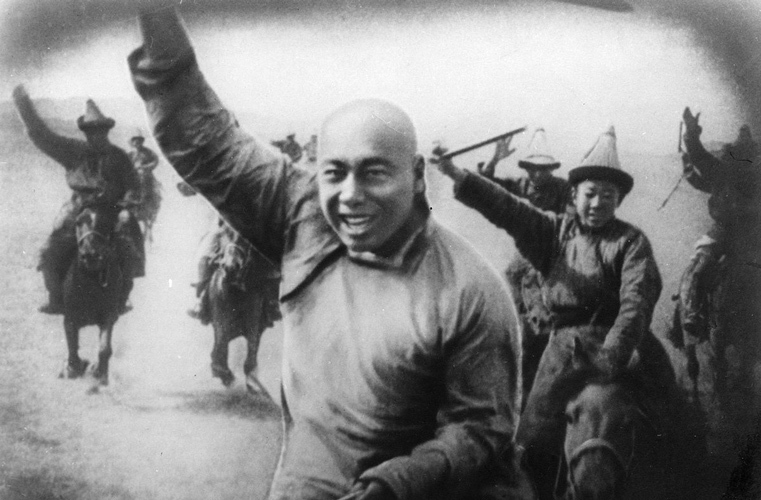
In August, the Moscow Park “Museon” resumes the shows of the silent Soviet film -wounder, which have already become a tradition to a live accompaniment of the avant -garde of the musical - and modern. On this Tuesday, August 2, the program opens the “Descent of Genghis Khan” Vsevolod Pudovkin. Maxim Semenov explains all the ambiguity of the choice of this particular picture, and Evgeny Galochkin - the congeniality of the music of Pavel Yeremev (aka Holypalms) to the socialist orientalism of Pudovkin.
The vast expanses of Central Asia. Somewhere in the distance there is a yurt. Nearby are the dogs crushed by the afternoon sun. A little further a few horses, slowly bowing their muzzles to the ground, pinch the grass. Even farther, in the famous Gusinoozersky datsan, the unperturbed scientists of the lamas put on terrible masks to play the mystery of Tsam. But all this is somewhere in the depths.
But on the surface of which is not: chases, executions, punitive expeditions, the fight against militias, "a fire and an earthquake in the bathroom."
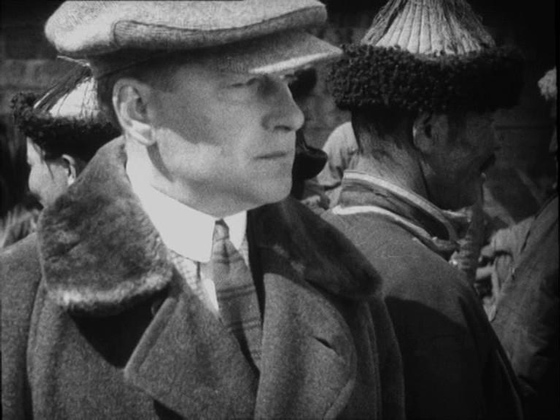
The young hunter Bair, having mined a magnificent fox skin (500 coins with silver, no less!), Trying to protect himself from greedy lamps and predatory colonialists. Wounding the English merchant (the blood of the White Man is spent, the population will be approximately punished!), He enters the detachment of Russian militias. The head of the militias is a “Shakhtar from distant Donbass”, a thorough man in a fur hat. He takes the hero into the detachment, but suddenly an attack! Shooting! Smoke! The herds running around the field! .. And now the British are leading Bair to shoot. Under Bair, it was found taken from the insidious lumboat in the Ladanka, indicating that its owner is a direct descendant of Genghis Khan, the hereditary lord of Asia. Will the officers have time or not to translate the text, while ordinary soldiers are preparing to carry out the verdict? Suddenly they won’t have time? Saspens.
There are many events, but for some reason they do not stick together. “The descendant of Genghis Khan” is the most famous, but not the most successful film by Pudovkin. Despite the international success and love of the Sinefils, it is inferior to both the armor-piercing “mother” and “the end of St. Petersburg”, although they should not yield to them. The usual historical and revolutionary material, the techniques worked out to perfection, the irony of mounting speakers-everything is clear and familiar, but in the “descendant” the avant-garde fails.
Let's make a reservation. Counting together with Dovzhenko and Eisenstein to the top three pillars of the Soviet film van, Pudovkin has always been the most genre director. Even a hundred years later, the “mother” (whose plot has a very distant resemblance to Gorky’s novel) looks like an exciting action movie, and the “end of St. Petersburg” is perceived as a melodrama of almost Hollywood scale. While Eisenstein shot films about the insight of the masses and reveled in the variety of living human faces, and Dovzhenko introduced a mythological dimension into the historical and revolutionary epic, filling the installation gluing with talking horses and immortal Ukrainian workers, Pudovkin tells very understandable stories.
 © Interrabp-film
No crowds on the Potemkin ladder, no hundred -year -old old people with their Scythians, Lyuhas and underground monks. In the “Mother” and “The end of St. Petersburg”, we can accurately isolate the main characters-ordinary people who have to go through different trials and change. All numerous avant -garde techniques and interspersed of historical scenes, which should be responsible for dialectical thinking, actually serve to change a very specific character, which is manifested in very specific actions. Pudovkin accurately knows his material, understands what needs to be cut and what to mount.
But the material of the “descendant” is completely alien. Instead of the usual world of imperial Russia with its officers and headless senators, the camera in a confusion removes dogs, horses, yurts and Buddhist ceremonies, not finding an adequate language to describe them. A living and unusual life defeats the director, breaks through the energetic mounting joints and distracts attention from the protagonist and his adventures.
Dancing monks and lying dogs seem to be like symbolizing the backwardness of patriarchal Asia, but instead they portend the imminent end of the film award. The peppy cinema of the 20s from the entire speed flies into eternity. And from this collision it is not at all eternity.
* * *
HolyPalms - Solo Pavel Eremeev from Ussy . In the past, Paul played in the group on drums, and he immediately switched to the baritone guitar. In especially rhythmic dance compositions, it sounds ominous-miserably, in more thoughtful tracks-meditatively, hypnically, sleeping. Sometimes layered guitars begin to sound like a real sitar, sometimes like wine, another traditional pinch instrument; Holypalms music has a lot of Indian, Pakistani, and indeed an authentic East. Yeremeyev alone programs and prescribes the entire rhythmic structure of the compositions and does it with meticulous scrupulousness. That is why HolyPalms sounds like a colorful folk ensemble of several soloists. The music of the project is distinguished by volume and rage: if at the end of the concert you do not see hot slam in the hall, then at least the dance in the most elegant sense of the word is definitely guaranteed. And vice versa: in the quietest moments, the sound becomes truly psychedelic, blurry, liquid and begins to introduce the listener into a deep-sea trans.