
Translated material
Little Türkiye inside Germany
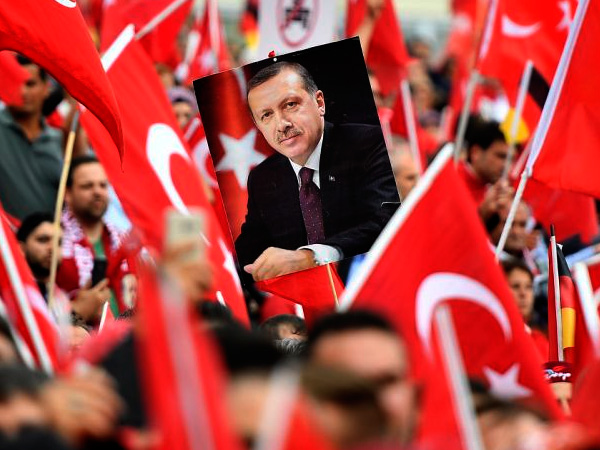
On Sunday, in Cologne (Germany), demonstrations of the Turkish diaspora were held, expressing support to Turkish President Recep Erdogan and a protest against a military coup, whose attempt was on July 15. There were also demonstrations against Erdogan. The media talk about relations between Germany and Turkey and the influence of Turkish policy on German policy.
Deutsche Welle writes that additional police forces were involved in Cologne. First of all, this was due to the fact that countermathy was planned, that is, there was a probability of conflicts between the parties, since friction intensified inside the Turkish diaspora. The Sunday demonstration was organized by the Union of European Turkish Democrats, and its goal was a protest against an attempt by a military coup on July 15, as a result of which more than 250 citizens were killed. The rally also expressed their support to Erdogan.
It was planned to include a live broadcast from Turkey with Erdogan's appeal to the protesters as one of the rally events. The German police forbade broadcasting out of fear that this could act on the crowd too enthusiastic. Also, the decision was motivated by the unwillingness to extend Turkey’s political tension into their territory and intimidate people who do not like Erdogan. The leader of the German Party of Green Jam Ozdemir, in particular, said that before the rally in the Turkish community there were attempts to intimidate the disagreements, that is, the critics of Erdogan. Recall that Ozdemir was also the initiator of the Bundestag recognition of the Armenian genocide in the Ottoman Empire.
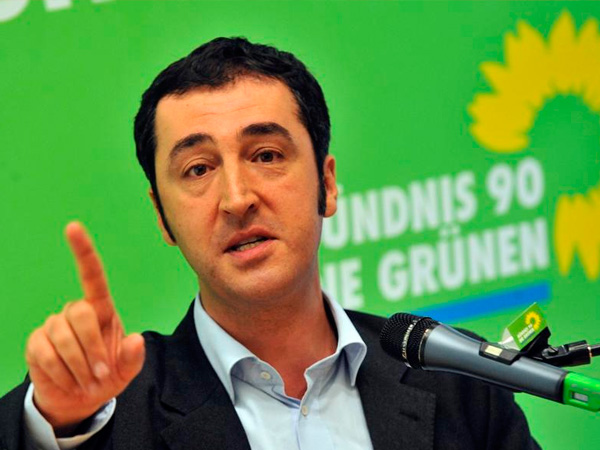 Jam Ozdemir leader of the Green Party in Germany
The Turkish side considered this ban by a flagrant anti -democratic one.
The Financial Times transfers the replica of the Turkish Minister of Justice, who stated that the actions of the German authorities are a shame for democracy and the law. The intergovernmental skirmish following the results of the Sunday rally in Cologne, the author comments, has become a new reminder of the tension of relations between Germany and Turkey. This tension, in turn, was aggravated after an unsuccessful attempt by a military coup in Turkey, when Erdogan began to harshly pursue those who were suspected of involvement in the conspiracy.
In parallel with the general statements of the Minister of Justice, the Turkish Minister of Foreign Affairs also stated that the migration transaction between the EU and Turkey will be terminated if the EU does not voice the date when the permission of the Turkish citizens of the right to visa -free entry is approved. The permission itself, the Turkish leadership believes, can wait until the fall, but it is necessary to set the exact date. In turn, the European Commission claims that Türkiye does not comply with 72 conditions, compliance with which is required to remove visa restrictions. First of all, these are conditions regarding the reform of the anti -terrorism legislation of Turkey.
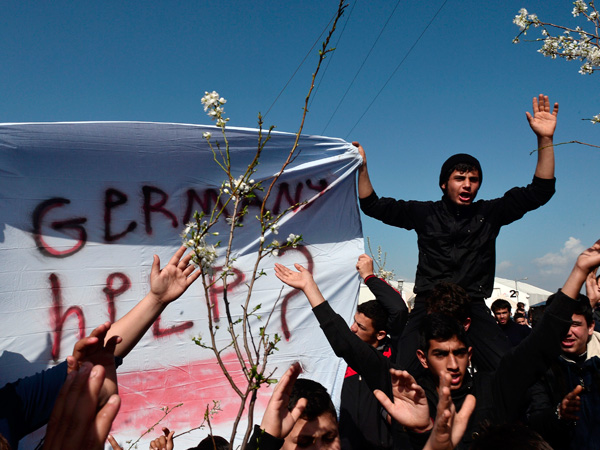 Migrants on the EU border
Guardian writes that inside the three -millionth Turkish community in Germany, strong contradictions began after the coup in Turkey. These unrest are significant, because the world's largest Turkish diaspora lives in Germany. In this sense, the events taking place in Turkey in one way or another inevitably affect the political climate in Germany. The authors note that among the German Turkish diaspora, Erdogan is very popular. So, for example, in the elections in November last year, he gained 60% of the vote there, that is, more than in Turkey.